Short direct answer
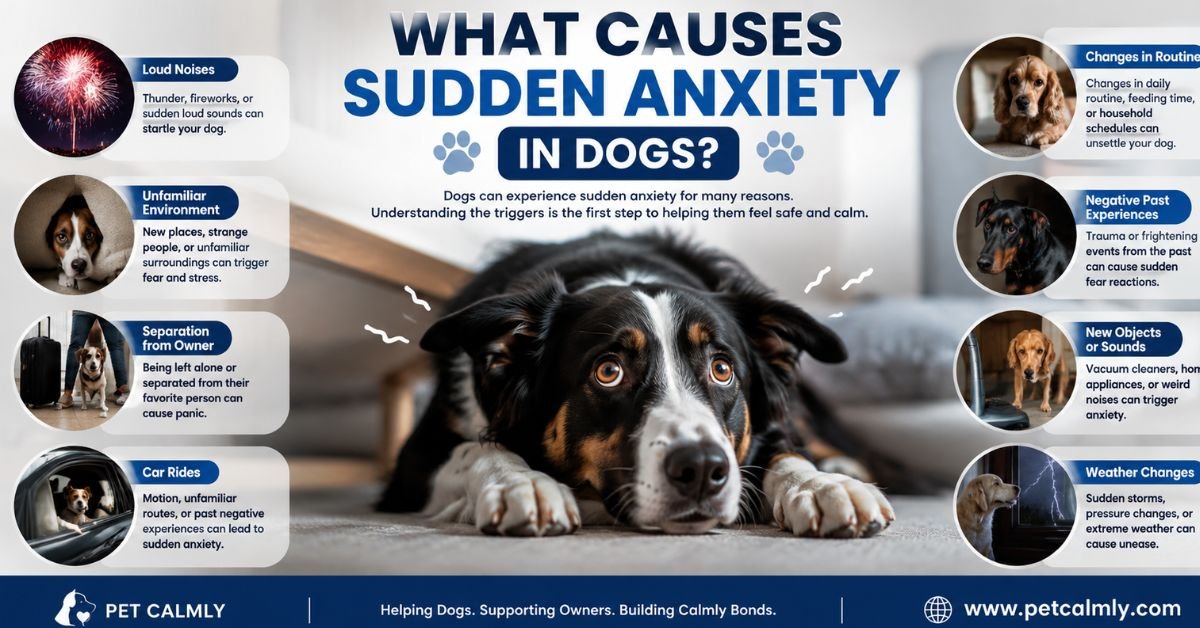
Sudden anxiety in dogs is usually triggered by a mix of environmental changes, medical discomfort, fear-based experiences, or sensory overload. Common causes include loud noises (like thunderstorms or fireworks), separation from owners, unfamiliar environments, pain or illness, or even changes in routine at home. In many cases, what looks like “sudden anxiety” is actually a response to something the dog is sensing or feeling that humans may not immediately notice. Understanding the trigger is key to helping your dog feel safe again.
Introduction
It can be unsettling when a normally calm dog suddenly starts pacing, hiding, shaking, or acting clingy without an obvious reason. Many pet owners describe it as their dog “switching overnight.”
If you’re here searching for what causes sudden anxiety in dogs, you’re likely trying to figure out whether it’s behavior, fear, or something more serious. The truth is, dogs don’t experience anxiety randomly. There is almost always a trigger—sometimes obvious, sometimes subtle.
Sudden anxiety can show up after:
- A change in the household
- A stressful experience outside
- A health issue that causes discomfort
- Or even something as simple as a new sound or smell
In this guide, we’ll break everything down in a calm, practical way so you can understand what your dog might be feeling, what’s normal, what’s not, and how to help them regain emotional balance.
What Sudden Anxiety in Dogs Actually Looks Like
Before identifying causes, it helps to recognize how anxiety shows up. Dogs can’t say “I feel stressed,” but their behavior speaks clearly.
Common signs include:
- Pacing or restlessness
- Hiding under furniture or in corners
- Excessive barking or whining
- Sudden clinginess or following you everywhere
- Panting without exercise
- Trembling or shaking
- Drooling more than usual
- Loss of appetite
- Destructive chewing or scratching
- Refusing walks or trying to escape
Some dogs become quiet and withdrawn. Others become hyperactive or reactive. The key is change—especially if the behavior appears suddenly.
The Main Causes of Sudden Anxiety in Dogs
Sudden anxiety is rarely random. It usually falls into a few major categories. Let’s break them down in a practical, real-world way.
1: Environmental Changes (The Most Common Trigger)
Dogs are creatures of habit. Even small changes can feel significant to them.
Examples include:
- Moving to a new home
- Rearranging furniture
- New family members or visitors
- A new pet in the house
- Owner schedule changes (new job, travel, longer absences)
Even something as simple as moving the dog’s bed can create uncertainty.
Why it matters:
Dogs rely heavily on familiarity for emotional security. When their “mental map” of the home changes, they may feel unsafe until they re-adjust.
2: Loud Noises and Sensory Overload
Many dogs experience sudden anxiety from noise-related stress.
Common triggers:
- Thunderstorms
- Fireworks
- Construction sounds
- Loud household appliances (vacuum, blender, washing machine)
Dogs hear frequencies humans cannot detect. This means what sounds “normal” to us may feel overwhelming to them.
Some dogs even develop noise phobia, where anxiety appears instantly at the first sound of a trigger.
3: Separation Anxiety (Even Mild Forms)
Separation anxiety doesn’t always look dramatic. Sometimes it appears suddenly after a routine change.
Triggers include:
- Returning to office after working from home
- A family member leaving home
- Boarding or daycare experiences
- Sudden increase in alone time
Dogs with separation stress may:
- Panic when you grab your keys
- Bark or howl when left alone
- Scratch doors or windows
- Follow you obsessively before you leave
You can explore deeper behavior patterns in separation-related anxiety such as Separation Anxiety in Dogs.
4: Medical Issues and Physical Discomfort
This is one of the most overlooked causes of sudden anxiety.
Dogs often show anxiety when something hurts.
Possible medical triggers:
- Joint pain or arthritis
- Ear infections
- Digestive discomfort
- Urinary tract infections
- Skin irritation or allergies
- Neurological changes in older dogs
A dog in pain may:
- Avoid being touched
- Become restless at night
- Act unusually irritable or fearful
- Refuse movement or certain positions
Important insight:
If anxiety appears out of nowhere with no environmental trigger, a vet check is always a smart first step.
5: Fear-Based Experiences (Even Small Ones)
Dogs remember negative experiences strongly.
Examples:
- Being startled by another dog
- A rough grooming session
- A loud fall or accident
- A stressful vet visit
- Being scolded harshly
Sometimes one scary moment is enough to create ongoing anxiety linked to a place, person, or situation.
6: Lack of Mental and Physical Stimulation
Dogs need both mental and physical engagement.
When bored or under-stimulated, dogs may develop anxiety-like behavior:
- Restlessness
- Excess energy
- Destructive habits
- Inability to settle
Working breeds (like Border Collies or Belgian Malinois) are especially sensitive to boredom-related stress.
7: Aging and Cognitive Changes
Older dogs may develop confusion and anxiety due to cognitive decline.
Signs include:
- Getting lost in familiar rooms
- Sleeping during the day, pacing at night
- Staring at walls
- Sudden fearfulness
This is sometimes linked to canine cognitive dysfunction (similar to dementia in humans).
Emotional Triggers Behind Sudden Anxiety
Dogs don’t just react to physical events they react emotionally too.
Emotional triggers include:
5.1 Owner Stress
Dogs can pick up on human stress hormones and body language. A tense household can create emotional instability in sensitive dogs.
5.2 Loss or Absence
If a family member or another pet is gone, dogs may show grief-like behavior that appears as anxiety.
5.3 Lack of Predictability
Dogs feel safe when they can predict daily routines. Irregular schedules can lead to insecurity.
Common Owner Mistakes That Make Anxiety Worse
Sometimes well-meaning actions unintentionally increase stress.
Avoid these mistakes:
- Punishing anxious behavior (it increases fear)
- Over-comforting panic behavior (can reinforce anxiety loops)
- Ignoring early signs
- Drastic routine changes without transition
- Using inconsistent commands or training methods
A calmer, structured response works better than emotional reactions.
Step-by-Step: What to Do When Your Dog Shows Sudden Anxiety
If your dog suddenly becomes anxious, here’s a practical approach:
Step 1: Stay calm yourself
Dogs mirror human energy. Calm presence matters.
Step 2: Observe patterns
Ask:
- When did it start?
- What changed recently?
- Does it happen at specific times?
Step 3: Rule out medical issues
If symptoms are sudden or severe, schedule a vet visit.
Step 4: Create a safe space
- Quiet room
- Soft bedding
- Familiar scents
- Dim lighting
Step 5: Maintain routine
Consistency helps rebuild emotional stability.
Step 6: Reduce triggers
Limit exposure to known stressors where possible.
Calming Techniques That Actually Help Dogs
Not every solution works for every dog, but these are widely effective.
1: Gentle Exercise
A calm walk can reduce nervous energy.
2: Mental Enrichment
Try:
- Puzzle toys
- Scent games
- Basic obedience training
3: Background Sound
Soft music or white noise can mask triggering sounds.
4: Pressure-Based Comfort
Some dogs respond well to calming pressure from anxiety wraps.
5: Predictable Routine
Feeding, walks, and sleep schedules should stay consistent.
Prevention: How to Reduce Future Anxiety Episodes
Preventing anxiety is easier than treating it.
Best prevention habits:
- Gradual exposure to new environments
- Positive reinforcement training
- Regular exercise routine
- Early socialization with people and animals
- Avoid sudden lifestyle changes when possible
Consistency is one of the strongest emotional stabilizers for dogs.
When Should You Worry?
Not all anxiety is harmless. Some cases require professional help.
Seek veterinary advice if:
- Anxiety appears suddenly and severely
- Your dog stops eating
- There is aggression or self-harm behavior
- Symptoms persist for more than 1–2 weeks
- Your dog shows signs of pain or illness
Behavioral specialists or veterinarians can help identify deeper issues.
11. What Should Pet Owners Do Long-Term?
Helping a dog with anxiety is not a one-time fix—it’s a process.
Long-term strategy:
- Build predictable routines
- Strengthen trust through positive interactions
- Monitor behavior changes early
- Provide daily mental stimulation
- Keep vet checkups consistent
Think of it as emotional maintenance, not emergency repair.
Useful Tools and Support Options
Some products can help when used responsibly:
- Calming dog beds
- Anxiety wraps
- Puzzle feeders
- Dog pheromone diffusers
- Interactive toys
These are supportive tools not replacements for training or medical care.
If anxiety continues, working with a certified dog behaviorist can be extremely helpful.
Conclusion
Sudden anxiety in dogs can feel confusing and worrying, especially when it seems to appear without warning. But in most cases, there is always a cause whether emotional, environmental, or physical.
The most important thing is not to panic, but to observe carefully. Dogs communicate through behavior, and once you understand what they’re trying to express, you can respond in a way that builds trust and safety again.
With patience, routine, and the right support, most dogs gradually regain their calm and confidence.
More Information About Pets, Please Visit Our Website: Dog Acting Strange Suddenly at Night
Frequently Asked Questions
1. Why did my dog suddenly become anxious for no reason?
In most cases, there is a hidden trigger like noise, routine change, or discomfort. Dogs rarely become anxious without a cause.
2. Can medical problems cause sudden anxiety in dogs?
Yes. Pain, infections, or internal discomfort can make dogs restless, fearful, or clingy without obvious external triggers.
3. How long does sudden anxiety in dogs last?
It depends on the cause. Mild stress may resolve in days, while deeper behavioral anxiety may take weeks or longer to improve.
4. Can separation anxiety appear suddenly?
Yes, especially after changes in routine or bonding patterns. Dogs may suddenly struggle when left alone.
5. Should I comfort my dog when they are anxious?
Yes, but calmly. Avoid overly emotional reactions. Gentle reassurance works better than excitement or panic.
6. When should I take my dog to a vet for anxiety?
If anxiety is severe, sudden, or accompanied by physical symptoms like appetite loss or pain, a vet visit is strongly recommended.