Short direct answer
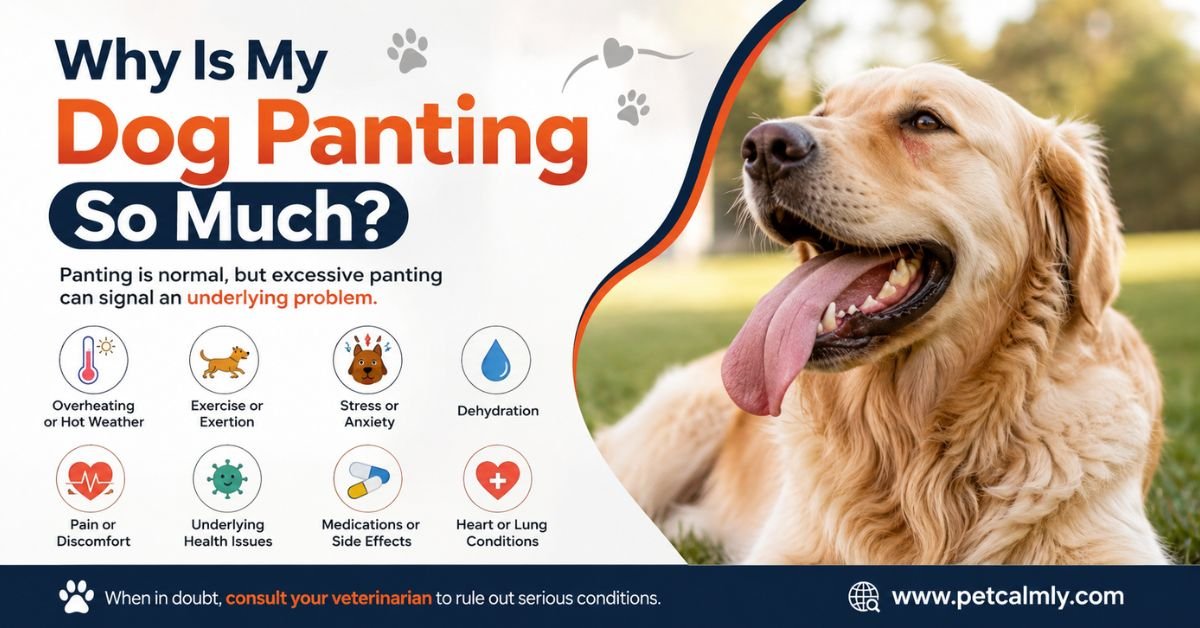
Dogs pant heavily most often because they’re regulating their body temperature panting is how dogs “sweat,” since they only have sweat glands in their paw pads. Heavy panting is usually normal after exercise, in hot weather, or during excitement or stress. But if your dog is panting hard while resting, panting with a closed mouth, or panting alongside symptoms like weakness, pale gums, or restlessness, it can point to pain, heatstroke, heart or lung disease, or another medical issue that needs a veterinarian’s attention.
Introduction
If you’ve been sitting there watching your dog’s sides heave in and out, tongue hanging, chest working overtime and it’s not hot, and they haven’t just chased a squirrel across the yard that uneasy feeling in your stomach makes total sense. Panting is one of those things dogs do so often that it’s easy to tune out, until suddenly it looks different, and you can’t quite explain why it’s bothering you.
Here’s the honest truth: most heavy panting has a simple, harmless explanation. Dogs pant to cool down, they pant when they’re nervous, they pant when they’re thrilled you just picked up the leash. But panting is also one of the few ways dogs can tell us something is wrong, so learning to read the pattern not just the panting itself is one of the most useful skills a dog owner can have.
This guide walks through every common (and uncommon) reason dogs pant heavily, how to tell the difference between “this is normal” and “this needs a vet,” and what you can do right now to help your dog feel more comfortable.
How Dogs Cool Down: Why Panting Happens in the First Place
Unlike humans, dogs can’t cool their whole body through sweat glands across their skin. Their sweat glands are mostly limited to their paw pads, which isn’t nearly enough surface area to regulate body heat. So instead, dogs rely on panting: rapid, shallow breathing that moves air across the moist surfaces of the tongue, throat, and lungs, allowing heat to evaporate and cool the blood flowing through those areas.
This is completely normal dog physiology. According to VCA Animal Hospitals, panting is a dog’s primary method of thermoregulation, and mild-to-moderate panting after activity, in warm weather, or during moments of excitement is expected behavior, not a red flag.
The key isn’t whether your dog pants it’s whether the panting fits the situation, and whether it stops within a reasonable amount of time once the trigger (heat, exercise, excitement) has passed.
Normal Reasons Dogs Pant Heavily
Most panting falls into one of these everyday categories.
Heat and Warm Weather
Even a moderately warm day can trigger noticeable panting, especially in thick-coated breeds or dogs who’ve been in direct sun. This is your dog’s cooling system doing exactly what it’s supposed to do.
Exercise and Playtime
A good run, a game of fetch, or an energetic play session with another dog will naturally speed up breathing. This kind of panting should ease within 10–20 minutes of rest, depending on your dog’s fitness level and the intensity of the activity.
Excitement or Anticipation
Some dogs pant when they’re thrilled — the doorbell rings, you grab the car keys, a favorite person walks in. This is an adrenaline response, similar to how a person’s heart might race before something exciting.
Stress or Anxiety
Panting is also a common stress signal. Vet visits, thunderstorms, fireworks, car rides, or being left alone can all trigger anxious panting, often paired with pacing, lip licking, yawning, or trembling.
Age-Related Changes
Senior dogs sometimes pant more simply because their bodies work harder to regulate temperature and manage minor aches, or because age-related conditions (discussed below) become more common later in life.
When Heavy Panting Signals a Medical Problem
This is the part most owners actually came here for how to tell when panting has crossed from “normal dog behavior” into “something’s not right.”
Pain or Discomfort
Pain is one of the most overlooked causes of unexplained panting. A dog with an injury, arthritis, an upset stomach, or an internal issue may pant persistently because their body is under physical stress, even if nothing looks visibly wrong. Watch for other pain signals: reluctance to jump or climb stairs, restlessness, panting that worsens at night, or a hunched posture.
Heatstroke (Medical Emergency)
Heatstroke happens when a dog’s body temperature rises to dangerous levels and their cooling systems can’t keep up. It progresses quickly and can be fatal without prompt treatment.
Signs of heatstroke include:
- Frantic, heavy panting that doesn’t ease with rest
- Bright red or purple gums
- Thick, ropey drool
- Vomiting or diarrhea
- Wobbly legs or collapse
- Confusion or glazed eyes
According to the American Veterinary Medical Association (AVMA), heatstroke is a true emergency requiring immediate veterinary care, and flat-faced (brachycephalic) breeds like Bulldogs, Pugs, and Boxers are at significantly higher risk because their airway shape already limits efficient cooling.
Heart Disease
Dogs with underlying heart conditions may pant more than usual because their heart isn’t circulating blood — and oxygen — as efficiently as it should. This panting often happens at rest, may worsen when lying down, and can be paired with a persistent cough, tiring quickly on walks, or a bluish tinge to the gums in severe cases.
Respiratory or Airway Issues
Conditions affecting the lungs, throat, or windpipe — including laryngeal paralysis, collapsing trachea, or pneumonia — can all cause labored, heavy breathing that looks like panting but is really the dog working hard to get enough air.
Cushing’s Disease
Cushing’s disease, caused by excess cortisol production, is a well-documented cause of chronic panting in middle-aged and senior dogs. It’s often paired with increased thirst, increased urination, a pot-bellied appearance, and thinning fur. The Merck Veterinary Manual lists panting as one of the classic early symptoms owners notice.
Poisoning or Toxin Exposure
Certain toxins — including some human medications, chocolate, xylitol, and specific plants — can cause rapid breathing or panting as part of a broader toxic reaction. This is usually accompanied by vomiting, tremors, drooling, or disorientation, and requires emergency veterinary attention.
Fever or Infection
A dog fighting off an infection may pant as their body temperature rises, similar to how a person might feel hot and breathe faster with a fever.
Normal Panting vs. Concerning Panting: A Quick Comparison
| Sign | Usually Normal | Worth a Vet Call |
|---|---|---|
| Timing | After exercise, heat, or excitement | At rest, at night, or with no clear trigger |
| Duration | Settles within 15–20 minutes | Continues for an hour or more |
| Mouth | Open, relaxed, tongue loose | Tight, wide, or panting with mouth barely open |
| Gum color | Pink and moist | Pale, blue, brick-red, or purple |
| Behavior | Otherwise acting normal | Restless, weak, wobbly, or withdrawn |
| Sound | Quiet, rhythmic | Raspy, wheezy, or noisy breathing |
Medications That Can Cause Increased Panting
If your dog has recently started a new medication and the panting began around the same time, the drug itself may be the reason — not a new underlying illness. Some common examples:
- Corticosteroids (like prednisone) are well known for increasing thirst, appetite, and panting as a side effect.
- Pain medications in certain classes can affect breathing patterns temporarily.
- Sedatives or anesthesia recovery can cause grogginess paired with panting for a day or two after a procedure.
If panting shows up shortly after starting a new medication, don’t stop it on your own call your vet to ask whether it’s an expected side effect or something to monitor more closely..
Breed-Specific Panting Patterns Worth Knowing
Different builds and coat types affect how and how often dogs pant:
- Brachycephalic breeds (Pugs, French Bulldogs, Boston Terriers, Bulldogs, Boxers): Their shortened airways make panting less efficient at cooling them down, so they tend to pant more heavily and more often, even with light activity.
- Thick or double-coated breeds (Huskies, Malamutes, Golden Retrievers): These dogs can overheat faster in warm climates than their coat’s appearance suggests, especially if shaved incorrectly, which can actually interfere with their natural insulation and cooling.
- Small and toy breeds: Often pant more visibly simply because their breathing rate is naturally faster than large dogs.
- Large and giant breeds: More prone to heart-related panting later in life, given the added strain on the cardiovascular system.
Knowing your own dog’s “baseline” — how much they normally pant after a walk, in your climate, at their fitness level — makes it much easier to notice when something shifts.
How Vets Diagnose the Cause of Excessive Panting
If you bring your dog in for evaluation, don’t be surprised if your vet asks detailed questions before running tests the pattern of panting itself is diagnostically useful. They’ll typically ask about:
- When the panting started and how it’s changed over time
- Whether it happens at rest, during activity, or both
- Any recent changes in appetite, thirst, weight, or energy
- Current medications or recent illnesses
- Whether other symptoms (coughing, limping, accidents in the house) have appeared alongside it
From there, a physical exam, bloodwork, chest X-rays, or an ECG may be recommended depending on what your vet suspects. This is why keeping a simple log of when panting happens — and what else you’ve noticed — can genuinely speed up getting an accurate answer.
What Panting Looks Like at Different Ages
Puppies tend to pant during and right after high-energy play, and their bodies cool down fairly quickly once they rest. Persistent panting in a puppy that isn’t linked to activity is worth mentioning to your vet, since puppies can also overheat faster than adult dogs.
Adult dogs generally show the most predictable panting patterns tied to exercise, heat, and excitement, which makes it easier to notice when something is off.
Senior dogs are more likely to develop the underlying conditions above arthritis, heart disease, Cushing’s disease so unexplained panting in an older dog deserves a bit more attention, even if it seems mild.
A Real-World Example
Picture a dog owner whose 9-year-old Labrador starts panting heavily most evenings, even after a quiet day indoors. At first, it’s easy to assume the dog is just warm or restless. But when the panting starts happening during naps, and the dog seems a little slower to get up, that pattern panting at rest, combined with a behavior change is exactly the kind of shift that’s worth a veterinary check-up rather than waiting it out. In cases like this, early diagnosis (for something like early heart disease or arthritis pain) often leads to much simpler, more comfortable treatment than catching it later.
When Should You Worry? Red Flags That Need Immediate Attention
Contact your veterinarian promptly or head to an emergency vet if panting is paired with any of the following:
- Pale, blue, purple, or brick-red gums
- Collapse, stumbling, or extreme weakness
- Panting that doesn’t slow down after rest and cooling
- Vomiting, diarrhea, or visible distress
- A swollen or hard abdomen
- Difficulty standing or noisy, labored breathing
- Known exposure to heat, a toxin, or a recent injury
Heatstroke and severe breathing distress can escalate within minutes, so when in doubt, it’s always safer to call your vet or an emergency animal hospital rather than waiting to see if it passes.
What Should Pet Owners Do? A Practical Action Plan
- Move your dog to a cool, shaded, or air-conditioned space if heat could be a factor.
- Offer fresh, cool water — but don’t force them to drink if they’re distressed.
- Check gum color by gently lifting the lip; healthy gums are pink and moist.
- Note what came before the panting — exercise, heat, a stressful event, or nothing at all.
- Time it. If panting hasn’t eased within 20–30 minutes of rest and cooling, that’s a signal to call your vet.
- Avoid ice-cold water or ice baths for suspected heatstroke — rapid temperature drops can cause additional complications; use cool (not freezing) water and contact a vet immediately instead.
- Keep a symptom log if panting has become a recurring pattern, noting time of day, activity level, and any other symptoms — this is genuinely useful information for your vet.
Prevention: Helping Your Dog Pant Less (When It’s Excessive)
- Avoid exercising during peak heat. Early morning or evening walks are safer in warm months.
- Provide constant access to water, especially outdoors or during travel.
- Watch brachycephalic breeds closely, since their airway shape makes overheating and labored breathing more likely even in mild heat.
- Keep up with regular vet checkups, particularly for senior dogs, since many panting-related conditions (heart disease, Cushing’s, arthritis) are far easier to manage when caught early.
- Support anxious dogs with calming routines — consistent structure, safe spaces, and gradual desensitization to known triggers like storms or car rides can meaningfully reduce stress-related panting over time.
- Never leave dogs in parked cars, even briefly, even with windows cracked — temperatures inside a car can climb to dangerous levels within minutes.
Conclusion
Panting is one of the most normal things a dog does but it’s also one of the clearest windows into how they’re feeling, physically and emotionally. Most of the time, heavy panting simply means your dog is warm, worn out from play, or riding a wave of excitement, and it’ll settle on its own. The times to pay closer attention are when panting shows up without an obvious reason, doesn’t ease with rest, or comes bundled with other changes like pale gums, weakness, or a shift in your dog’s usual energy.
You know your dog’s normal better than anyone else. Trusting that instinct and calling your vet when something feels off is often the single most protective thing you can do for them.
More Information About Pets, Please Visit Our Website: Why Do Dogs Shake Their Bodies
Why Dogs Lick You So Much
Frequently Asked Questions
1: Why is my dog panting so much at night?
Nighttime panting can be caused by a warm bedroom, anxiety, discomfort from arthritis, or in older dogs, early signs of heart disease. If it’s a new pattern, it’s worth mentioning at your next vet visit.
2: Why is my dog panting and not settling down?
Restless panting that won’t settle is often linked to stress, pain, or overheating. If your dog also seems unable to get comfortable, pacing, or whining, treat it as a sign to check in with your vet rather than assuming it will pass.
3: Is heavy panting normal after a short walk?
Mild panting after a short walk is normal, especially in warm weather. However, if a dog is winded and panting hard after minimal activity compared to their usual stamina, it can indicate a heart, lung, or weight-related issue worth discussing with your vet.
4: Can anxiety alone cause heavy panting in dogs?
Yes. Anxiety is a very common and well-recognized cause of panting, often paired with pacing, drooling, lip licking, or clinginess. Identifying and managing the specific trigger whether it’s storms, separation, or car travel usually helps reduce it over time.
5: When should I take my dog to the vet for panting?
See a vet if panting happens at rest with no clear cause, lasts longer than 20–30 minutes without easing, or comes with symptoms like pale gums, weakness, vomiting, or collapse. When in doubt, it’s always better to get it checked.
6: Do certain dog breeds pant more than others?
Yes. Flat-faced (brachycephalic) breeds like Pugs, Bulldogs, and Boxers tend to pant more heavily and are more prone to overheating because their airway shape makes efficient cooling harder, even in mild heat.