Short direct answer
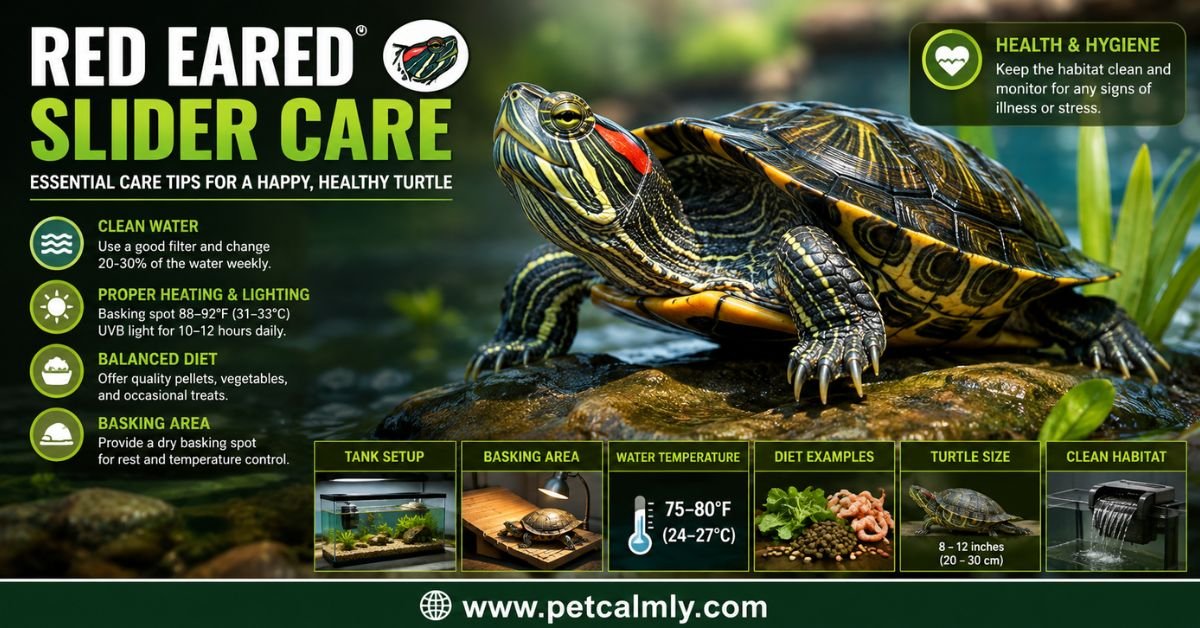
Red eared slider care means providing a tank of at least 75–100 gallons for one adult turtle, a basking area heated to 85–95°F under UVB lighting, clean filtered water kept around 75–78°F, and a varied diet of turtle pellets, leafy greens, and occasional protein. Sliders are messy, long-lived (20–40 years), and grow to 8–12 inches, so most beginner problems come from undersized tanks, missing UVB, and poor diet not from the turtle itself.
If you just brought home a red-eared slider, or you’re rescuing one from a friend who “didn’t realize how big they’d get,” you’re not alone. It’s one of the most common turtle-ownership stories out there. These turtles are sold small and inexpensive, which makes them feel like a low-commitment pet. They’re not. A healthy slider can outlive a family dog by decades, and the setup mistakes people make in month one are often what cause shell problems, respiratory infections, or stunted growth years later.
This guide walks through everything a red-eared slider actually needs not just the bare minimum to keep it alive, but what it takes for the turtle to genuinely thrive. We’ll cover tank setup, water quality, heating and lighting, diet, growth stages, common health warning signs, and the mistakes that trip up almost every new owner.
What Is a Red-Eared Slider and Why Does Their Care Get Underestimated?
Red-eared sliders (Trachemys scripta elegans) are freshwater turtles native to the southern United States, easily recognized by the red stripe behind each eye. They’re the most commonly kept pet turtle in the world, which is exactly why so much bad advice circulates about them the small plastic tanks and tiny “turtle islands” sold in pet stores are built for a hatchling the size of a quarter, not the 8–12 inch adult that turtle will become within a few years.
The underestimation usually comes from three things: sliders are cheap to buy, they look self-sufficient floating in a small bowl, and their needs aren’t obvious the way a dog’s or cat’s are. A turtle won’t whine at the door or refuse to eat right away when something’s wrong by the time you notice a problem, it’s often already been developing for weeks.
Understanding this upfront changes how you approach setup. You’re not building a temporary tank for a small pet. You’re building permanent housing for an animal that may still be alive when your kids are in college.
How Big of a Tank Does a Red-Eared Slider Actually Need?
The standard rule among experienced keepers is 10 gallons of water per inch of shell length, with a hard minimum of 75–100 gallons for a single adult. A hatchling can start smaller, but sliders grow fast often reaching 4–6 inches within their first two years so buying “adult-sized” housing early saves you from replacing tanks every few months.
A few practical notes on sizing:
- Length matters more than depth. Sliders need horizontal swimming space, not a tall, narrow column of water.
- Water depth should allow full swimming. As a rough guide, depth equal to at least 1.5–2 times the turtle’s shell length gives room to dive and turn comfortably.
- Multiple turtles need more than double the space. Sliders can be territorial, especially males, and cramped housing increases stress-related aggression and shell-rubbing injuries.
Stock tanks, large plastic tots, and custom-built plywood ponds are all common alternatives to glass aquariums once a slider outgrows standard tank sizes, and they’re often more affordable per gallon.
Setting Up the Basking Area, Heat, and UVB Lighting
This is the section most beginner setups get wrong, and it’s also the one most connected to long-term shell and bone health.
Why Basking and UVB Aren’t Optional
Sliders are ectothermic they can’t regulate their own body temperature and they also need UVB light to produce vitamin D3, which their body uses to absorb calcium. Without adequate UVB, even a turtle eating a perfect diet can develop metabolic bone disease, which softens and deforms the shell over time. This isn’t a maybe; it’s one of the most well-documented health issues in captive turtles, and it’s entirely preventable with correct lighting.
Basking Platform Setup
- The basking spot should sit completely out of the water and be large enough for the turtle to fully leave the pool.
- Basking surface temperature: 85–95°F, measured with a digital thermometer or temp gun, not guessed.
- A ceramic heat emitter or basking bulb provides the heat; a separate UVB bulb (5.0 or 10.0 strength, reptile-specific) provides the light. These are two different fixtures — a heat bulb alone does not produce UVB.
- UVB bulbs lose effective output long before they visibly stop working. Most need replacing every 6–12 months even if the bulb still lights up.
- Position UVB bulbs 6–12 inches from the basking spot, without glass or plastic in between, since both block UVB rays.
Water Temperature
Water should stay around 75–78°F for adults, slightly warmer (78–80°F) for hatchlings and juveniles. A submersible aquarium heater with a guard (to prevent shell damage or burns) keeps this stable. Sudden temperature swings stress the turtle’s immune system and are a common trigger for respiratory infections.
Water Quality and Filtration: The Part Beginners Skip
Sliders eat and defecate in the same water they swim in, and they’re notoriously messy eaters. Without strong filtration, ammonia and bacteria build up fast, leading to shell rot, eye infections, and skin irritation.
A practical filtration setup:
- Oversize the filter. Rule of thumb: buy a canister or submersible filter rated for 2–3 times your actual water volume.
- Do partial water changes weekly, even with good filtration filters remove debris, not dissolved waste.
- Feed in a separate container when possible. Moving the turtle to a feeding tub keeps food debris out of the main tank and dramatically cuts down on cleaning frequency.
- Test water occasionally if you notice cloudiness, odor, or the turtle rubbing its eyes these are early signs water quality has slipped.
Clear water isn’t the same as clean water. Ammonia and nitrite are invisible, so relying on “it looks fine” is one of the most common ways owners miss a slowly worsening problem.
What Do Red-Eared Sliders Eat? A Practical Feeding Guide
Sliders are omnivores, and their diet needs shift as they age hatchlings need more protein for growth, while adults need more plant matter.
| Life Stage | Diet Ratio (Protein : Plant) | Feeding Frequency |
|---|---|---|
| Hatchling (0–2 yrs) | 60% protein / 40% plant | Daily |
| Juvenile (2–4 yrs) | 50/50 | Every 1–2 days |
| Adult (4+ yrs) | 20–25% protein / 75–80% plant | 2–3 times per week |
Good protein sources: high-quality commercial turtle pellets, occasional feeder fish, cooked shrimp, earthworms.
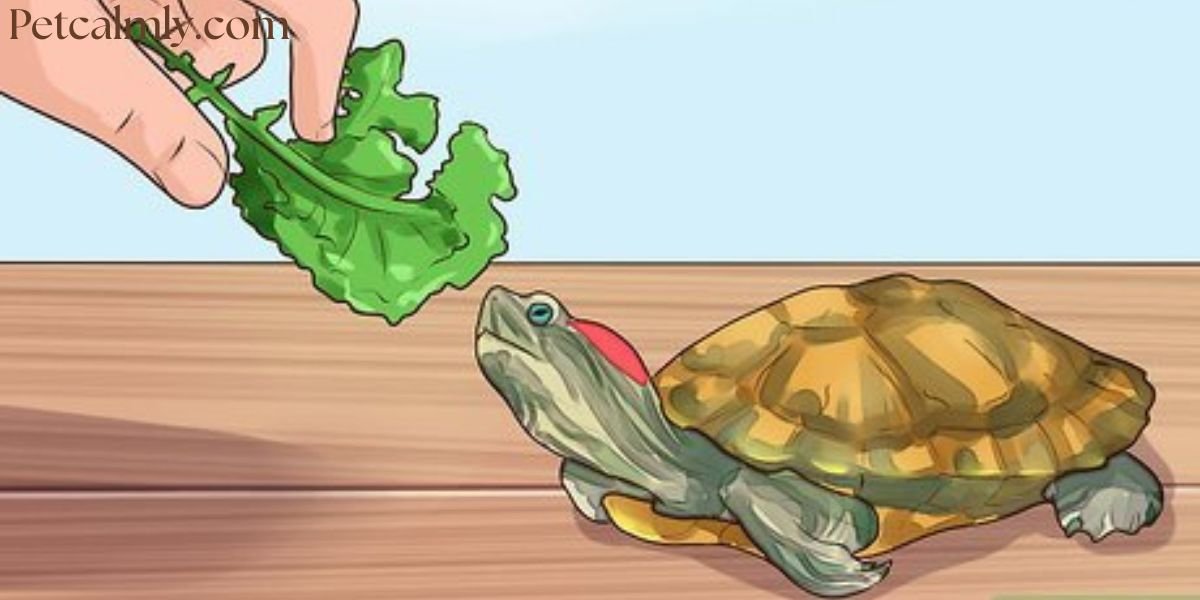
Good plant sources: dark leafy greens like romaine, collard greens, and dandelion greens, along with aquatic plants such as duckweed or water lettuce.
Feed in moderation: treats like freeze-dried krill or mealworms should stay occasional, not a daily staple overfeeding protein is one of the leading causes of pyramiding (raised, bumpy shell growth) and obesity in captive sliders.
A helpful gauge for portion size: offer roughly as much food as would fit in the turtle’s head, and remove uneaten food after 15–20 minutes to keep the water cleaner.
Common Mistakes New Slider Owners Make
Most slider health issues trace back to a handful of repeatable mistakes:
- Buying a small starter tank “for now.” Sliders outgrow these within months, and the temporary setup often becomes permanent because upgrading feels like extra work.
- Skipping UVB or using the wrong bulb type. A basic heat lamp does not replace a UVB bulb — the two do different jobs.
- Overfeeding protein, especially pellets, which are calorie-dense and easy to overdo.
- Not testing or changing water regularly, assuming the filter handles everything.
- Housing multiple sliders together without enough space, leading to fighting, biting, and stress.
- Handling too often. Sliders aren’t a cuddly pet frequent handling stresses them and offers little benefit to the turtle.
None of these mistakes are unusual or a sign of a bad owner they’re just what happens when pet stores sell an underestimated animal without explaining what it actually needs.
When Should You Worry? Warning Signs That Need a Vet
General care habits and daily observation cover most situations, but certain signs point to something that needs professional attention rather than a home fix.
Watch for:
- Swollen or closed eyes, which can indicate a vitamin A deficiency or bacterial infection
- Soft spots on the shell, flaking, or a strong odor possible signs of shell rot or metabolic bone disease
- Floating lopsided or unable to submerge, which can point to a respiratory infection or gas buildup
- Not eating for more than a week (outside of normal brumation behavior in cooler months)
- Visible mouth discharge, wheezing, or gasping, which are classic signs of respiratory illness
- Lethargy paired with a soft shell in a turtle under 2 years old, a common metabolic bone disease pattern
These aren’t situations to wait out. According to the Merck Veterinary Manual, respiratory infections and metabolic bone disease are among the most common conditions seen in captive aquatic turtles, and both respond far better to early treatment than to a wait-and-see approach. A reptile-experienced veterinarian, not a general small-animal vet, is the right call exotic pet care differs enough from cat and dog medicine that it matters who you see.
What Should Pet Owners Do Day to Day?
Once the setup is right, daily and weekly slider care is fairly light:
Daily:
- Quick visual check is the turtle active, eyes clear, basking normally?
- Confirm basking and water temperatures are stable
- Feed according to age-appropriate schedule
Weekly:
- Partial water change (10–25%, more if not using a feeding tub)
- Wipe down basking platform
- Check UVB bulb output date if you track replacement schedules
Monthly:
- Full water quality check if you have test strips
- Inspect shell and skin closely for any changes in color, texture, or growth pattern
This rhythm is what keeps a slider’s environment stable, and stability is what prevents most of the health issues covered above.
Conclusion
Red-eared sliders make genuinely rewarding pets once their setup matches their actual needs which is bigger, brighter, and more involved than most first-time owners expect. The good news is that almost every common problem is preventable with the basics done right: enough space, correct UVB and heat, clean water, and a balanced diet that shifts as your turtle grows. Get those fundamentals in place, and you’re looking at decades with an animal that’s far more personable and alert than people give turtles credit for.
More Information About Pets, Please Visit Our Website: How Often Should I Feed My Turtle?
How to Treat a Sick Turtle at Home Naturally
Frequently Asked Questions
1: How big do red-eared sliders get?
Most adult red-eared sliders reach 8–12 inches in shell length, with females typically growing larger than males. Full size is usually reached between 5–8 years old.
2: Can red-eared sliders live outside a tank, like a pond?
Yes, and in warm climates outdoor ponds are a popular option for adults, provided the pond has secure fencing against predators, a basking area, and enough depth that it won’t freeze solid in winter.
3: Do red-eared sliders need a heat lamp and a UVB bulb, or just one?
Both. A heat lamp/basking bulb provides warmth, while a separate UVB bulb allows the turtle to produce vitamin D3 for calcium absorption. One does not substitute for the other.
4: Why is my red-eared slider not eating?
Occasional appetite dips can be normal, especially during brumation in cooler months or after a tank change. But if a turtle refuses food for more than a week during its active season, or shows other symptoms like lethargy or swollen eyes, it’s worth a vet check.
5: How often should I clean a red-eared slider tank?
With a properly sized filter, partial water changes weekly are typical, alongside spot-cleaning debris as needed. Feeding your turtle in a separate container significantly reduces how often deep cleaning is needed.
6: Can two red-eared sliders live together?
They can, but it requires significantly more space than a single turtle not just double, since territorial behavior and competition for basking spots increase with more turtles in the same tank. Males housed together are more likely to fight than mixed-sex or female pairs.