Short direct answer
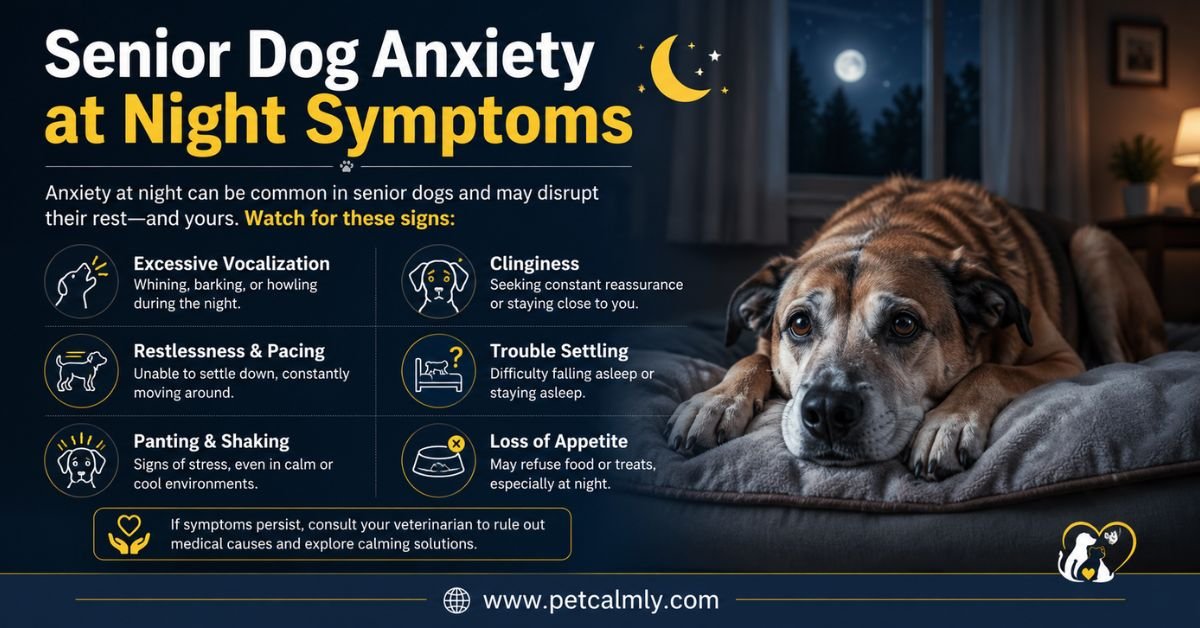
Senior dog anxiety at night symptoms often include pacing, whining, barking, restlessness, panting, confusion, clinginess, frequent waking, accidents indoors, and difficulty settling down. While some older dogs become anxious because of age-related changes, others may have pain, vision loss, hearing problems, cognitive decline, or an underlying medical condition. Identifying the cause early is important because nighttime anxiety is often manageable with environmental changes, routine adjustments, veterinary care, and gentle behavioral support.
Introduction
Few things are more heartbreaking than watching an older dog who used to sleep peacefully suddenly wander the house at night.
Maybe your senior dog paces from room to room. Perhaps they stand staring into corners, bark for no obvious reason, or wake the entire household several times every night.
Many owners assume it’s simply “old age.”
In reality, nighttime anxiety is usually your dog’s way of telling you that something has changed. It may be emotional, physical, or medical. Understanding those changes is the first step toward helping your dog feel safe again.
The encouraging news is that many causes of senior dog anxiety can be improved once they’re identified. Some require simple lifestyle adjustments, while others need veterinary evaluation and treatment.
In this guide, you’ll learn how to recognize senior dog anxiety at night symptoms, understand what may be causing them, know when to seek veterinary care, and discover practical ways to help your aging companion sleep more comfortably.
Common Symptoms of Anxiety in Senior Dogs at Night
Identifying senior dog anxiety at night symptoms is essential for timely support. These signs can vary in intensity, but they often appear consistently after dusk. If your dog exhibits multiple symptoms, it’s a strong indicator of nighttime anxiety. Below, we’ll detail the most common ones, drawing from veterinary observations and pet owner experiences.
Pacing and Restlessness
One of the hallmark senior dog anxiety at night symptoms is relentless pacing. Your older dog might wander aimlessly around the house, unable to settle down. This restlessness can last for hours, with the dog getting up repeatedly even after being guided back to their bed.
Restlessness often stems from confusion or discomfort. For example, a dog with CDS might forget where they are or feel an urge to “patrol” the home. Pet owners describe this as their dog acting like they’re on a mission, circling rooms or standing in corners. If your senior dog is pacing at night, observe if it’s accompanied by heavy breathing or wide-eyed stares these amplify the anxiety signal.

Whining, Barking, or Vocalizing
Excessive vocalization is another key symptom. Your elderly dog may whine softly at first, escalating to barking or howling if ignored. This isn’t attention-seeking; it’s often a cry for reassurance amid feelings of fear or isolation.
Nighttime whining in senior dogs can disrupt the whole household. According to reports from dog forums and vet sites, this behavior peaks around 2-4 a.m., when the house is quietest. It might be linked to separation anxiety, where the dog panics if they’re not in direct contact with you. Variations include trembling while vocalizing, indicating deeper distress.
Panting and Heavy Breathing
Panting without physical exertion is a red flag for anxiety. Senior dogs with nighttime anxiety often pant excessively, even in cool environments. This rapid breathing can be mistaken for overheating, but in anxious dogs, it’s a stress response.
Watch for panting combined with drooling or lip-licking these are calming signals dogs use when overwhelmed. In severe cases, it leads to hyperventilation, making the dog appear dizzy or unsteady. This symptom is particularly common in breeds prone to respiratory issues, like pugs, but it’s widespread in anxious seniors.
Disorientation and Confusion
Disorientation manifests as your dog staring blankly at walls, getting “stuck” in corners, or wandering without purpose. This is a classic sign of cognitive decline and a frequent senior dog anxiety at night symptom.
Elderly dogs might bump into furniture or seem lost in familiar spaces. At night, reduced light worsens this, leading to increased agitation. Owners often note their dogs acting “spacey,” standing still for long periods before resuming pacing. This confusion can also cause accidents, like urinating indoors despite being house-trained.
Shaking, Hiding, or Trembling
Physical tremors or hiding under furniture signal fear-based anxiety. Your senior dog might shake uncontrollably or seek out tight spaces for security, like under the bed or in closets.
This symptom often overlaps with noise sensitivity, where distant sounds trigger panic. Trembling can be subtle at first but intensify, making the dog avoid eye contact or cower. It’s heartbreaking to witness, but recognizing it helps you intervene with comforting measures.
Changes in Sleep Patterns and Increased Urination
Senior dogs with anxiety may sleep more during the day and wake frequently at night, inverting their sleep cycle. This leads to exhaustion for everyone involved.
Frequent urination or accidents at night can stem from anxiety-induced stress on the bladder. It’s not always a UTI sometimes, the dog is too anxious to hold it or signals urgently. Monitoring these patterns is key to distinguishing anxiety from medical issues.
Other less common symptoms include excessive licking (of paws or objects), chewing on furniture, or attempting to escape the room. If your dog shows any combination of these, document them for your vet. Early detection of older dog restlessness at night can prevent escalation.
Causes of Nighttime Anxiety in Elderly Dogs
Understanding the root causes of senior dog anxiety at night symptoms is vital for effective management. Several factors contribute, often intertwined.
Cognitive Dysfunction Syndrome (CDS) tops the list. Similar to Alzheimer’s in humans, CDS affects brain function, leading to sundowning worsened symptoms at night. Dogs with CDS experience memory loss, altered sleep, and heightened anxiety.
Pain and discomfort from conditions like arthritis or hip dysplasia can make nights unbearable. Dogs may not show pain during the day but become restless when lying down for long periods.
Sensory decline, such as vision or hearing loss, heightens vulnerability at night. A dog that can’t see well might perceive shadows as threats, sparking anxiety.
Environmental stressors, like thunderstorms, fireworks, or household changes, can trigger episodes. Separation anxiety intensifies if the dog feels isolated from family.
Hormonal imbalances, thyroid issues, or medications can also play a role. In some cases, it’s a combination e.g., a dog with CDS aggravated by joint pain.
Addressing causes requires a holistic approach, starting with a vet check-up to rule out treatable conditions.
Differentiating Anxiety from Other Health Issues
Not all nighttime restlessness is anxiety. It’s crucial to differentiate to avoid misdiagnosis.
For instance, frequent urination might indicate a urinary tract infection rather than stress. Pain-related pacing could stem from orthopedic problems, not cognitive issues.
Symptoms overlapping with anxiety include those from heart disease (panting), neurological disorders (disorientation), or even brain tumors (rare but serious).
Observe patterns: Anxiety often improves with comfort, while medical issues persist. Keep a journal of symptoms, triggers, and duration. This aids your vet in accurate diagnosis, possibly involving blood tests or imaging.
Tips to Soothe Your Senior Dog’s Nighttime Anxiety
Helping your dog manage senior dog anxiety at night symptoms involves simple, effective strategies.
Establish a consistent routine: Regular bedtime walks, meals, and playtime signal safety.
Create a calming environment: Use nightlights, white noise machines, or pheromone diffusers to reduce sensory overload.
Provide comfort items: Orthopedic beds, anxiety wraps (like ThunderShirts), or CBD treats (vet-approved) can ease tension.
Increase daytime activity: Gentle exercise tires them out, promoting better sleep.
Consider supplements: Melatonin or L-theanine, under vet guidance, helps regulate sleep.
For severe cases, medications like anti-anxiety drugs or Selegiline for CDS may be prescribed.
Incorporate massage or cuddling sessions before bed to build security. Avoid punishment it worsens anxiety.

When to Consult a Veterinarian
If symptoms persist or worsen, seek professional help. Signs warranting immediate attention include sudden onset, weight loss, or lethargy.
Your vet can diagnose underlying issues and recommend tailored treatments, from behavioral therapy to medication.
Regular check-ups for seniors prevent problems from escalating.
More Information About Pets, Please Visit Our Website: Petcalmly.com
Conclusion
Dealing with senior dog anxiety at night symptoms can be challenging, but with awareness and action, you can significantly improve your dog’s comfort. From recognizing pacing and whining to addressing causes like CDS or pain, this guide covers the essentials for better nights. Remember, your elderly dog’s well-being depends on your attentiveness early intervention makes all the difference. By implementing routines, environmental tweaks, and vet advice, you’ll help your furry friend age gracefully. If symptoms align with what you’ve read, consult a professional for personalized care. Your senior dog deserves peaceful slumbers in their twilight years.
(FAQs)
1. What are the first signs of senior dog anxiety at night?
The earliest signs often include mild restlessness, whining, or pacing. These can progress to more intense behaviors like panting or disorientation if unaddressed.
2. Can senior dog anxiety at night be caused by dementia?
Yes, Cognitive Dysfunction Syndrome (CDS) is a common cause, leading to sundowning where symptoms worsen after dark due to cognitive decline.
3. How can I calm my older dog’s nighttime anxiety naturally?
Try establishing a bedtime routine, using calming aids like pheromone diffusers, and providing a cozy, well-lit sleeping area. Gentle exercise during the day also helps.
4. Is panting a normal symptom of anxiety in elderly dogs at night?
Panting can indicate anxiety, especially if unexplained by heat or activity. However, it might also signal pain or respiratory issues, so monitor closely.
5. When should I take my senior dog to the vet for nighttime anxiety symptoms?
Visit the vet if symptoms last more than a few nights, involve accidents, or include physical changes like trembling or loss of appetite.
6. Are there medications for senior dog anxiety at night?
Yes, vets may prescribe anti-anxiety meds, antidepressants, or CDS-specific drugs like Selegiline. Always combine with behavioral strategies for best results.