Short direct answer
Cats purr primarily as a self-soothing mechanism and a way to communicate contentment, but it’s far more complex than that. While most people associate purring with happiness, cats actually purr for multiple reasons including stress relief, pain management, and maternal bonding. The purring sound comes from your cat’s larynx (voice box) vibrating rapidly as they breathe, creating that distinctive rumbling that many cat owners find irresistible to hear and feel.
Why Do Cats Purr: The Full Picture
When you hear your cat purring on your lap, you’re experiencing one of the most comforting sounds in pet ownership. Yet that gentle rumble is far more meaningful than most people realize. Understanding why cats purr can deepen your bond with your cat and help you recognize when something might need your attention.
The truth is, purring isn’t a single communication. It’s your cat’s version of a complex language with multiple dialects. Some purrs mean pure bliss. Others are your cat asking for dinner. And yes, some cats even purr when they’re scared or in pain. Once you understand the different reasons behind purring, you’ll start noticing patterns in your own cat’s behavior that might surprise you.
The Science of Purring: How It Actually Works
Your cat’s purr is a mechanical marvel that happens inside their throat. When your cat is relaxed and content, their brain sends signals to the laryngeal muscles the muscles surrounding the voice box. These muscles contract and relax rapidly, typically between 25 and 150 times per second. As your cat breathes in and out, this muscular vibration creates the distinctive purring sound.
Here’s what makes it even more interesting: your cat doesn’t need vocal cords to purr. The sound comes from the hyoid bone (a small U-shaped bone in the neck) vibrating along with the laryngeal muscles. This is why big cats like lions and tigers can purr despite their roaring capabilities, though it’s less audible than a domestic cat’s purr.
The vibration travels through your cat’s body, and when your cat is sitting on your lap, you feel those vibrations through your hands and legs. That physical sensation is real—it’s not your imagination. Some cat owners describe it as feeling like their cat is running an internal motor, which is a surprisingly accurate comparison.
Not every cat purrs with the same intensity. Some cats are quiet purrers, barely audible unless you’re right next to them. Others sound like small motorcycles. Personality, breed, and individual biology all play a role. Siamese and Oriental breeds tend to be vocal purrers, while some cats are naturally quieter communicators. If your cat doesn’t purr much, it doesn’t necessarily mean anything is wrong it’s just their communication style.
The Real Reasons Cats Purr (It’s Not Just Happiness)
Cats Purr When They’re Content and Relaxed
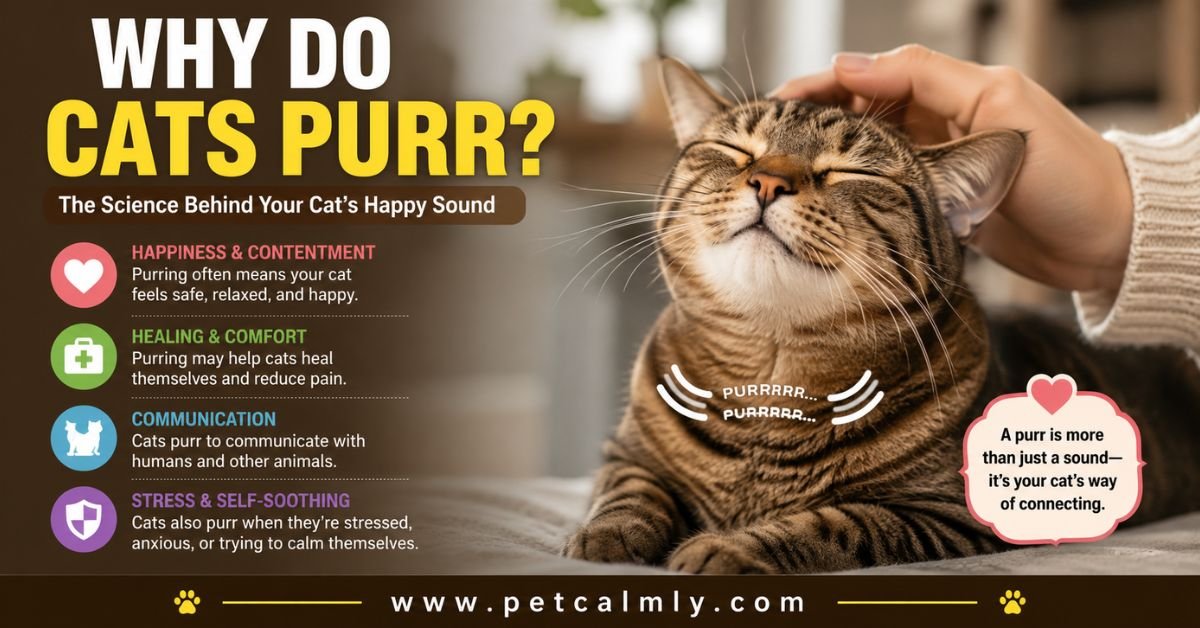
The most common reason your cat purrs is simple: they feel good. When your cat is settled on your lap, getting gentle strokes behind the ears, or lounging in a sunny window, they’re purring because the moment feels pleasant. This is the purr most owners recognize and love. It’s relaxed, steady, and often accompanied by slow blinks or kneading paws.
These contentment purrs tend to be quieter and more rhythmic than other types. You might notice your cat’s eyes half-closing or their body becoming limp both signs of genuine relaxation. This is what many cat owners describe as their cat’s “happy place.”
Cats Purr to Self-Soothe During Stress
This might surprise you: cats often purr when they’re anxious, afraid, or stressed. This isn’t contradiction it’s a coping mechanism. When your cat is at the vet’s office, sitting in a cat carrier, or during a thunderstorm, some cats will purr despite being clearly uncomfortable. They’re not happy. They’re using the vibration and the sound of their own purr to calm their nervous system.
Think of it like how humans might hum or talk to themselves when nervous. Your cat’s purr serves a similar function—it’s self-directed comfort. The vibrations may even have a mild self-soothing effect on the nervous system. If your cat purrs during stressful situations, they’re actually doing something smart: attempting to regulate their own emotional state.
Cats Purr to Communicate Hunger and Demands
Listen closely the next time your cat purrs before their mealtime. Many cat owners notice their cat’s “demand purr” sounds different from their content purr. It’s often louder, more insistent, and may have a slightly different pitch. Some research suggests cats have learned to mimic the cry of human babies in this demanding purr—and it might actually be working on us.
Your cat isn’t necessarily happy when they’re “purring” at you to refill their food bowl. They’ve figured out that this sound gets your attention and gets results. It’s communication, pure and simple. If you listen closely, this purr often stops once they get what they wanted, unlike the steady purring that comes from genuine contentment.
Mother Cats Purr to Bond With Kittens
A nursing mother cat purrs continuously while her kittens feed. This maternal purring serves multiple purposes: it soothes the kittens, helps them find her when they’re lost, and may even encourage them to nurse more effectively. Kittens purr back to their mother as early as two days old, creating a reciprocal communication system that strengthens the bond.
If you bottle-feed kittens, paying attention to how mother cats use purring can help you understand what the kittens need. The consistent purring tells them they’re safe and cared for.
Cats Purr When They’re Injured or Ill
One of the most important facts cat owners should know: cats sometimes purr when they’re in pain or feeling sick. This isn’t because they’re happy it’s because purring may have a healing function. The vibrations generated by purring have been studied for their potential benefits to muscle and bone recovery.
Some research suggests that the frequency of a cat’s purr (25-150 Hz) might stimulate muscles and bones, potentially promoting healing. While this isn’t a substitute for veterinary care, it might explain why cats purr when they’re not feeling well. Their body might be attempting to self-heal through vibration therapy.
If your usually quiet cat starts purring excessively, or your typically social cat is purring but acting withdrawn or not eating normally, this could signal an underlying health issue. Pay attention to the context, not just the sound.
What Different Types of Cat Purrs Really Mean
Not all purrs sound the same, and experienced cat owners learn to distinguish between them.
The Soft, Steady Purr: This is the classic contentment purr. It’s quiet, rhythmic, and usually accompanied by relaxation signals. Your cat feels safe and comfortable.
The Loud, Demanding Purr: Louder and more intense, this purr often happens at feeding time or when your cat wants something specific. It’s less about emotion and more about communication your cat is asking for something.
The Stuttering or Broken Purr: Some cats produce a purr that sounds like it’s interrupted or stuttering. This often occurs in cats who are very excited to see you or greeting you after you’ve been away. It can be a more emotional, enthusiastic version of the content purr.
The Silent Purr: Some cats appear to purr without making much sound. You might feel the vibration and see their mouth moving, but hear almost nothing. This is normal for some cats and doesn’t indicate a problem it’s just their communication style. Older cats sometimes develop quieter purrs too.
Common Myths About Cat Purring
Myth: Cats Only Purr When They’re Happy
The Reality: As we’ve covered, cats purr for multiple reasons comfort, stress relief, healing, communication, and more. Purring is one tool in your cat’s communication toolkit, not an exclusive sign of happiness. Context matters. Look at your cat’s body language, ear position, and behavior alongside the purring.
Myth: A Purring Cat Is Always Safe to Pet
The Reality: While many cats purr when they enjoy being petted, some cats will purr and then bite or swat moments later. This isn’t the cat being mean it’s often a sign of overstimulation or that the cat has reached their petting limit. If a cat’s purr is accompanied by a twitching tail, flattened ears, or sudden rigidity, they might be reaching their threshold for physical interaction.
Myth: Cats Purr Because They Have a “Motor”
The Reality: This is charming but inaccurate. Cats purr because of rapid muscular contractions in the larynx, not because they’re built like a mechanical device. Understanding the real mechanism helps you appreciate just how sophisticated your cat’s communication system actually is.
Myth: If Your Cat Doesn’t Purr, They Don’t Love You
The Reality: Some cats simply don’t purr much, and that’s completely normal. Just like humans have different love languages, cats express affection differently. A cat who doesn’t purr but brings you gifts, slowly blinks at you, or rubs against you regularly is showing love through other means.
Myth: Purring Means Your Cat’s Trachea Is Blocked or Damaged
The Reality: Normal purring indicates a healthy larynx. If your cat starts purring differently suddenly much louder, with a strained sound, or accompanied by difficulty breathing that could signal a health issue worth discussing with your vet. But standard purring is a sign of a functioning voice box.
Why Your Cat’s Purring Pattern Matters
Understanding your individual cat’s purring habits creates a baseline for recognizing when something changes. Just like humans have unique voices, cats have unique purring signatures. Some cats are natural chatterers who purr frequently and loudly. Others are minimalist communicators.
Tracking your cat’s normal purring pattern helps you notice:
- Changes in frequency (purring much more or much less than usual)
- Changes in sound quality (sounds strained, unusual, or distressed)
- Changes in context (purring in situations where they normally wouldn’t)
- Changes in trigger (what causes their purring shifts)
Any significant change in your cat’s purring behavior, especially when accompanied by other symptoms like appetite changes, litter box changes, or behavioral shifts, warrants a conversation with your veterinarian.
The Health Benefits of Purring (For Your Cat and You)
The vibrations from your cat’s purr aren’t just pleasant they may have measurable benefits for both your cat and you.
Potential Healing Effects for Your Cat
Research has explored whether purring frequencies might promote muscle and bone healing. The frequency range of cat purring (25-150 Hz) overlaps with frequencies used in therapeutic vibration therapy for humans. While more research is needed, it’s plausible that cats instinctively use purring as a self-healing mechanism during recovery or illness.
This doesn’t mean purring replaces veterinary care—it doesn’t. But it adds another layer to understanding why cats purr even when they’re not feeling well. Their body might be attempting to support healing through vibration.
Calming Effects for You
When your cat purrs on your lap, you’re experiencing measurable stress reduction. Studies have shown that petting a purring cat can:
- Lower blood pressure
- Reduce heart rate
- Decrease cortisol (stress hormone) levels
- Promote feelings of calm and wellbeing
The combination of tactile interaction (petting) and the auditory stimulus (purring) creates a soothing effect that many cat owners describe as therapeutic. This is why “cat therapy” is real the science backs it up.
When Your Cat’s Purring Should Concern You
In most cases, cat purring is normal and nothing to worry about. However, pay attention to these situations:
Your Cat Is Purring But Acting Sick
If your cat is purring but also showing signs of illness—not eating, lethargic, vomiting, hiding, or acting unusual—the purring might indicate pain or stress rather than contentment. The combination of symptoms matters more than the purring alone.
What to do: Contact your veterinarian, especially if other symptoms persist for more than 24 hours or if your cat seems in distress.
Your Cat Never Purrs (And It’s New)
If your cat used to purr and suddenly stopped, this could indicate a health issue affecting the larynx, stress, or pain. Individual cats vary naturally in how much they purr, but a sudden change warrants attention.
What to do: Have your cat examined by your vet to rule out laryngeal problems or other health concerns.
Your Cat’s Purr Sounds Abnormal
If your cat’s purr has changed quality sounds hoarse, strained, raspy, or like they’re struggling this could indicate a throat or respiratory issue.
What to do: Schedule a veterinary exam. Changes in vocalization can sometimes indicate problems that need professional evaluation.
Your Cat Is Purring Excessively
Some cats purr more than others, but if your cat is purring constantly and intensely, especially paired with behaviors like excessive grooming or other stress signals, they might be experiencing anxiety.
What to do: Assess your cat’s environment for stressors and consider whether changes in routine or environment might be affecting them. If excessive purring persists, discuss it with your vet to rule out pain or medical issues.
How to Encourage Healthy Purring in Your Cat
Most cat owners want to hear their cat’s purr not because we’re selfish, but because it signals contentment and bonding. Here’s how to create an environment where your cat feels relaxed enough to purr:
Create a calm, predictable routine. Cats purr more readily when they feel safe and when their environment is consistent. Regular feeding times, play sessions, and quiet rest periods help.
Respect your cat’s petting boundaries. Many cats will purr more readily if you understand their petting preferences. Some cats love vigorous petting; others prefer gentle strokes. Pay attention to your cat’s body language and stop before overstimulation sets in.
Offer comfortable spaces. Cats purr more when they’re physically comfortable. Provide soft beds, sunny window perches, or cozy spots where your cat can relax fully.
Allow your cat to initiate interaction. A cat who chooses to come sit with you will purr more readily than one who feels forced into interaction. Encourage your cat’s autonomy in the relationship.
Understand individual differences. Not every cat is a frequent purrer, and that’s okay. Some cats show affection through other behaviors slow blinks, head rubbing, being nearby. Those are equally valid communication styles.
What If Your Cat Doesn’t Purr Much?
Some cat owners worry if their cat doesn’t purr frequently or loudly. It’s important to know that not all cats are enthusiastic purrers, and this doesn’t indicate a problem or lack of affection.
Reasons why some cats purr less:
- Genetics and personality: Some cats are simply quieter communicators. Certain individual cats and even some breeds tend to be less vocal.
- Early life experiences: Kittens who weren’t around other purring cats during their early weeks might not develop robust purring behaviors.
- Health status: Senior cats sometimes develop quieter purrs. This is normal aging.
- Comfort level: Some cats only purr in very specific situations or with certain people they trust most.
- Different communication style: Your cat might show affection through other means following you around, slow blinks, head rubbing, or sitting near you.
If your cat doesn’t purr much but otherwise seems healthy, happy, and engaged with you, there’s nothing to worry about. Every cat communicates differently.
More Information About Pets, Please Visit Our Website: Why Do Cats Knead?
Can Cats Eat Eggs?
Can Cats Eat Tuna?
Frequently Asked Questions
1: Why does my cat purr when I pick her up, then bite me moments later?
A: This common behavior usually indicates overstimulation or that your cat has reached their tolerance limit for physical handling. Cats have a sensory threshold petting feels good up to a point, then the sensation becomes irritating. The purring indicates they were content initially, but the biting signals they’re done. Some cats also bite as a communication method to say “that’s enough.” Watch for warning signs like a twitching tail or ears turning back, and put your cat down before they reach that frustration point.
2: My cat purrs really loudly when the doorbell rings or when there’s a thunderstorm. Is she scared?
A: Yes, she’s likely using purring as a self-soothing mechanism during stress. The loud purring doesn’t mean she’s happy it’s her nervous system attempting to calm itself. You can help by providing a safe space, staying calm yourself (cats pick up on our tension), and not forcing interaction. Some cats also vocalize more when anxious, so a loud purr during stressful situations is normal stress-response behavior.
3: Can a cat purr while they’re swallowing or eating?
A: Most cats pause purring while actively swallowing or eating because those actions involve the larynx and throat. However, some cats will purr right before or immediately after eating, especially if they’re happy about their meal or associating you with feeding time. If you notice your cat purring while actively eating, it’s likely stopping and starting rather than continuous.
4: Why does my senior cat’s purr sound different now?
A: As cats age, their voice and purr can change naturally, just like human voices change with age. This is normal. However, if the change happens suddenly or is accompanied by other symptoms (difficulty swallowing, coughing, voice hoarseness that extends to meowing), mention it to your vet to rule out age-related health concerns.
5: Is it normal for a cat to purr nonstop for hours?
A: While some cats are naturally frequent purrers, continuous purring for extended periods could indicate stress, pain, or attention-seeking behavior. Assess the context: Is your cat otherwise healthy and active, or are there other signs something might be off? If your cat’s purring pattern represents a significant change from their normal behavior, or if it’s paired with other symptoms, schedule a vet check to rule out issues.
6: My kitten barely purrs. Will she develop a stronger purr as she grows?
A: Not necessarily. Kittens’ purrs are often quieter than adult cats’ purrs, partly because they have smaller larynxes. Some kittens develop louder purrs as they grow, while others remain quieter throughout their lives. This is about individual personality and physiology. If your kitten is otherwise healthy and developing normally, a quiet purr is just part of who she is.
The Bigger Picture: Purring as Part of Cat Communication
Understanding why cats purr gives us insight into the broader feline communication system. Cats don’t rely on just one signal to convey their emotional state or needs. They use:
- Vocalizations (meowing, purring, chirping, hissing, yowling)
- Body language (tail position, ear orientation, body posture, facial expressions)
- Physical communication (head bumping, slow blinks, kneading, rubbing)
- Behavioral patterns (where they choose to be, who they seek out, what they avoid)
Purring is one thread in this complex tapestry. To truly understand your cat, you need to consider the whole picture. A cat purring while their ears are flat back and their tail is puffed tells a very different story than a cat purring while slow-blinking at you with relaxed ears.
Developing this holistic understanding of your cat’s communication creates a deeper, more trusting relationship. You become fluent in your cat’s language, and your cat learns that you’re responsive to their needs and emotions.
Key Takeaways: What Every Cat Owner Should Know
- Cats purr for multiple reasons, not just happiness. Contentment, stress relief, pain management, communication, and healing are all legitimate reasons for purring.
- Purring is a choice. Your cat’s brain actively directs the laryngeal muscles to create purring. It’s intentional communication, not an involuntary reflex.
- Context matters more than the sound itself. The same purring can mean different things depending on your cat’s body language, the situation, and their overall behavior.
- Not all cats are frequent purrers, and that’s completely normal. Individual personality and genetics play huge roles.
- Changes in purring patterns might indicate health or emotional changes and are worth monitoring, especially if accompanied by other behavioral shifts.
- Your cat’s purr is genuinely beneficial for both of you. It’s a stress-reliever, a bonding tool, and possibly a self-healing mechanism.
- Understanding your cat’s unique purring voice helps you recognize when something is different and when your cat might need attention or care.
Conclusion
That rumbling sound you hear when your cat settles onto your lap isn’t just cute it’s sophisticated communication, biological mechanism, and potentially a healing tool all wrapped into one. Your cat’s purr is their way of saying “I’m okay,” “Pay attention to me,” “I’m hurting,” or “Take care of me” depending on the situation.
The more you listen to your individual cat’s purring patterns how they sound different in different situations, what triggers them, how your cat’s unique voice compares to other cats the better you understand your cat as an individual. That’s when cat ownership shifts from simply living with a pet to truly knowing your cat.
So the next time your cat purrs, pause for a moment and listen closely. Notice whether their body is relaxed or tense. Check their ear position. Feel the vibrations through your hands. Consider what might be happening in their world at that moment. That gentle attention to detail is what transforms a simple purr into a genuine conversation between you and your cat.
Your cat has been trying to tell you their stories all along. The purr is just one of their most eloquent ways of doing it.