Short direct answer
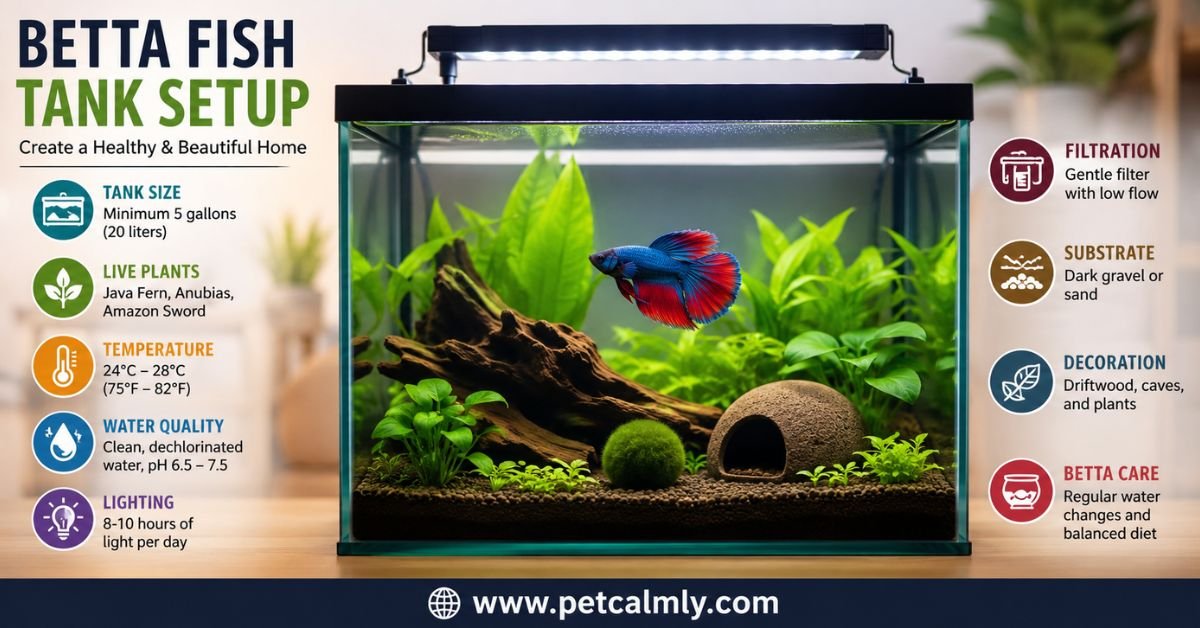
A proper betta fish tank setup needs a minimum 5-gallon tank (10 gallons is better), a gentle filter, a heater to keep water between 76–80°F, a secure lid, soft substrate, live or silk plants for hiding spots, and a fully cycled nitrogen cycle before your betta goes in. Skipping the cycle or using a bowl instead of a filtered, heated tank is the single biggest mistake new betta owners make and it’s the reason so many bettas get sick in their first few weeks.
If you’ve just brought home a betta, or you’re standing in the fish aisle trying to figure out what you actually need, you’re in the right place. Bettas have a reputation for being “easy” pets that can live in small bowls with no filter or heater. That reputation is outdated, and honestly, it’s led to a lot of unnecessary betta deaths and stressed-out fish. The good news is that setting up a betta tank properly isn’t complicated or expensive it just requires a little planning before the fish comes home, not after.
This guide walks through everything: tank size, equipment, water cycling, plants, tank mates, common mistakes, and what to do if something looks off. By the end, you’ll know exactly what to buy, how to set it up, and how to avoid the trial-and-error most new owners go through.
Why Betta Fish Need More Than a Bowl
Bettas (Betta splendens) originate from shallow rice paddies and slow-moving waters in Southeast Asia. In the wild, they have access to relatively stable, warm water and plenty of space to explore, even if that water is shallow. A small unfiltered, unheated bowl doesn’t replicate that environment it recreates a much harsher, more unstable version of it.
Cold, dirty water is stressful for any fish, and stress in bettas often shows up as clamped fins, fading color, lethargy, or loss of appetite. A stable, appropriately sized tank removes most of that stress before it starts, which is really the whole goal of a good setup: prevention, not correction.
What Size Tank Does a Betta Fish Actually Need?
The short answer is 5 gallons minimum, with 10 gallons or more being ideal for most owners. Anything smaller than 5 gallons makes it very difficult to keep water parameters stable, which means more frequent water changes and a higher risk of ammonia spikes.
Bigger tanks are actually easier to maintain, not harder. A larger volume of water dilutes waste and temperature swings more effectively, so a 10-gallon tank is often more forgiving for a beginner than a 2-gallon one, even though it looks like “more work.”
A few practical notes on sizing:
- 1 to 2.5 gallons: Not recommended. Temperature and water quality swing too fast, and there isn’t enough room for enrichment.
- 5 gallons: The realistic minimum. Workable with a small filter and heater.
- 10 gallons: A comfortable, low-stress option that also allows for live plants, a small algae-eating cleanup crew, or gentle tank mates.
- 20+ gallons: Great if you want a community setup with other peaceful, non-fin-nipping species.
Essential Equipment for a Betta Fish Tank Setup
This is the part most beginners get wrong not because they don’t care, but because pet store staff or old advice online tells them bettas don’t need much. Here’s what actually matters.
Filtration: Gentle Flow, Not No Flow
Bettas do need a filter. Filters remove waste and support the beneficial bacteria that break down ammonia and nitrite (more on that in the cycling section below). The catch is that bettas have long, flowing fins and aren’t strong swimmers against a current, so a filter with adjustable flow — or a sponge filter — is usually the best choice. If your filter’s current is pushing your betta around the tank or he’s constantly hiding from the outflow, it’s too strong, and you can baffle it with a sponge or a plastic bottle with holes cut into it.
Heater: Keeping Water Between 76–80°F
Bettas are tropical fish and need consistently warm water, ideally between 76°F and 80°F (24–27°C). Room temperature in most homes runs cooler than this, especially at night or during colder months, so a heater isn’t optional for the vast majority of households. A submersible heater with an adjustable thermostat, sized appropriately for your tank volume, is the safest option. Pair it with a simple aquarium thermometer so you’re not guessing.
Lighting: A Regular Day-Night Cycle
Bettas don’t need intense lighting, but they do benefit from a consistent light and dark cycle — generally 8 to 12 hours of light per day. This supports their natural rhythm and, if you have live plants, keeps them healthy too. Avoid leaving lights on 24/7, which can stress your fish and encourage algae growth.
Substrate and Tank Lid
Fine gravel or sand both work well; avoid anything with sharp edges that could tear delicate fins. A secure, well-fitting lid matters more than people expect — bettas are known jumpers, especially when startled, and a gap in the lid is often how owners discover this the hard way.
How to Cycle a Betta Tank Before Adding Your Fish
This is the step almost every beginner skips, and it’s the one that causes the most health problems in the first month of betta ownership.
“Cycling” means growing a colony of beneficial bacteria in your filter and substrate that convert toxic ammonia (from fish waste and uneaten food) into nitrite, and then into much less harmful nitrate. Without this bacteria colony established first, ammonia builds up quickly in a new tank and can burn your betta’s gills and skin this is often called “new tank syndrome,” and it’s a leading cause of early fish loss.
How to cycle a tank before adding your betta:
- Set up the tank fully substrate, decor, filter, heater and fill it with dechlorinated water.
- Add a source of ammonia (a bottled bacteria starter product, or a small amount of fish food to decompose) to feed the bacteria you’re trying to grow.
- Test the water every few days using a liquid test kit, tracking ammonia, nitrite, and nitrate.
- Wait until ammonia and nitrite both read zero and nitrate is present this typically takes 2 to 6 weeks without a bacterial starter product, or much faster with one.
- Once the cycle is complete, do a partial water change to bring nitrate down to a safe range, then add your betta.
If you already brought your betta home before reading this, don’t panic it happens to almost everyone. You can “fishless cycle” retroactively by doing frequent partial water changes (every 1–2 days) to keep ammonia and nitrite near zero while the bacteria colony catches up. A liquid test kit is worth the investment here, since it tells you exactly when it’s safe to slow down on water changes.
Water Parameters Bettas Need to Thrive
Once your tank is cycled, ongoing water quality is what keeps your betta healthy long-term. Here’s a quick-reference table:
| Parameter | Ideal Range | Why It Matters |
|---|---|---|
| Temperature | 76–80°F (24–27°C) | Supports metabolism, digestion, and immune function |
| pH | 6.5–7.5 | Extreme swings stress fish more than a slightly “off” but stable number |
| Ammonia | 0 ppm | Toxic even at low levels |
| Nitrite | 0 ppm | Toxic, interferes with oxygen transport in blood |
| Nitrate | Under 20 ppm | Should be managed with regular water changes |
Weekly partial water changes (around 25–30% of the tank) are the simplest way to keep these numbers stable without disturbing the beneficial bacteria you worked to establish during cycling.
Choosing Tank Mates (or Why Solo Might Be Best)
Male bettas are territorial, and that reputation isn’t exaggerated housing two males together will almost always end in serious fighting. Many bettas do fine living alone, and for a first-time owner, a solo betta in a well-decorated tank is genuinely a low-stress, satisfying setup.
If you want tank mates, the safest options are peaceful species that don’t have bright colors, long fins, or fin-nipping tendencies nerite snails, mystery snails, or a small group of corydoras catfish in a large enough tank are commonly successful choices. Every betta has a different personality, though, so introductions should be done gradually and monitored closely for the first few days, with a backup plan to separate them if there’s any sign of chasing or fin damage.
Plants, Decor, and Hiding Spots Bettas Actually Need
Bettas are naturally curious but also easily stressed by wide-open spaces with nowhere to retreat. Decor isn’t just aesthetic — it directly affects your fish’s stress levels.
What works well:
- Live plants like java fern, anubias, or marimo moss balls (low-maintenance and gentle on fins)
- Silk plants if you prefer artificial (avoid plastic plants with stiff, sharp edges)
- Caves, logs, or betta hammocks near the surface for resting
- Smooth-edged decor with no rough or narrow gaps a fin could snag on
Think of the tank layout in terms of “zones” a shaded resting spot, an open swimming area, and something near the surface, since bettas have a labyrinth organ that lets them breathe air directly and they often enjoy resting near the top of the tank.
Step-by-Step: Setting Up Your Betta Tank (Practical Guide)
Here’s how it comes together in order:
- Choose your tank — 5 gallons minimum, 10 gallons preferred.
- Rinse substrate and decor with water only (no soap) and add them to the tank.
- Install the filter and heater, following manufacturer instructions for placement.
- Fill with dechlorinated water, using a water conditioner to neutralize chlorine and chloramine.
- Add plants and hiding spots, arranging them to create shaded and open areas.
- Cycle the tank using the fishless cycling process described above.
- Test water parameters until ammonia and nitrite both read zero.
- Acclimate your betta slowly by floating the bag in the tank for 15–20 minutes, then gradually mixing tank water into the bag before release, to avoid temperature and chemistry shock.
- Feed lightly for the first day and observe behavior over the following week.
Common Betta Tank Setup Mistakes New Owners Make
A lot of betta stress comes down to a handful of repeat mistakes:
- Skipping the cycle and adding the fish immediately, causing an ammonia spike.
- Using a bowl with no heater or filter, leading to unstable temperature and water quality.
- Overfeeding, which is one of the most common causes of poor water quality and bloating.
- Sudden, large water changes instead of small, regular ones, which can shock the fish with rapid parameter shifts.
- Rough decor that tears fins over time.
- Housing two male bettas together, assuming they’ll “work it out.”
Each of these is easy to avoid once you know about it, which is really the whole point of planning the setup before the fish arrives rather than after.
When Should You Worry About Your Betta’s Tank or Health?
Most day-to-day betta care is genuinely manageable, but there are signs that go beyond general tank maintenance and point to a health issue worth professional attention:
- Rapid, labored breathing at the surface that doesn’t improve after a water change
- Visible white spots, fuzzy patches, or unusual growths
- Prolonged loss of appetite (more than 2–3 days) with no obvious cause
- Swelling of the body or pinecone-like scales (a sign of possible internal illness)
- Sudden, severe color loss combined with lethargy
- Clamped fins and hiding that persist even after water quality is corrected
If any of these show up, a water test and partial water change is the right first step, since poor water quality is behind a large share of betta health issues. But if symptoms persist after water quality is confirmed to be in a safe range, it’s time to consult a veterinarian experienced with aquatic or exotic pets rather than guessing with over-the-counter treatments, which can sometimes do more harm than good if the underlying issue is misidentified.
What Should Pet Owners Do Next?
Once your tank is cycled and your betta is settled in, ongoing care is mostly about consistency:
- Test water weekly until you have a feel for your tank’s normal parameters
- Do partial water changes on a regular schedule rather than waiting for visible dirtiness
- Keep feeding portions small most bettas do well on 2–4 small pellets, once or twice a day
- Watch for behavior changes, since they’re often the earliest sign something’s off
- Avoid adding new tank mates impulsively; research and quarantine first
A calm, stable routine is genuinely more protective for a betta’s health than any single product or gadget.
Conclusion
A good betta fish tank setup isn’t about spending a fortune or overcomplicating things it’s about giving your fish a stable, warm, cycled environment before he ever moves in. Size, filtration, heating, and patience during the cycling process solve the vast majority of problems new betta owners run into. Once that foundation is in place, day-to-day care becomes pretty simple: steady water changes, sensible feeding, and paying attention to how your fish is behaving. Bettas are genuinely rewarding pets to keep once their environment actually supports them, and a little upfront planning is what makes that possible.
More Information About Pets, Please Visit Our Website: Petcalmly.com
Frequently Asked Questions
1: Can betta fish live in a bowl without a filter?
Technically they can survive short-term, but it’s not recommended. Bowls make it very hard to maintain stable temperature and water quality, which increases stress and the risk of ammonia buildup. A filtered, heated tank of at least 5 gallons is a much safer, healthier setup.
2: How long does it take to cycle a betta tank?
A fishless cycle typically takes 2 to 6 weeks without a bacterial starter product, or as little as 1 to 2 weeks with one. Testing ammonia, nitrite, and nitrate regularly is the only reliable way to know when it’s finished.
3: Do betta fish need a heater?
Yes, in most homes. Bettas need water between 76–80°F, which is warmer than typical room temperature, especially overnight or in cooler seasons. Without a heater, temperature swings can stress the fish and weaken its immune response.
4: Can two betta fish live together?
Two male bettas should never be housed together, as they’re highly territorial and will fight. Female bettas can sometimes live in groups called “sororities” in large, carefully set up tanks, but this requires more experience and careful monitoring.
5: What is the best substrate for a betta tank?
Fine gravel or sand both work well. Avoid sharp or rough substrate that could injure a betta’s delicate fins as it swims near the bottom of the tank.
6: Why does my betta fish keep hiding after I set up the tank?
New environments are stressful, and hiding for the first few days is normal as your betta adjusts. If hiding continues for over a week alongside clamped fins or appetite loss, check your water parameters first, since poor water quality is a common hidden cause.