Short direct answer
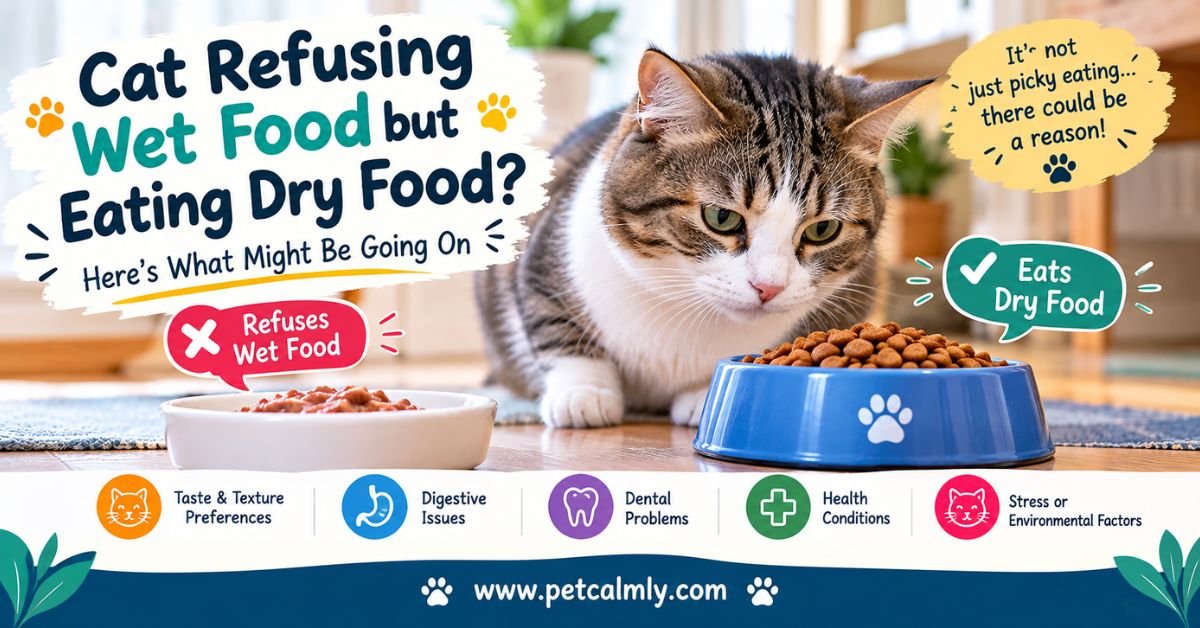
Cat Refusing Wet Food But Eating Dry Food is often reacting to texture, smell, temperature, or a recent negative association with the wet food itself not necessarily illness. Cats imprint on food textures early in life, and many simply never learned to enjoy the mushy consistency of wet food. However, sudden refusal in a cat that previously ate wet food without issue can also signal dental pain, nausea, or another underlying health problem, so it’s worth watching for other symptoms before assuming it’s just pickiness.
If your cat turns their nose up at the wet food bowl but cleans out the dry food dish every single time, you’re not imagining it, and you’re definitely not alone. This is one of the most common feeding puzzles cat owners run into, and it usually has a logical explanation once you know what to look for.
Why Do Cats Refuse Wet Food But Eat Dry Food?
Cats are famously particular about what goes into their mouths, and that’s not just personality it’s biology. Their sense of smell is far more sensitive than ours, and smell drives most of their eating decisions. A cat who seems “stubborn” about wet food is often responding to sensory cues that we simply can’t detect.
Here are the main reasons this happens.
1. Texture Preference Formed Early in Life
Kittens develop food preferences based on what they’re exposed to between roughly six weeks and six months of age. A kitten raised primarily on dry kibble may never build a taste for the soft, gelatinous, or pâté-like textures found in wet food. This isn’t fussiness for the sake of it it’s a genuine sensory preference that gets locked in early and can be difficult to shift later on.
2. Wet Food Served Too Cold
Cats generally prefer food closer to room temperature or slightly warm, which mimics the body temperature of freshly caught prey in the wild. Wet food straight from the fridge can smell muted and feel unappealing on the tongue. Many owners notice a big difference just by letting refrigerated food sit out for 15–20 minutes, or warming it gently before serving.
3. Weak or “Off” Smell
Because cats rely so heavily on scent to decide whether food is worth eating, a can that’s been open too long, stored improperly, or simply doesn’t smell strong enough can be rejected outright. Some formulas also have a milder aroma than others, which matters more to cats than it does to us.
4. A Negative Association
If a cat associates wet food with something unpleasant — a stomach ache after eating it, being forced to eat it, medication hidden in it, or even just a bad first impression — they can develop a lasting aversion. Cats have strong food memory, and one bad experience can shape behavior for months.
5. Bowl and Environment Issues
Whisker fatigue (irritation from whiskers repeatedly brushing against a bowl’s sides), a bowl placed too close to a litter box or in a noisy area, or competition with another pet can all make a cat avoid the food, regardless of what’s actually in the bowl.
6. Dental Discomfort
Some cats actually prefer dry kibble because chewing it feels different, while the moist texture of wet food might briefly touch a sore tooth or inflamed gum in a way that causes discomfort. This is one of the more overlooked reasons and is worth ruling out, especially in senior cats.
7. Underlying Illness
Nausea, gastrointestinal discomfort, kidney concerns, or systemic illness can all reduce a cat’s interest in strong-smelling, rich foods like wet food, while leaving their appetite for drier, blander kibble comparatively intact. This is less common than the behavioral reasons above, but it’s the one that requires the most attention.
Is It Normal for Cats to Prefer Dry Food Over Wet Food?
Yes, this is genuinely common, and it doesn’t automatically point to a problem. Plenty of healthy, well-adjusted cats simply gravitate toward the crunch and consistency of kibble. That said, “normal” doesn’t mean you should ignore it altogether — wet food offers hydration and nutritional benefits that matter over the long run, so it’s worth gently encouraging without turning mealtime into a battle.
How to Tell the Difference Between Picky Eating and a Health Problem
This is the question that matters most, and it’s where a lot of owners get stuck. Use this quick comparison to get a clearer picture of what you’re dealing with.
| Sign | More Likely Picky Eating | More Likely a Health Concern |
|---|---|---|
| Appetite for dry food | Strong and consistent | Reduced or inconsistent too |
| Weight | Stable | Dropping, even slightly |
| Energy level | Normal, playful | Lethargic, hiding more |
| Onset | Gradual, or has always been this way | Sudden change in a cat who used to eat wet food fine |
| Other symptoms | None | Vomiting, drooling, bad breath, diarrhea, litter box changes |
| Water intake | Normal | Increased or decreased noticeably |
If your cat falls mostly into the left column, you’re likely dealing with a preference issue you can work through at home. If you’re seeing signs from the right column, it’s time to loop in your veterinarian.
When Should You Worry?
Most cats who skip wet food but eat dry food normally are simply expressing a preference. But contact your veterinarian if you notice any of the following, especially in combination:
- Refusal of both wet and dry food for more than 24 hours
- Noticeable weight loss over a few weeks
- Vomiting, diarrhea, or lethargy alongside the food refusal
- Bad breath, drooling, or pawing at the mouth (possible dental pain)
- Increased thirst or urination
- Hiding, reduced grooming, or general behavior changes
- A senior cat suddenly changing established eating habits
Cats are experts at masking illness, and prolonged appetite changes even partial ones are one of the more reliable early warning signs that something deeper may be going on. According to the Cornell Feline Health Center, any cat that stops eating entirely for more than a day or two should be evaluated by a veterinarian, since prolonged lack of food intake can lead to a serious liver condition called hepatic lipidosis, particularly in overweight cats.
What Should Pet Owners Do?
If your cat is otherwise healthy and simply avoiding wet food, here’s a calm, low-pressure way to work through it.
Step 1: Rule Out the Basics First
Before assuming it’s behavioral, check the obvious: is the food fresh, is it a new batch or formula, and is the bowl clean? Small changes in packaging or recipe (even from the same brand) can throw off a sensitive cat.
Step 2: Serve It Slightly Warm
Take the food out of the fridge 15–20 minutes before mealtime, or warm it briefly in warm water (never the microwave, which can create hot spots). This intensifies the aroma and makes it more appealing.
Step 3: Try a Different Texture
Wet food isn’t one uniform category. There’s pâté, shredded, chunks in gravy, and mousse-style textures. A cat who rejects one style may happily eat another. Buying a small variety pack is often more effective than repeatedly offering the same rejected formula.
Step 4: Switch Up the Bowl
Try a shallow, wide plate instead of a deep bowl to reduce whisker fatigue, and make sure it’s placed somewhere quiet, away from the litter box, loud appliances, or another pet who might be causing stress at mealtime.
Step 5: Don’t Force or Punish
Never withhold all food to “starve out” the preference, and avoid scolding your cat for refusing a bowl. This can create additional stress and worsen the aversion. Cats respond far better to patience than pressure.
Step 6: Introduce Gradually, Alongside Dry Food
Instead of swapping meals outright, place a small amount of wet food next to the usual dry food, or lightly mix a spoonful in. This lets your cat explore it on their own terms without feeling like their routine has been upended.
Step 7: Use Mealtime Timing to Your Advantage
Some owners find success offering wet food first, when the cat is hungriest, rather than after they’ve already filled up on kibble.
Step 8: Keep a Simple Log
Jot down what your cat ate, how much, and any other symptoms for about a week. This makes it much easier to spot patterns and gives your vet useful information if the issue continues.
Common Mistakes Owners Make
- Switching brands too often. This can make a cat even more suspicious of new food rather than more accepting.
- Serving food ice-cold straight from the fridge.
- Leaving wet food out too long, which dries it out and dulls the smell.
- Assuming it’s “just pickiness” without checking for physical symptoms.
- Mixing in strong supplements or medication without disguising the taste properly, which can taint the cat’s association with wet food entirely.
- Giving up after one or two tries. Some cats need several low-pressure exposures before they’re willing to explore a new texture.
Why Wet Food Still Matters, Even If Your Cat Prefers Dry
It’s completely possible to keep a cat healthy on a dry-food-only diet, provided it’s a complete and balanced formula and your cat drinks enough water. But wet food offers a meaningful hydration advantage, since it contains significantly more moisture than kibble, which supports urinary and kidney health over time — something that becomes increasingly relevant as cats age. This is why many veterinarians, including those at VCA Animal Hospitals, recommend incorporating at least some wet food into a cat’s diet where possible, rather than treating it as optional.
If your cat truly won’t tolerate wet food no matter what you try, focus instead on encouraging water intake through other means: a pet water fountain, multiple water bowls placed around the house, or adding a small amount of water to dry food.
Real-Life Example: A Gradual Transition That Worked
Consider a common scenario: an indoor cat adopted as an adult, previously raised almost exclusively on kibble. Offered a standard pâté, the cat sniffs it once and walks away every single time. Rather than continuing to offer the same rejected can, switching to a gravy-style formula with visible chunks, warmed slightly and placed in a shallow saucer a few inches from the usual kibble bowl, can make the food feel far less like an imposition. Over one to two weeks of small, pressure-free exposures, many cats begin tasting it on their own, then gradually eating more. The lesson here isn’t a specific product it’s the approach: small changes, patience, and no forcing.
Frequently Asked Questions
1. Why does my cat sniff wet food and then walk away?
This is usually a smell or texture rejection rather than a full refusal of food in general. If your cat then goes and eats dry food normally, it’s a strong sign of preference rather than illness, though it’s still worth watching for any other symptoms.
2. Is it bad if my cat only eats dry food?
Not necessarily. A high-quality, complete dry food can meet a cat’s nutritional needs, but make sure your cat is drinking enough water, since dry food alone provides far less moisture than wet food does.
3. How long can a cat go without eating wet food before it’s a problem?
As long as your cat is still eating dry food normally, drinking water, and behaving like themselves, there’s no strict deadline to worry about. The concern arises if they stop eating altogether, which shouldn’t continue for more than 24 hours without veterinary guidance.
4. Can dental problems cause a cat to avoid wet food specifically?
Yes, in some cases. While it’s more common for dental pain to cause avoidance of hard kibble, some cats with sore gums or teeth also dislike the sensation of soft food pressing against sensitive areas. A veterinary dental check can rule this out.
5. Should I mix wet and dry food together to get my cat to eat wet food?
This can work well for some cats, especially when only a small amount of wet food is blended in at first. Others prefer the two textures kept separate. It often comes down to trial and error with your individual cat.
6. Will my cat eventually grow out of refusing wet food?
Preferences can shift over time, especially with patient, low-pressure exposure to different textures and brands. Some cats never fully come around to wet food, and that’s usually fine as long as their overall diet and hydration needs are being met.
More Information About Pets, Please Visit Our Website: Why Is My Cat Sleeping Under Blankets?
Best Cat Breeds for Apartments
Siamese Cat Personality Problems
Do Cats Remember Their Siblings When They Die?
What Are the Signs of Dehydration in Cats
Do Cats Need More Food in Winter?
How Long Do Cats Mourn the Loss of Another Cat?
Why does My Cat Walk Around Meowing at Night?
Do Cats Understand Siblings?
Conclusion
A cat refusing wet food while happily eating dry food is, in most cases, simply telling you something about their sensory preferences rather than signaling a crisis. Pay attention to the full picture appetite, energy, weight, and any accompanying symptoms rather than fixating on the wet food bowl alone. With a little patience, some texture experimentation, and a willingness to let your cat set the pace, many cats do come around to at least tolerating wet food in their diet. And if something feels genuinely off beyond simple pickiness, trust that instinct and check in with your veterinarian.