
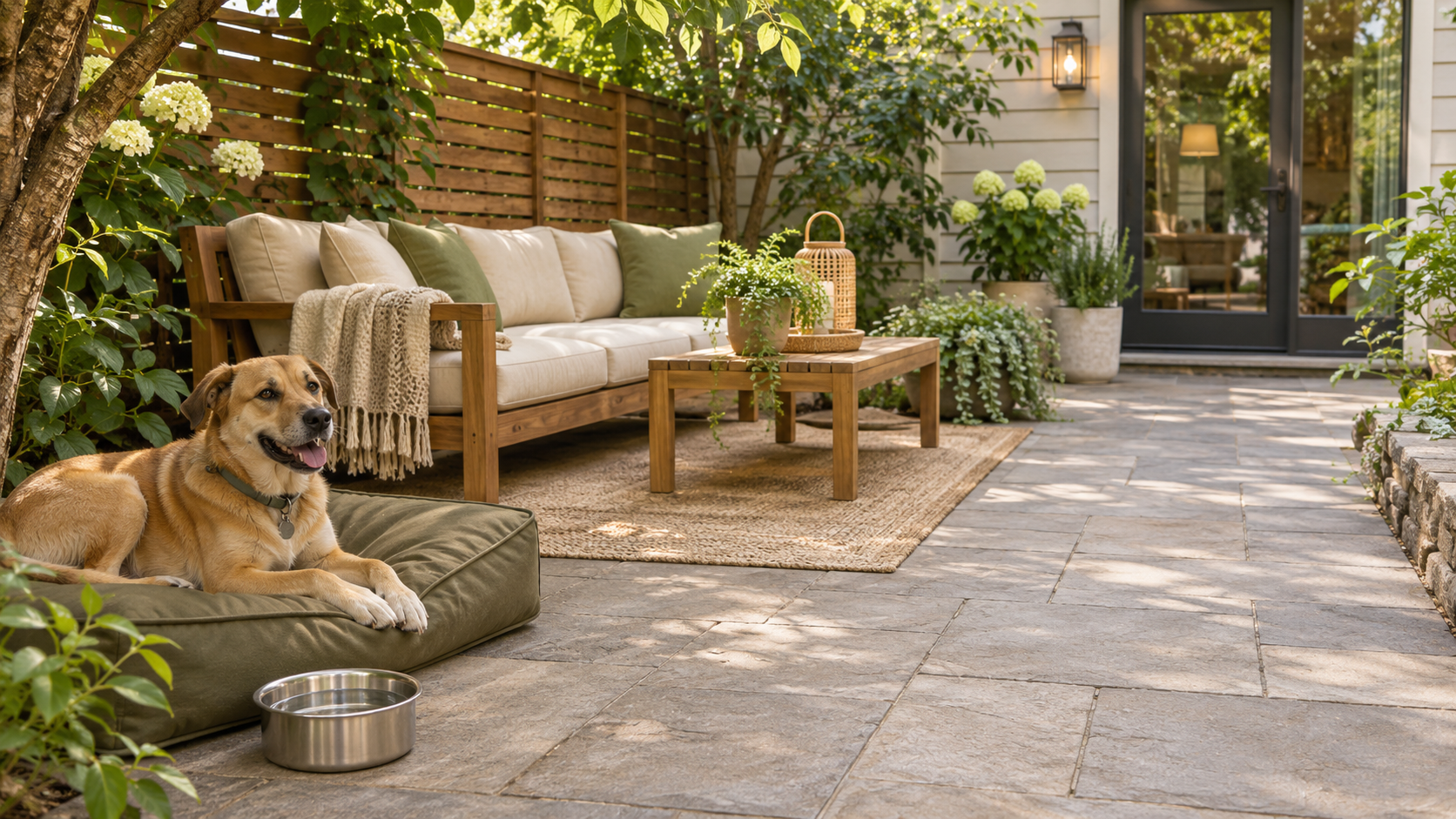
A well-designed patio can become a favorite gathering spot for the entire household, including its four-legged members. Comfortable seating, natural shade, attractive flooring, and outdoor dining areas make spending time outside more enjoyable. However, features that appeal to homeowners do not always provide the same level of comfort for pets. Slippery surfaces, unstable furniture, and constant exposure to neighborhood activity can make an otherwise beautiful patio uncomfortable for a dog.
Pet-friendly outdoor design requires more consideration than purchasing a waterproof dog bed and leaving a bowl of water near the door. The placement of furniture, texture of flooring, arrangement of plants, and movement of people all influence how animals experience their surroundings. Even minor design decisions can affect their willingness to explore, rest, and spend time outside.
Homeowners do not need to sacrifice attractive furniture or entertaining space to accommodate their pets. Durable materials, thoughtful furniture arrangements, and designated resting areas can support a more comfortable environment while maintaining the character of the home. Many improvements also make outdoor areas easier to clean, maintain, and enjoy throughout the year.
1. Your Pet Experiences Your Patio Differently Than You Do
Dogs experience outdoor spaces through a combination of sounds, smells, textures, and movement. While homeowners might appreciate an open view of the street, a dog may find passing cyclists, delivery workers, and unfamiliar animals unsettling. A metal chair scraping against concrete might seem insignificant to most people but could startle a noise-sensitive pet.
Environmental predictability plays an important role in animal comfort. Dogs often develop preferences for particular sleeping spots, walking routes, and areas where they can observe household activities. Frequently rearranging furniture or introducing unfamiliar objects can temporarily disrupt those habits. Some animals adjust immediately, while others need time to become comfortable with changes.
Furniture stability can also influence a dog’s willingness to explore. A lightweight chair that moves unexpectedly when brushed against or a table that rattles during windy weather can discourage an anxious animal from approaching certain areas. Dogs that have experienced frightening encounters with falling objects may become particularly cautious around unstable furniture.
Temperature introduces another consideration. Outdoor surfaces that feel manageable to someone wearing shoes can become uncomfortable or dangerous for bare paws. Dogs also experience heat differently depending on their breed, age, coat, weight, and health. A patio that provides pleasant afternoon seating for humans may offer little relief for an animal with a thick coat.
Visual stimulation can make relaxation difficult in busy residential neighborhoods. A dog with an unobstructed view of pedestrians, neighboring gardens, and passing vehicles may spend considerable time monitoring its surroundings. Instead of resting, it might repeatedly bark, pace, or move between different observation points.
Individual personalities should guide outdoor design decisions. An outgoing Labrador may enjoy lying beside a dining table during a family gathering, while a nervous rescue dog might prefer a sheltered corner several feet away. Older animals may prioritize comfortable surfaces and easy access to the house over opportunities to observe outdoor activity.
Behavior provides useful clues about which patio features need improvement. A dog that repeatedly returns indoors, avoids specific flooring, or struggles to settle may be uncomfortable with something in the environment. Persistent panting, trembling, pacing, or excessive barking can also indicate distress, although medical conditions and other factors should not be overlooked.
Observing a pet’s existing habits before redesigning a patio can prevent unnecessary purchases. The best starting point is understanding where the animal already feels comfortable and identifying what makes those locations appealing.
2. Designing a Patio Where Pets Don’t Feel the Need to Be on Guard
A calming patio begins with a layout that accommodates natural movement. Dogs should be able to travel between resting areas, water bowls, garden spaces, and indoor rooms without squeezing between chairs or navigating crowded furniture arrangements. Clear pathways become particularly important in households with large breeds, senior animals, or multiple pets.
Furniture positioned around the perimeter can create a more spacious central area. An outdoor sofa against a wall, combined with a compact coffee table and several chairs, leaves room for pets to move without constantly encountering obstacles. Smaller patios benefit from narrow benches and appropriately sized dining tables rather than oversized furniture sets.
Resting areas work best when they offer some separation from household activity. A sheltered corner beside an outdoor sofa or beneath a covered section of the patio can provide a comfortable retreat. Dogs should have the option to remain near their owners without occupying the busiest part of the space.
Privacy screens can reduce unnecessary visual stimulation. Wooden slats, solid fence panels, and carefully positioned planters help limit views of passing pedestrians or neighboring dogs. Complete enclosure is not always necessary. Blocking sightlines at a dog’s eye level may be sufficient to reduce some distractions without making the patio feel closed off.
Plants offer a natural way to divide outdoor areas, but pet safety should influence species selection. Spider plants, Boston ferns, and certain palms can suit pet-friendly environments under appropriate growing conditions. Sago palms, oleander, and other toxic plants should be avoided wherever animals can reach them. Homeowners should verify the exact species before purchasing unfamiliar vegetation.
Sheltered resting spaces should provide protection without restricting movement. An outdoor bench with a comfortable bed beside it may appeal to a dog that prefers partial enclosure. However, placing bedding behind heavy furniture or inside a narrow corner can create problems if the animal feels trapped by approaching guests or other pets.
Water bowls deserve a permanent location away from busy walkways. A heavy ceramic or stainless steel bowl placed on a washable, nonslip mat reduces spills and movement. Shaded positioning helps keep drinking water cooler, although owners should still replace it regularly throughout the day.
Open-concept kitchens connected to patios benefit from similar design principles. Dogs often want to remain near family members while meals are prepared, but kitchen islands, dining chairs, and frequently opened appliances create potential hazards. Positioning a dog bed near the edge of the kitchen allows the animal to participate in household activity from a safer distance.
Doorways between indoor and outdoor areas should remain accessible whenever pets are using the patio. Large planters, dining chairs, and decorative accessories can unintentionally restrict these routes. An unobstructed entrance gives animals the opportunity to return indoors when they become tired, uncomfortable, or overwhelmed.
Multiple-pet households may require separate resting locations. Even animals that generally get along can become territorial around bedding, food, and favored sleeping spots. Providing more than one shaded retreat and water station reduces unnecessary competition.
A successful arrangement allows pets to make their own choices. They can move closer to family members, retreat from visitors, explore the garden, or return indoors without depending on someone to rearrange the furniture.
3. What Your Pet Feels Underfoot Matters More Than You Think
Outdoor flooring has a direct impact on animal mobility and comfort. Homeowners typically compare materials according to appearance, installation costs, and weather resistance. Pet owners must also consider traction, surface temperature, drainage, and potential irritation to paws.
Textured concrete provides a practical foundation for many outdoor spaces. It withstands heavy furniture, frequent cleaning, and everyday foot traffic. A moderately textured finish offers better grip than polished concrete, although excessively rough surfaces can irritate sensitive paws.
Natural stone creates an attractive patio but varies considerably in texture and heat absorption. Slate and certain textured stone products can provide useful traction, while highly polished stone may become slippery when wet. Dark materials exposed to direct sunlight can also become extremely hot during summer.
Composite decking appeals to homeowners who want the appearance of wood without frequent staining or sealing. Its resistance to splintering is useful in households with active dogs. However, some composite products retain considerable heat, and traction varies between manufacturers. Samples should be evaluated before committing to a large installation.
Traditional wooden decking offers a softer appearance and can remain comfortable under suitable weather conditions. Regular maintenance is necessary to prevent raised nails, loose boards, and splinters. Owners should pay particular attention to areas where dogs frequently run, scratch, or lie down.
Outdoor porcelain tiles can complement modern homes, particularly when the patio connects directly to an open-plan kitchen. Products designed for exterior use with slip-resistant finishes are preferable to smooth, glossy tiles. Drainage and correct installation also contribute to safer walking conditions.
Artificial grass provides a softer-looking surface and eliminates muddy patches, but it has limitations. Synthetic turf can absorb substantial heat in direct sunlight, while urine odors may accumulate when drainage and cleaning are inadequate. It is better suited to carefully maintained, shaded areas than patios exposed to intense afternoon sun.
Senior dogs often benefit most from improvements in flooring traction. Arthritis, muscle weakness, and mobility problems can make smooth surfaces difficult to navigate. An animal that struggles to stand or repeatedly slips may eventually avoid using the patio altogether.
Outdoor rugs offer a relatively inexpensive way to improve existing flooring. Washable polypropylene rugs and other weather-resistant products can create comfortable pathways between doors, bedding, and shaded seating areas. Rugs should have secure edges and suitable nonslip backing to prevent movement.
Gravel requires careful consideration in pet-friendly gardens. Sharp stones can become lodged between paw pads, while small loose materials may be swallowed by curious animals. Rounded stones may be suitable for decorative borders, but frequently used walking routes generally benefit from more stable surfaces.
Cleanliness should not come at the expense of animal safety. Strong chemicals, concentrated disinfectants, and certain outdoor cleaning products can irritate paws or cause problems if ingested. Follow product instructions, rinse surfaces when required, and keep pets away until treated areas are safe for use.
A combination of materials often works better than covering the entire patio with one surface. Textured tiles can support the dining area, washable rugs can improve traction near entrances, and shaded decking can accommodate resting spaces. Each material serves a specific purpose while contributing to the overall design.
4. Furniture That Survives Claws, Muddy Paws, and Excited Dogs
Pet-friendly outdoor furniture needs to withstand conditions beyond ordinary residential use. Claws scratch surfaces, wet animals transfer moisture onto cushions, and energetic dogs occasionally collide with tables or chairs. Furniture that looks attractive in a showroom may deteriorate quickly under these conditions.
Powder-coated aluminum offers a practical option for outdoor seating. It resists corrosion and requires relatively little maintenance. Its lightweight construction makes furniture easy to move, although particularly light designs may be unsuitable for households with large, energetic dogs.
Steel furniture generally provides greater weight and stability. Protective coatings help prevent rust, but scratches and damaged finishes require attention. Metal surfaces can also become uncomfortable in direct sunlight, making shaded positioning particularly important during warmer months.
Teak remains a popular choice for homeowners who prefer natural materials. Its natural oils contribute to weather resistance, and quality construction can provide years of use. Dogs may still scratch wooden surfaces, while puppies that chew furniture can damage exposed corners and legs.
Synthetic wicker offers a softer appearance without the weather sensitivity of traditional natural wicker. Quality products can withstand outdoor conditions, but woven surfaces may trap pet hair and dirt. Dogs that enjoy chewing or scratching textured materials may also damage individual strands.
Recycled plastic furniture can suit households that prioritize low maintenance. High-density polyethylene products resist moisture, and many designs feature substantial construction. They are particularly practical near pools, gardens, and outdoor areas where pets frequently become wet.
Furniture stability deserves special attention in active households. Pet owners who frequently host guests often look for scratch-resistant, commercial-grade pieces similar to sturdy bar and restaurant furniture, since heavy table bases can reduce the risk of accidental tipping when an excited dog bumps into them.
Table geometry also affects safety. Wide, stable bases generally offer better support than narrow designs, while rounded edges reduce the likelihood of injuries during accidental collisions. Glass tabletops require additional consideration in households where large dogs frequently run or jump near furniture.
Chair construction should accommodate everyday movement around animals. Exposed mechanical components, narrow openings, and folding mechanisms may create opportunities for paws or tails to become trapped. Inspecting furniture from ground level can reveal potential hazards that are less obvious when standing.
Upholstery choices determine how much time homeowners spend cleaning outdoor seating. Fabrics with tightly woven construction resist some forms of scratching and tend to collect less debris than heavily textured materials. Removable cushion covers simplify washing after muddy walks or unexpected rain.
Solution-dyed acrylic and outdoor-grade polyester are common upholstery options. Both are available in a range of colors and textures, although quality and performance vary. Homeowners should pay attention to washing instructions, abrasion resistance, and whether replacement covers are available.
Furniture colors can make routine maintenance less noticeable. Medium gray, taupe, olive green, and muted brown often disguise dirt better than bright white or solid black. Choosing upholstery that contrasts less with a pet’s coat can also make loose hair less visible between cleaning sessions.
Storage benches provide a convenient place for leashes, towels, toys, and spare cushion covers. Models with controlled-closing lids are preferable around animals. Cleaning chemicals, gardening tools, and potentially harmful products should remain in secure storage inaccessible to pets.
Furniture proportions should reflect both the available space and the animals using it. An oversized sectional may leave little room for a large dog to stretch out, while an unnecessarily crowded dining arrangement can make navigating the patio difficult. Fewer, better-positioned pieces often provide greater everyday comfort.
Expensive furniture is not automatically more suitable for pet owners. Construction quality, replaceable components, stable bases, and straightforward maintenance matter more than decorative details or designer labels. Buying furniture that accommodates the household’s actual routine can prevent premature replacement.
5. When the Patio Becomes a Party: Keeping Pets Comfortable Around Guests
Social gatherings temporarily change the character of an outdoor space. Familiar furniture becomes occupied by strangers, conversation grows louder, and people move unpredictably between dining areas and the kitchen. Even dogs that typically enjoy human attention can become overstimulated during extended gatherings.
Preparing a retreat before guests arrive gives pets somewhere familiar to settle. The location should contain comfortable bedding, fresh water, and perhaps a familiar toy. For particularly sensitive animals, a quiet indoor room may offer more comfort than any corner of a crowded patio.
Dining arrangements should keep regular pet resting areas separate from the busiest sections. Moving a dog’s bed immediately before a party can remove a familiar source of comfort. Instead, homeowners can position additional guest seating away from the animal’s preferred location.
Guest behavior can influence how comfortably pets participate in gatherings. Children may approach sleeping dogs, unfamiliar visitors may attempt to pick up smaller animals, and well-meaning guests frequently offer food without consulting owners. Establishing simple boundaries helps prevent uncomfortable interactions.
Outdoor cooking introduces several additional hazards. Hot grills, sharp utensils, grease, electrical cables, and discarded food can attract curious dogs. Cooking stations should occupy a designated area that pets cannot access freely while equipment is in use or cooling down.
Food safety becomes especially important during outdoor dining. Grapes, raisins, chocolate, onions, certain sugar-free products, alcohol, and cooked bones can present serious risks to dogs. Covered waste containers and prompt removal of leftovers reduce opportunities for animals to consume dangerous items.
Music should remain at a reasonable volume when pets are nearby. Speakers positioned at ground level or beside animal resting areas can create unnecessary exposure to noise. Moving audio equipment closer to human seating may provide a more comfortable arrangement for everyone.
Outdoor lighting influences evening comfort and navigation. Soft, steady illumination helps animals identify pathways, furniture legs, and changes in flooring. Rapidly changing decorative lights and sudden motion-activated floodlights may startle some pets, particularly those already sensitive to unfamiliar stimuli.
Familiar routines provide consistency during gatherings. Feeding dogs at their regular time, maintaining normal toilet breaks, and allowing them to rest when they choose can reduce disruption. Owners should not expect their pets to remain socially engaged throughout an entire evening.
Animals need the freedom to withdraw from situations they find uncomfortable. A dog that retreats indoors or moves away from guests does not necessarily need encouragement to return. Respecting that decision can prevent a manageable level of discomfort from escalating into distress.
A thoughtfully arranged patio supports both entertaining and everyday pet care. Friends can gather around a dining table, children can enjoy outdoor activities, and animals can participate at their own pace without being placed at the center of every interaction.
6. Building an Outdoor Space Your Pet Will Choose to Spend Time In
Improving a pet-friendly patio does not require an extensive renovation. Small adjustments often address the most noticeable problems. Moving a water bowl into the shade, adding a nonslip rug, or replacing an unstable side table can make an immediate difference to everyday usability.
Observation should guide the order of improvements. A dog that consistently rests beneath an outdoor table may prefer overhead shelter. An animal that chooses to lie beside the patio door may value proximity to indoor spaces. These preferences offer useful information when selecting furniture and establishing dedicated resting areas.
Shade should remain available throughout the day. Patio umbrellas, retractable awnings, pergolas, and covered seating areas provide different levels of protection as the sun moves. Homeowners should check whether a regularly used dog bed remains shaded during the hottest hours rather than relying on its morning position.
Comfortable bedding extends the usability of outdoor areas. Raised dog beds promote airflow beneath the animal, while cushioned mats can provide additional support for older dogs. Weather-resistant covers simplify maintenance, but bedding should still be dried and cleaned regularly to prevent moisture buildup.
Seasonal adjustments keep patios comfortable as weather conditions change. Summer arrangements may require additional shade and drinking stations. Cooler months may call for dry bedding and protection from wind. Extreme temperatures make indoor accommodation the safer option regardless of outdoor design quality.
New furniture should be introduced gradually when possible. Replacing an entire patio set at once changes familiar routes, smells, and resting locations. Maintaining existing bedding and other familiar objects can help nervous dogs adjust to their surroundings at their own pace.
Homeowners should also revisit outdoor arrangements as their pets age. A young dog may have little difficulty navigating steps, raised decking, or narrow passages. The same animal might require ramps, improved traction, and additional resting areas several years later. Designing with future mobility needs in mind can reduce renovation costs.
Regular maintenance protects the improvements already made. Loose furniture screws, damaged deck boards, deteriorating upholstery, unstable planters, and torn rugs can introduce hazards over time. Periodic inspections help homeowners identify problems before they interfere with everyday use.
Environmental improvements can support animal comfort, but they are not a substitute for professional care. Dogs experiencing persistent anxiety, unexplained behavioral changes, or significant fear responses may benefit from an assessment by a veterinarian or qualified animal behavior professional.
The best pet-friendly patios rarely look like spaces designed exclusively for animals. They feature attractive furniture, practical flooring, comfortable seating, and carefully arranged greenery. Their distinguishing quality is that every member of the household has somewhere to feel comfortable.
When a dog voluntarily settles beside the outdoor sofa, sleeps while family members enjoy dinner, or quietly explores the garden before returning to its bed, the patio has become more than an entertaining area. It is a familiar extension of the home where people and pets can enjoy spending time together.