Short direct answer
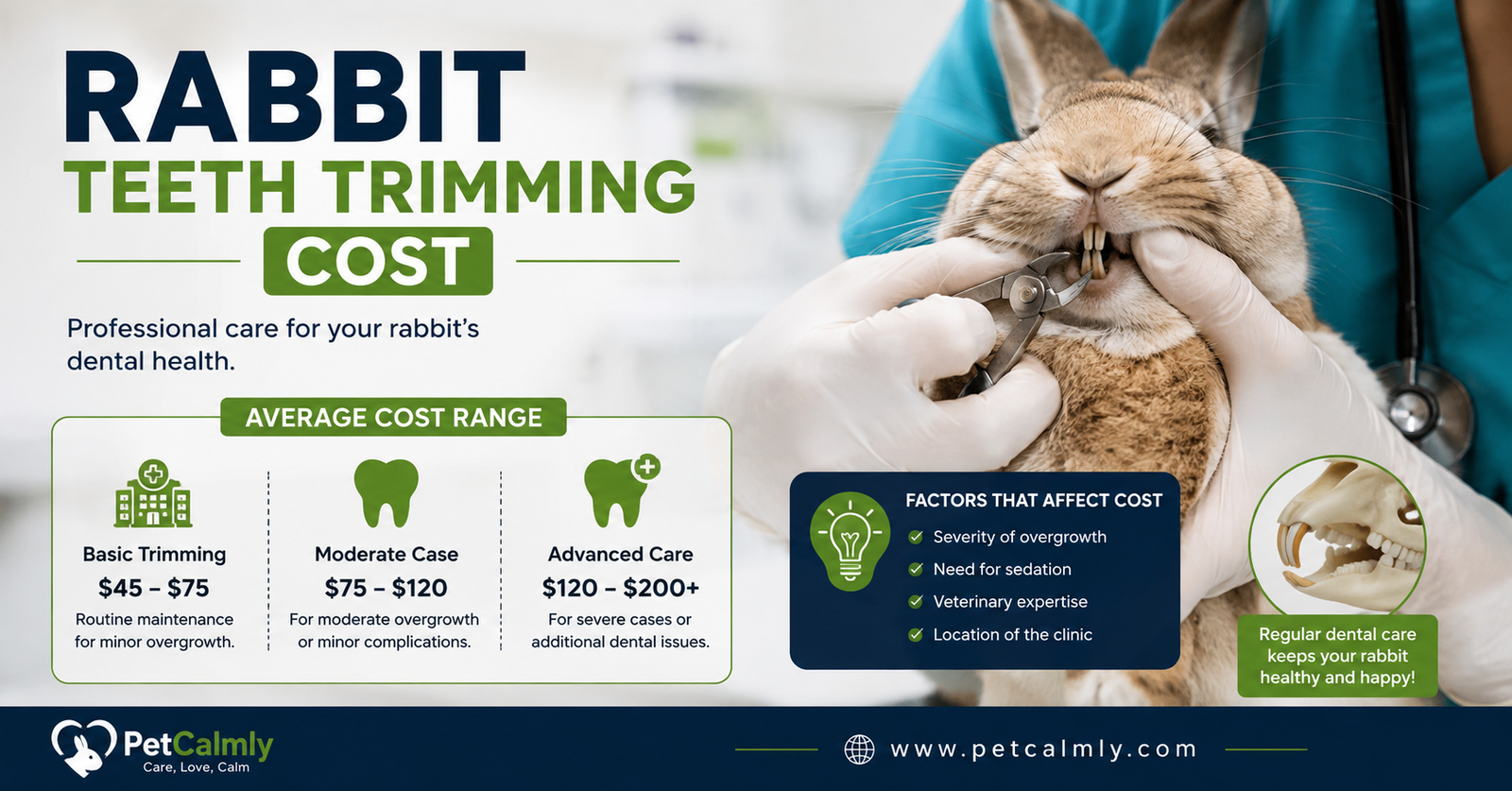
Rabbit teeth trimming cost typically ranges from $30 to $75 for a simple incisor trim done while your rabbit is awake, and $150 to $400+ for a full dental procedure under anesthesia that includes molar filing and X-rays. The exact price depends on your location, whether sedation is needed, and whether your rabbit has an underlying condition like malocclusion. A rabbit with chronic dental issues may need this done every 4 to 8 weeks for life, which is the part that actually strains most budgets not any single visit.
Let’s break down where that money goes, why some rabbits need trims constantly while others never do, and how to keep the long-term cost from spiraling.
Why Rabbits’ Teeth Need Trimming In The First Place
Rabbit teeth are unlike almost anything else in the pet world. Both the incisors (front teeth) and the molars (back teeth) grow continuously throughout a rabbit’s life often 2 to 3 millimeters per week. In the wild, this is a feature, not a bug. Constant grazing on rough grasses and fibrous plants wears the teeth down at roughly the same rate they grow, so the length stays balanced without anyone ever “trimming” anything.
Trouble starts when that natural wear-and-grow balance breaks down. A few things throw it off:
- Genetic jaw misalignment (malocclusion). Some rabbits, particularly certain dwarf and lop breeds, are simply born with jaws that don’t line up correctly. When the upper and lower teeth don’t meet properly, they can’t grind against each other, so they keep growing unchecked.
- Low-fiber diets. Rabbits fed mostly pellets and treats, with little hay, don’t get the chewing time needed to wear teeth down naturally.
- Injury or infection. A fall, a broken tooth, or a jaw abscess can shift how the teeth meet, throwing off the wear pattern even in a rabbit with a normal jaw structure.
- Age-related changes. Older rabbits sometimes develop dental disease as part of broader health decline, even without a lifelong history of tooth problems.
This matters for cost because it splits rabbit owners into two very different situations: a healthy rabbit that occasionally needs a nail-style trim, and a rabbit with chronic malocclusion that will need professional dental work on a recurring schedule for the rest of its life.
Average Rabbit Teeth Trimming Cost, Broken Down
Here’s roughly what to expect, based on typical exotic and small-animal veterinary pricing across the US.
| Type of Trim | What It Involves | Typical Cost |
|---|---|---|
| Basic incisor trim (awake) | Front teeth only, done with a hand tool while the rabbit is gently restrained | $20 – $75 |
| Incisor trim + exam | Trim plus a general wellness check | $50 – $100 |
| Molar trim (sedated) | Back teeth filed under light sedation, since molars can’t safely be reached while the rabbit is fully awake | $100 – $250 |
| Full dental procedure (general anesthesia) | Molar and/or incisor correction, X-rays, and sometimes tooth extraction | $200 – $500+ |
| Dental X-rays (add-on) | Checks tooth roots and jaw for abscess or deeper disease | $75 – $200 |
| Emergency dental (abscess, broken tooth) | Includes imaging, extraction, antibiotics, pain management | $300 – $800+ |
A rabbit that needs occasional incisor trims might spend $50 to $100 a year on dental care. A rabbit with chronic molar malocclusion, needing sedated trims every 4 to 8 weeks, can realistically cost $1,000 to $2,500+ a year once you add it all up. That gap is the single biggest thing to understand before bringing a rabbit home, or before deciding how to budget for one you already have.
What Actually Drives the Price Up or Down
A handful of factors explain why one owner pays $40 and another pays $400 for what sounds like “the same” procedure.
Whether Sedation Is Needed
Incisors are visible and accessible, so many vets can trim them with the rabbit awake and gently wrapped in a towel. Molars sit far back in the mouth and require a mouth speculum and steady positioning most vets won’t attempt this without at least light sedation, since a sudden head movement near a rotary tool is a real safety risk. Sedation alone typically adds $50 to $150 to the bill.
Your Location and Vet Type
Standard veterinary clinics that occasionally see rabbits often charge less than exotic-animal specialists, but they may also have less hands-on experience with rabbit-specific anatomy. Specialty exotic vets in major metro areas tend to charge more per visit but often catch underlying issues (like early abscesses) that a general practice might miss.
Underlying Dental Disease
A straightforward trim on an otherwise healthy rabbit is the cheapest scenario. If the vet finds a root abscess, elongated tooth roots pressing into the eye socket or jaw, or signs of infection, the visit shifts from routine maintenance to diagnostic and treatment territory — X-rays, cultures, medication, and sometimes extraction all get added.
Frequency of Visits
This is the real cost driver over time. A single $150 sedated trim isn’t what breaks a budget. Needing that same trim every 6 weeks for 8 years is what does. If your rabbit has confirmed chronic malocclusion, it’s worth asking your vet directly about the realistic long-term frequency before you’re surprised by it later.
Vet Trimming vs. At-Home Filing: Is DIY Ever Safe?
Search around and you’ll find rabbit owners filing their own rabbit’s incisors at home with nail clippers or a rotary tool. It’s worth being direct about this rather than dancing around it.
Incisors can, in some cases, be safely trimmed at home by an experienced owner using proper rabbit nail clippers but this comes with real risk. Cutting at the wrong angle or too close to the gumline can split the tooth, cause painful fractures, or lead to infection. It should only be attempted after a vet has shown you the correct technique on your specific rabbit.
Molars should never be filed at home. They’re positioned deep in the mouth, require specialized equipment to access safely, and the margin for error around a rabbit’s tongue, cheek tissue, and jaw is extremely small. This isn’t a “some owners can, some can’t” situation it genuinely requires sedation and professional tools.
If cost is the reason you’re considering DIY incisor trimming, talk to your vet about it openly. Many are willing to teach you the technique during a paid visit specifically so future incisor trims cost less, while still keeping molar work in their hands where it belongs.
Signs Your Rabbit’s Teeth Need Attention
Rabbits are prey animals, which means they’re biologically wired to hide pain and discomfort until it’s fairly advanced. Watching for early, subtle signs matters more with rabbits than with most pets.
- Dropping food while eating, or chewing on one side of the mouth
- Smaller or fewer fecal pellets than usual
- Drooling or a persistently wet chin (“slobbers”)
- Reduced interest in hay specifically, even if still eating pellets
- Visible overgrowth of the front teeth
- Weight loss without an obvious cause
- Swelling along the jawline or under the eye
- Pawing at the mouth or face
Any noticeable drop in appetite in a rabbit deserves same-day attention regardless of the cause. Rabbits can develop a dangerous digestive slowdown called GI stasis within hours of eating less, and dental pain is one of the most common triggers for it.
How Often Rabbits Actually Need Teeth Trimmed
There’s no single answer here, and that’s part of what makes budgeting for rabbit dental care tricky compared to, say, a dog’s annual checkup.
- Rabbits with normal jaw alignment and a hay-heavy diet may never need a professional trim at all, since their teeth wear down naturally through chewing.
- Rabbits with mild malocclusion might need a trim every few months, sometimes less if diet and chew-toy access are optimized.
- Rabbits with moderate to severe malocclusion often need trims every 4 to 8 weeks for life. This is the group where owners should plan financially for it as an ongoing line item, not a one-time expense.
If your rabbit has needed more than two trims in its first year, it’s worth asking your vet directly whether this is a lifelong pattern so you can plan the budget accordingly rather than being caught off guard visit after visit.
What Happens During a Rabbit Dental Trim Appointment
Knowing what to expect can make the cost feel less like a mystery fee and more like a clear list of services.
- Physical exam. The vet checks body condition, jaw alignment, and looks for facial swelling before touching the teeth.
- Oral exam. Using an otoscope or specialized speculum, the vet inspects incisors and molars for length, angle, and any visible damage.
- Sedation, if needed. For molar work, a short-acting sedative is given so the rabbit stays still and pain-free during the procedure.
- Trimming or filing. Incisors are typically clipped or filed with a rotary tool; molars are filed down using a dental burr designed for small animals.
- Recovery monitoring. After sedation, most rabbits are watched for 30 to 60 minutes before going home, since rabbits can be sensitive to anesthesia.
- Follow-up plan. The vet will usually tell you when to schedule the next trim based on how quickly the teeth are regrowing.
How to Reduce Long-Term Dental Costs
You generally can’t eliminate the need for trims in a rabbit with genuine malocclusion, but you can reduce how often issues develop or worsen.
- Feed unlimited grass hay. Timothy, orchard, or meadow hay should make up the majority of your rabbit’s diet. The chewing motion needed to eat hay is what naturally wears teeth down.
- Limit pellets and sugary treats. Pellets require far less chewing per calorie than hay, so an over-reliance on them reduces natural tooth wear.
- Offer safe chew items. Untreated willow, apple wood, or rabbit-safe chew toys give extra wear without replacing hay’s nutritional role.
- Schedule routine dental checks. Catching a slight overgrowth early is cheaper and less invasive than waiting until it causes an abscess.
- Ask about pet insurance. Some exotic-pet insurance plans cover recurring dental work, which can offset the cost for rabbits with chronic malocclusion.
When You Should Worry (And Not Wait for a Scheduled Visit)
Most dental trims are routine, but a few signs point to something that needs same-day or emergency veterinary care rather than a regular appointment:
- Your rabbit has stopped eating or drinking entirely
- No fecal pellets for 12+ hours
- Visible facial swelling or a discharge from the eye
- Blood around the mouth
- Sudden lethargy combined with any of the above
These can indicate an abscess, a fractured tooth, or the early stages of GI stasis all of which are considered veterinary emergencies in rabbits, not wait-and-see situations.
What Pet Owners Should Do Next
If you’re currently budgeting for a dental trim, the most useful next step is a direct conversation with your vet about your specific rabbit’s pattern not a general online estimate. Ask them:
- Is this a one-time issue or a chronic condition?
- Based on regrowth rate, how often will trims realistically be needed?
- Would teaching me at-home incisor care reduce long-term costs?
- Is dental X-ray monitoring recommended given my rabbit’s history?
Getting real numbers specific to your rabbit, rather than a national average, is what actually lets you plan.
Conclusion
A single rabbit teeth trimming cost is rarely the real issue most owners can absorb a $50 to $200 vet visit without much trouble. The real cost lives in the pattern: whether your rabbit needs this once a year or once every six weeks for the rest of its life. Get a clear answer from your vet about which category your rabbit falls into, lean hard on hay and safe chewing options to reduce unnecessary wear-and-grow imbalance, and treat any sudden drop in appetite as urgent. Dental health in rabbits isn’t cosmetic it’s directly tied to whether they can eat, and that makes it one of the few costs worth prioritizing without cutting corners.
More Information About Pets, Please Visit Our Website: How to Trim Rabbit Nails
Rabbit Poop Normal vs Unhealthy
Can Rabbits Eat Lettuce?
How Much Does a Rabbit Vaccination Cost?
How to Calm a Scared Rabbit
Rabbit Safe Vegetables List
Frequently Asked Questions
1: How much does it cost to trim a rabbit’s teeth without sedation?
A basic, awake incisor trim typically costs $20 to $75, depending on your location and whether it’s bundled with a general exam.
2: Why are rabbit teeth trims so expensive compared to other small pets?
Molar trims require sedation and specialized equipment to safely access the back of a rabbit’s mouth, which raises the cost compared to a simple nail or fur trim.
3: Can I trim my rabbit’s teeth myself at home?
Incisors can sometimes be trimmed at home after a vet demonstrates proper technique, but molars should always be done by a veterinarian under sedation due to the risk of injury.
4: How often do rabbits need their teeth trimmed?
It varies widely rabbits with normal jaw alignment may never need a trim, while those with malocclusion often need one every 4 to 8 weeks for life.
5: Is rabbit teeth trimming covered by pet insurance?
Some exotic-pet insurance plans cover recurring dental care, especially for confirmed malocclusion, but coverage varies significantly by provider and policy.
6: What happens if a rabbit’s teeth are never trimmed?
Untrimmed overgrown teeth can prevent normal eating, cause mouth injuries, lead to abscesses, and contribute to serious complications like GI stasis, making regular monitoring important for at-risk rabbits.