
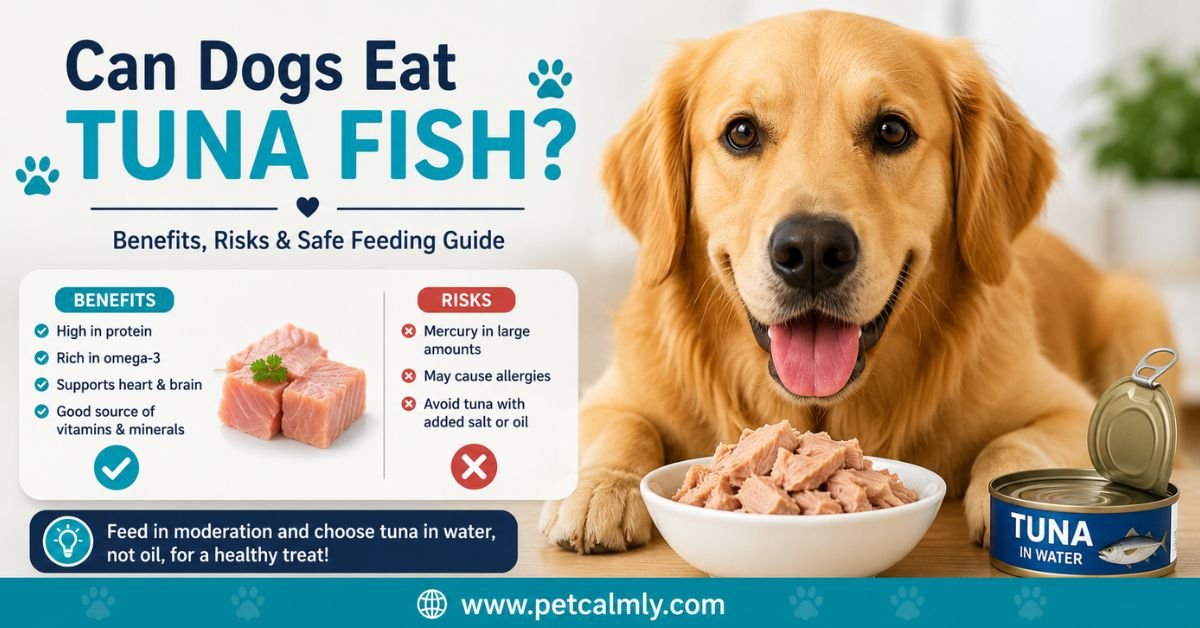
Short direct answer
Yes, dogs can eat small amounts of plain, cooked tuna as an occasional treat. Tuna isn’t toxic to dogs the way chocolate or grapes are, but it does carry two real concerns: mercury buildup from regular feeding and stomach upset from oil, salt, or seasoning found in canned varieties. A few bites of plain tuna now and then is generally fine for a healthy adult dog. Tuna should never replace balanced dog food, and it shouldn’t become a daily habit.
That’s the short version. If you want to actually understand why those limits exist, what amount is safe for your specific dog, and what to do if your pup just raided your tuna sandwich off the counter, keep reading. This guide covers all of it.
Why This Question Comes Up More Than You’d Think
If you’re reading this, there’s a decent chance your dog just did something dogs do best: found food that wasn’t meant for them and ate it anyway. Maybe a can of tuna got left open on the counter. Maybe you were making a tuna salad sandwich and turned around to find your dog’s nose in the bowl. Or maybe you’re just a thoughtful owner trying to figure out if tuna could be a healthy addition to your dog’s diet.
All three situations are common, and all three deserve a real answer instead of vague reassurance or unnecessary panic. Tuna sits in a gray area of pet nutrition — it’s not dangerous the way onions or xylitol are, but it’s not a free-for-all either. Understanding where the actual risk lives makes it much easier to make a confident decision.
What Happens Nutritionally When a Dog Eats Tuna
Tuna is a lean, protein-dense fish, and in that sense, it’s not a bad match for a dog’s biology. Dogs are built to process animal protein efficiently, and fish protein is generally easy to digest compared to some fattier meats.
Plain tuna (cooked, unsalted, no oil or seasoning) offers:
- High-quality protein that supports muscle maintenance
- Omega-3 fatty acids, which support skin, coat, and joint health
- Vitamin B12 and vitamin D
- Selenium and other trace minerals
None of this makes tuna a “superfood” for dogs, and it shouldn’t be marketed that way. It simply means tuna, in small amounts, isn’t nutritionally harmful the way people sometimes assume seafood might be for pets unfamiliar with a fish-based diet.
The Real Risk: Mercury, Not the Fish Itself
This is the part most casual advice skips over, and it’s the part that actually matters.
Tuna especially larger species like albacore and yellowfin accumulates mercury from the ocean environment over its lifetime. Larger, longer-living fish tend to carry more mercury than smaller ones like skipjack (the type most often used in standard canned “light” tuna).
Mercury doesn’t cause a dramatic reaction after one meal. The concern is cumulative. If a dog eats tuna regularly over weeks or months, mercury can build up in the body faster than it’s eliminated, potentially leading to mercury toxicity over time. This is why veterinary sources consistently frame tuna as an occasional treat rather than a dietary staple, not because a single bite is dangerous.
In plain terms: one spoonful of tuna today is not the same risk as tuna every day for a month. Frequency is what turns a harmless treat into a potential problem.
Signs of Mercury-Related Concern (Develops Over Time, Not Instantly)
- Loss of coordination or wobbliness
- Vision changes
- Kidney issues
- Hair loss
- Lethargy that doesn’t resolve
These symptoms would only be expected after prolonged, repeated high exposure — not from an isolated incident. If you’re worried about a single event, the more immediate concerns below are far more relevant.
Canned Tuna vs. Fresh Tuna: They Are Not the Same Risk Category
This distinction matters more than most articles give it credit for.
| Type of Tuna | Safety for Dogs | Main Concern |
|---|---|---|
| Fresh, cooked, plain tuna | Safest option in small amounts | Mercury (only with frequent feeding) |
| Canned tuna in water | Acceptable occasionally | Sodium content |
| Canned tuna in oil | Least ideal | Added fat can trigger stomach upset or, rarely, pancreatitis |
| Flavored or seasoned tuna (garlic, onion powder, spices) | Avoid | Garlic and onion are toxic to dogs |
| Raw or sushi-grade tuna | Avoid | Risk of parasites and bacteria; thiaminase concerns in some raw fish |
| Tuna salad with mayo, relish, or seasoning | Avoid | Added fat, salt, and often onion |
If your dog got into a can of plain tuna packed in water, that’s a very different situation than getting into a tuna salad sandwich loaded with mayonnaise, onion, and seasoning. The fish itself is rarely the problem what’s mixed in with it usually is.
How Much Tuna Is Actually Safe for a Dog?
There’s no single number that applies to every dog, because size, health status, and how often tuna is offered all factor in. As a general guideline for a healthy adult dog with no kidney or health conditions:
- Small dogs (under 20 lbs): A teaspoon-sized amount, no more than once every couple of weeks
- Medium dogs (20–50 lbs): One to two tablespoons, occasionally
- Large dogs (50+ lbs): A small handful, occasionally
“Occasionally” means as a treat, not a routine. Tuna should stay well under 10% of your dog’s overall diet, the same general rule that applies to most treats and food toppers. If you’re regularly adding tuna to your dog’s meals because they love it, it’s worth switching to a fish specifically formulated for dogs, like sardines packed in water, which carry a lower mercury load and are often better tolerated in larger amounts.
Dogs Who Should Avoid Tuna Entirely
Some dogs shouldn’t have tuna at all, even in small amounts. This includes dogs with:
- Existing kidney disease
- A history of pancreatitis
- Known fish allergies or sensitivities
- Heart conditions requiring a low-sodium diet
- Puppies under a few months old, whose systems are still developing
If your dog fits into any of these categories, it’s worth having a direct conversation with your veterinarian before offering tuna, even occasionally. Their diet is likely already being managed carefully, and tuna’s sodium and mercury content can interfere with that.
My Dog Just Ate Tuna Off the Counter What Now?
This is usually where people land on this article, so let’s walk through it calmly.
Step 1: Figure out what kind of tuna it was. Plain canned tuna in water is low-risk for a one-time incident. Tuna salad with mayo, onion, or heavy seasoning is a bigger concern.
Step 2: Estimate the amount. A dog that ate a few bites is very different from a dog that finished an entire large can. Larger amounts increase the chance of stomach upset.
Step 3: Check the ingredients if it was tuna salad. Onion and garlic are toxic to dogs even in small quantities. If either was in the mix, this becomes a more urgent situation, and you should contact your vet or an animal poison control line right away rather than waiting to see what happens.
Step 4: Watch for symptoms over the next 24 hours. Mild vomiting or soft stool from the fat or salt content is possible and usually resolves on its own. Repeated vomiting, diarrhea that doesn’t stop, lethargy, or refusal to eat are signs it’s time to call your vet.
Step 5: Don’t panic, but don’t dismiss it either. A single incident of eating plain tuna is rarely an emergency. The goal here is awareness, not fear.
When You Should Actually Call the Vet
General pet-care advice can only go so far. Contact your veterinarian if any of the following apply:
- The tuna was seasoned with onion, garlic, or heavy spices
- Your dog ate a large quantity relative to their size
- Your dog has an existing kidney, heart, or pancreas condition
- Symptoms include repeated vomiting, diarrhea lasting more than a day, unusual lethargy, or loss of appetite
- Your dog shows any signs of an allergic reaction, such as facial swelling, hives, or difficulty breathing
This is the line between “manage it at home” and “this needs professional input.” When in doubt, a quick call to your vet costs far less than waiting through a situation that turns out to be serious.
What Responsible Tuna Feeding Actually Looks Like
If you’d like to include tuna as an occasional treat, here’s what that looks like done well:
- Choose tuna packed in water, not oil.
- Rinse it briefly to reduce sodium content further.
- Serve it plain no mayo, no seasoning, no bread.
- Offer small amounts, matched to your dog’s size.
- Space it out. Once every week or two is a reasonable ceiling, not a target to hit consistently.
- Treat it as a topper or occasional reward, not a meal replacement.
This approach lets your dog enjoy tuna without turning an occasional treat into a habit that raises mercury exposure over time.
Common Mistakes Owners Make With Tuna and Dogs
- Assuming “fish is healthy” means “more is better.” Moderation is the entire point with tuna.
- Sharing tuna salad instead of plain tuna. The mayo, onion, and salt are the real issue, not the fish.
- Feeding tuna daily because a dog seems to love it. This is exactly the pattern that leads to mercury accumulation.
- Not checking the can for added oils or seasoning blends. Some canned tuna products include flavoring that isn’t dog-safe.
- Confusing tuna with tuna-flavored dog treats. Products made specifically for dogs are formulated differently and aren’t a direct comparison to human-grade canned tuna.
Tuna and Cats: A Quick Note (Since Many Households Have Both)
If you also have a cat, it’s worth knowing the guidance is stricter for them. Cats are more prone to becoming selectively attached to tuna’s strong smell and flavor, which can lead to picky eating and nutritional imbalances if it’s given too often. The mercury concern applies to cats as well, and because of their smaller body size, it becomes relevant faster. The same “occasional treat, not a habit” rule applies, just with an even lighter hand.
Conclusion
Tuna isn’t something to fear, and it isn’t something to feed freely either. Plain, unseasoned tuna in small, occasional amounts is safe for most healthy dogs. The real risks mercury buildup and added ingredients like salt, oil, onion, or garlic come from how often and in what form tuna is offered, not from an isolated bite here and there.
If your dog got into some tuna today, the most useful thing you can do is check what kind it was, watch for symptoms over the next day, and reach out to your vet if anything seems off. And if you’re considering tuna as a regular treat going forward, keeping it occasional and plain is the simplest way to let your dog enjoy it without any real downside.
More Information About Pets, Please Visit Our Website: Can Dogs Eat Kiwi?
Can Dogs Eat Celery?
Can Dogs Eat Cucumber?
Can Dogs Eat Watermelon?
Can Dogs Eat Mango?
Frequently Asked Questions
1: Can dogs eat tuna every day?
No. Daily tuna feeding increases the risk of mercury accumulation over time. Tuna is best kept as an occasional treat, not a daily addition to your dog’s diet.
2: Can dogs eat canned tuna in oil?
It’s not the best choice. The added oil increases fat content, which can cause stomach upset or, in sensitive dogs, contribute to pancreatitis. Tuna packed in water is the safer option.
3: Is tuna toxic to dogs?
Tuna itself is not toxic in the way chocolate or grapes are. The concern is mercury buildup from frequent feeding and additives like salt, onion, or garlic often found in prepared tuna dishes such as tuna salad.
4: Can puppies eat tuna?
It’s best to avoid tuna for puppies. Their smaller bodies and developing systems make them more vulnerable to sodium and mercury, and puppy nutrition should focus on food formulated specifically for their growth stage.
5: What should I do if my dog ate tuna salad?
Check whether it contained onion or garlic, both of which are toxic to dogs. If so, contact your veterinarian promptly. If it was simply tuna, mayo, and no toxic seasonings, monitor for mild stomach upset over the next 24 hours.
6: Can dogs eat tuna fish bones?
Canned tuna typically has bones removed or softened during processing and isn’t usually a choking or splintering concern. Fresh, uncooked tuna bones should still be avoided, as with any raw fish bones.