
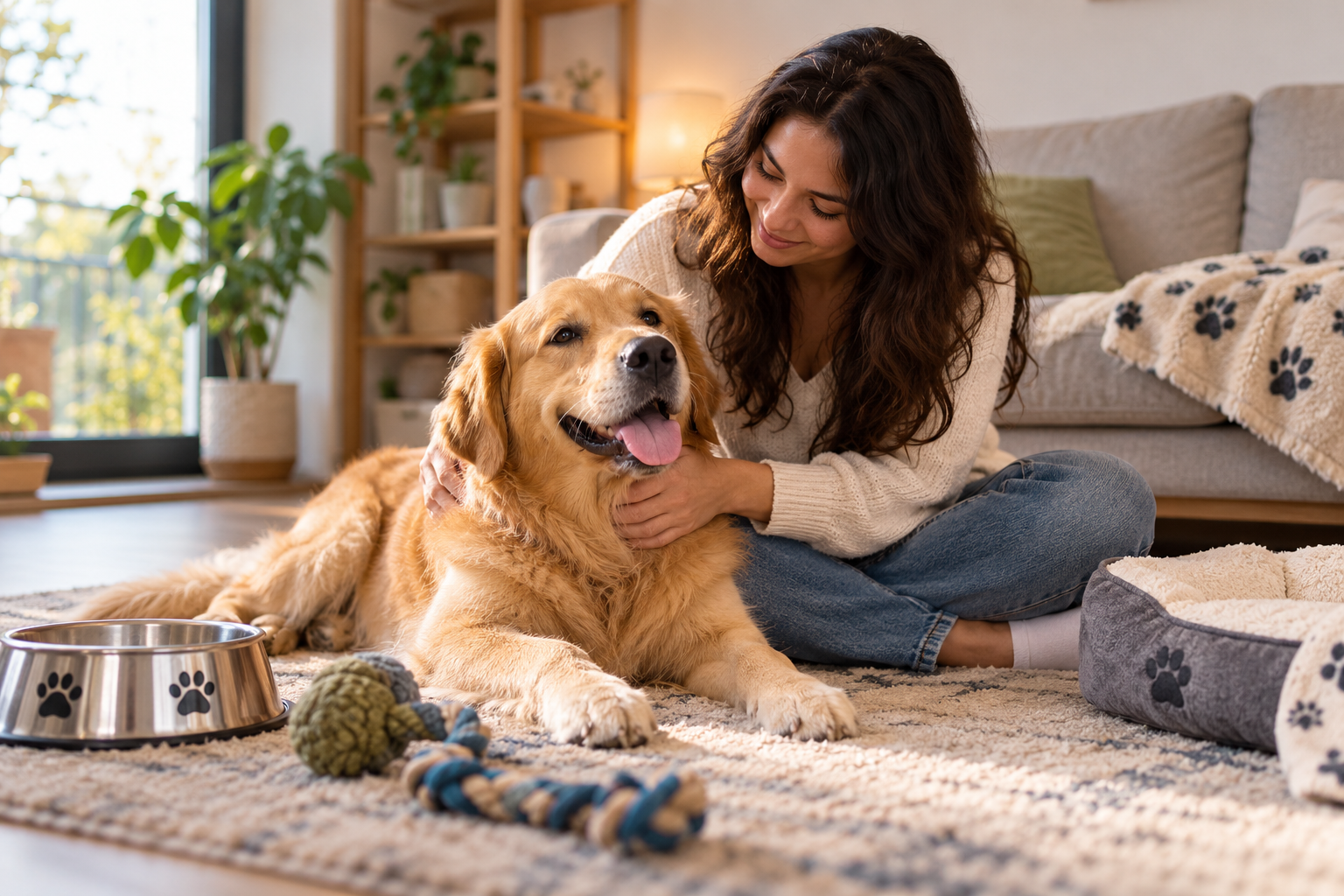
Your dog has been walked, fed and let outside, yet is still pacing from the sofa to the door. Restlessness has several possible causes, including discomfort that needs veterinary attention. Before adding another walk, consider both your dog’s health and the balance of the day.
A dependable daily routine covers essential care, suitable activity, time with people and protected rest. It should fit your household while allowing for your dog’s age, health and preferences.
This guide is educational and does not replace veterinary advice. A routine can organize everyday care, but it cannot diagnose or treat an anxiety disorder. All training suggestions below use reward-based methods.
Key Takeaways
- A familiar order of events matters more than exact clock times.
- Measure meals, count treats and puzzle food toward the daily total and keep fresh water available.
- Plan toilet breaks separately from longer walks, and adjust activity for age, health and weather.
- Protect rest as carefully as play, and treat restlessness or pacing as a possible sign of discomfort.
- Bring new or persistent changes to your veterinarian instead of adding more exercise.
Build a Daily Dog Care Routine You Can Repeat
The table below illustrates a routine for a generally healthy adult dog. Adapt it to your circumstances, respond to your dog’s needs between scheduled activities and follow any individual veterinary instructions.
| Part of day | Care priorities | Adjustments |
| Waking | Toilet opportunity straight away; check the water bowl | Puppies and older dogs may need to go out more often |
| Morning | Scheduled meal; a walk or other suitable activity | Adjust activity for mobility, weather and veterinary restrictions |
| Midday | Caregiver check-in, toilet access, interaction, then rest | Arrange a visit from a family member, neighbor or sitter if needed |
| Evening | Scheduled meal; shared activity such as a sniffing walk, a short game or brief training | Keep activities low-key for dogs who become overexcited in the evening |
| Bedtime | Final toilet opportunity; access to a quiet sleeping space | Older dogs and puppies may need a nighttime trip outside |
Keep water available and respond to toilet needs throughout the day. These rows are reminders to check on your dog; care continues between them.
Dogs Trust advises owners to adapt its example routine to their circumstances. Preventive Vet also emphasizes structure over strict timing. Build a familiar pattern your household can maintain, with room for ordinary changes in the day.
Keep the order familiar. Waking, going outside, eating breakfast, walking and resting can form a recognizable sequence even when the timing shifts. If work hours change, keep that sequence where practical without delaying essential care.
Share the checklist. In a busy household, people may assume someone else has fed or walked the dog. A checkmark on a shared note or fridge calendar helps prevent missed or duplicate meals and shows whoever comes home last what still needs doing. Agree on who covers each task.
Protect prescribed timing. Follow medication instructions and any feeding schedule your veterinarian has set for a medical condition. Arrange flexible activities, such as play and grooming, around those requirements.
Make Meals Predictable and Keep Water Available
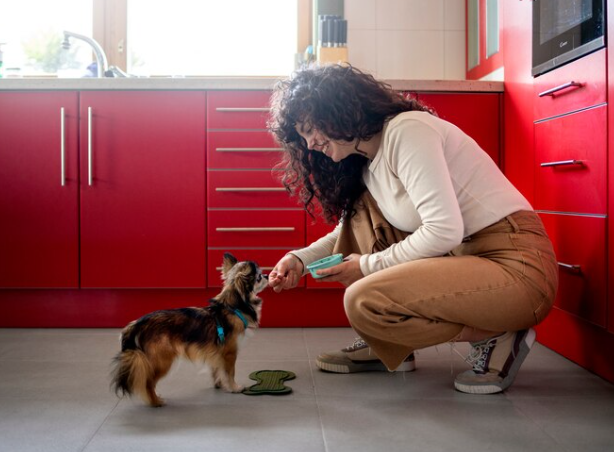
Regular meals provide useful checkpoints for the rest of the day. Montecito Animal Clinic describes two meals a day as suitable for most adult dogs, while noting that puppies may need more frequent feeding. Your dog’s individual feeding instructions take precedence.
Follow the individual feeding plan. VCA’s feeding guidance recommends choosing regular times and identifies the dog’s veterinarian as the best source of nutritional advice. Feed the amount and frequency agreed for your dog, measuring portions rather than guessing. Dogs with diabetes, digestive conditions or weight-management plans may need a different schedule.
Avoid topping up the bowl whenever your dog looks bored or hopeful. Keep track of the agreed daily amount, and offer suitable interaction or enrichment when your dog needs something to do. If appetite changes noticeably, discuss it with your veterinarian.
Count rewards and puzzle food. AAHA discusses a general treat allowance of 10% of daily calories. Training treats count toward that allowance and the day’s calorie total; they are not extra calories to add after meals. Follow any individual limits your veterinarian recommends.
Food used in a snuffle mat or puzzle also counts toward the daily total. Setting aside part of a measured meal for these activities helps you track how much your dog eats. Make sure everyone who gives rewards knows what has already been set aside, so shared training does not turn into untracked feeding.
Keep water accessible. Fresh water should be available throughout the day in a bowl your dog can reach easily. Refresh it regularly and check it during tasks you already do, such as feeding, waking and bedtime. Changes in drinking deserve veterinary attention, especially if they persist or occur alongside other changes.
For background on everyday wellness and feeding, The Dog Care Guide’s health and nutrition section is a helpful companion read, and the wider dog care guide also covers training and breeds. Read it alongside your veterinarian’s plan, particularly when deciding which general advice applies to your dog.
Match Walks and Potty Breaks to Your Dog
Taking your dog out serves several needs: toileting, movement, sniffing and exploring. Plan for toilet access separately from longer outings. A walk earlier in the day does not remove the need for another toilet opportunity later.
Respond to toilet needs. Waking, after meals, midday and bedtime can serve as checkpoints for adult dogs, with extra trips whenever needed. The AKC advises offering puppies opportunities to go outside after eating, waking from naps and playing. Older dogs may also need more frequent access. Respond when your dog asks to go out rather than making them wait for the next scheduled trip.
Choose suitable activity. Exercise needs vary with age, breed, body condition, health and personality. Watch how your dog moves and responds to the surroundings. Comfortable movement, chances to sniff and an environment your dog can cope with are more useful goals than covering a set distance.
Watch the walk itself. A dog that stops often, lags behind or seems reluctant on a familiar route may be experiencing pain, heat or fear. Avoid assuming stubbornness or pushing the dog to finish. Adjust the outing and seek veterinary advice about new or persistent changes.
Plan for changed conditions. Weather, mobility and veterinary restrictions all affect what a suitable outing looks like. In harsh weather, a shorter toilet trip and indoor enrichment may be more appropriate. After surgery or during a joint flare-up, follow the veterinarian’s activity instructions even if your dog seems keen to do more.
Arrange cover for long workdays. If nobody will be home to meet your dog’s needs, arrange help from a family member, trusted neighbor, dog walker or sitter. Agree on toilet access, water checks and suitable interaction. Put the visit on the household checklist and tell the caregiver about any feeding or activity restrictions.
Use Short, Rewarding Enrichment and Training
Enrichment gives dogs suitable opportunities to sniff, search, explore and solve manageable problems. Dogs Trust recommends providing enrichment daily and using it throughout the day. Choose activities that fit your dog’s size, health, dietary needs and preferences, and watch for frustration.
Brief training can fit around these activities. The American Veterinary Society of Animal Behavior recommends reward-based methods for all dog training and behavior modification. Reward behaviors you want to encourage, and avoid intimidation, punishment or forcing your dog into a situation they are trying to leave.
Activities that can fit into an ordinary evening include:
- A simple food puzzle or snuffle mat containing part of your dog’s measured meal.
- An easy find-the-food game, with kibble placed in plain sight before you try slightly harder spots around the room.
- Brief practice of a familiar cue, such as sit or touch, with a reward for each success.
Choose an activity your dog enjoys. These examples are optional ways to add interest to the day, not treatments for anxiety or a program every dog must complete.
Start with an easy success. An unsolvable puzzle can frustrate a dog. Begin at a level your dog can manage comfortably, then increase the difficulty gradually.
Watch the response. Some dogs settle after a search game; others become more excited. If an activity leaves your dog wound up, try a calmer option or move it earlier in the day. Allow quiet time afterward rather than starting another game straight away.
Make activities safe. Choose puzzles and chews sized for your dog, supervise unfamiliar items and avoid leaving new toys or chews with a dog who is alone. In a multi-dog household, offer food games separately to reduce competition. Count all food used toward each dog’s daily amount.
Give Rest a Place in the Routine
Plan quiet periods alongside walks, meals and games. Leave room for your dog to rest without expecting them to join every household activity.
Dogs Trust advises leaving sleeping dogs undisturbed and notes that pain or physical discomfort can make resting difficult. Both points matter when deciding whether a restless dog needs a change of pace or a veterinary assessment.
Make downtime deliberate. Build a quiet stretch into the day, perhaps after the evening meal and activity. Reduce noise and lively play around your dog. A familiar wind-down can include the same comfortable bed or blanket and a low-key period before bedtime, without waking a sleeping dog to follow the schedule.
Respect the sleeping space. Provide a comfortable place away from busy walkways, drafts and household commotion. Some dogs rest happily in a crate with the door open; others prefer a quiet corner or alcove. Let your dog choose to use the space and leave them undisturbed once settled.
Allow your dog to walk away from a game or cuddle. Avoid following them to their bed or bringing them back to continue an interaction they have left. Make sure everyone in the household understands that the resting space is quiet and protected.
Look for signs of discomfort. Lying still alone does not tell you whether a dog is comfortable. Notice changes in how they settle, move or respond to people. Pacing, repeatedly moving between resting spots or struggling to get comfortable can warrant veterinary attention, so avoid responding automatically with more exercise.
If your dog repeatedly cannot settle, review the day’s balance of activity and downtime while arranging advice about possible health concerns. Activity packed into a single busy block may need rearranging, but a schedule cannot rule out pain. Separation-related distress and noise fears can also require professional assessment and treatment.
Make Daily Hygiene Gentle and Manageable
A brief daily check helps you notice changes in your dog’s comfort and appearance. Daily toothbrushing is also a recommended goal, introduced gradually. Coat brushing, bathing and nail care need schedules suited to the individual dog.
The daily check can fit into a familiar task, such as putting on a harness. Notice the coat, visible skin, paws and how comfortable the mouth seems. Learning what is normal makes changes easier to describe to a veterinarian.
Build dental care gradually. AAHA recommends daily toothbrushing to help reduce plaque accumulation, and its guidance emphasizes patience and consistency when introducing brushing.
Start with a step your dog accepts comfortably, such as tasting dog-safe toothpaste, before gradually introducing a dog toothbrush. Keep sessions short and reward calm participation. Avoid prying the mouth open or continuing when your dog pulls away, and never use human toothpaste.
Home brushing supports dental care, but your dog still needs professional dental assessment. A change in mouth odor or discomfort during handling is a reason to seek advice rather than brush harder.
Match grooming to the coat. AAHA’s shedding guidance recommends regular brushing, with daily brushing for heavy shedders. Some coats need more frequent attention to prevent mats. Bathing and nail trimming also depend on coat type and activity, so add them to the household checklist at suitable intervals.
Stop if handling causes discomfort. If your dog pulls away when you touch a paw or flinches when you lift a lip, stop and note the change. Excessive shedding, hair loss, redness, new lumps or an unusual smell from the ears all deserve veterinary advice. Leave deep ear cleaning, dental scaling and difficult handling to an appropriate professional.
Adjust the Routine When Your Dog’s Needs Change
The adult-dog routine above is a starting point. Review it as your dog’s needs or your household circumstances change, and always follow any individual veterinary instructions.
| Situation | Possible adjustments | Continuing priorities |
| Puppies | More frequent meals; toilet opportunities after eating, waking and playing; shorter activities with plenty of rest | A familiar order of events and reward-based handling |
| Older dogs | Gentler outings, more toilet trips, an accessible bed and closer attention to appetite and mobility | Suitable daily enrichment and protected rest |
| Changed household schedule | Adjusted activity times, caregiver visits and reassigned checklist tasks | Essential care every day, with clear responsibility for each task |
| Dogs under veterinary treatment | Feeding, medication and activity arranged around the treatment plan | Following the veterinarian’s instructions |
Watch changes in your dog’s comfort, appetite and abilities rather than relying on age alone. Review feeding and activity with your veterinarian when those needs change.
Change one manageable element. For an everyday scheduling problem, try moving the evening walk earlier, swapping an exciting game for a calmer sniffing walk or adding a midday visit. Keep other parts of the routine steady so you can observe the response, and don’t delay needed care while you test a change.
Keep a short care log. Record appetite, drinking, toilet habits, activity and how easily your dog settles. It gives you something specific to discuss if a concern continues and helps other caregivers notice changes.
Seek help for distress or discomfort. Contact your veterinarian about new or persistent distress, obvious discomfort, changes in appetite or drinking, difficulty resting or a meaningful shift in behavior. It also helps to understand the common causes of dog anxiety before deciding what to change. Punishment and leaving a distressed dog to cry it out are never appropriate responses.
FAQ
How many times a day should I feed my adult dog?
Two meals a day suits most healthy adult dogs, while puppies usually need more frequent feeding. Your veterinarian’s plan comes first, especially for dogs with medical conditions.
How often should my dog go out to the toilet?
Offer a trip after waking, after meals, around midday and before bed, plus whenever your dog asks. Puppies and older dogs often need more frequent breaks.
Why is my dog restless even after a walk?
Restlessness can come from too little rest, an overstimulating evening or physical discomfort. Review the balance of the day, and talk to your veterinarian if pacing or trouble settling continues.
Can a routine fix dog anxiety?
A predictable routine can make the day easier for your dog, but it cannot diagnose or treat an anxiety disorder. Persistent distress needs a veterinarian or qualified behavior professional.