
Short direct answer
Most corn snakes need feeding every 5-7 days as hatchlings and juveniles for steady growth, shifting to every 7-14 days as subadults, and every 10-21 days for healthy adults. Adjust based on your snake’s age, size, weight, and body condition to prevent under- or overfeeding. Always offer appropriately sized frozen-thawed rodents, and monitor for signs of good health like a rounded but not bulging body.
Why Getting the Feeding Schedule Right Matters for Your Corn Snake
Corn snakes are popular pets because they’re calm, hardy, and relatively easy to care for. But feeding is one area where small mistakes can lead to big issues like obesity, regurgitation, or stunted growth. Many new owners worry: “Is my snake hungry?” or “Am I feeding too much?” Getting the frequency right keeps your pet at a healthy weight, supports natural digestion, and mimics how these snakes eat in the wild infrequent but substantial meals.
Think of it like this: in nature, a corn snake might catch a mouse once every couple of weeks. In captivity, we control that schedule to match their metabolism and prevent problems from constant access to food.
Understanding Feeding Frequency by Age and Size
Corn snake feeding isn’t one-size-fits-all. It changes as they grow because younger snakes have faster metabolisms and need more frequent nutrition for development.
Hatchlings (8-20 inches long, typically under 6-8 months old) These little ones grow quickly. Feed them every 5-7 days. Start with one pinky mouse (newborn mouse, about 1-3g). Some keepers offer two smaller pinkies if the snake is on the larger side of hatchling size. This keeps energy high without overloading their tiny stomachs.
Juveniles (20-45 inches, roughly 6 months to 2 years) As they hit this stage, stretch to every 7-10 days. Move up to fuzzies or small hoppers. The goal is steady growth without rapid weight gain. A common example: a 30-inch juvenile might get one fuzzy mouse weekly.
Subadults (35-50 inches) Feed every 10-12 days. Prey size increases to weaned or adult mice. Many owners notice their snake starts refusing food occasionally this is normal as metabolism slows.
Adults (over 50 inches or 2+ years old) Most adults thrive on meals every 10-21 days. Females sometimes eat more often (every 7-12 days) if breeding, while males may go longer (11-14 days or more). Large adults can handle every 2-3 weeks without issue, especially if maintaining weight.
A quick rule many experts follow: base it on body weight. Aim for prey totaling about 10% of the snake’s body weight per meal for growing snakes, dropping to 5-7% for adults to avoid obesity.
Factors That Influence How Often to Feed
Several things tweak the basic schedule.
- Temperature and enclosure setup — Corn snakes digest best at proper basking (88-92°F) and cool-side (75-80°F) temps. Cooler setups slow digestion, so you might extend time between feeds.
- Activity level — Active, climbing snakes burn more calories than sedentary ones.
- Seasonal changes — Some slow eating in cooler months or during shedding.
- Health and breeding status — Gravid females or breeding males need more frequent, nutrient-rich meals.
- Individual personality — Every corn snake is different. One might eagerly eat weekly; another skips meals happily.
Always weigh your snake monthly. A healthy corn has a gentle taper from head to tail no sharp ribs visible, no rolls of fat.
Signs Your Corn Snake Is Getting the Right Amount of Food
Watch body condition closely it’s the best indicator.
Good signs:
- Rounded but not distended mid-body after feeding (digests in 48-72 hours).
- Clear eyes, smooth shedding, active tongue flicking.
- Consistent energy and no refusal streaks longer than a month (adults can fast longer safely).
Red flags for underfeeding:
- Visible spine or ribs.
- Slow growth in young snakes.
- Lethargy or hiding more than usual.
Signs of overfeeding:
- Bulging fat rolls around the middle.
- Regurgitation after meals.
- Difficulty moving or breathing.
One owner shared: their juvenile corn looked “puffy” after weekly large hoppers. They switched to every 10 days with smaller prey—the snake slimmed to a perfect shape in months.
When Should You Be Concerned?
Contact a reptile vet if:
- Your snake refuses food for over a month (juveniles) or 2-3 months (adults) without obvious reasons like brumation or shedding.
- Repeated regurgitation—could signal too-large prey, handling too soon after eating, or illness.
- Sudden weight loss or gain.
- Swelling, lumps, or abnormal feces.
Prolonged refusal isn’t always emergency many healthy adults fast seasonally but track weight weekly during strikes.
What Should Pet Owners Do? Actionable Steps for Proper Feeding
Follow these simple steps for success:
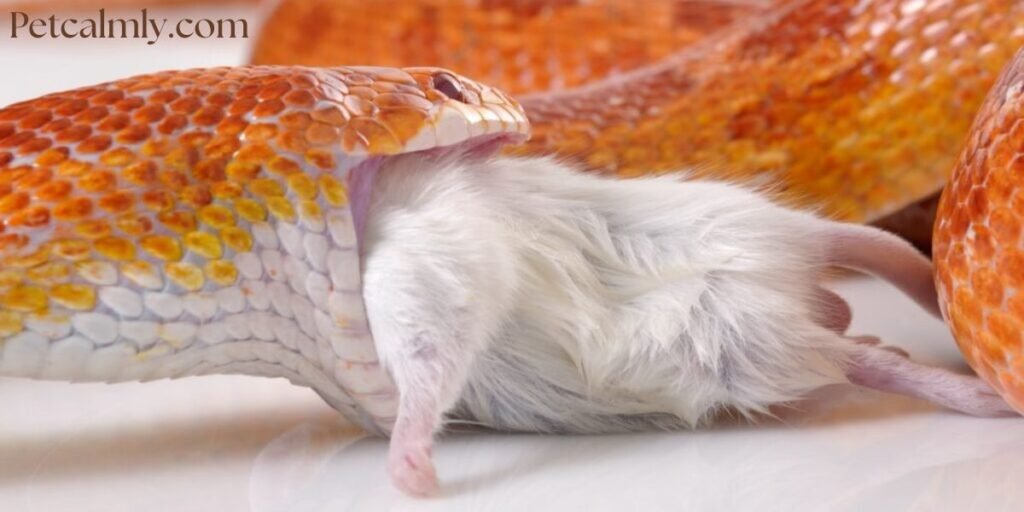
- Choose the right prey — Always frozen-thawed rodents (mice preferred for most corn snakes). Thaw in warm water, never microwave. Size: widest part no bigger than 1-1.5x the snake’s mid-body width.
- Set a routine — Pick consistent days (e.g., every Saturday). Feed in the enclosure using tongs to avoid bites.
- Monitor digestion — Wait 48 hours post-feed before heavy handling. No bathing or moving during this window.
- Weigh regularly — Use a digital kitchen scale. Log weights to spot trends.
- Adjust as needed — If overweight, reduce frequency or prey size. If underweight/growing slowly, slightly increase.
- Offer variety occasionally — Add quail chicks or Reptilinks monthly for enrichment (not required).
- Provide fresh water always — Large, stable bowl changed daily.
Start conservatively if unsure better slightly under than over.
More Information About Pets, Please Visit Our Website: Can Baby Bearded Dragons Eat Cucumber Daily in Summer?
Conclusion
Feeding your corn snake the right amount at the right intervals is key to its well-being. Hatchlings and juveniles need meals every 5-10 days for growth, while adults do fine every 10-21 days for maintenance. Prioritize proper prey size, body condition checks, and a stable environment over strict rules.
With attentive care, your corn snake can live 15-20+ years happily. Observe your individual pet, adjust gradually, and enjoy the rewarding bond that comes from responsible reptile keeping.
Frequently Asked Questions
How long can a corn snake go without eating?
Healthy adults often fast 1-3 months without harm, especially during cooler seasons or shedding. Juveniles shouldn’t go beyond a month. Always check for weight loss.
Should I feed my corn snake live or frozen mice?
Frozen-thawed is safer and recommended. Live prey can bite or stress your snake, risking injury or infection.
What if my corn snake regurgitates its food?
Common causes: prey too large, handling too soon after eating, or low temps. Wait 10-14 days before retrying with smaller prey, ensure proper heat, and avoid disturbance.
Can I feed my adult corn snake every week?
Some do, especially smaller or active adults, but many experts suggest every 10-21 days to prevent obesity. Monitor body shape closely.
How do I know if the prey size is correct?
The prey’s widest part should be no larger than 1-1.5 times your snake’s mid-body width. After swallowing, there should be a noticeable but not extreme lump that smooths in a few days.
Do corn snakes need supplements or vitamins?
No whole frozen-thawed rodents provide complete nutrition. Variety like occasional quail adds interest but isn’t essential for balanced diets.