Short direct answer
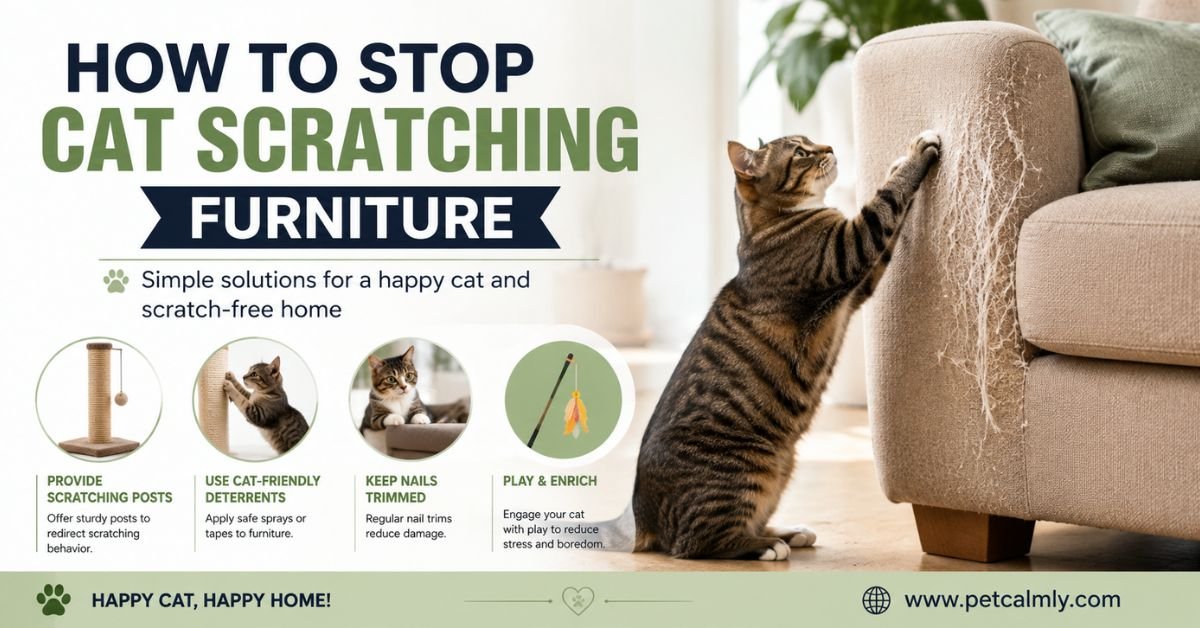
To stop a cat from scratching furniture, give it a better legal option first, then make the furniture less appealing. Place a sturdy scratching post right next to the couch or chair your cat already targets, choose a texture your cat prefers (sisal, cardboard, or wood), and use double-sided tape, aluminum foil, or a citrus-scented deterrent on the furniture temporarily. Reward every use of the post with a treat or praise. Most cats switch within one to three weeks once scratching feels easier and more rewarding on the post than on the couch.
That’s the short version. If you want to actually fix this for good not just patch it for a week keep reading, because the “why” matters just as much as the “how.”
Why Your Cat Is Scratching the Furniture in the First Place
If you’ve ever caught your cat mid-scratch on your favorite armchair and wondered “why here, of all places,” you’re not alone. It’s one of the most common complaints cat owners bring up, right after litter box issues.
Here’s the part most articles skip: scratching isn’t a behavior problem you need to eliminate. It’s a biological need you need to redirect. Cats scratch for several very specific reasons, and none of them are about spite or misbehavior.
- Claw maintenance. Scratching sheds the outer, worn layer of the claw sheath, keeping claws sharp and healthy.
- Scent marking. Cats have scent glands in their paw pads. Scratching leaves both a visual mark and a chemical signal that says “I was here” to other animals.
- Stretching. Scratching lets a cat extend its spine, shoulders, and front legs in a full-body stretch, similar to how you might stretch after sitting too long.
- Stress relief. Some cats scratch more when they’re anxious, bored, or dealing with a change at home, like a new pet, a move, or a shift in routine.
- Territory and confidence. Scratching in a visible spot, like the arm of a couch facing the front door, often means your cat is marking a high-traffic area on purpose.
Your couch just happens to be a good scratching surface usually because of its texture, height, and location. Cats often prefer materials with a coarse weave they can dig their claws into and drag downward through, which is exactly what upholstery fabric and wood furniture offer.
What Your Cat’s Furniture Choice Is Actually Telling You
Here’s something a lot of guides miss: where your cat scratches gives you real clues about what they need.
If your cat scratches near entryways or windows, they may be marking territory boundaries. If they head straight for the couch arm right after waking up, it’s likely part of their stretch-and-wake routine. If scratching spikes during a stressful week — house guests, a new baby, construction noise next door — it may be more about anxiety than furniture texture at all.
Paying attention to the pattern helps you pick the right fix instead of guessing.
The Real Reason Punishment Doesn’t Work (and Can Make Things Worse)
It’s tempting to squirt your cat with water, yell “no,” or tap them on the nose when you catch them scratching. Most cat owners have tried this at some point — it’s a completely understandable reaction.
But here’s the problem: cats don’t connect punishment with the act of scratching itself. They connect it with you being nearby. This often teaches your cat to scratch when you’re not in the room, rather than to stop scratching altogether. It can also damage trust and make an anxious cat more anxious, which sometimes increases scratching rather than reducing it.
A much more effective approach works with your cat’s instincts instead of against them. That’s what the rest of this guide walks you through.
How to Stop Cat Scratching Furniture: Step-by-Step
Step 1: Choose the Right Scratching Post for Your Cat’s Style
Not all scratching posts are created equal, and this is where a lot of well-meaning owners lose momentum. They buy a small, wobbly post, the cat ignores it, and they assume their cat “just doesn’t like scratching posts.” Usually, it’s the post.
Look for these features:
- Height: At least 30–32 inches tall so an adult cat can fully extend while scratching.
- Stability: A wide, heavy base that doesn’t wobble or tip when your cat pulls down on it. A shaky post feels unsafe, and cats will avoid it.
- Material: Sisal rope or sisal fabric tends to be a favorite because it mimics tree bark. Some cats prefer plain cardboard scratchers instead, especially if they scratch horizontally.
- Orientation: Some cats prefer vertical posts, others prefer horizontal scratching pads or angled ramps. If you’re not sure which your cat likes, offer both and watch which one gets used.
Step 2: Location Matters More Than You’d Think
This is the step most people get backwards. They put the new scratching post in a quiet corner of the house, away from the “mess,” and then feel confused when the cat keeps going back to the couch.
Cats scratch where they already spend time and where they already feel confident marking. So the fix isn’t to hide the post — it’s to place it directly next to the furniture your cat currently scratches. Once your cat consistently uses it there for a few weeks, you can gradually move it a few inches at a time toward a more convenient spot, if you want to relocate it later.
A good rule of thumb: one scratching post or pad per cat, plus one extra, placed in the main areas your household actually uses — living room, near sleeping spots, and by entryways.
Step 3: Make the Post More Appealing Than the Couch
Cats are far more likely to try a new scratching post if it smells and feels inviting. A few tricks that genuinely help:
- Rub a small amount of catnip or silvervine into the post’s surface.
- Dangle a toy from the top of the post to encourage playful scratching.
- Praise your cat calmly and give a small treat the moment they scratch the post, even accidentally.
- Play with your cat near the post so it becomes associated with a fun, safe activity rather than an ignored object in the corner.
Timing matters here. Reward scratching within a few seconds so your cat can connect the action with the praise or treat.
Step 4: Make the Furniture Temporarily Unappealing
While your cat is learning the new habit, it helps to make the old scratching spot less satisfying, without using anything painful, scary, or punishing.
Options that work well and are safe:
- Double-sided tape (like Sticky Paws) on the arms or corners cats target. Most cats dislike the tacky texture on their paws.
- Aluminum foil draped loosely over the area. The texture and sound discourage scratching without harming your cat.
- A citrus-scented spray, since many cats naturally dislike citrus smells. Test on a hidden patch of fabric first to avoid staining.
- A furniture protector or throw blanket in the exact spot they scratch, which changes the texture without ruining your décor.
These deterrents are meant to be temporary. Once the new scratching post is established as the preferred spot — usually within a few weeks — you can slowly remove them.
Step 5: Keep Claws Trimmed and Consider Caps if Needed
Regular nail trims (every 2–3 weeks for most cats) reduce the damage scratching can cause, even while you’re working on redirection. Trimmed claws are less likely to snag fabric or leave deep marks.
If you’re dealing with a particularly determined scratcher, soft nail caps (such as Soft Paws) are a temporary, vet-approved option some owners use. They’re glued over the claws and typically need replacing every 4–6 weeks. They’re not a long-term behavioral fix on their own, but they can protect furniture while you work through the training steps above.
Scratching Post Types Compared: Which One Fits Your Cat?
Since so much of this comes down to matching the post to your specific cat, it helps to see the main options side by side.
| Post Type | Best For | Pros | Watch Out For |
|---|---|---|---|
| Vertical sisal post | Cats who stretch upward after sleeping | Mimics tree bark, durable, encourages full-body stretch | Needs a heavy, wide base or it tips |
| Horizontal cardboard scratcher | Cats who scratch on rugs or flat surfaces | Inexpensive, replaceable, many cats love the texture | Wears out faster, needs replacing every few months |
| Angled or ramp scratcher | Older cats or kittens who prefer a gentler angle | Easier on joints, good for cats with mobility issues | Takes up more floor space |
| Carpeted post | Cats already used to carpet texture | Familiar texture for some cats | Can confuse cats about what’s okay to scratch if carpet is elsewhere in the home |
| Cat tree with built-in posts | Multi-cat households, cats who like height | Combines scratching, climbing, and resting in one spot | Higher cost, needs sturdy assembly |
If your cat currently scratches a couch arm (vertical, coarse fabric), a sisal post is usually the closest match. If they scratch a rug or the flat base of a chair, a horizontal cardboard scratcher will likely feel more familiar to them.
How Multi-Cat Households Change the Approach
Scratching guidance often assumes a single-cat home, but the picture shifts when you have two or more cats. A few things to keep in mind:
- Provide more than one post per cat, ideally in different rooms. Competition over a single scratching spot can create tension, especially in homes where one cat is more confident than another.
- Offer different textures. One cat may prefer sisal while another prefers cardboard. Having variety reduces the odds that both cats target the same couch cushion out of habit.
- Watch for tension-driven scratching. In multi-cat homes, scratching near doorways or shared spaces can sometimes relate to social tension between cats rather than pure claw maintenance. If you notice one cat scratching heavily after interactions with another cat, it may help to give them more separate resources — food, litter boxes, resting spots — throughout the home.
- Reward calmly and individually. Praising one cat while another watches can occasionally create competition. Keep training moments low-key and spread attention evenly.
Kitten-Specific Scratching Guidance
Kittens scratch for many of the same reasons adult cats do, but habits formed early tend to stick. A few kitten-specific notes:
- Introduce a scratching post as soon as you bring your kitten home, before furniture habits form.
- Choose a smaller, kitten-friendly post at first a full-size adult post can feel intimidating to a small kitten.
- Kittens respond especially well to play-based redirection, since scratching is often tied into their broader play and exploration behavior at this age.
- Be extra consistent with praise and treats in the early weeks. Kittens are forming lifelong habits, and the effort you put in now pays off for years.
Common Mistakes That Slow Down Progress
- Removing the post too soon. Give it several weeks of consistent use before assuming it “isn’t working.”
- Placing the post somewhere convenient for you, not your cat. Location is often the single biggest reason a scratching post gets ignored.
- Punishing instead of redirecting. This tends to backfire, as covered earlier.
- Choosing one scratching material for a multi-cat household. Different cats often prefer different textures — what works for one cat may be ignored by another.
- Expecting an instant fix. Behavior change in cats, like in most animals, happens gradually through repetition and positive association, not overnight correction.
- Forgetting to check post stability over time. A post that was sturdy on day one can loosen with heavy use. A wobble that develops months later can undo weeks of progress, since your cat may quietly go back to the couch without you noticing why.
- Using scented deterrents inconsistently. If a citrus spray or tape is removed too early, or only applied some days, your cat may simply wait out the inconsistency rather than learn a new habit.
- Overlooking the emotional side of scratching. If a cat is anxious, bored, or under-stimulated, adding play sessions, climbing shelves, or window perches often reduces scratching pressure more than any product change alone.
What to Do If Your Cat Still Won’t Use the Post
Sometimes, even after trying everything above, a cat sticks with the furniture. Before assuming the situation is hopeless, it helps to troubleshoot systematically rather than switching products at random:
- Re-check the post’s stability. Gently push on it yourself. If it wobbles even slightly, your cat likely notices too.
- Try a different texture. If sisal isn’t working after several weeks, switch to cardboard or a carpeted surface, since texture preference is highly individual.
- Move the post closer, not farther. It’s tempting to relocate an unused post somewhere more visible, but often the better move is placing it even closer to the exact scratched spot.
- Increase positive association. Spend a few minutes a day playing near the post with a wand toy, letting play naturally lead into scratching motions.
- Rule out stress or pain. If none of the above helps after a reasonable trial period, a conversation with your veterinarian can help rule out discomfort, anxiety, or an underlying issue contributing to the behavior.
When Scratching Might Signal Something More Than Habit
Most furniture scratching is completely normal cat behavior. But there are a few situations where it’s worth paying closer attention, and possibly talking to your veterinarian:
- Sudden, dramatic increase in scratching with no clear trigger
- Scratching accompanied by excessive grooming, hair loss, or skin irritation
- Signs of pain when your cat extends its claws or paws
- Scratching paired with other new behaviors like hiding, appetite changes, or increased vocalization
According to the Cornell Feline Health Center, sudden behavior changes in cats can sometimes be linked to underlying stress, pain, or medical issues, so a vet visit can help rule out anything physical before assuming it’s purely behavioral. This isn’t meant to alarm you — most scratching is just a cat being a cat — but a quick check-in with your vet brings peace of mind when something feels off.
What Pet Owners Should Do Today
If you’re feeling a little overwhelmed by all the steps, here’s a simple starting checklist:
- Identify exactly where your cat scratches most and note the pattern (time of day, triggers, location).
- Place a tall, stable scratching post right next to that spot.
- Add a temporary deterrent to the furniture itself.
- Reward every use of the new post, even small attempts.
- Trim claws every two to three weeks.
- Reassess after two to three weeks and adjust texture, height, or placement if needed.
Small, consistent steps work far better than one dramatic change all at once.
A Realistic Example
A common scenario looks like this: a cat scratches the same corner of the couch every morning, right after breakfast. In most cases, this isn’t random — it’s the cat’s post-meal stretch and territory check. Once a scratching post is placed in that exact corner, with a bit of catnip rubbed into the sisal, many cats transfer that same morning routine to the post within a week or two, especially when the switch is paired with praise and a treat.
This is a good example of how the “why” behind the behavior directly shapes the fix. Understanding the pattern makes the solution almost automatic.
Conclusion
Stopping a cat from scratching furniture isn’t about breaking a bad habit it’s about giving your cat a better, more satisfying place to do something they’re always going to need to do. Once you understand why your cat scratches, choose the right post, place it where it actually matters, and reward the behavior you want to see, most cats make the switch on their own terms.
Be patient with the process. A calm, consistent approach almost always works better than frustration or punishment, both for your furniture and for your relationship with your cat.
If you’re also dealing with related challenges like litter box avoidance or general stress-related behaviors, those often stem from similar root causes and respond well to the same patient, redirect-first approach.
More Information About Pets, Please Visit Our Website: How to Litter Train a Kitten Without Mother
Why Does My Cat Meow So Much?
Why Is My Cat Aggressive All of a Sudden?
Frequently Asked Questions
1: Why does my cat scratch the furniture right in front of me?
Cats often scratch in visible areas on purpose, since scent marking is more effective in high-traffic spots. Scratching in front of you isn’t defiance — it’s usually just your cat doing what feels natural in a spot they already associate with comfort or confidence.
2: Will trimming my cat’s nails stop the scratching completely?
Trimming reduces damage but doesn’t eliminate the need to scratch. Your cat will still want to stretch, mark territory, and maintain healthy claws, so nail trims work best alongside a good scratching post, not as a standalone fix.
3: What scratching post material do cats like best?
It varies by cat, but sisal rope, sisal fabric, and plain cardboard are the most commonly preferred materials because they offer resistance similar to tree bark. Offering more than one texture at first can help you figure out your cat’s preference.
4: Is it cruel to declaw a cat instead of dealing with scratching?
Declawing involves amputating part of the toe bone, not just removing the claw, and it can lead to long-term pain and behavior issues. Most veterinary organizations, including the American Veterinary Medical Association, discourage declawing except in rare medical cases, and recommend management alternatives like scratching posts, nail trims, and nail caps instead.
5: How long does it take to redirect a cat from furniture to a scratching post?
Most cats begin shifting their behavior within one to three weeks of consistent placement and positive reinforcement, though timelines vary depending on the cat’s age, personality, and how strongly the furniture habit is established.
6: Can stress or anxiety cause more furniture scratching?
Yes. Changes like a new pet, moving homes, or a shift in routine can increase scratching as a self-soothing behavior. If scratching increases suddenly alongside other stress signs, it’s worth looking at environmental changes and, if needed, consulting your veterinarian.