Short direct answer
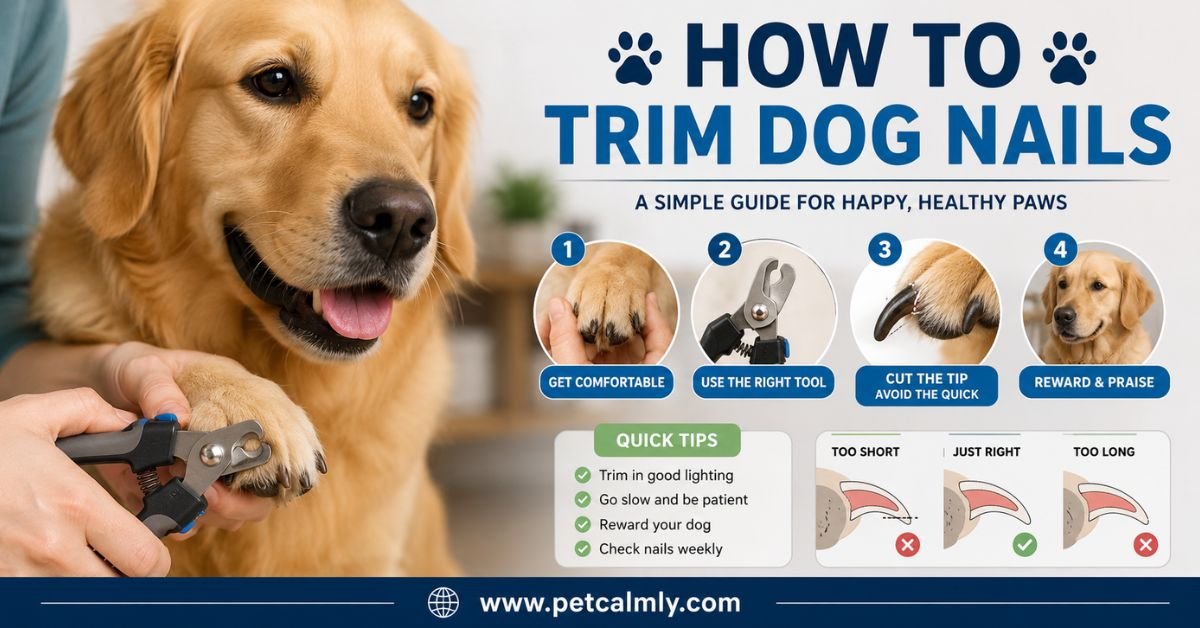
Knowing how to trim dog nails is an important part of keeping your dog healthy and comfortable. Use a quality dog nail clipper or grinder, trim only a small amount at a time, avoid cutting into the quick, and reward your dog throughout the process. Regular nail trimming helps prevent pain, improves posture, reduces the risk of broken nails, and makes walking easier. If you’re unsure or your dog becomes extremely anxious, ask your veterinarian or a professional groomer for help.
How to Trim Dog Nails: The Complete Beginner’s Guide
Many dog owners feel nervous the first time they trim their dog’s nails and that’s completely understandable. One small mistake can cause bleeding, while an anxious dog may pull away or refuse to cooperate.
The good news is that nail trimming becomes much easier with the right technique and a little patience.
Whether you have a playful puppy, an energetic adult dog, or a calm senior companion, learning how to trim dog nails safely can save money on grooming visits and help your dog stay comfortable throughout life.
In this guide, you’ll learn:
- Why nail trimming matters
- How often dogs need nail trims
- The safest tools to use
- How to identify the quick
- Step-by-step trimming instructions
- What to do if you accidentally cut too far
- Tips for nervous or fearful dogs
- Common mistakes to avoid
- When it’s time to call a professional
By the end, you’ll have the confidence to trim your dog’s nails safely at home.
Why Regular Dog Nail Trimming Is So Important
Many owners don’t notice their dog’s nails until they become noticeably long. Unfortunately, by then, the nails may already be affecting your dog’s comfort.
Healthy nail care is about much more than appearance.
Long Nails Can Cause Pain
When nails become too long, they touch the ground before the paw pads do.
This changes how your dog stands and walks.
Over time, that extra pressure can lead to:
- Foot pain
- Joint discomfort
- Muscle strain
- Poor posture
- Difficulty walking on hard floors
Dogs naturally try to adjust their gait to avoid discomfort, which can place unnecessary stress on their legs and spine.
Overgrown Nails Are More Likely to Break
Long nails easily catch on:
- Carpets
- Blankets
- Grass
- Furniture
- Decking
- Sidewalk cracks
A torn nail can be extremely painful because the quick contains blood vessels and nerves.
Broken nails often require veterinary treatment if they split deeply or continue bleeding.
Proper Nail Length Improves Traction
Dogs rely on healthy paws for balance.
Short, well-maintained nails help dogs:
- Run confidently
- Turn quickly
- Climb stairs safely
- Walk on slippery floors
- Maintain better balance as they age
Senior dogs especially benefit from regular nail maintenance because it reduces slipping and helps them stay mobile.
Nail Trimming Helps Keep the Quick Short
One advantage of regular trimming is that the quick gradually recedes.
This means:
- Future trims become easier.
- Less nail needs to be removed.
- The risk of accidental bleeding decreases.
For dogs with very long nails, trimming a little every couple of weeks can slowly encourage the quick to shorten.
How Can You Tell If Your Dog’s Nails Are Too Long?
Many owners ask this question because nail length varies between breeds and lifestyles.
Here are the easiest ways to tell.
Your Dog’s Nails Click on Hard Floors
One of the most obvious signs is hearing a clicking sound when your dog walks across tile, wood, or laminate flooring.
Ideally, the nails should not constantly tap the floor.
Nails Extend Past the Paw Pads
Look at your dog’s feet while they are standing.
Healthy nails should not extend excessively beyond the paw pads.
Very long nails often begin curling downward.
Your Dog Walks Differently
Watch for changes such as:
- Shorter steps
- Hesitation on hard surfaces
- Shifting weight backward
- Slipping more often
These can indicate discomfort caused by overgrown nails.
Nails Begin Curling
Extremely long nails can curl toward the paw pad.
In severe cases, they may even grow into the pad, causing pain and increasing the risk of infection.
This situation requires prompt veterinary attention.
How Often Should You Trim Your Dog’s Nails?
There isn’t one schedule that works for every dog.
The right timing depends on:
- Breed
- Age
- Activity level
- Walking surfaces
- Nail growth rate
Here’s a general guide:
| Dog Lifestyle | Recommended Nail Trim |
|---|---|
| Very active dogs walking on pavement daily | Every 4–6 weeks |
| Average family dogs | Every 3–5 weeks |
| Indoor or senior dogs | Every 2–4 weeks |
| Puppies | Check weekly and trim as needed |
Instead of following the calendar alone, inspect your dog’s nails regularly.
If you hear clicking on hard floors or notice the nails touching the ground while standing, it’s usually time for a trim.
Best Tools for Trimming Dog Nails
Using the right equipment makes nail trimming easier and safer.
Scissor-Style Nail Clippers
These are one of the most popular choices.
Best for:
- Medium dogs
- Large dogs
- Thick nails
Pros:
- Strong cutting power
- Comfortable grip
- Easy control
Guillotine Nail Clippers
These clippers cut the nail through a small opening.
Best for:
- Small breeds
- Puppies
- Thin nails
Pros:
- Compact
- Precise
- Easy for beginners on small dogs
Cons:
- Less effective on thick nails
- Blade requires regular replacement
Dog Nail Grinders
Many owners prefer grinders because they remove nail gradually.
Advantages include:
- Smooth edges
- Lower chance of cutting the quick
- Good for dark nails
- Excellent for shaping
Some dogs need time to get used to the sound and vibration.
Styptic Powder
Every dog owner trimming nails at home should keep styptic powder nearby.
If you accidentally cut the quick, it helps stop bleeding quickly.
Cornstarch can sometimes be used temporarily if styptic powder isn’t available, but a dedicated styptic product is generally more effective.
Treats
Never underestimate the power of rewards.
High-value treats help your dog build positive associations with nail trimming.
Examples include:
- Small pieces of cooked chicken
- Freeze-dried liver treats
- Soft training treats
How to Prepare Your Dog Before Trimming Their Nails
Preparation often determines whether nail trimming is easy or stressful.
Exercise First
Take your dog for:
- A walk
- A game of fetch
- Gentle play
A relaxed dog is usually much easier to handle.
Choose a Quiet Environment
Avoid trimming during:
- Loud family gatherings
- Fireworks
- High-energy playtime
Instead, choose a calm room with minimal distractions.
Let Your Dog Inspect the Tools
Allow your dog to sniff the clippers or grinder.
Reward calm behavior with praise and treats.
This simple step reduces fear of unfamiliar objects.
Practice Handling the Paws
Many dogs dislike nail trims because they aren’t used to having their feet touched.
Spend a few minutes each day:
- Holding each paw
- Gently pressing each toe
- Touching each nail
- Offering treats
This builds trust over time.
Stay Calm Yourself
Dogs are surprisingly good at reading body language.
If you appear tense or frustrated, your dog may become anxious too.
Speak softly, move slowly, and take breaks if needed.
Step-by-Step: How to Trim Dog Nails Safely
Follow these steps carefully for the safest experience.
Step 1: Position Your Dog Comfortably
Choose the position your dog finds most relaxing.
Options include:
- Standing
- Sitting
- Lying on their side
- Sitting beside you
Avoid forcing uncomfortable positions.
Step 2: Hold the Paw Gently
Support the paw without squeezing tightly.
Press lightly on one toe to extend the nail.
Step 3: Identify the Quick
Before making any cut, locate the quick whenever possible.
This is the living tissue inside the nail that contains blood vessels and nerves.
Avoid cutting into it.
Step 4: Trim Small Amounts
Instead of taking one large cut:
- Remove only 1–2 millimeters at a time.
- Check the center of the nail after each trim.
- Continue slowly until you approach the quick.
Small cuts greatly reduce the risk of injury.
Step 5: Check the Nail Frequently
As you trim, the center of the nail begins changing.
When you notice:
- A small dark dot
- A gray or pink oval
- A chalky center becoming darker
Stop trimming.
You’re close to the quick.
Step 6: Smooth Rough Edges
Use a grinder or nail file to smooth any sharp edges.
Rounded nails are less likely to snag on carpets or furniture.
Step 7: Reward Your Dog
End every trimming session with:
- Praise
- Favorite treats
- Playtime
- Affection
Positive experiences make future nail trims much easier.
How to Find the Quick Without Hurting Your Dog
The quick is the most important thing to identify before trimming.
Fortunately, it’s easier than many owners think.
Dogs With White or Clear Nails
These nails are easiest.
You’ll usually see:
- A pink area inside the nail
- Blood vessels running toward the tip
Trim several millimeters before the pink section.
Never cut into it.
Dogs With Black Nails
Black nails hide the quick, so extra care is needed.
The safest approach is to:
- Trim tiny amounts at a time.
- Examine the freshly cut surface after each clip.
- Stop when you notice a small dark or moist-looking circle in the center.
That indicates you’re very close to the quick.
A bright flashlight can sometimes help illuminate dark nails, but it isn’t always effective. Taking your time and trimming in small increments is the safest strategy.
A Helpful Rule for Beginners
If you’re ever unsure whether to make another cut, don’t.
It’s always safer to trim a little less today than accidentally cut into the quick.
Regular trims every few weeks will gradually shorten the nails without causing pain.
What Happens If You Cut the Quick?
Even experienced dog owners, groomers, and veterinarians occasionally nick the quick. It can happen if your dog suddenly moves or if the quick extends farther than expected.
While it can look alarming because nails tend to bleed quite a bit, a small cut to the quick is usually not a medical emergency.
Signs You’ve Cut the Quick
You may notice:
- Immediate bleeding
- Your dog pulling the paw away
- A brief yelp
- Your dog licking the nail
- Blood dripping from the nail tip
Stay calm. Dogs often recover quickly when their owner remains relaxed.
How to Stop a Dog’s Nail from Bleeding
If you accidentally cut too far, follow these steps.
Step 1: Stay Calm
Your dog will often mirror your emotions.
Avoid panicking or raising your voice.
Speak gently and reassure your dog.
Step 2: Apply Styptic Powder
Styptic powder is the quickest way to stop bleeding.
To use it:
- Pour a small amount into the lid or a clean dish.
- Gently press the bleeding nail into the powder.
- Hold light pressure for 20–30 seconds.
The bleeding usually stops within a few minutes.
Step 3: Use Cornstarch if Needed
If you don’t have styptic powder, cornstarch or plain flour may help slow minor bleeding until you can purchase a proper styptic product.
Apply gentle pressure while keeping your dog as still as possible.
Step 4: Give Your Dog a Break
Don’t continue trimming if your dog is frightened.
Offer praise, treats, and let them relax.
You can finish the remaining nails later or the next day.
Should You Finish Trimming After Cutting the Quick?
Usually, no.
Even if the bleeding stops quickly, it’s often best to end the session on a positive note.
Trying to continue immediately may increase your dog’s fear of future nail trims.
Instead:
- Reward your dog.
- End with something enjoyable.
- Resume another day when everyone is calm.
How to Trim Black Dog Nails Safely
Many owners worry about black nails because the quick isn’t visible.
Fortunately, the safest approach is also the simplest.
Trim Tiny Amounts
Instead of taking one large cut:
- Clip only the tip.
- Examine the nail.
- Clip again if needed.
Small trims dramatically reduce the chance of injury.
Watch the Center of the Nail
After each cut, inspect the freshly trimmed surface.
As you approach the quick, you’ll notice:
- A chalky white center changing color
- A gray or black dot in the middle
- A moist-looking center
Once you see these signs, stop trimming.
Use a Nail Grinder for Extra Control
Many owners find grinders easier on dark nails because they remove small amounts gradually.
This gives you more time to notice changes before reaching the quick.
Dog Nail Grinder vs. Clippers: Which Is Better?
Both tools work well when used correctly.
The best choice depends on your dog’s personality, nail type, and your confidence.
| Feature | Nail Clippers | Nail Grinder |
|---|---|---|
| Speed | Faster | Slower |
| Beginner friendly | Moderate | Often easier after practice |
| Precision | Good | Excellent |
| Smooth finish | Fair | Excellent |
| Noise | Silent | Makes a humming sound |
| Risk of cutting the quick | Moderate | Lower if used carefully |
| Best for thick nails | Excellent | Good |
Clippers May Be Better If:
- Your dog dislikes buzzing sounds.
- You need a quick trim.
- Your dog has very thick nails.
A Grinder May Be Better If:
- You’re nervous about clipping.
- Your dog has black nails.
- You want smooth nail edges.
- Your dog tolerates the vibration well.
Many owners actually use both clipping first to shorten the nail and then smoothing the edges with a grinder.
How to Trim an Anxious Dog’s Nails
Some dogs become nervous the moment they see nail clippers.
This often happens because:
- They’ve had a painful experience.
- Their paws are sensitive.
- They’re unfamiliar with handling.
- They’re naturally cautious.
The goal is to change how they feel about nail trimming rather than forcing them through it.
Start Without Trimming
For several days, simply:
- Show the clippers.
- Give a treat.
- Put the clippers away.
Your dog begins to associate the tool with something positive.
Practice Paw Handling Daily
Spend one or two minutes each day:
- Touching one paw.
- Rewarding calm behavior.
- Holding each toe briefly.
- Releasing before your dog becomes uncomfortable.
Small sessions build confidence much faster than occasional long ones.
Trim One Nail at a Time
Many owners think they must finish all four paws in one sitting.
That’s not necessary.
If your dog stays calm for one nail, that’s progress.
You can trim another nail later that day or the next.
Use High-Value Rewards
Save your dog’s favorite treats specifically for nail trimming.
Examples include:
- Cooked chicken
- Tiny cheese pieces (if tolerated)
- Freeze-dried liver
- Small meat-based training treats
The better the reward, the stronger the positive association.
How to Trim a Puppy’s Nails
Puppies usually learn nail care more easily than adult dogs because they haven’t developed fear yet.
The goal isn’t perfection.
The goal is creating positive experiences.
Begin Early
Handle your puppy’s paws from the first few weeks after bringing them home.
Touch:
- Toes
- Paw pads
- Nails
Reward every calm interaction.
Keep Sessions Short
Young puppies have limited attention spans.
Aim for:
- One or two minutes
- One or two nails
- Plenty of praise
Ending early is better than pushing too far.
Introduce Clippers Gradually
Before clipping:
- Let your puppy sniff them.
- Open and close the clippers nearby.
- Reward calm behavior.
This helps prevent fear later.
How to Trim Dewclaws
Many owners forget about dewclaws because they don’t touch the ground.
Unlike other nails, dewclaws don’t wear down naturally.
This means they often grow faster.
Why Dewclaws Need Extra Attention
Overgrown dewclaws may:
- Curl into the skin
- Break easily
- Catch on blankets
- Become painful
Check them every time you inspect your dog’s nails.
Trim Carefully
Dewclaws often have longer quicks than regular nails.
Take very small trims until you become familiar with your dog’s nail structure.
6 Common Mistakes to Avoid When Trimming Dog Nails
Avoiding these mistakes makes nail trimming safer and less stressful.
1: Cutting Too Much at Once
Large cuts increase the chance of hitting the quick.
Always trim gradually.
2: Waiting Too Long Between Trims
Allowing nails to overgrow causes the quick to extend.
Regular maintenance is much easier than occasional major trims.
3: Using Dull Clippers
Old blades crush rather than cleanly cut nails.
Replace or sharpen clippers as recommended by the manufacturer.
4: Holding the Paw Too Tightly
Excessive restraint often increases fear.
Support the paw gently instead.
5: Forgetting Rewards
Dogs learn through positive experiences.
Treats, praise, and patience help build lifelong cooperation.
6: Trimming When You’re Frustrated
If you’re stressed or rushed, postpone the session.
A calm owner usually has a calmer dog.
Can Walking on Pavement Replace Nail Trimming?
Many people believe regular walks naturally keep nails short.
While pavement can wear down some nails, it rarely trims all of them evenly.
For example:
- Dewclaws don’t touch the ground.
- Rear nails often wear differently than front nails.
- Older or less active dogs experience very little natural wear.
Regular nail checks are still necessary, even if your dog walks daily.
When Should You Ask a Groomer or Veterinarian for Help?
Home nail trimming isn’t always the safest option.
Consider professional help if:
- Your dog becomes extremely aggressive during nail trims.
- The nails are severely overgrown or curling.
- A nail is cracked, split, or torn.
- Bleeding won’t stop after applying pressure and styptic powder.
- You suspect an infected nail or paw.
- Your dog has a painful foot injury.
- You feel too anxious to trim safely.
Professional groomers trim thousands of nails each year, and your veterinarian can evaluate any underlying pain, injury, or nail disease that may make trimming difficult.
How to Keep Your Dog’s Nails Short Between Trims
Regular trimming is the most effective way to maintain healthy nails, but a few habits can help slow excessive nail growth and keep your dog’s feet in good condition.
Walk on Different Surfaces
Daily walks provide exercise and may naturally wear down some of your dog’s nails.
Surfaces that offer gentle nail wear include:
- Concrete sidewalks
- Asphalt paths
- Brick walkways
- Smooth gravel trails
However, walking alone is rarely enough to replace nail trimming. Dewclaws and some rear nails often receive little or no natural wear.
Check Your Dog’s Nails Weekly
A quick weekly inspection helps you catch problems before they become painful.
Look for:
- Cracks or splits
- Uneven nail growth
- Nails touching the floor
- Nails curling toward the paw pads
- Redness or swelling around the nail
Regular checks only take a minute and can prevent bigger issues later.
Keep Paw Hair Trimmed
Dogs with long fur around their paws can make nail inspection more difficult.
Carefully trimming excess hair around the feet helps you:
- See the nails clearly
- Spot injuries sooner
- Improve traction on slippery floors
Use blunt-ended grooming scissors or ask your groomer to tidy the paw hair during routine visits.
Maintain a Consistent Schedule
Instead of waiting until the nails become noticeably long, trim small amounts regularly.
For many dogs, trimming every 3 to 5 weeks keeps nails at a healthy length.
Dogs with fast-growing nails may need more frequent maintenance.
Dog Nail Care Checklist
Use this checklist before every nail-trimming session.
✔ Your dog is calm and relaxed.
✔ Clippers or grinder are clean and sharp.
✔ Styptic powder is within reach.
✔ High-value treats are ready.
✔ The room has good lighting.
✔ You’re trimming only a small amount at a time.
✔ You know where the quick is—or you’re trimming cautiously if it’s hidden.
✔ You plan to reward your dog after the session.
Keeping this routine consistent helps nail trimming become less stressful for both you and your dog.
Dog Nail Trimming Tips for Different Breeds and Sizes
Although the basic trimming technique is the same, some dogs need extra consideration.
Small Dogs
Small breeds often have tiny, delicate nails.
Tips include:
- Use clippers designed for small dogs.
- Trim very small amounts.
- Support the paw gently without squeezing.
Examples include Chihuahuas, Yorkshire Terriers, Maltese, and Toy Poodles.
Large Dogs
Large breeds usually have thicker nails that require stronger tools.
Choose heavy-duty clippers or a powerful grinder designed for large dogs.
Breeds such as Labrador Retrievers, German Shepherds, Golden Retrievers, and Rottweilers may benefit from scissor-style clippers with longer handles for better leverage.
Senior Dogs
Older dogs often move less, meaning their nails may wear down more slowly.
Long nails can also make arthritis discomfort worse by changing the dog’s posture.
For senior dogs:
- Keep sessions short.
- Provide a non-slip surface.
- Allow breaks if they become tired.
- Handle sore joints gently.
Active Working and Sporting Dogs
Dogs that hike, run, or work outdoors may naturally wear some nails.
Even so, don’t assume every nail is the correct length.
Always inspect all nails—including dewclaws—regularly.
When Should You Worry About Your Dog’s Nails?
Most nail problems are easy to manage when caught early.
However, some signs require prompt attention.
Contact Your Veterinarian If You Notice:
- Persistent bleeding that doesn’t stop after applying pressure and styptic powder.
- A torn or partially detached nail.
- Swelling around the nail.
- Pus or foul-smelling discharge.
- A nail growing into the paw pad.
- Limping that lasts longer than a day.
- Sudden changes in nail color or shape.
- Multiple brittle or crumbling nails.
- Your dog repeatedly licking or chewing one nail.
These signs may indicate an infection, injury, inflammation, or another underlying medical condition that needs professional evaluation.
What Should Pet Owners Do If Their Dog Hates Nail Trims?
If every nail-trimming session turns into a struggle, avoid forcing the process.
Instead:
- Slow down the training.
- Practice touching paws every day.
- Reward calm behavior generously.
- Trim just one nail if that’s all your dog can tolerate.
- Consider using a grinder if your dog dislikes clippers.
- Ask a professional groomer or veterinarian for help if fear remains severe.
Building trust takes time, but patience usually produces better long-term results than restraint or punishment.
Quick Do’s and Don’ts of Dog Nail Trimming
| Do | Don’t |
|---|---|
| Trim small amounts at a time. | Cut large sections of the nail. |
| Reward your dog often. | Punish fearful behavior. |
| Keep styptic powder nearby. | Panic if you nick the quick. |
| Check nails every week. | Wait until nails curl. |
| Use sharp, clean tools. | Use dull or damaged clippers. |
| Stop if your dog becomes extremely stressed. | Force your dog through a frightening experience. |
Frequently Asked Questions
1. How do I know where to cut my dog’s nails?
Trim only the curved tip of the nail and remove small amounts at a time. For dogs with light-colored nails, stop before reaching the pink quick. For black nails, trim gradually and stop when you notice a darker or moist-looking center.
2. How often should I trim my dog’s nails?
Most dogs need their nails trimmed every 3 to 5 weeks, although active dogs that walk on pavement may need less frequent trims. Check your dog’s nails weekly rather than relying only on a calendar.
3. Is it better to use a nail grinder or clippers?
Both tools are effective.
Clippers are faster, while grinders provide more control and leave smoother edges. Many owners use both as part of the same grooming routine.
4. What happens if I accidentally cut the quick?
Your dog’s nail may bleed and feel sore for a short time.
Apply styptic powder and gentle pressure to stop the bleeding, comfort your dog, and allow the nail to recover before attempting another trim.
5. Can I trim my puppy’s nails at home?
Yes. Start early using short, positive sessions.
Handle your puppy’s paws regularly, trim only tiny amounts, and reward calm behavior to help them develop lifelong comfort with nail care.
6. Can long nails cause health problems in dogs?
Yes. Overgrown nails can change the way a dog stands and walks, increasing stress on the feet and joints. They are also more likely to crack, split, snag, or grow into the paw pad if left untreated.
More Information About Pets, Please Visit Our Website: When Dogs Get Stuck Together Is She Pregnant?
Why Is My Dog Suddenly Scared of Everything?
How to Calm an Anxious Dog During a Thunderstorm
Top 7 Reasons Why Does My Dog Lick His Paws at Night
Conclusion
Learning how to trim dog nails may seem intimidating at first, but it becomes much easier with practice, patience, and the right approach.
The safest method is to trim only small amounts at a time, use clean and appropriate tools, and reward your dog throughout the process. Regular nail care isn’t just about appearance it plays an important role in your dog’s comfort, mobility, and overall well-being.
Remember that every dog is different. Some dogs are relaxed during nail trims, while others need weeks of gradual training before they feel comfortable. Taking things at your dog’s pace helps build trust and makes future grooming sessions far less stressful.
If you’re ever uncertain about trimming your dog’s nails, or if your dog has severe anxiety, injured nails, or ongoing nail problems, don’t hesitate to seek help from your veterinarian or a qualified professional groomer. A little expert guidance can make a big difference for both you and your dog.