Short direct answer
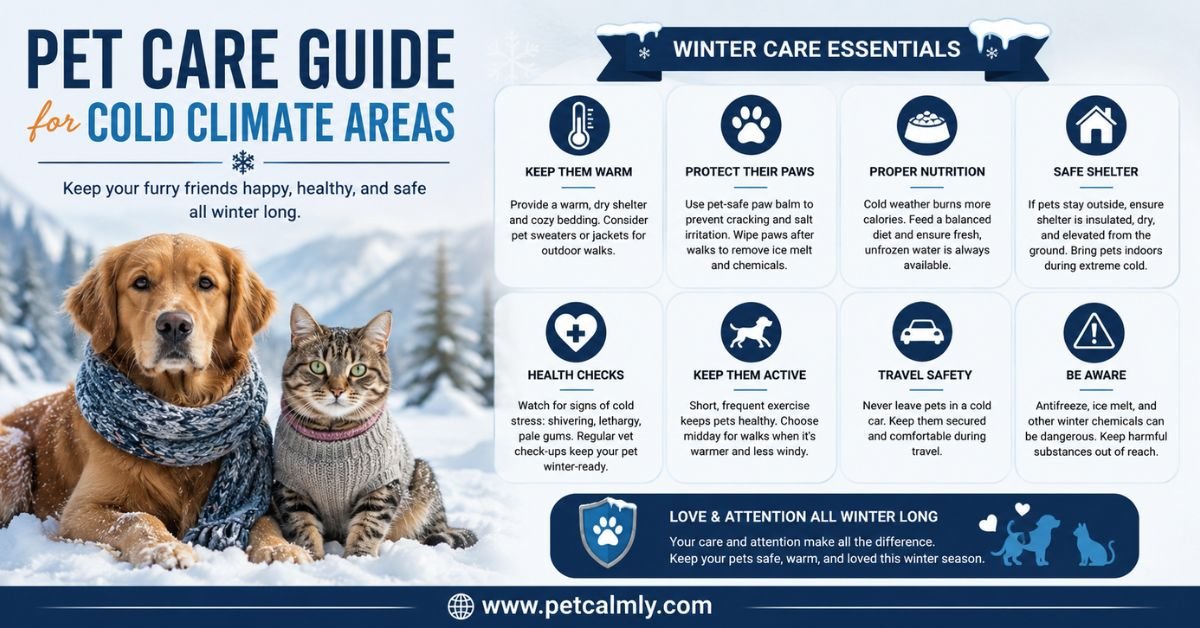
A good pet care guide for cold climate areas focuses on warmth, shelter, proper nutrition, hydration, paw protection, exercise adjustments, and close monitoring for cold-related health problems. Pets can suffer from hypothermia, frostbite, dry skin, dehydration, and reduced activity during cold weather. The safest approach is to provide a warm indoor environment, limit exposure to extreme temperatures, protect paws and skin, and adjust daily routines based on your pet’s age, breed, health, and coat type.
Pet Care Guide for Cold Climate Areas
Winter can be beautiful for people, but for pets, cold weather often creates challenges that many owners underestimate.
Some dogs seem to love snow and freezing temperatures. Others start shivering after only a few minutes outside. Cats may spend entire days hiding near heaters. Small pets, birds, reptiles, and senior animals can become especially vulnerable when temperatures drop.
Many pet owners worry about questions like:
- Is my pet too cold?
- How long can my dog stay outside in winter?
- Does my cat need extra food during cold weather?
- Are winter walks still safe?
- What signs of frostbite should I watch for?
These concerns are completely reasonable.
Cold weather affects pets differently depending on their species, breed, age, health condition, and living environment. What works for a Husky may not be safe for a Chihuahua. A healthy adult cat may tolerate cooler temperatures better than a senior cat with arthritis.
This guide explains exactly how to care for pets in cold climate areas, avoid common winter mistakes, and keep your companion comfortable throughout the colder months.
Why Cold Weather Can Be Dangerous for Pets
Quick answer
Cold temperatures place extra stress on a pet’s body and can increase the risk of hypothermia, frostbite, dehydration, skin problems, respiratory issues, and mobility challenges.
Many people assume that fur automatically protects pets from winter conditions.
The reality is more complicated.
Even thick-coated animals have limits. Wind chill, wet fur, snow accumulation, and prolonged exposure can overwhelm a pet’s natural defenses.
Cold weather affects:
- Body temperature regulation
- Circulation
- Joint flexibility
- Skin moisture
- Immune function
- Energy requirements
The risk becomes even greater during storms, icy conditions, and sudden temperature drops.
Which Pets Are Most Vulnerable in Cold Climates?
Not all pets handle winter equally.
Higher-risk dogs
These breeds often struggle more in cold conditions:
- Chihuahua
- Greyhound
- Dachshund
- French Bulldog
- Italian Greyhound
- Miniature Pinscher
- Chinese Crested
Their smaller body size, thin coats, or low body fat provide less insulation.
Higher-risk cats
Cats generally tolerate cold less effectively than many people think.
Particularly vulnerable cats include:
- Hairless breeds
- Elderly cats
- Kittens
- Outdoor cats
- Cats with chronic illnesses
Pets that need special protection
- Rabbits
- Guinea pigs
- Hamsters
- Ferrets
- Birds
- Reptiles
Many small animals lose body heat quickly and may suffer serious complications if their habitat temperatures fall outside recommended ranges.
Understanding Hypothermia in Pets
What is hypothermia?
Hypothermia occurs when a pet’s body temperature drops below normal and the body can no longer maintain adequate heat.
Early signs
Watch for:
- Shivering
- Slowed movement
- Seeking warm places
- Lethargy
- Cold ears or paws
- Anxiety
More serious signs
Seek veterinary care immediately if you notice:
- Severe weakness
- Collapse
- Slow breathing
- Pale gums
- Loss of consciousness
The main reason hypothermia becomes dangerous is that normal organ function begins to slow as body temperature drops.
Frostbite: A Serious Winter Risk
Frostbite occurs when tissues freeze after prolonged exposure to cold.
Commonly affected areas include:
- Paw pads
- Tail tips
- Ears
- Nose
Warning signs
Initially, affected areas may appear:
- Pale
- Gray
- Bluish
As circulation returns, you may notice:
- Swelling
- Pain
- Redness
- Blisters
Never rub frozen tissue aggressively, as this can cause additional damage.
Veterinary evaluation is important whenever frostbite is suspected.
Creating a Safe Indoor Environment
For most pets, the best winter protection starts indoors.
Ideal winter setup
Provide:
- Warm bedding
- Draft-free sleeping areas
- Elevated beds if floors become cold
- Comfortable room temperatures
- Dry resting areas
Many pets naturally seek warmer spots around the home during winter.
You might notice your dog sleeping closer to furniture or your cat spending more time in sunny windows.
This behavior is completely normal.
Choosing the Right Winter Bedding
A comfortable bed can significantly improve winter comfort.
Look for:
- Thick cushioning
- Raised sides for warmth
- Washable covers
- Insulating materials
Senior pets often benefit from:
- Orthopedic beds
- Memory foam support
- Heated pet beds approved for animal use
Older pets with arthritis frequently experience increased stiffness during cold weather.
Providing extra warmth may help improve comfort and mobility.
Winter Nutrition for Pets
Do pets need more food in winter?
Sometimes.
The answer depends largely on activity level and living conditions.
Pets that may need more calories
- Working dogs
- Outdoor dogs
- Sled dogs
- Farm dogs
- Highly active breeds
These animals often burn additional calories maintaining body heat.
Pets that may need fewer calories
Indoor pets often exercise less during winter.
Reduced activity can lead to:
- Weight gain
- Obesity
- Joint stress
Avoid automatically increasing food portions without considering activity levels.
Importance of Hydration During Cold Weather
Many owners focus on heat but forget hydration.
Pets can become dehydrated during winter because:
- Indoor heating dries the air
- Pets may drink less
- Cold weather suppresses thirst
Encourage hydration by:
- Providing fresh water daily
- Cleaning bowls regularly
- Monitoring water intake
- Using pet fountains for reluctant drinkers
Outdoor water sources should never be allowed to freeze.
Protecting Your Pet’s Paws
Winter sidewalks can be surprisingly harsh.
Common paw hazards
- Ice
- Snow
- Salt
- De-icing chemicals
- Frozen surfaces
These can cause:
- Cracks
- Irritation
- Burns
- Cuts
Paw protection strategies
Consider:
- Dog boots
- Paw balm
- Shorter walks during extreme conditions
- Regular paw inspections
After walks:
- Wipe paws thoroughly.
- Remove salt residue.
- Check between toes.
- Dry completely.
This simple routine prevents many winter-related paw problems.
Winter Walk Safety
Dogs still need exercise when temperatures drop.
However, winter walks require some adjustments.
Best practices
- Walk during warmer daylight hours.
- Avoid icy surfaces.
- Use reflective gear during darker months.
- Shorten walks during extreme cold.
- Monitor for shivering.
If your dog begins lifting paws repeatedly, slowing down significantly, or trying to turn home early, they may be too cold.
Pay attention to those signals.
Should Pets Wear Winter Clothing?
Quick answer
Some pets benefit from coats and sweaters, while others do not need them.
Winter clothing can be helpful for:
- Small breeds
- Short-haired breeds
- Senior dogs
- Puppies
- Dogs recovering from illness
Many northern breeds naturally possess enough insulation without additional clothing.
Signs clothing fits properly
The garment should:
- Allow free movement
- Stay dry
- Avoid chafing
- Cover the chest adequately
Avoid excessively tight clothing.
Cold Weather and Pet Behavior
Winter often changes behavior patterns.
You may notice:
- Increased sleeping
- Reduced activity
- More cuddling
- Less outdoor interest
- Increased appetite
These changes are often normal.
However, dramatic behavior shifts should not automatically be blamed on cold weather.
Pain, illness, anxiety, or mobility problems may also contribute.
Keeping Pets Mentally Stimulated Indoors
When outdoor time decreases, boredom can become a problem.
Indoor enrichment ideas
For dogs:
- Puzzle feeders
- Nose work games
- Training sessions
- Indoor obstacle courses
- Hide-and-seek
For cats:
- Interactive toys
- Food puzzles
- Window perches
- Climbing trees
- Hunting games
Mental exercise can be surprisingly tiring and helps reduce unwanted behaviors.
Caring for Senior Pets in Winter
Older pets often struggle more during cold weather.
Common winter challenges
- Arthritis flare-ups
- Reduced mobility
- Muscle stiffness
- Slower circulation
Helpful adjustments include:
- Additional bedding
- Non-slip flooring
- Gentle exercise
- Weight management
- Easy access to food and water
Many senior pets benefit from shorter but more frequent walks.
Special Considerations for Cats During Winter
Cats are masters of finding warm places.
Unfortunately, some warm places can be dangerous.
Areas to check before starting a vehicle
Outdoor cats may seek shelter:
- Under hoods
- Near engines
- Inside wheel wells
Always tap the hood and check around your vehicle before starting it.
This simple habit can save lives.
Indoor cat comfort
Provide:
- Sunny resting spots
- Warm blankets
- Elevated sleeping areas
- Consistent room temperatures
Winter Care for Small Pets
Small animals require careful environmental control.
Rabbits and guinea pigs
Protect from:
- Drafts
- Dampness
- Sudden temperature changes
Provide:
- Extra bedding
- Dry housing
- Adequate ventilation
Birds
Avoid placing cages near:
- Drafty windows
- Exterior doors
- Heating vents
Temperature stability is often more important than simply increasing warmth.
Reptile Care in Cold Climate Areas
Reptiles depend on external heat sources.
Cold weather can quickly create dangerous habitat conditions.
Monitor:
- Enclosure temperature
- Basking temperatures
- Humidity levels
- Equipment performance
Power outages during winter can become emergencies for reptiles.
Having a backup heating plan is wise.
5 Common Winter Pet Care Mistakes
Many winter problems are preventable.
Mistake 1: Assuming fur is enough
Even fluffy pets can become dangerously cold.
Mistake 2: Ignoring hydration
Winter dehydration is surprisingly common.
Mistake 3: Skipping exercise
Reduced activity can contribute to obesity and behavioral issues.
Mistake 4: Forgetting paw care
Salt and ice injuries often develop gradually.
Mistake 5: Leaving pets outside too long
Tolerance varies dramatically among individuals.
Always monitor your pet rather than relying on breed stereotypes.
Winter Pet Care Checklist
Use this quick checklist throughout the cold season.
Daily
✔ Fresh water available
✔ Warm sleeping area
✔ Paw inspection after walks
✔ Monitor activity levels
✔ Observe appetite
Weekly
✔ Wash bedding
✔ Check skin condition
✔ Inspect winter gear
✔ Review weight changes
✔ Clean feeding areas
Monthly
✔ Assess overall comfort
✔ Evaluate exercise routine
✔ Replace damaged winter supplies
✔ Discuss concerns with your veterinarian if needed
Winter Pet Product Considerations
Some products can make cold-weather care easier.
Useful options include:
- Insulated beds
- Heated pet mats
- Winter coats
- Paw balms
- Protective boots
- Water fountains
- Interactive enrichment toys
Choose products based on your pet’s individual needs rather than seasonal trends.
The most expensive item is not always the most useful.
When Should You Worry?
Seek veterinary advice if your pet shows:
- Persistent shivering
- Refusal to eat
- Severe lethargy
- Difficulty walking
- Signs of frostbite
- Pale gums
- Breathing difficulties
- Sudden weakness
Emergency situations
Contact a veterinarian immediately if your pet:
- Collapses
- Becomes unconscious
- Stops responding normally
- Shows severe hypothermia symptoms
Cold-related injuries can worsen quickly.
Prompt treatment often improves outcomes significantly.
What Should Pet Owners Do?
If you live in a cold climate area, focus on prevention rather than reacting to problems later.
Action plan
- Provide a warm indoor environment.
- Protect paws during outdoor activity.
- Adjust exercise based on weather conditions.
- Maintain hydration.
- Monitor behavior changes.
- Support senior pets with additional comfort measures.
- Schedule veterinary checkups for pets with chronic health conditions.
Small daily habits usually provide the greatest protection.
Frequently Asked Questions
1: How cold is too cold for dogs?
The answer depends on breed, size, age, coat type, and health. Small or short-haired dogs may struggle in temperatures that larger northern breeds tolerate comfortably.
2: Can cats stay outside during winter?
Cats are generally safest indoors during severe winter weather. Outdoor exposure increases the risk of frostbite, hypothermia, injury, and getting trapped in dangerous shelter locations.
3: Do pets burn more calories in cold weather?
Some active outdoor pets do. Indoor pets often burn fewer calories due to reduced exercise. Feeding should be adjusted according to activity levels and body condition.
4: How can I tell if my pet is cold?
Common signs include shivering, lifting paws, seeking warmth, curling tightly while resting, slowing down during walks, and reluctance to stay outside.
5: Should I walk my dog when it is snowing?
Light snowfall is often manageable for healthy dogs. During extreme cold, heavy storms, or icy conditions, shorter and safer walks are usually the better option.
6: Are heated pet beds safe?
Quality heated pet beds designed specifically for animals are generally safe when used according to manufacturer instructions. Always inspect cords and equipment regularly.
More Information About Pets, Please Visit Our Website: How to Care for Dogs in Hot Weather
Can I Use First Aid Antiseptic on My Dog?
Conclusion
Caring for pets in cold climate areas is not simply about keeping them warm. It involves understanding how winter affects their body, behavior, mobility, hydration, and overall well-being.
A few thoughtful adjustments such as protecting paws, maintaining hydration, providing warm resting spaces, and monitoring for cold-related health concerns can make a significant difference throughout the season.
Most importantly, pay attention to your individual pet. Their behavior often tells you more than the temperature forecast. When owners learn to recognize those signals, winter becomes much safer, more comfortable, and far more enjoyable for both pets and the people who love them.
For more seasonal wellness advice, behavior tips, training guidance, and pet health resources, explore other helpful articles here on PetCalmly.com.