Short direct answer
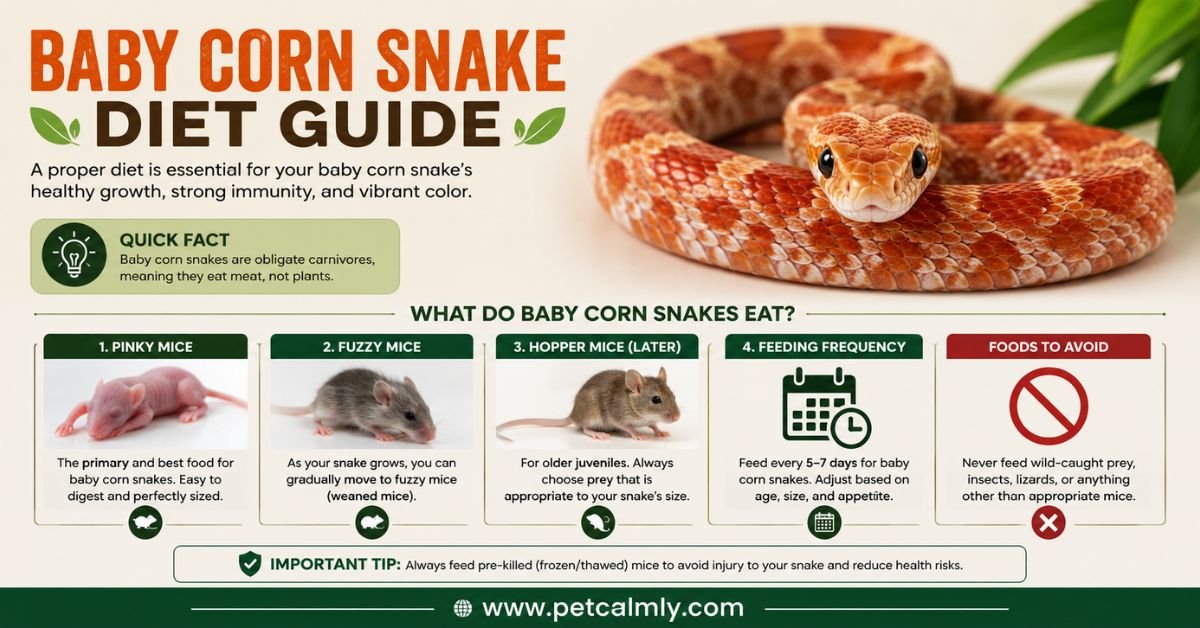
A baby corn snake diet mainly consists of appropriately sized frozen-thawed pinky mice offered every 5–7 days. At this early stage, corn snakes need small, protein-rich prey that matches the width of their body at its widest point. Feeding too large or too often can cause stress or regurgitation, while feeding too little can slow growth. Most hatchlings thrive on consistent, simple feeding routines, stable temperatures, and low-stress handling. As they grow, their diet gradually shifts to larger prey such as fuzzy mice, then adult mice.
Introduction
Bringing home a baby corn snake is exciting, but feeding often becomes the first real worry for new reptile owners. Many people expect snakes to eat frequently or easily, but baby corn snakes are more sensitive than adults. Their diet isn’t just about “feeding them mice” it’s about timing, size, temperature, stress levels, and even handling habits.
A baby corn snake refusing food doesn’t always mean something is wrong, but incorrect feeding practices can quickly lead to problems like poor growth, regurgitation, or stress-related refusal. On the other hand, a well-managed diet helps your snake grow steadily, stay active, and develop strong feeding responses.
In this guide, you’ll learn exactly what baby corn snakes eat, how often to feed them, what mistakes to avoid, and how to build a safe feeding routine that works even if you’re a complete beginner.
Understanding the Baby Corn Snake Diet
What a Baby Corn Snake Naturally Eats
In the wild, corn snakes (Pantherophis guttatus) are opportunistic feeders. Baby corn snakes don’t hunt large prey they start small. Their natural diet includes:
- Pinky mice (newborn rodents)
- Small lizards (occasionally in the wild)
- Tiny frogs or soft-bodied prey
- Occasional insect interactions (rare and not primary food)
However, in captivity, we simplify this diet for safety and nutrition. The standard and healthiest option is:
Frozen-thawed pinky mice
This provides balanced nutrition without the risks of parasites or injury from live prey.
Why Diet Is So Critical for Hatchlings
Baby corn snakes grow rapidly during their first year. Their bodies require:
- High protein for muscle development
- Adequate fat for energy
- Consistent feeding schedule for stable growth
- Proper prey size for safe digestion
Unlike mammals, snakes don’t “graze” or snack. Each meal must fully sustain them for several days.
A poorly planned diet can cause:
- Stunted growth
- Feeding refusal cycles
- Stress behavior (hiding, striking, or lethargy)
- Digestive issues like regurgitation
What Do Baby Corn Snakes Eat?
Primary Food: Pinky Mice
The foundation of a baby corn snake diet is the pinky mouse.
Why pinkies work so well:
- Soft, easy to digest
- High in protein
- Perfect size for hatchlings
- Readily available frozen
Size rule:
The prey should be no wider than the thickest part of the snake’s body.
If the mouse looks “slightly big but manageable,” it’s usually correct. If it causes visible stretching or bulging, it’s too large.
Feeding Progression as They Grow
Baby corn snakes don’t stay on pinkies forever. Their diet evolves:
| Snake Age / Size | Recommended Food | Feeding Frequency |
|---|---|---|
| Hatchling (0–3 months) | Pinky mice | Every 5–7 days |
| Juvenile (3–6 months) | Larger pinkies or fuzzies | Every 5–7 days |
| Sub-adult (6–12 months) | Fuzzy to hopper mice | Every 7 days |
| Adult (12+ months) | Adult mice | Every 7–10 days |
Growth rate varies, so don’t rely strictly on age body size matters more.
Feeding Frequency: How Often Should Baby Corn Snakes Eat?
A common mistake new owners make is overfeeding.
Ideal schedule:
- Baby corn snakes: every 5–7 days
- Some very small hatchlings: every 4–5 days
Why not more often?
Snakes digest slowly. Feeding too frequently can:
- Stress the digestive system
- Increase regurgitation risk
- Cause refusal behavior
- Lead to obesity later in life
Why not less often?
Underfeeding can:
- Slow growth
- Reduce feeding response
- Cause weakness in younger snakes
Consistency matters more than frequency changes.
Frozen vs Live Feeding: What’s Better for Baby Corn Snakes?
Frozen-Thawed (Recommended)
Most reptile keepers and veterinarians strongly prefer frozen-thawed prey.
Benefits:
- No risk of rodent injury
- No parasite transmission
- Easy storage
- Controlled feeding process
How it works:
You thaw the mouse, warm it to body temperature, and offer it with tongs.
Live Feeding (Not Ideal for Beginners)
Live feeding is sometimes used in rare cases, but it carries risks:
- Mouse can bite and injure the snake
- Higher stress levels for both animals
- Ethical concerns
- More difficult to control feeding
For baby corn snakes, frozen-thawed is almost always the safest choice.
Step-by-Step: How to Feed a Baby Corn Snake
Feeding is not just about offering food it’s about creating the right conditions.
Step 1: Prepare the Environment
- Feed in the enclosure (recommended for corn snakes)
- Ensure temperature is correct (warm side around 28–30°C)
- Keep lighting low and environment calm
Step 2: Thaw the Pinky Properly
- Defrost in refrigerator or lukewarm water
- Warm to slightly above room temperature
- Never microwave directly (uneven heating risk)
Step 3: Use Feeding Tongs
- Hold pinky with soft-tipped tongs
- Avoid using hands to prevent accidental strikes
Step 4: Offer with Gentle Movement
- Lightly wiggle the prey
- Mimic natural movement
- Be patient—don’t rush withdrawal
Step 5: Leave Snake Alone
- Do not handle for 24–48 hours after feeding
- Allow full digestion in a stress-free environment
Common Baby Corn Snake Feeding Problems
Even healthy snakes sometimes refuse food. This is normal, especially in young corn snakes.
1. Refusing Food
Common causes:
- Stress from new environment
- Incorrect temperature
- Shedding cycle
- Handling too often
- Wrong prey size
What to do:
- Wait 5–7 days before trying again
- Check enclosure temperature
- Reduce handling temporarily
2. Regurgitation
This is more serious than refusal.
Possible reasons:
- Prey too large
- Handling too soon after feeding
- Low enclosure temperature
- Stress
If regurgitation happens, skip feeding for 7–10 days and reassess conditions.
3. Slow Feeding Response
Some baby corn snakes are shy feeders.
Solutions:
- Feed at night or dim light
- Try scenting prey (rare cases)
- Ensure privacy during feeding
What NOT to Do in Baby Corn Snake Diet Care
Avoid These Mistakes:
- Feeding too large prey
- Feeding daily
- Handling immediately after meals
- Using cold or partially thawed mice
- Constantly switching prey types
- Stressing the snake during feeding attempts
These mistakes are more common than you think and usually cause feeding problems.
Hydration and Its Role in Feeding Health
While diet focuses on food, hydration is equally important.
Baby corn snakes need:
- Clean, fresh water daily
- A shallow water bowl
- Proper humidity for digestion
Dehydration can lead to:
- Poor appetite
- Difficult shedding
- Lethargy
Always ensure water is available even if feeding seems fine.
Growth Stages and Dietary Changes
Hatchling Stage (0–3 Months)
- Pinky mice only
- Small, frequent meals
- High sensitivity to stress
Juvenile Stage (3–6 Months)
- Larger pinkies or fuzzies
- More stable feeding response
- Rapid growth phase
Sub-Adult Stage (6–12 Months)
- Fuzzy to hopper mice
- Longer intervals between meals
- Strong feeding behavior
Adult Stage (12+ Months)
- Adult mice
- Less frequent feeding
- Stable metabolism
Understanding these stages prevents overfeeding and confusion.
When Should You Worry About Feeding Issues?
Not every skipped meal is an emergency, but some signs should not be ignored.
Warning Signs:
- No feeding for 3–4 weeks (without shedding)
- Repeated regurgitation
- Weight loss
- Sunken body appearance
- Extreme lethargy
- Mouth breathing or wheezing
If you notice these, a reptile-experienced veterinarian should be consulted.
What Should Baby Corn Snake Owners Do Daily?
Simple Care Routine:
- Check temperature gradient
- Provide fresh water
- Observe behavior briefly
- Clean enclosure regularly
- Feed on a consistent schedule
Weekly Routine:
- Feed once (if juvenile/hatchling)
- Clean water bowl
- Spot-clean enclosure
- Monitor body condition
Consistency builds a confident, healthy snake.
Helpful Feeding Checklist
Before each feeding, ask:
- Is the prey size correct?
- Is the temperature warm enough?
- Has the snake digested its last meal?
- Is the environment calm?
- Is shedding happening?
If all answers are “yes,” feeding will likely go smoothly.
Conclusion
A baby corn snake diet doesn’t have to feel complicated once you understand the basics. These snakes thrive on simple, consistent care: appropriately sized pinky mice, steady feeding intervals, and a calm environment.
Most feeding problems come from stress, incorrect prey size, or inconsistent routines not illness. When you respect your snake’s natural digestion cycle and avoid rushing the process, growth becomes steady and predictable.
Over time, you’ll notice your baby corn snake becoming more confident, more responsive to feeding, and more comfortable in its environment. That’s the real goal not just feeding, but building trust through consistency.
More Information About Pets, Please Visit Our Website: How to Tell If a Corn Snake Is Healthy
Frequently Asked Questions
1. What is the best food for a baby corn snake?
The best food is frozen-thawed pinky mice. They are soft, nutritious, and perfectly sized for hatchlings, making digestion easy and safe.
2. How often should I feed a baby corn snake?
Most baby corn snakes eat every 5–7 days. Very small hatchlings may eat slightly more frequently, but consistency is more important than frequency.
3. Why is my baby corn snake not eating?
Common reasons include stress, shedding, incorrect temperatures, or prey being too large. New environments can also temporarily reduce appetite.
4. Can baby corn snakes eat live mice?
They can, but it is not recommended for beginners. Frozen-thawed prey is safer, cleaner, and avoids injury risks.
5. How long can a baby corn snake go without eating?
Healthy hatchlings can safely skip 1–2 weeks, especially during shedding or adjustment periods. Longer refusals should be monitored closely.
6. When do corn snakes switch from pinkies to larger mice?
Usually around 3–6 months, depending on growth. The key indicator is body thickness, not exact age.