Short direct answer
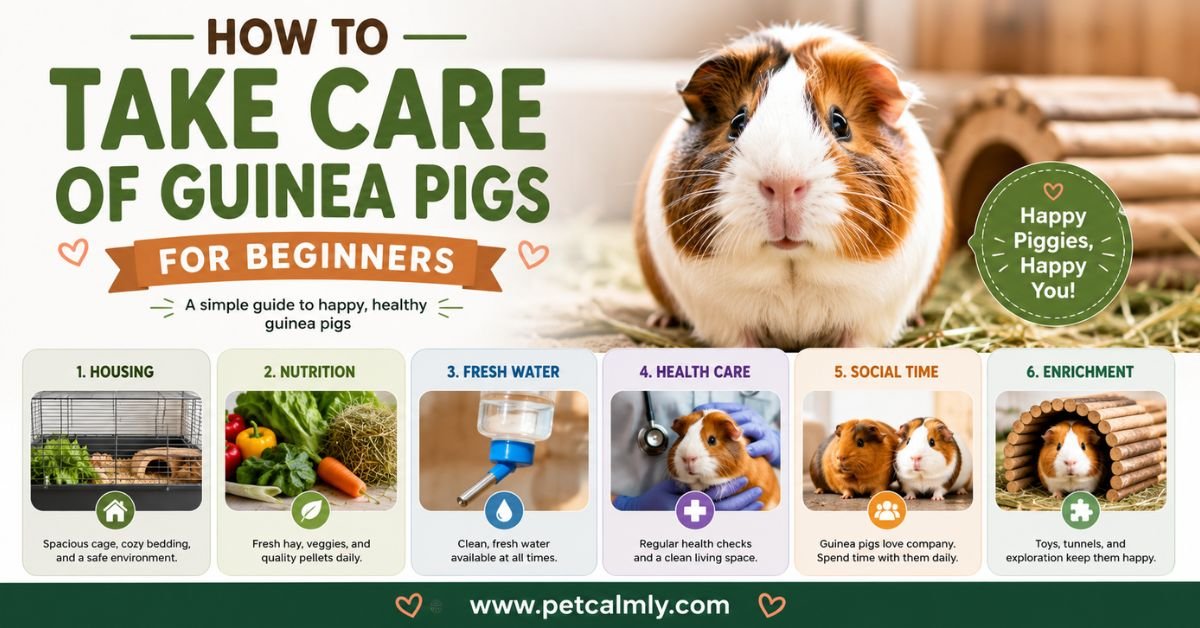
Taking care of guinea pigs for beginners means giving them the right housing, daily fresh food, constant access to hay, clean water, and gentle social interaction. They need a spacious cage, not a small pet store setup, along with vitamin C-rich vegetables and a safe, quiet environment. Guinea pigs are social animals, so they should ideally be kept in pairs. Most importantly, they require daily attention, regular cleaning, and calm handling to stay healthy and stress-free.
Introduction
Bringing home a guinea pig often feels simple at first they look small, quiet, and easy to manage. But many new owners quickly realize something important: guinea pigs are sensitive, social, and surprisingly specific in their care needs.
They don’t just “live in a cage.” They depend on routine, companionship, and the right diet to stay healthy. A small mistake like the wrong food, a cramped enclosure, or too much handling too soon can lead to stress or illness.
If you’re searching for how to take care of guinea pigs for beginners, you’re likely trying to avoid those early mistakes and give your pet a comfortable life from day one. That’s exactly what this guide is designed to help with.
We’ll walk through everything in a calm, practical way no confusion, no overwhelming jargon just real guidance you can actually use.
Understanding Guinea Pig Basics (Before You Bring One Home)
Before talking about cages or food, it helps to understand what guinea pigs actually are.
Guinea pigs (also called cavies) are small herbivorous rodents originally from South America. Unlike hamsters or mice, they are:
- Highly social (they don’t like being alone)
- Sensitive to stress and temperature changes
- Active during the day (not nocturnal)
- Dependent on constant fiber intake
🧠 Why this matters for beginners
A lot of care problems happen because owners treat guinea pigs like “low-maintenance cage pets.” In reality, they are closer to small companion animals that need daily interaction and structure.
The Right Guinea Pig Setup (Most Important Step)
If there is one area where beginners make mistakes, it’s housing.
Cage Size Matters More Than Anything
Quick answer: Bigger is always better. Guinea pigs need floor space, not height.
Minimum recommended space:
- 1 guinea pig: at least 7.5 sq ft
- 2 guinea pigs: at least 10.5 sq ft
Why space is critical:
- Prevents stress and fighting
- Encourages natural movement
- Reduces boredom and depression
- Keeps them physically healthier
Ideal Cage Setup Includes:
- Solid floor (no wire mesh)
- Soft bedding (fleece or paper-based bedding)
- Hiding houses (at least 2 hideouts per guinea pig)
- Separate zones for eating, resting, and potty areas
Common beginner mistake:
Small pet store cages that look “cute” but are too cramped.
Temperature and Environment
Guinea pigs are sensitive to heat and cold.
- Ideal temperature: 18°C to 24°C (64°F to 75°F)
- Avoid direct sunlight
- Avoid drafts (windows, fans, AC blowing directly)
Stress signs from poor environment:
- Hiding constantly
- Loss of appetite
- Shivering or lethargy
Guinea Pig Diet Explained (Where Health Begins)
Diet is the foundation of guinea pig health. Many illnesses come from improper feeding.
The Golden Rule:
Guinea pigs must have unlimited hay every single day.
1. Hay (Most Important Food)
- Timothy hay (best for adults)
- Orchard grass hay (alternative)
- Alfalfa hay (only for young guinea pigs under 6 months)
Why hay matters:
- Keeps teeth healthy (they grow continuously)
- Supports digestion
- Prevents obesity
2. Fresh Vegetables (Daily Requirement)
Guinea pigs need vitamin C daily because their bodies don’t produce it.
Safe vegetables include:
- Bell peppers (excellent vitamin C source)
- Cucumber
- Romaine lettuce
- Coriander (cilantro)
- Carrot (small amounts)
Feeding tip:
Rotate vegetables to avoid digestive issues.
3. Fruits (Occasional Treats)
Fruits are not daily food.
- Apple slices (no seeds)
- Strawberry
- Blueberry
Rule:
Treats only 1–2 times per week.
4. Fresh Water (Always Available)
- Use a bottle or heavy bowl
- Change daily
- Keep clean to prevent bacteria growth
Foods to Avoid
- Chocolate or sugary foods
- Onion and garlic
- Iceberg lettuce
- Dairy products
- Bread, rice, or processed food
Guinea Pig Behavior Explained (What They’re Really Trying to Tell You)
Understanding behavior helps you bond better and prevent stress.
Common behaviors:
1. Popcorning (Jumping Suddenly)
- Sign of happiness and excitement
2. Hiding constantly
- Fear or stress
- Needs more time or better environment
3. Teeth chattering
- Warning sign of irritation or discomfort
4. Wheeking (loud squeak)
- Usually means hunger or excitement for food
Social Needs (Very Important)
Guinea pigs are herd animals.
Best practice:
- Keep at least two together
- Same-sex pairs or neutered combinations
Why loneliness is harmful:
- Depression
- Reduced appetite
- Reduced lifespan in severe cases
Cleaning and Hygiene Routine
A clean environment directly affects health.
Daily tasks:
- Remove uneaten vegetables
- Spot-clean waste
- Check water bottle
Weekly tasks:
- Replace bedding
- Deep clean cage
- Wash accessories
Beginner mistake:
Waiting too long between cleanings, which leads to odor and bacteria buildup.
Handling Guinea Pigs Safely (Building Trust)
Guinea pigs are naturally nervous.
Step-by-step handling:
- Sit quietly near them daily
- Offer treats from your hand
- Gently scoop with both hands (support body fully)
- Hold close to your chest for security
Important:
Never grab from above suddenly it triggers fear response.
Common Beginner Mistakes (Avoid These Early)
Many problems come from simple misunderstandings:
- Keeping only one guinea pig
- Small cages with no hiding space
- Feeding too many pellets or fruits
- Not providing enough hay
- Skipping vitamin C foods
- Handling too aggressively too soon
Beginner Care Checklist
Daily:
- Fresh hay available
- Clean water
- Vegetables
- Quick health check
Weekly:
- Cage cleaning
- Nail check (if needed)
- Weight monitoring
Monthly:
- Deep cage sanitation
- Health observation (coat, eyes, teeth)
When Should You Worry? (Warning Signs)
Some symptoms should never be ignored:
- Not eating for 8–12 hours
- Sudden weight loss
- Diarrhea or very soft stool
- Labored breathing
- Constant hiding and lethargy
- Overgrown teeth or drooling
Most important:
Guinea pigs decline quickly when sick, so early attention matters.
If you notice any of these signs, contact a veterinarian experienced with small animals.
What Should New Owners Do First?
If you’re just starting, focus on this order:
Step 1:
Set up a proper large cage
Step 2:
Buy hay, pellets, and vitamin C vegetables
Step 3:
Bring at least two guinea pigs if possible
Step 4:
Create a daily routine (feeding + cleaning)
Step 5:
Spend quiet time bonding every day
Consistency matters more than perfection.
Real-Life Beginner Scenario (Common Situation)
Many new owners say:
“My guinea pig is always hiding and doesn’t want to come out.”
This is normal in the first few days. Guinea pigs need time to adjust to new smells, sounds, and surroundings.
What helps:
- Quiet environment
- No sudden movements
- Gentle feeding from your hand
- Giving them hiding spaces
Usually, within 1–2 weeks, they become more confident if handled calmly.
Quick Dos and Don’ts
Do:
- Provide unlimited hay
- Keep them in pairs
- Clean cage regularly
- Offer vitamin C vegetables daily
- Handle gently and daily
Don’t:
- Keep them alone
- Feed sugary foods
- Use small cages
- Ignore stress signs
- Overhandle in early days
Frequently Asked Questions
1. How long do guinea pigs live?
Guinea pigs usually live 5–8 years with proper care. Good diet and clean environment can help them live longer and healthier.
2. Can guinea pigs be kept alone?
It’s not recommended. They are social animals and thrive best in pairs or small groups for emotional wellbeing.
3. What is the best food for guinea pigs daily?
Unlimited hay is essential, along with fresh vegetables rich in vitamin C like bell peppers and leafy greens.
4. Do guinea pigs need vaccines?
In most regions, guinea pigs do not require routine vaccinations, but regular vet checkups are still important.
5. Why is my guinea pig not eating?
Loss of appetite can indicate stress, dental issues, or illness. This should be checked by a vet quickly.
6. How often should I clean the cage?
Spot-clean daily and do a full deep clean once a week to maintain hygiene and prevent odor buildup.
More Information About Pets, Please Visit Our Website: Petcalmly.com
Conclusion
Taking care of guinea pigs for beginners is not about perfection it’s about consistency, patience, and understanding their natural needs. Once you provide the right space, proper diet, and gentle companionship, guinea pigs quickly become affectionate and interactive pets.
They may be small, but their emotional and physical needs are real. When those needs are met, they respond with trust, curiosity, and even joyful little “popcorn” jumps that make all the effort worthwhile.
If you focus on daily care, calm interaction, and a clean environment, you’re already doing most of what your guinea pig needs to thrive.