Short direct answer
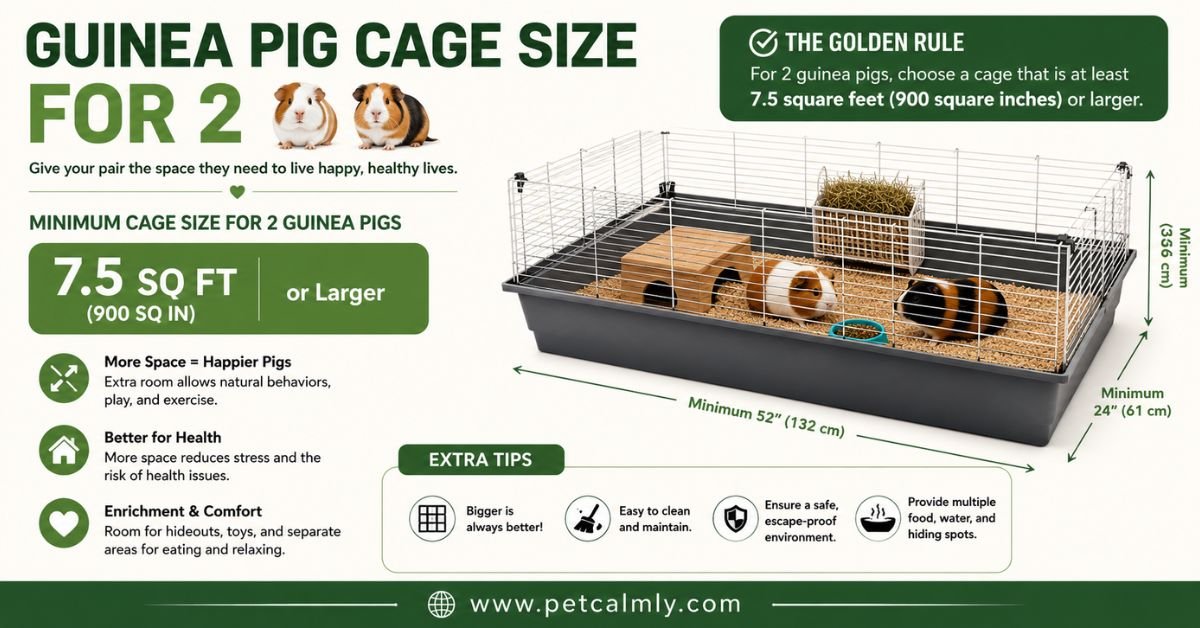
For two guinea pigs, the recommended minimum cage size is 10.5 square feet, but a more comfortable and healthier setup is at least 13 square feet or larger. In practical terms, this usually means a cage around 48 x 30 inches (minimum), though bigger is always better. Guinea pigs are active, social animals and need enough space to move, popcorn, eat, and establish personal zones without stress.
If you want them to thrive not just “fit” aim for a spacious, well-ventilated enclosure with separate hideouts, a feeding area, and open floor space.
Why Cage Size Matters More Than Most Owners Realize
Many new guinea pig owners underestimate how much space these small animals actually need. At first glance, guinea pigs seem tiny and easy to house, but their behavior tells a different story.
Guinea pigs (Guinea pig) are:
- Highly social (they should never live alone)
- Naturally active in short bursts
- Sensitive to stress and overcrowding
- Territorial about personal space (even in pairs)
When two guinea pigs are kept in a cramped cage, problems don’t always appear immediately. Over time, you may notice:
- One pig dominating food or hideouts
- Increased hiding and reduced activity
- Occasional fighting or chasing
- Weight gain or lethargy in less dominant pigs
- Stress-related behaviors like bar chewing or freezing
A properly sized cage doesn’t just improve comfort it directly impacts their mental health, social balance, and even lifespan.
Understanding the True Space Needs of Two Guinea Pigs
The minimum vs. the ideal
Here’s a simple breakdown that experienced guinea pig caretakers and rescue organizations often follow:
| Number of Guinea Pigs | Minimum Size | Recommended Size |
|---|---|---|
| 1 guinea pig | 7.5 sq ft | 10+ sq ft |
| 2 guinea pigs | 10.5 sq ft | 13–16 sq ft |
| 3 guinea pigs | 13 sq ft | 16–20 sq ft |
For two guinea pigs, the minimum is just a survival baseline, not a comfort level. The difference between minimum and ideal space often shows up in their behavior within a few days.
Why “bigger is better” is especially true for guinea pigs
Unlike some small pets, guinea pigs don’t use vertical space much. They are ground-dwellers. That means:
- They need floor space, not height
- Ramps and levels don’t replace usable ground area
- Open running space reduces stress hormones
Think of it like sharing a small bedroom with another person you can manage it, but it becomes much healthier when there’s room to move freely.
The Emotional Side: What Guinea Pigs Actually Experience in Small Cages
One of the most overlooked aspects of cage sizing is emotional wellbeing.
Guinea pigs are prey animals. In the wild, they rely on space and visibility to feel safe. When space is limited, they cannot create distance from each other or retreat comfortably.
Common emotional signs of cramped housing include:
- Constant alertness or freezing when approached
- One pig always hiding while the other dominates open space
- Reduced “popcorning” (happy jumping behavior)
- Increased irritability during feeding time
- Avoidance of open areas in the cage
A larger cage allows them to do something very important: choose where to be. That sense of choice reduces stress significantly.
Best Cage Dimensions for Two Guinea Pigs (Real-World Examples)
Instead of just thinking in square feet, it helps to visualize actual setups:
Minimum acceptable setup
- 48 x 30 inches (1-level cage)
- Suitable only for temporary housing or young pigs
Comfortable standard setup
- 56 x 30 inches or larger
- Enough room for:
- Two hideouts
- Separate feeding areas
- Open running strip
Ideal setup (recommended)
- 60 x 30 inches or bigger
- Or a custom C&C cage (Cube and Coroplast)
- Room for:
- Multiple zones
- Fleece bedding area + hay corner
- Enrichment items like tunnels and bridges
Many experienced owners say that once they upgrade from “standard pet store cages” to larger DIY-style enclosures, their guinea pigs behave like completely different animals more active, social, and confident.
4 Common Mistakes New Owners Make
1. Buying cages labeled “for guinea pigs”
Pet store packaging is often misleading. Many cages sold as “guinea pig homes” are actually too small for long-term use.
2. Confusing height with usable space
Guinea pigs don’t climb like rats or ferrets. Multi-level cages often waste vertical space instead of increasing usable area.
3. Not planning for growth
Two young guinea pigs may seem fine in a smaller cage at first, but as they mature:
- territorial behavior increases
- movement needs grow
- social hierarchy becomes clearer
4. Forgetting enrichment space
A cage isn’t just sleeping quarters. It should also include:
- hideouts
- tunnels
- hay feeding zones
- open running lanes
If enrichment items fill the entire cage, it effectively becomes “too small” even if measurements look correct.
What a Proper Two-Guinea Pig Setup Should Include
A good enclosure is not just about size—it’s about layout.
Essential layout zones:
- Sleeping area: At least 2 hideouts (one per pig)
- Feeding zone: Hay rack or hay pile area
- Water zone: Stable bottle or bowl
- Open space: Clear running area for exercise
- Toilet corner: Guinea pigs naturally choose certain spots
Why multiple hideouts matter
Even bonded guinea pigs need personal space. Without enough hiding options, one pig may block the other from resting comfortably.
A simple rule:
Number of guinea pigs + 1 hideout = ideal setup
Behavioral Signs Your Cage Might Be Too Small
You don’t always need a tape measure to know something is wrong. Guinea pigs often show clear behavioral signals.
Watch for:
- One pig constantly chasing or mounting the other
- Limited movement during the day
- Excessive sleeping in one corner
- Fights during feeding time
- Chewing cage bars frequently
- Reduced curiosity or exploration
If you notice these patterns, increasing cage size or reorganizing the layout often helps quickly.
The Role of Bonding in Cage Space Requirements
Even well-bonded guinea pigs can develop tension in tight spaces.
Bonding factors include:
- Age differences
- Gender pairing
- Personality match
- Previous living conditions
Two calm guinea pigs in a large cage usually coexist peacefully. The same pair in a cramped space may start competing for territory.
Space doesn’t replace bonding, but it protects it.
Ideal Cage Setup for Beginners (Simple Checklist)
If you’re setting up for two guinea pigs, use this checklist:
- Minimum 10.5 sq ft (prefer 13+ sq ft)
- At least 2 hideouts
- Separate feeding spots if needed
- Open running area
- Soft bedding or fleece
- Good ventilation
- Easy cleaning access
- No wire flooring
This setup reduces stress for both you and your pets.
Indoor vs Outdoor Cage Considerations
Indoor cages
- More stable temperature
- Safer from predators
- Easier interaction
- Better for bonding
Outdoor cages
- Require predator-proof design
- Weather protection is critical
- Must avoid heat stress or cold drafts
- More maintenance required
For most owners, indoor housing is significantly safer and more manageable.
When Should You Worry About Cage Size?
You should consider upgrading if you notice:
- Frequent chasing or dominance behavior
- One guinea pig losing weight
- Reduced movement or exercise
- Constant hiding
- Aggression around food
- Lack of normal playful behavior
These are often not “personality issues” they’re environmental stress signals.
What Should Pet Owners Do? (Practical Steps)
If you currently have two guinea pigs in a small cage, here’s a simple action plan:
Step 1: Measure your current space
Calculate total usable floor area (not including ramps or shelves).
Step 2: Compare with minimum standards
Check if you are below 10.5 sq ft.
Step 3: Upgrade if needed
Consider:
- C&C cages (most flexible option)
- Expanding existing enclosures
- Connecting two cages safely
Step 4: Improve layout immediately
Even before upgrading:
- Add more hideouts
- Separate feeding zones
- Remove cluttered space
Step 5: Observe behavior changes
Within a few days, many guinea pigs show:
- More exploration
- Less tension
- Increased social grooming
- Better appetite
Why Bigger Cages Often Solve “Behavior Problems”
Many owners think guinea pigs are “fighting,” but in reality, they are often responding to stress.
A larger space:
- Reduces competition
- Allows escape routes
- Supports natural social hierarchy
- Lowers stress-driven aggression
Instead of separating guinea pigs immediately, increasing space often restores balance.
Conclusion
Choosing the right guinea pig cage size for 2 is not just a technical decision it directly affects how your pets feel every day. A slightly larger cage often leads to calmer behavior, better bonding, and more natural activity.
If there’s one takeaway, it’s this:
A cage should never feel like a container. It should feel like a safe, open territory where both guinea pigs can exist comfortably without pressure.
When you give them enough space, you’re not just meeting a requirement you’re giving them a better quality of life.
More Information About Pets, Please Visit Our Website: How to Take Care of Guinea Pigs for Beginners
Frequently Asked Questions
1. What is the absolute minimum cage size for two guinea pigs?
The minimum is about 10.5 square feet, but this should only be used as a baseline. Larger space is strongly recommended for long-term comfort.
2. Can two guinea pigs live in a small cage if they get along?
Even bonded guinea pigs need space. Small cages can still cause stress and lead to dominance issues over time.
3. Is a two-level cage good for guinea pigs?
Not really. Guinea pigs prefer floor space rather than vertical levels. Ramps don’t replace usable running area.
4. What is the best cage type for two guinea pigs?
C&C cages are often considered the best because they are customizable, spacious, and easy to expand as needed.
5. How do I know if my cage is too small?
Signs include chasing, bar chewing, lack of movement, or one pig always hiding. These often point to insufficient space.
6. Do guinea pigs get happier in bigger cages?
Yes. Larger cages allow natural behaviors like running, exploring, and social interaction, which reduces stress and improves wellbeing.