Short direct answer
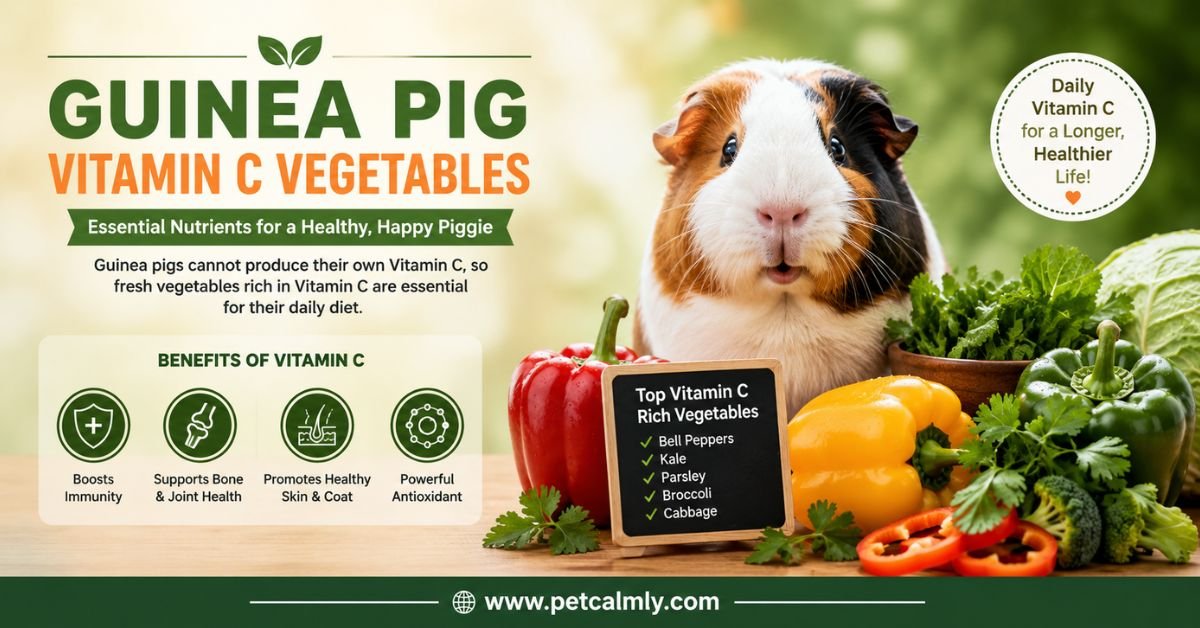
Guinea pigs cannot produce vitamin C on their own, so they must get it daily from food. The best guinea pig vitamin C vegetables include bell peppers, kale, parsley, cilantro, broccoli, and leafy greens. These vegetables help prevent scurvy, a serious deficiency disease that causes weakness, joint pain, and poor immunity.
A healthy adult guinea pig typically needs 10–30 mg of vitamin C per day. Fresh vegetables are the safest and most natural way to meet this requirement, but variety and correct portion size are essential. Overfeeding or choosing the wrong vegetables can lead to digestive issues, so balance is key.
Introduction
If you’ve ever watched your guinea pig happily munching vegetables, you already know how important diet is for their daily comfort and health. But what many owners don’t realize is that guinea pigs are completely dependent on external vitamin C sources.
Unlike most animals, they lack the enzyme needed to produce vitamin C internally. That means every bite of food matters.
This is where guinea pig vitamin C vegetables become essential. They’re not just “healthy snacks”—they are a daily survival requirement.
Without enough vitamin C, guinea pigs can develop scurvy within weeks. It’s painful, progressive, and completely preventable with the right diet.
In this guide, you’ll learn exactly which vegetables are safe, how much to feed, common mistakes to avoid, and how to build a balanced feeding routine that keeps your guinea pig active, bright-eyed, and healthy.
Why Guinea Pigs Need Vitamin C Every Single Day
Vitamin C supports several critical body functions in guinea pigs:
Strong immune system
It helps fight infections and keeps them more resistant to illness.
Healthy joints and mobility
Without vitamin C, connective tissues weaken, leading to pain and stiffness.
Skin and coat health
Deficiency can cause rough fur, hair loss, and slow wound healing.
Growth and repair
Young guinea pigs especially need vitamin C for proper development.
The key thing to remember is this:
Vitamin C does NOT store well in their body.
So yesterday’s intake does not protect them today.
That’s why daily feeding of guinea pig vitamin C vegetables is non-negotiable.
Best Guinea Pig Vitamin C Vegetables (Safe & Recommended)
Not all vegetables are equal when it comes to vitamin C content. Some are nutrient-rich but too high in calcium or sugar. Others are ideal for daily feeding.
Below are the safest and most effective options.
Bell Peppers (Top Choice)
Bell peppers especially red and yellow are one of the best vitamin C sources.
Why they’re ideal:
- Extremely high vitamin C
- Low calcium
- Easy to digest
- Guinea pigs love the taste
Feeding tip: Offer small strips daily.
Parsley
Parsley is rich in vitamin C but should be balanced due to calcium content.
Benefits:
- Strong antioxidant profile
- Supports immunity
- Boosts appetite
Tip: Feed 2–3 times per week, not daily.
Cilantro (Coriander Leaves)
A gentle, safe herb that most guinea pigs enjoy.
Benefits:
- Moderate vitamin C
- Good hydration support
- Easy digestion
Kale (In Moderation)
Kale contains vitamin C but also higher calcium.
Best use:
- 1–2 times per week only
Broccoli (Leaves and Florets)
Broccoli is nutrient-dense but can cause gas if overfed.
Benefits:
- Vitamin C rich
- Fiber source
Tip: Offer small portions occasionally.
Romaine Lettuce
While not extremely high in vitamin C, it is safe and hydrating.
Use it as:
- Base leafy green
- Daily filler with other vitamin C vegetables
Guinea Pig Vitamin C Vegetables Chart
| Vegetable | Vitamin C Level | Frequency | Notes |
|---|---|---|---|
| Red Bell Pepper | Very High | Daily | Best choice |
| Green Bell Pepper | High | Daily | Slightly less than red |
| Parsley | High | 2–3x weekly | High calcium |
| Cilantro | Moderate | Daily–moderate | Very safe |
| Kale | Moderate–High | 1–2x weekly | Calcium caution |
| Broccoli | Moderate | Occasionally | Can cause gas |
| Romaine Lettuce | Low | Daily | Hydration support |
Vegetables to Avoid or Limit for Guinea Pig Vitamin C Diet
Even if a vegetable contains vitamin C, it may not always be safe in large amounts.
Avoid or limit:
- Iceberg lettuce (low nutrition, watery)
- Spinach (high oxalates, calcium imbalance)
- Potatoes (unsafe for guinea pigs)
- Onions and garlic (toxic)
- Avocado (fat content is harmful)
- Sugary fruits in excess
A common mistake is assuming “more vegetables better health.” For guinea pigs, balance is more important than quantity.
How to Feed Guinea Pig Vitamin C Vegetables Properly
Feeding vegetables is not just about choosing the right ones. How you serve them matters too.
Step-by-step feeding routine:
- Wash all vegetables thoroughly
- Cut into small, bite-sized pieces
- Mix 2–3 vegetables per meal
- Rotate daily to prevent boredom
- Serve fresh only (never wilted leftovers)
Best feeding schedule:
- Morning: leafy greens + bell pepper
- Evening: mix of herbs and safe greens
Portion guideline:
- About 1 cup of vegetables per adult guinea pig per day
- Adjust based on size and activity level
Signs Your Guinea Pig May Lack Vitamin C
Vitamin C deficiency (scurvy) develops slowly but can become serious quickly.
Early signs:
- Low energy
- Loss of appetite
- Dull coat
- Mild weight loss
Advanced symptoms:
- Swollen joints
- Difficulty walking
- Bleeding gums
- Reluctance to move
- Pain when touched
If you notice these symptoms, it is important to act quickly and consult a vet.
5 Common Mistakes with Guinea Pig Vitamin C Vegetables
Many owners unintentionally make feeding mistakes that affect long-term health.
1. Feeding only lettuce
Romaine is safe, but it does not provide enough vitamin C alone.
2. Overfeeding calcium-rich greens
Too much kale or parsley can lead to bladder stones.
3. Not rotating vegetables
Repetition reduces nutrient diversity.
4. Relying only on pellets
Pellets help, but fresh vegetables are essential.
5. Ignoring freshness
Wilted vegetables lose vitamin content quickly.
How to Build a Weekly Guinea Pig Vitamin C Vegetable Plan
A balanced weekly plan ensures consistent nutrition without overload.
Example weekly rotation:
Monday
- Red bell pepper
- Romaine lettuce
- Cilantro
Tuesday
- Green bell pepper
- Cucumber
- Parsley (small amount)
Wednesday
- Red bell pepper
- Romaine lettuce
- Broccoli (small portion)
Thursday
- Cilantro
- Bell pepper mix
- Leafy greens
Friday
- Red bell pepper
- Romaine lettuce
- Kale (small amount)
Saturday
- Mixed greens
- Cilantro
- Bell pepper
Sunday
- Light day: romaine + bell pepper only
This rotation keeps guinea pig vitamin C vegetables balanced, safe, and enjoyable.
When Should You Worry About Diet or Health?
Not every appetite change is serious, but some signs should never be ignored.
Contact a vet if:
- Your guinea pig refuses vegetables for more than 24 hours
- You notice swollen joints or limping
- There is rapid weight loss
- Eating becomes painful or difficult
Guinea pigs hide illness naturally, so subtle changes matter.
Early intervention can prevent long-term complications.
What Responsible Guinea Pig Owners Should Focus On
Healthy feeding is not just about vegetables it’s about consistency and observation.
Key care principles:
- Provide vitamin C vegetables daily
- Rotate food variety weekly
- Monitor weight regularly
- Always offer fresh hay alongside vegetables
- Keep water clean and available
A stable routine reduces stress and improves digestion.
Conclusion
Feeding the right guinea pig vitamin C vegetables is one of the most important responsibilities of pet ownership. It directly affects your guinea pig’s energy, immunity, comfort, and lifespan.
The good news is that it doesn’t have to be complicated. With simple choices like bell peppers, cilantro, and safe leafy greens, you can easily meet their daily vitamin C needs.
What matters most is consistency not perfection. A balanced routine, fresh vegetables, and careful observation will keep your guinea pig healthy and active for years.
More Information About Pets, Please Visit Our Website: Can Guinea Pigs Eat Apples Everyday?
Frequently Asked Questions
1. What vegetables are highest in vitamin C for guinea pigs?
Red bell peppers are the best source, followed by green peppers, parsley, and cilantro.
2. Can guinea pigs get enough vitamin C from pellets alone?
Pellets help, but fresh vegetables are still necessary for full nutrition and hydration.
3. How often should I feed vitamin C vegetables?
Daily feeding is recommended, especially bell peppers and leafy greens.
4. Can too much vitamin C harm guinea pigs?
Excess vitamin C is usually excreted, but overfeeding vegetables high in calcium can cause other issues.
5. What happens if guinea pigs don’t get enough vitamin C?
They may develop scurvy, leading to pain, weakness, and serious health complications.
6. Are fruits a good source of vitamin C for guinea pigs?
Some fruits contain vitamin C, but they should only be given occasionally due to sugar content.