Short direct answer
A corn snake tank setup needs a 40-gallon enclosure for adults, a secure screen lid, a warm side (85°F) and cool side (75°F), a hiding spot on each end, proper substrate like aspen bedding, and a water dish. Add climbing branches and decorations to enrich their environment and keep them mentally stimulated.
Why Your Corn Snake’s Tank Setup Matters More Than You Think
Imagine moving into a new home with no furniture, no temperature control, and nowhere to hide. You’d be miserable and stressed. Corn snakes feel the same way.
Getting the tank setup right from day one isn’t just about aesthetics. It directly affects your snake’s health, feeding response, shedding success, and lifespan. A well-set-up enclosure can mean the difference between a thriving, active pet and a stressed snake that refuses to eat for weeks.
The good news? Corn snakes are one of the most forgiving beginner reptiles. With the right setup, they adapt quickly and reward you with curious, gentle personalities. This guide covers every element of a proper corn snake habitat from tank size to décor ideas so you can set things up correctly the first time.
Choosing the Right Tank Size for Your Corn Snake
Size is the first decision, and it’s a big one.
Hatchlings and juvenile corn snakes (under 18 inches) can start in a 10 to 20-gallon tank. But corn snakes grow fast adults typically reach 4 to 5 feet and they need room to move, explore, and thermoregulate.
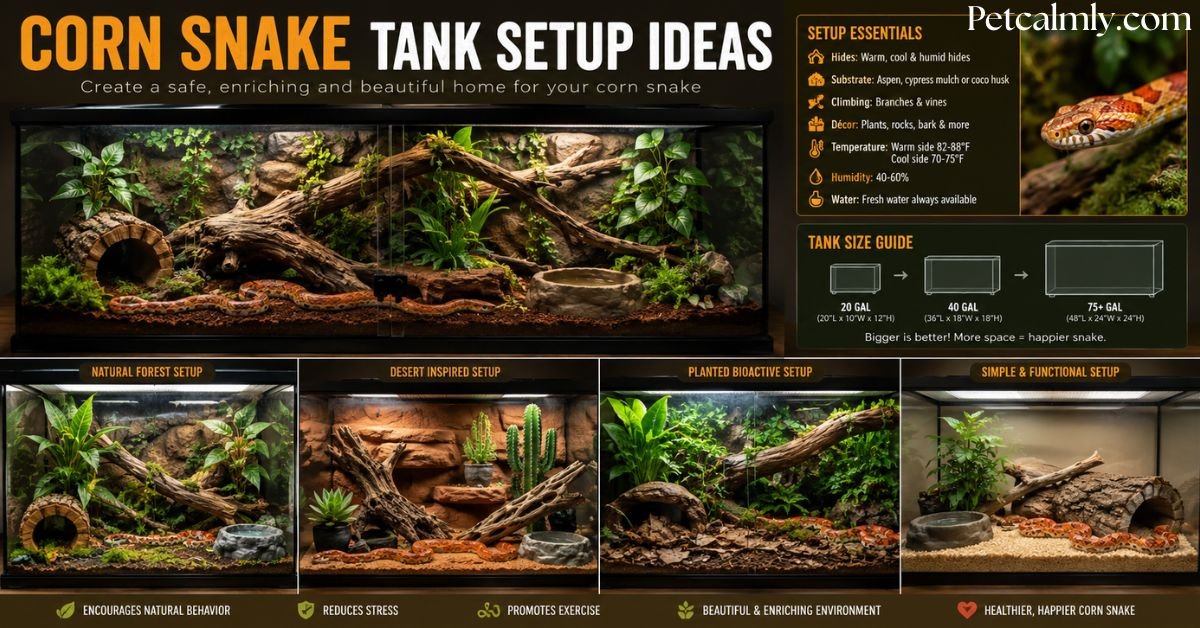
For adult corn snakes, a 40-gallon enclosure is the minimum. Many experienced keepers prefer a 4-foot by 2-foot by 2-foot (4x2x2) front-opening enclosure, which gives more floor space for naturalistic setups. More floor space is always better than extra height for this terrestrial species.
A tank that’s too small causes chronic stress. Corn snakes that feel cramped often pace the walls, refuse food, or develop respiratory issues over time. Think of the tank not as a cage, but as your snake’s entire world.
Glass vs. PVC Enclosures Which Is Better?
Glass aquariums are budget-friendly and easy to find, but they lose heat quickly and have poor humidity retention.
PVC enclosures cost more upfront but hold heat better, are lighter, and often come with front-opening doors which is much less stressful for snakes than reaching in from above (which mimics a predator attack).
If budget allows, a PVC or ABS plastic enclosure is worth the investment. If you’re starting with glass, that works fine you’ll just need to monitor temperature and humidity more carefully.
The Essential Temperature and Heating Setup
Corn snakes are ectothermic they rely entirely on their environment to regulate body temperature. This is why a proper thermal gradient is non-negotiable.
Your enclosure needs:
- Warm side: 80–85°F (basking area)
- Cool side: 72–75°F
- Nighttime low: No colder than 65°F
The best way to achieve this is with an under-tank heater (UTH) placed under one side of the enclosure, controlled by a thermostat. Never plug a heat mat directly into the wall without a thermostat, it can overheat and burn your snake.
Do Corn Snakes Need a Basking Light?
Corn snakes don’t require a basking light the way bearded dragons or tortoises do. They’re crepuscular most active at dawn, dusk, and night so intense overhead heat is unnecessary and can even dry them out.
If you want a naturalistic look with lighting, a low-wattage LED or T5 UVB light on a timer (12 hours on, 12 hours off) can be beneficial and won’t disturb their cycle. Some research even suggests low-level UVB improves overall health in corn snakes, though it remains optional for most keepers.
Always use a digital thermometer with a probe not the stick-on dial thermometers that come with starter kits. Those are notoriously inaccurate and can give you a false sense of security.
Humidity Levels and Why They Matter for Shedding
Corn snakes need moderate humidity around 40 to 60% under normal conditions, rising to about 70% during shed cycles.
Low humidity leads to incomplete sheds, where dry skin remains stuck around the eyes or tail tip. This is not just cosmetic retained eye caps can cause permanent eye damage, and a constricted shed around the tail can cut off circulation.
Signs your humidity is too low:
- Skin comes off in patches rather than one piece
- Dull, opaque eyes that don’t clear up after a week
- Snake soaking in its water dish more than usual (a self-help behavior)
Use a digital hygrometer to monitor humidity. To raise it, lightly mist one side of the tank or add a humid hide filled with damp sphagnum moss. This gives your snake the option to retreat to higher humidity when needed especially useful during sheds.
Best Substrate Options for a Corn Snake Tank
Substrate is what lines the bottom of your enclosure, and the right choice supports burrowing, helps maintain humidity, and looks great.
Top substrate choices:
Aspen shavings
The classic choice. Aspen is affordable, widely available, and holds burrow tunnels well. It’s also low-dust and safe if ingested in small amounts. The main downside is that it doesn’t handle moisture well — spot clean immediately if it gets wet.
Coconut fiber (coco coir)
Holds humidity better than aspen and looks very naturalistic. Great for bioactive or naturalistic setups. Slightly messier when dry.
Bioactive soil mix
A blend of topsoil, play sand, and organic matter. Used in bioactive enclosures with live plants and cleanup crews (isopods and springtails). Excellent long-term option but requires more initial setup effort.
Paper towels or newspaper
Not pretty, but perfect for quarantine setups or when monitoring a sick snake. Easy to clean and lets you spot droppings or mites quickly.
Avoid pine or cedar the aromatic oils are toxic to snakes. Also skip gravel, sand-only substrates, and anything with artificial dyes or added chemicals.
Aim for a substrate depth of at least 3 to 4 inches. Corn snakes love to burrow, and loose substrate lets them exhibit this natural behavior freely.
Hides, Décor, and Enrichment Ideas
This is where the fun begins. A well-decorated corn snake tank isn’t just beautiful it’s essential for your snake’s mental health and sense of security.
The Two-Hide Rule
Every corn snake tank must have at least two hides: one on the warm side and one on the cool side. This allows your snake to thermoregulate while still feeling hidden and safe.
If your snake only has one hide (usually the warm side), it will be forced to choose between comfort and security. That’s a low-grade stressor that adds up over time.
Hides should be snug just large enough for the snake to fit inside with its body touching the walls on all sides. A hide that’s too large defeats the purpose. Think of it like a weighted blanket versus a cold empty room.
Décor Ideas That Double as Enrichment
Cork bark flats and tubes
Natural-looking, lightweight, and easy to clean. Cork bark logs make excellent hides and look stunning in naturalistic setups.
Climbing branches and driftwood
Despite being a ground-dwelling species, corn snakes do climb. Diagonal branches give them exercise opportunities and use vertical space. Make sure branches are secured so they can’t collapse.
Artificial plants and vines
Add visual cover, give your snake something to move through, and dramatically improve the look of the enclosure. Silk plants are safer than plastic (less risk of abrasion). Rinse them before use.
Live plants
If you’re doing a bioactive setup, pothos, snake plants, and bromeliads are hardy choices. They also help with humidity regulation and look incredible.
Rocks and slate
Flat rocks can create naturalistic basking platforms or hide entrances. Make sure heavy rocks are stable and can’t shift onto your snake.
Tunnels and caves
Ceramic caves, resin rock hides, and PVC pipe sections all work well. Variety is key rotate or rearrange décor occasionally to provide novelty and mental stimulation.
Water Dish Setup and Placement Tips
Your corn snake’s water dish needs to be:
- Large enough for the snake to soak in if it wants to (especially during sheds)
- Heavy enough that it won’t tip over
- Placed on the cool side of the enclosure
A heavy ceramic crock or a purpose-made reptile water bowl works perfectly. Change the water every 2 to 3 days, or immediately if soiled.
Don’t place the water dish on the warm side it will evaporate quickly, spike humidity unpredictably, and make the warm zone wetter than ideal.
Some keepers notice their corn snake soaking for extended periods. This usually signals an approaching shed or, in some cases, a sign of mites. If soaking behavior is unusual for your snake, inspect it closely under bright light, checking for tiny moving specks especially around the eyes and under scales.
Lighting Setup for a Natural Day-Night Cycle
Even if your corn snake doesn’t need intense UV lighting, it still benefits from a consistent light cycle that mimics natural day and night.
Using a simple timer to run a low-wattage LED light for 12 hours on and 12 hours off helps regulate your snake’s internal rhythm. This supports healthy feeding, activity patterns, and overall well-being.
Avoid heat lamps that produce excessive ambient heat or dry out the enclosure. If you need supplemental warmth, use a ceramic heat emitter (CHE) it produces heat without light, so it can run at night without disrupting your snake’s cycle.
Never use red or purple “night lights.” Despite the old belief that snakes can’t see these wavelengths, research now suggests they can and constant light at night is stressful.
Naturalistic vs. Minimalist Tank Setups Which Style Is Right for You?
There’s no single “correct” way to decorate a corn snake tank. It comes down to your goals and how much time you want to spend on maintenance.
Minimalist setup:
Paper towels or aspen substrate, two simple hides, a water dish. Easy to clean, easy to monitor your snake’s health, great for beginners or quarantine situations. Not the most visually exciting, but fully functional.
Semi-naturalistic setup:
Aspen or coco coir substrate, cork bark hides, a few artificial plants, some branches. The sweet spot for most keepers looks good, easy to maintain, enriching for the snake.
Full bioactive setup:
Custom soil mix, live plants, cleanup crew of isopods and springtails, naturalistic décor. The most visually stunning option and the most self-sustaining once established. Requires more planning and upfront cost but very low day-to-day maintenance once cycling.
A great beginner approach: start semi-naturalistic and upgrade to bioactive once you’re comfortable with basic husbandry.
When Should You Be Concerned About Your Setup?
Even with the best intentions, tank setup mistakes happen. Here’s what to watch for:
Temperature issues:
If your snake is always on one side and never moves, the gradient isn’t working correctly. A snake permanently hiding in the cool zone may be too hot; one always on the warm side may be too cold on the opposite end.
Humidity problems:
If your snake’s shed comes off in pieces, multiple small patches, or gets stuck around the eyes or tail tip, your humidity is too low during the shed cycle. Address this before the next shed.
Escape attempts:
Corn snakes are notorious escape artists. If your snake is constantly pushing at the lid or pressing its nose against the glass, it may be looking for a way out or it may simply be exploring (which is normal). Make sure all lid clips are secure.
Refusal to eat:
A new snake may refuse food for 1 to 4 weeks while settling in. That’s normal. But if a previously healthy feeder suddenly stops eating, check temperatures first, then look at other stressors excessive handling, tank placement near high-traffic areas, or recent decor changes.
Respiratory sounds:
Wheezing, clicking, or mucus around the mouth are signs of a respiratory infection usually triggered by cold temperatures or high humidity combined with poor ventilation. This needs a vet visit.
What Should You Do as a New Corn Snake Owner?
Setting up the perfect tank is exciting, but the first few weeks require patience.
Step 1 — Set up the tank fully before bringing your snake home.
Run the heating for 24 to 48 hours and confirm temperatures are stable with a thermometer before your snake arrives.
Step 2 — Let your snake settle.
After bringing it home, leave it alone for 5 to 7 days. Resist the urge to handle it or show it to friends. It needs quiet time to acclimate.
Step 3 — Offer the first meal after the settling period.
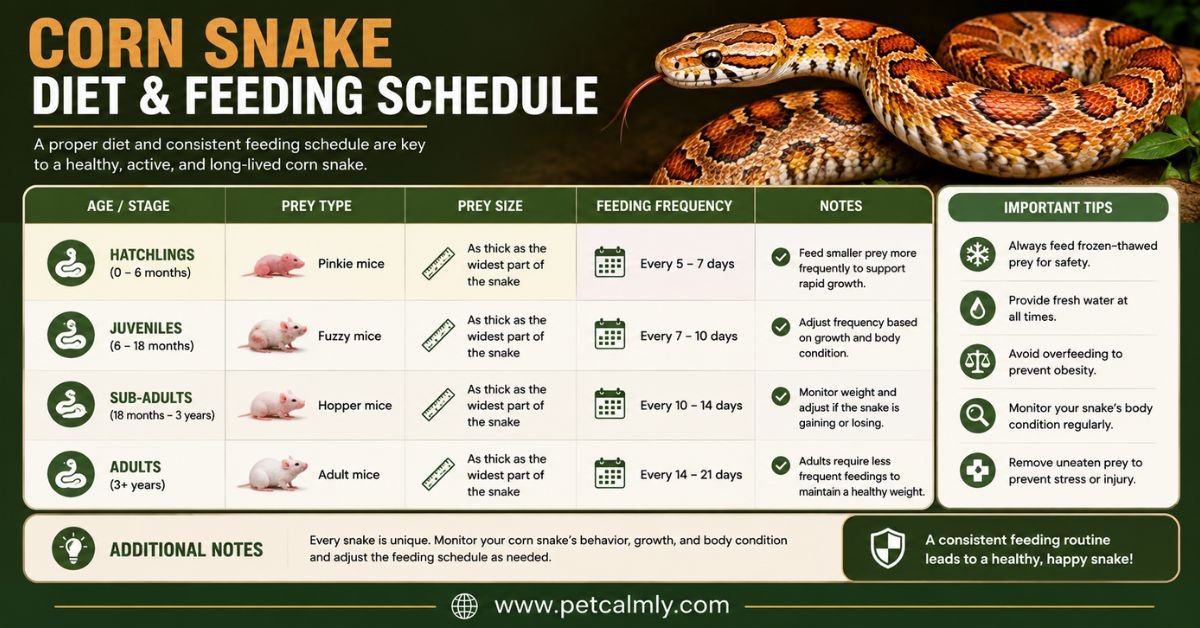
Feed appropriately sized frozen/thawed prey the prey item should be roughly the same width as the snake’s widest body point.
Step 4 — Spot clean weekly, deep clean monthly.
Remove droppings promptly. Full substrate changes and enclosure washes with reptile-safe cleaner should happen every 4 to 6 weeks (or as needed).
Step 5 — Keep a simple log.
Note feeding dates, shed dates, and any behavioral changes. This makes it much easier to catch problems early.
Conclusion
A well-planned corn snake tank setup isn’t complicated, but every detail matters from the size of the enclosure to the placement of the water dish. Get the basics right, and your corn snake will reward you with years of gentle, curious behavior and satisfying interactions.
To summarize the essentials: 40-gallon minimum enclosure for adults, proper thermal gradient with a thermostat-controlled heat mat, two hides (warm and cool), aspen or coco coir substrate, moderate humidity around 40 to 60%, a soaking-sized water dish, and enrichment décor that lets your snake explore and hide naturally.
Start simple, observe your snake’s behavior, and adjust from there. The more you tune in to what your specific snake prefers, the better keeper you’ll become.
More Information About Pets, Please Visit Our Website: Petcalmly.com
Frequently Asked Questions
1: What size tank does a corn snake need?
Juvenile corn snakes can start in a 10 to 20-gallon enclosure, but adult corn snakes need at least a 40-gallon tank. Many experienced keepers prefer a 4x2x2-foot enclosure for adults, as more floor space allows proper thermoregulation and enrichment.
2: What temperature should a corn snake tank be?
The warm side of the enclosure should reach 80 to 85°F, while the cool side should stay around 72 to 75°F. Nighttime temperatures should not drop below 65°F. Always use a thermostat to control your heat source never rely on an unregulated heat mat.
3: How often should I clean my corn snake’s tank?
Spot clean droppings as soon as you see them typically every few days. A full substrate change and enclosure cleaning with a reptile-safe disinfectant should happen every 4 to 6 weeks, depending on how quickly the tank gets soiled.
4: Do corn snakes need UVB lighting?
UVB is not strictly required for corn snakes, but emerging research suggests low-level UVB may support better overall health. At minimum, provide a consistent 12-hour light and 12-hour dark cycle using a timer, even with just a regular LED light, to support their natural rhythm.
5: What’s the best substrate for a corn snake?
Aspen shavings are the most popular choice affordable, safe, and great for burrowing. Coconut fiber holds humidity better and looks more naturalistic. For advanced keepers, a bioactive soil mix with live plants creates a self-sustaining ecosystem. Avoid pine, cedar, or any scented wood shavings.
6: How many hides does a corn snake need?
Every corn snake tank should have at least two hides one on the warm side and one on the cool side. This allows the snake to thermoregulate while staying hidden and secure. Hides should fit snugly around the snake’s body for maximum comfort and stress reduction.