Short direct answer
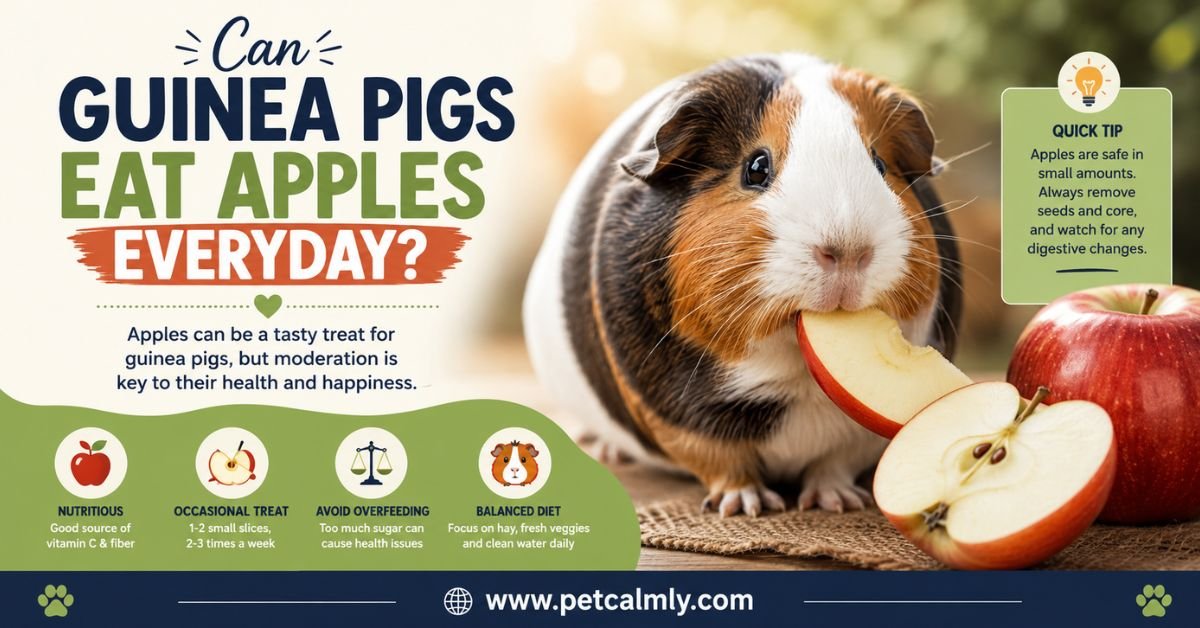
Guinea pigs should not eat apples every day. While apples are safe in small, occasional amounts, they are high in natural sugar and can upset a guinea pig’s sensitive digestive system if fed too frequently. A few small slices 1–2 times per week is generally considered safe for most healthy guinea pigs. Daily feeding can lead to digestive issues like bloating, soft stools, and weight gain. The key is moderation and balance with a high-fiber diet based mainly on hay.
Introduction
If you’re asking “can guinea pigs eat apples everyday”, you’re already thinking like a responsible pet owner. Apples are sweet, easy to offer, and most guinea pigs absolutely love them so it’s tempting to make them a daily treat.
But guinea pigs have a very delicate digestive system. Unlike humans, they cannot handle frequent sugar intake or sudden dietary changes. Even healthy fruits like apples can become a problem if they’re offered too often.
This guide breaks everything down in a practical, real-world way so you can confidently decide how often to feed apples, how much is safe, and what signs to watch for if your guinea pig has had too much.
Can Guinea Pigs Eat Apples Every Day? (The Real Answer)
The simple answer is no, apples should not be fed daily to guinea pigs.
Apples are not toxic, but they are:
- High in natural sugars (fructose)
- Low in essential fiber compared to hay and leafy greens
- Acidic enough to potentially irritate sensitive stomachs
Guinea pigs are strict herbivores designed to eat mostly grass and hay. Their digestive system depends on constant fiber flow not sugary snacks.
Why daily apples are risky:
Feeding apples every day can lead to:
- Digestive imbalance
- Loose stools or diarrhea
- Gas and bloating
- Reduced appetite for hay
- Weight gain over time
- Imbalanced gut bacteria
Even though apples seem harmless, frequency matters more than quantity in guinea pig nutrition.
Nutritional Value of Apples for Guinea Pigs
Apples do have some nutritional benefits when offered correctly. They are not “bad,” but they must be treated as a treat food, not a staple.
What apples contain:
- Vitamin C (small amount)
- Water content (hydration support)
- Natural sugars (fructose)
- Fiber (moderate, mostly in the skin)
Why Vitamin C matters
Guinea pigs cannot produce their own Vitamin C, so they need dietary sources. Apples contain some Vitamin C, but not enough to rely on.
Better Vitamin C sources include:
- Bell peppers
- Parsley (in moderation)
- Leafy greens like romaine lettuce
So while apples contribute a little nutrition, they are not essential for daily feeding.
Benefits of Feeding Apples (When Done Correctly)
Even though apples shouldn’t be daily food, they do offer some benefits when used properly as a treat.
1. Enrichment and mental stimulation
A small apple slice can:
- Encourage natural foraging behavior
- Add variety to diet
- Help bond with your guinea pig
2. Hydration support
Apples contain water, which can slightly help hydration, especially in warm weather.
3. Appetite encouragement
Some picky guinea pigs may eat better when small fruit treats are introduced occasionally.
But remember these benefits only apply when apples are limited, not frequent.
Risks of Feeding Apples Too Often
Understanding risks is important for long-term guinea pig health.
1. Digestive problems
Guinea pigs rely on fiber-rich diets. Too much fruit can disrupt gut flora.
Common issues include:
- Soft stool
- Reduced cecotropes quality
- Bloating
- Gut stasis risk (in severe cases)
2. Sugar overload
Even natural sugar is still sugar.
Excess sugar may lead to:
- Obesity
- Reduced hay consumption
- Imbalanced gut bacteria
3. Dental imbalance (indirect effect)
Guinea pigs need constant chewing on hay to maintain healthy teeth. If they fill up on sweet fruits, they may chew less hay, affecting dental wear.
How Often Can Guinea Pigs Eat Apples?
A safe feeding guideline:
Recommended frequency:
- 1 to 2 times per week maximum
Recommended portion size:
- 1–2 small thin slices per serving
- Equivalent to about 1–2 teaspoons of chopped apple
Best practice rule:
Think of apples like dessert not part of the main meal.
What Part of the Apple Is Safe for Guinea Pigs?
Not all parts of the apple are equally safe.
Safe parts:
- Flesh (core fruit part)
- Skin (washed thoroughly)
Unsafe parts:
- Seeds (contain trace cyanide compounds)
- Core (choking hazard + tough digestion)
Always remove seeds and core completely before offering apple to your guinea pig.
How to Safely Feed Apples to Guinea Pigs (Step-by-Step Guide)
Feeding fruit safely is just as important as choosing the right fruit.
Step 1: Wash the apple thoroughly
Remove pesticides, wax, and dirt.
Step 2: Remove seeds and core
This is essential for safety.
Step 3: Cut into very small pieces
Guinea pigs have small mouths and can choke on large chunks.
Step 4: Offer a tiny portion
Start small especially if it’s their first time.
Step 5: Observe after feeding
Watch for:
- Stool changes
- Energy levels
- Appetite for hay
5 Common Mistakes Guinea Pig Owners Make with Apples
Many well-meaning owners unintentionally overfeed fruit.
Mistake 1: Feeding apples daily
This is the most common issue and the main reason for digestive upset.
Mistake 2: Giving large slices
More is not better. Guinea pigs need very small portions.
Mistake 3: Using apples as a main reward
This can lead to picky eating and hay refusal.
Mistake 4: Not removing seeds
Apple seeds are unsafe and should always be removed.
Mistake 5: Mixing multiple fruits at once
Too many fruits together can overload sugar intake.
Signs Your Guinea Pig Ate Too Much Apple
If your guinea pig has consumed too much apple, watch closely for symptoms.
Early warning signs:
- Softer than normal droppings
- Reduced hay consumption
- Mild bloating
- Less activity
More serious signs:
- Diarrhea
- Loss of appetite
- Hunched posture
- Gut discomfort signs (teeth grinding, restlessness)
If severe symptoms appear, it’s important to consult a veterinarian immediately.
What to Do If Your Guinea Pig Eats Too Much Apple
Accidents happen especially if a guinea pig steals extra fruit.
Step-by-step response:
- Remove all fruit immediately
- Provide unlimited fresh hay
- Ensure clean water is available
- Avoid any treats for 24–48 hours
- Monitor stool and behavior closely
If symptoms worsen or last more than a day, veterinary care is necessary.
Healthy Alternatives to Apples for Guinea Pigs
If you’re looking for safer variety, these options are better suited for more frequent feeding (still in moderation):
Better fruit alternatives (occasional use):
- Blueberries
- Strawberries
- Pear (small amounts)
- Melon (tiny pieces)
Even better daily options (preferred diet staples):
- Romaine lettuce
- Bell peppers (excellent Vitamin C source)
- Cucumber (hydration support)
- Cilantro
These are more aligned with guinea pig digestive needs than sugary fruits.
Balanced Guinea Pig Diet Overview (What They Really Need)
To understand apple feeding properly, it helps to see the full diet picture.
80–85% Hay (MOST IMPORTANT)
- Timothy hay (best choice)
- Orchard grass hay
- Meadow hay
10–15% fresh vegetables daily
- Leafy greens
- Bell peppers
- Herbs
5% or less fruits and treats
- Apples
- Berries
- Occasional snacks
If fruit exceeds this 5% category regularly, health risks increase.
Why Guinea Pigs Love Apples So Much
It’s not just taste it’s biology.
Apples are:
- Naturally sweet
- Soft and easy to chew
- Aromatic and appealing
But what they love isn’t always what their body needs daily. That’s why moderation is essential, even when your guinea pig begs for more.
When Should You Worry After Feeding Apples?
Contact a vet if you notice:
- Refusal to eat hay for more than 8–12 hours
- Watery diarrhea
- Severe bloating or a hard abdomen
- Weakness or lethargy
- No droppings for several hours
Guinea pigs can decline quickly, so early action matters.
Conclusion
So, can guinea pigs eat apples everyday?
The answer is clearly no but that doesn’t mean apples are bad. They can be a safe, enjoyable treat when given responsibly and in moderation.
The healthiest approach is simple:
- Prioritize hay and leafy greens
- Use apples as occasional rewards
- Keep portions small and controlled
When treated as a special snack rather than a daily food, apples can be part of a happy, balanced guinea pig diet without risking their digestive health.
More Information About Pets, Please Visit Our Website: Can Guinea Pigs Eat Apples?
Frequently Asked Questions
1. Can guinea pigs eat apples with skin on?
Yes, apple skin is safe and contains fiber, but it must be washed thoroughly to remove pesticides.
2. How much apple can I give my guinea pig?
About 1–2 small slices, once or twice a week is enough for most guinea pigs.
3. Can baby guinea pigs eat apples?
Baby guinea pigs should avoid fruits until they are older, as their digestive systems are more sensitive.
4. What happens if a guinea pig eats apple every day?
Daily apple feeding can lead to digestive issues, obesity, and reduced hay consumption.
5. Are apple seeds toxic to guinea pigs?
Yes, apple seeds contain harmful compounds and should always be removed before feeding.
6. What is the safest fruit for guinea pigs?
Small amounts of berries or occasional apple slices are safe, but vegetables like bell peppers are healthier for regular feeding.