Short direct answer
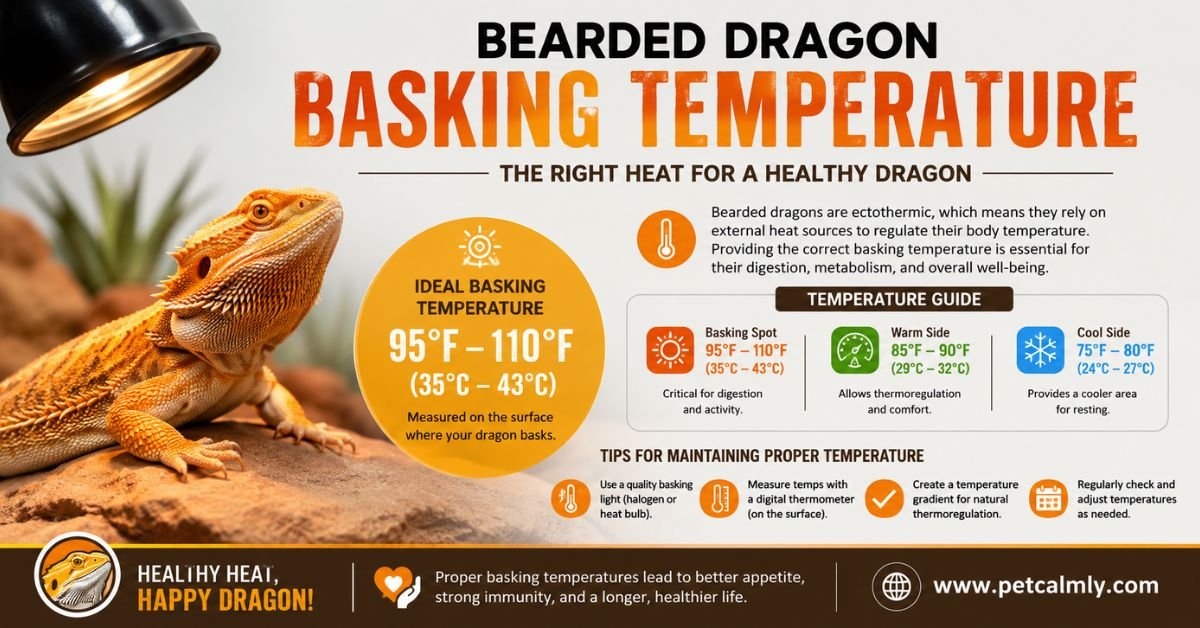
The ideal bearded dragon basking temperature depends on your dragon’s age. Juveniles generally need a basking surface temperature of 105–110°F (40–43°C), while healthy adults do best at 100–105°F (38–41°C). These temperatures should be measured on the basking surface not the air using a quality infrared temperature gun or a digital thermometer with a probe. Proper basking temperatures help your bearded dragon digest food, absorb nutrients, stay active, and maintain overall health.
Introduction
If you’re wondering whether your bearded dragon basking temperature is correct, you’re asking one of the most important questions in reptile care.
Unlike mammals, bearded dragons cannot regulate their own body temperature. In the wild, they move between sunny rocks and cooler shaded areas throughout the day to warm up or cool down. Inside an enclosure, they rely entirely on you to recreate that natural temperature gradient.
A basking spot that is just a few degrees too cool can lead to poor digestion, loss of appetite, sluggish behavior, and, over time, serious health problems. On the other hand, a basking area that becomes too hot can cause dehydration, heat stress, or burns.
The good news is that getting it right isn’t complicated once you understand how basking temperatures work. This guide explains everything beginners and experienced owners need to know from choosing the correct temperature to measuring it accurately, recognizing warning signs, and creating a safe habitat your dragon can thrive in.
Why Is the Correct Bearded Dragon Basking Temperature So Important?
A bearded dragon’s body depends on external heat for nearly every essential function.
Without enough warmth, even the healthiest dragon cannot properly digest food or use nutrients efficiently.
A proper basking temperature helps your bearded dragon:
- Digest insects and vegetables efficiently
- Maintain a healthy metabolism
- Produce energy for normal activity
- Support immune system function
- Process calcium effectively alongside proper UVB lighting
- Grow normally during the juvenile stage
- Shed skin more successfully
- Stay alert and display natural behaviors
Think of the basking area as your dragon’s daily charging station. After eating, most bearded dragons climb onto their favorite rock or branch because the heat helps their digestive system work efficiently.
Without this warmth, food can remain in the stomach longer than normal, increasing the risk of digestive issues.
What Is the Ideal Bearded Dragon Basking Temperature?
The perfect basking temperature depends largely on your dragon’s age.
Younger dragons grow rapidly and need slightly higher temperatures than adults because their metabolism is faster.
Recommended Basking Surface Temperatures
| Bearded Dragon Age | Ideal Basking Surface Temperature |
|---|---|
| Baby (0–6 months) | 105–110°F (40–43°C) |
| Juvenile (6–12 months) | 105–110°F (40–43°C) |
| Adult (12+ months) | 100–105°F (38–41°C) |
These recommendations refer to the surface temperature where your bearded dragon actually sits—not the surrounding air temperature.
Many beginners accidentally measure the air near the basking bulb and assume everything is correct. However, the surface of a basking rock can be significantly warmer than the surrounding air.
That’s why measuring the correct location makes such a difference.
What Should the Cool Side Temperature Be?
A healthy enclosure isn’t just about the basking spot.
Bearded dragons naturally move between warmer and cooler areas throughout the day to regulate their body temperature.
A proper temperature gradient allows them to choose where they feel most comfortable.
| Enclosure Area | Ideal Temperature |
|---|---|
| Basking Surface | 100–110°F (38–43°C) |
| Warm Side Ambient | 88–95°F (31–35°C) |
| Cool Side Ambient | 75–85°F (24–29°C) |
| Night Temperature | 65–75°F (18–24°C) |
Providing both warm and cool zones encourages natural movement and reduces stress.
If the entire enclosure stays the same temperature, your dragon cannot regulate its body heat effectively.
Why Surface Temperature Matters More Than Air Temperature
This is one of the most misunderstood parts of bearded dragon care.
Your dragon doesn’t bask in the air it basks on a solid surface.
Imagine standing outside on a sunny day. The air might feel comfortable, but a large rock sitting in direct sunlight can become much hotter.
The same thing happens inside your enclosure.
For example:
- Air temperature near the bulb may read 90°F
- The basking rock itself may reach 105°F
That surface heat is what your bearded dragon actually absorbs.
This is why experienced reptile keepers always check surface temperatures instead of relying only on stick-on dial thermometers.
How to Measure Bearded Dragon Basking Temperature Correctly
Using the right tool can prevent many common husbandry mistakes.
1. Infrared Temperature Gun (Best Choice)
An infrared thermometer measures the actual temperature of the basking surface within seconds.
Advantages include:
- Very accurate
- Instant readings
- Easy to use
- Measures rocks, logs, hammocks, and branches
- No need to disturb your dragon
This is the preferred method recommended by many experienced reptile keepers.
2. Digital Thermometer With Probe
A digital thermometer with a probe is another reliable option.
Place the probe directly on the basking surface for about 30–45 minutes before checking the reading.
This method is slower but generally provides dependable results.
3. Avoid Stick-On Dial Thermometers
Many starter kits include inexpensive dial thermometers attached to the glass.
These often measure only the air temperature near the enclosure wall rather than the surface where your dragon basks.
As a result, they may differ by 10–20°F from the actual basking surface.
Relying solely on these thermometers can lead to incorrect heating adjustments.
How Long Should You Leave the Heat On Before Measuring?
A common beginner mistake is checking temperatures immediately after turning on the basking lamp.
Heat takes time to stabilize.
For the most accurate reading:
- Turn on the basking bulb.
- Wait 30–60 minutes.
- Measure the basking surface.
- Check temperatures again later in the day to ensure consistency.
This simple habit helps you avoid chasing inaccurate readings.
Signs Your Bearded Dragon’s Basking Temperature Is Too Low
A basking spot that isn’t warm enough often causes gradual changes rather than immediate emergencies.
Watch for signs such as:
- Spending long periods under the heat lamp
- Slow digestion
- Eating less than usual
- Reduced activity
- Sleeping more during the day
- Darker beard or body coloration while basking
- Difficulty digesting larger meals
- Slower growth in young dragons
Sometimes owners worry their dragon is sick when the real issue is simply an enclosure that’s too cool.
Signs the Basking Temperature Is Too High
Excessive heat can also cause problems.
A dragon trying to escape excessive warmth may:
- Avoid the basking area completely
- Stay on the cool side all day
- Keep its mouth open while basking for extended periods (gaping is normal occasionally but constant gaping may indicate overheating)
- Glass surf repeatedly
- Show signs of dehydration
- Become unusually restless
- Seek shade continuously
If your dragon never uses the basking spot, it’s worth checking temperatures before assuming there’s a medical problem.
5 Common Mistakes That Lead to Incorrect Basking Temperatures
Even dedicated owners sometimes overlook small details that affect enclosure temperatures.
Using the Wrong Thermometer
Stick-on analog thermometers often provide inaccurate readings and can create a false sense of security.
Measuring Air Instead of Surface
The basking surface not the surrounding air is what determines whether your dragon can warm itself effectively.
Choosing the Wrong Bulb Wattage
A bulb that’s too weak may never create a proper basking spot, while one that’s too powerful can overheat the enclosure.
The right wattage depends on:
- Tank size
- Distance from the basking platform
- Room temperature
- Type of basking fixture
Rather than choosing a bulb based only on wattage, adjust the setup until the basking surface reaches the recommended temperature range.
Placing the Basking Platform Too Far From the Lamp
Heat intensity decreases as distance increases.
A basking rock positioned too far below the heat source may stay much cooler than expected.
Ignoring Seasonal Changes
Room temperatures often change between summer and winter.
A setup that works perfectly in July may need small adjustments during colder months.
Checking temperatures regularly throughout the year helps maintain a stable environment.
Does UVB Lighting Affect Basking Temperature?
Not directly but both work together to keep your bearded dragon healthy.
The basking lamp provides heat, while a high-quality UVB light allows your dragon to produce vitamin D3, which is essential for absorbing calcium.
Without enough heat, digestion slows.
Without proper UVB exposure, calcium metabolism suffers even if the basking temperature is correct.
For the best results:
- Position the UVB fixture so it overlaps the basking area.
- Follow the manufacturer’s recommended distance for the specific UVB bulb.
- Replace UVB bulbs according to the manufacturer’s schedule, even if they still produce visible light, as UVB output declines over time.
Creating a basking zone with both the correct heat and appropriate UVB exposure closely mimics the natural conditions bearded dragons seek in the wild.
How to Set Up the Perfect Bearded Dragon Basking Area
A proper bearded dragon basking temperature starts with more than just buying a heat bulb. The way you arrange the enclosure has a huge impact on how well your dragon can warm up, cool down, and behave naturally.
The goal is to recreate what happens in the wild. Bearded dragons bask on warm rocks in direct sunlight, then move into cooler areas when they need a break. Your enclosure should give them the same choice.
A well-designed basking area should include:
- A stable basking platform, such as a rock, slate tile, or sturdy branch
- A basking bulb positioned directly above the platform
- A quality UVB light that overlaps the basking zone
- Enough space for your dragon to move closer to or farther from the heat
- A cooler side of the enclosure where temperatures are noticeably lower
When these elements work together, your bearded dragon can regulate its body temperature naturally throughout the day.
Choosing the Best Basking Surface
Not every decoration is a good basking platform.
The surface should absorb and hold heat while remaining stable and safe for your dragon.
Natural Rocks
Flat rocks or pieces of slate are among the best choices.
Benefits include:
- Hold heat well
- Provide excellent traction
- Encourage natural basking behavior
- Easy to clean
- Durable and long-lasting
Always ensure rocks are secure and cannot shift or fall.
Slate Tiles
Many experienced keepers use slate because it heats evenly and creates a realistic basking spot.
Slate also helps gently wear down nails as dragons walk across it.
Branches
Thick branches allow climbing, which encourages exercise and enrichment.
If you use branches:
- Make sure they’re sturdy
- Prevent rolling or tipping
- Keep the highest point at a safe distance from the heat lamp
Reptile Hammocks
Fabric or mesh hammocks are popular because dragons often enjoy lounging on them.
However, hammocks usually don’t retain heat as well as rocks or slate.
Many owners combine a hammock with a heated rock below so their dragon can choose between both.
Choosing the Right Heat Lamp
The basking lamp is responsible for creating the warmest area of the enclosure.
Several factors affect the final basking temperature:
- Bulb wattage
- Fixture height
- Room temperature
- Enclosure size
- Ventilation
- Material of the basking surface
Instead of choosing a bulb based only on wattage, use a thermometer to confirm the surface reaches the correct temperature.
For many standard enclosures, owners commonly use basking bulbs ranging from 75 to 150 watts, but the ideal wattage varies with your setup. A larger enclosure or a cooler room may require more heat than a smaller enclosure in a warm home.
The safest approach is to adjust the bulb height or wattage until the basking surface reaches the recommended range.
Should You Use Ceramic Heat Emitters?
Ceramic heat emitters produce heat without visible light.
They can be useful in certain situations but are not usually a replacement for a daytime basking bulb.
Ceramic heaters are most helpful when:
- Nighttime temperatures drop below the recommended range
- Your home becomes very cold during winter
- Extra nighttime warmth is needed without disturbing your dragon’s day-night cycle
During the day, a bright white basking bulb is generally the better choice because it provides both heat and visible light that supports natural daytime activity.
Where Should the Basking Lamp Be Positioned?
Always place the basking lamp at one end of the enclosure rather than in the center.
This creates a natural temperature gradient.
Your enclosure should have:
- A warm basking zone
- A warm side
- A cooler side
- Areas of shade
This allows your bearded dragon to regulate its body temperature naturally instead of being exposed to constant heat everywhere.
How Far Should the Basking Light Be From Your Dragon?
There isn’t a single perfect distance for every enclosure.
The correct distance depends on:
- Bulb strength
- Fixture type
- Enclosure height
- Type of basking surface
Rather than measuring only the distance, focus on achieving the correct surface temperature.
If the basking surface is too cool:
- Raise the platform
- Use a stronger bulb
- Reduce the distance safely
If the surface becomes too hot:
- Lower the platform
- Increase the distance
- Use a lower-wattage bulb
Avoid making large adjustments all at once. Small changes followed by new temperature checks are much safer.
Why UVB and Heat Should Work Together
Heat alone isn’t enough for a healthy bearded dragon.
UVB lighting helps your dragon produce vitamin D3, which is essential for calcium absorption and strong bones.
For the best setup:
- Position the UVB fixture so it overlaps the basking area.
- Ensure your dragon can bask within the recommended distance for the specific UVB bulb.
- Replace UVB bulbs as recommended by the manufacturer, since UVB output decreases over time even if the bulb still emits visible light.
A dragon that receives proper heat but inadequate UVB is still at risk for health problems over time.
Daytime vs. Nighttime Temperatures
Many first-time owners worry that their bearded dragon will become too cold overnight.
In reality, healthy bearded dragons can safely experience cooler nighttime temperatures.
Ideal Night Temperature
| Time | Recommended Temperature |
|---|---|
| Day Basking Surface | 100–110°F (38–43°C) |
| Warm Side | 88–95°F (31–35°C) |
| Cool Side | 75–85°F (24–29°C) |
| Night | 65–75°F (18–24°C) |
If your home stays within this nighttime range, additional heating usually isn’t necessary.
If temperatures consistently fall below about 65°F (18°C), a ceramic heat emitter or another non-light-emitting heat source may be appropriate to maintain a safe overnight temperature.
Avoid colored “night bulbs” (red, blue, or purple), as visible light at night can interfere with your dragon’s natural sleep cycle.
How Seasonal Changes Affect Basking Temperature
Room temperature changes throughout the year, which means enclosure temperatures can change too.
During Winter
You may notice:
- Cooler basking surface
- Heat lamp works harder
- Longer warm-up time
- Cooler nighttime temperatures
You may need to:
- Increase bulb wattage
- Raise the basking platform slightly
- Improve room insulation
- Recheck temperatures more frequently
During Summer
Hot weather can cause:
- Overheating
- Higher enclosure temperatures
- Reduced basking time
- Increased water loss
Possible adjustments include:
- Lower bulb wattage if needed
- Improve ventilation
- Monitor temperatures daily during heat waves
- Ensure fresh water is always available
Small seasonal adjustments help keep your enclosure stable year-round.
Signs Your Bearded Dragon Is Comfortable
When the basking temperature is correct, your dragon often displays relaxed, natural behaviors.
Healthy signs include:
- Basking after meals
- Exploring the enclosure
- Bright, alert eyes
- Strong appetite
- Regular bowel movements
- Normal shedding
- Moving between warm and cool areas throughout the day
- Relaxed posture while basking
Some dragons also flatten their bodies slightly while basking to absorb more heat. This is a normal thermoregulation behavior.
Signs the Enclosure Temperature Needs Adjustment
Your dragon’s behavior often provides valuable clues before health problems develop.
Watch for:
Possible Signs of Low Temperatures
- Constant basking
- Poor appetite
- Slow digestion
- Reduced activity
- Sleeping during the day
- Darker body coloration while trying to warm up
Possible Signs of High Temperatures
- Avoiding the basking spot
- Remaining on the cool side
- Frequent or prolonged gaping while basking
- Rapid attempts to escape the enclosure
- Signs of dehydration
- Restlessness or pacing
Behavior should always be considered alongside accurate temperature measurements. A single sign doesn’t automatically mean the enclosure is too hot or too cold, but it does warrant checking your setup.
Troubleshooting Common Basking Temperature Problems
Problem: The Basking Spot Never Gets Warm Enough
Possible causes:
- Bulb wattage is too low
- Lamp is too far from the basking surface
- Room temperature is unusually cold
- The basking surface doesn’t retain heat well
Solutions:
- Use a higher-wattage basking bulb if needed
- Raise the basking platform safely
- Switch to a heat-retaining surface like slate
- Recheck temperatures after adjustments
Problem: The Basking Spot Is Too Hot
Possible causes:
- Bulb wattage is too high
- Lamp is positioned too close
- Enclosure is too small for the heat source
Solutions:
- Increase the distance between the lamp and basking surface
- Lower the basking platform
- Use a lower-wattage bulb
- Confirm readings with an infrared thermometer
Problem: Temperatures Change Throughout the Day
Minor fluctuations are normal, especially if room temperatures change.
However, large swings may indicate:
- Drafts near the enclosure
- Direct sunlight hitting the tank
- Air conditioning or heating vents affecting temperatures
- Inconsistent room temperatures
Moving the enclosure away from windows and vents often improves temperature stability.
Safety Tips for Heating Your Bearded Dragon’s Enclosure
Heating equipment is essential, but it should always be used safely.
Follow these best practices:
- Secure heat lamps with sturdy fixtures.
- Use ceramic sockets designed for high-heat bulbs.
- Keep flammable materials away from heat sources.
- Prevent your dragon from touching hot bulbs directly.
- Check temperatures regularly with reliable thermometers.
- Replace damaged bulbs or fixtures promptly.
- Inspect electrical cords for wear.
- Use timers to maintain a consistent day-night lighting schedule.
A few minutes of routine maintenance can help prevent accidents and keep your dragon comfortable.
Common Heating Mistakes New Owners Make
Even well-intentioned keepers can make simple errors when setting up a bearded dragon enclosure.
Avoid these common mistakes:
- Measuring only the air temperature instead of the basking surface.
- Using inexpensive stick-on dial thermometers as the only temperature guide.
- Heating the entire enclosure instead of creating a proper warm-to-cool gradient.
- Placing the basking lamp in the center of the enclosure.
- Forgetting to adjust temperatures during seasonal weather changes.
- Using colored night bulbs that disrupt normal sleep.
- Assuming one bulb wattage works for every enclosure size.
- Skipping regular temperature checks after changing bulbs or rearranging the habitat.
Taking the time to monitor and fine-tune your setup helps prevent many common husbandry issues before they affect your bearded dragon’s health.
When Should You Worry About Your Bearded Dragon’s Temperature?
Small temperature fluctuations happen from time to time and usually aren’t an emergency. However, if your bearded dragon has been living in temperatures that are consistently too hot or too cold, health problems can develop.
Pay close attention if your dragon shows any of the following signs for more than a day or two:
- Refuses food for several meals without another obvious reason
- Becomes unusually weak or lethargic
- Has trouble moving normally
- Loses weight
- Shows signs of dehydration, such as sunken eyes or wrinkled skin
- Has persistent diarrhea or constipation
- Appears unable to digest food properly
- Stays hidden all day despite correct lighting
If you’ve confirmed that your enclosure temperatures and UVB lighting are correct but these symptoms continue, it’s time to contact a reptile veterinarian. Temperature problems can sometimes mask other illnesses, including parasites, infections, metabolic bone disease, or digestive disorders.
Early veterinary care often leads to a better outcome than waiting for symptoms to worsen.
What Should Pet Owners Do if the Temperature Is Wrong?
The good news is that most temperature problems are easy to fix once you identify the cause.
If the Basking Temperature Is Too Low
Follow these steps:
- Confirm the reading with an infrared thermometer or digital probe.
- Check that the basking bulb is functioning properly.
- Raise the basking platform slightly if it’s safe to do so.
- Increase bulb wattage if needed.
- Recheck temperatures after 30–60 minutes.
Avoid making several changes at once. Adjust one factor, then measure again.
If the Basking Temperature Is Too High
If the basking surface is overheating:
- Lower the basking platform.
- Increase the distance between the bulb and the basking spot.
- Replace the bulb with a lower wattage if necessary.
- Improve airflow around the enclosure.
- Confirm the new temperature before returning your dragon to its usual routine.
Never cool the enclosure by spraying your dragon with cold water or making sudden temperature changes. Gradual adjustments are much safer.
Daily Bearded Dragon Temperature Checklist
A quick daily routine can prevent many common husbandry problems.
Every Morning
✔ Turn on the basking and UVB lights.
✔ Make sure all equipment is working.
✔ Check the basking surface temperature.
✔ Confirm the cool side remains within the recommended range.
During the Day
✔ Watch your dragon bask after eating.
✔ Ensure it moves naturally between warm and cool areas.
✔ Replace drinking water with fresh water.
✔ Look for any unusual behavior.
Every Evening
✔ Turn off daytime lights on a consistent schedule.
✔ Check that nighttime temperatures stay within the safe range.
✔ If your home gets colder than 65°F (18°C) overnight, use a non-light-emitting heat source if needed.
Weekly Maintenance
- Clean the basking platform.
- Inspect bulbs and fixtures for damage.
- Dust light fixtures if needed.
- Recheck temperatures in several locations.
- Verify the UVB fixture is still positioned correctly.
Consistent maintenance helps create a stable environment where your dragon can thrive.
Bearded Dragon Basking Temperature by Life Stage
As your dragon grows, its heating needs change slightly.
| Life Stage | Basking Surface | Warm Side | Cool Side |
|---|---|---|---|
| Baby | 105–110°F (40–43°C) | 88–95°F (31–35°C) | 75–85°F (24–29°C) |
| Juvenile | 105–110°F (40–43°C) | 88–95°F (31–35°C) | 75–85°F (24–29°C) |
| Adult | 100–105°F (38–41°C) | 88–95°F (31–35°C) | 75–85°F (24–29°C) |
These ranges support healthy digestion, growth, and normal daily activity while allowing your bearded dragon to regulate its body temperature naturally.
Bearded Dragon Basking Temperature: Quick Do’s and Don’ts
Do
- Measure the basking surface, not just the air.
- Use a reliable infrared thermometer or digital probe.
- Create a clear warm-to-cool temperature gradient.
- Position UVB lighting to overlap the basking area.
- Monitor temperatures during seasonal weather changes.
- Replace faulty bulbs promptly.
- Observe your dragon’s behavior along with temperature readings.
Don’t
- Rely only on stick-on dial thermometers.
- Heat the entire enclosure to one temperature.
- Use colored night bulbs for overnight heating.
- Guess the basking temperature without measuring it.
- Assume one bulb wattage works for every enclosure.
- Ignore changes in appetite or behavior that may indicate incorrect temperatures.
Frequently Asked Questions
1. What is the ideal basking temperature for an adult bearded dragon?
An adult bearded dragon generally does best with a basking surface temperature of 100–105°F (38–41°C). Measuring the surface with an infrared thermometer provides the most accurate reading.
2. Is 95°F hot enough for a bearded dragon basking spot?
For most adult dragons, 95°F is slightly cooler than recommended for the basking surface. While some individuals may still bask comfortably, consistently cooler temperatures can affect digestion and activity over time.
3. How do I know if my bearded dragon is too cold?
Common signs include spending excessive time under the basking lamp, reduced appetite, sluggish movement, darker body coloration while basking, and slow digestion. Always confirm enclosure temperatures before assuming your dragon is ill.
4. Can a basking spot be too hot?
Yes. If the basking surface becomes too hot, your dragon may avoid it, remain on the cool side, gape excessively, or show signs of dehydration. Measuring the surface temperature is the best way to identify overheating.
5. Should I leave the basking light on at night?
No. Bearded dragons need a regular day-night cycle. Turn off the basking light at night. If your home stays above 65°F (18°C), additional nighttime heating is usually unnecessary. If temperatures drop lower, use a non-light-emitting heat source such as a ceramic heat emitter if needed.
6. What is the best thermometer for measuring a bearded dragon’s basking temperature?
An infrared temperature gun is widely considered the easiest and most accurate way to measure the basking surface. A quality digital thermometer with a probe is also a reliable option.
More Information About Pets, Please Visit Our Website: Common Bearded Dragon Health Problems
Safe Vegetables for Bearded Dragons
Conclusion
Getting the bearded dragon basking temperature right is one of the most important parts of responsible reptile care. A properly heated basking spot supports healthy digestion, encourages natural behavior, strengthens the immune system, and helps your dragon make the most of its UVB exposure.
Rather than focusing only on the air temperature, always measure the surface temperature where your dragon actually basks. Pair that with a proper warm-to-cool gradient, quality UVB lighting, and regular monitoring, and you’ll provide an environment that closely reflects your pet’s natural habitat.
Remember that every enclosure is slightly different. Tank size, room temperature, bulb type, and basking surface all influence the final temperature. Checking your setup regularly and making small adjustments when needed will help your bearded dragon stay active, comfortable, and healthy throughout every stage of life.
If your dragon continues to show unusual behavior, appetite loss, or signs of illness even after you’ve confirmed the enclosure conditions are correct, consult an experienced reptile veterinarian. Temperature is a key part of good husbandry, but it’s only one piece of your pet’s overall health.