Short direct answer
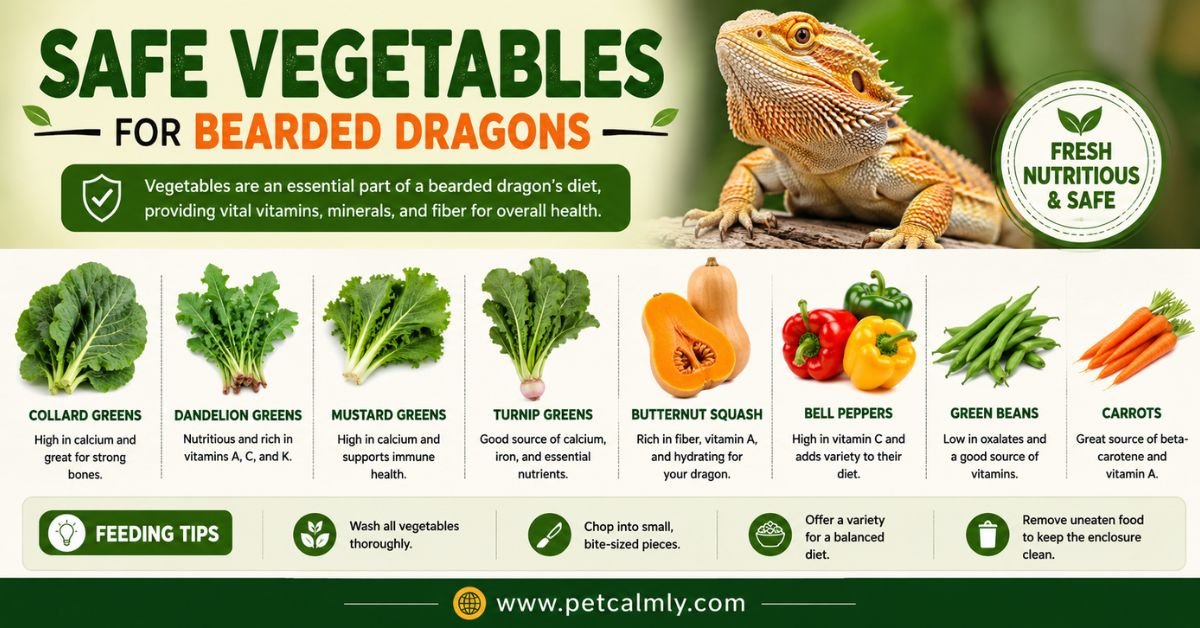
Safe vegetables for bearded dragons include collard greens, mustard greens, dandelion greens, turnip greens, squash, bell peppers, cactus pads, and green beans. These vegetables provide important vitamins, minerals, fiber, and hydration when offered as part of a balanced diet. Adults should eat mostly vegetables with insects as a smaller portion, while babies require more insects for healthy growth. Always wash vegetables thoroughly, chop them into bite-sized pieces, and avoid toxic or highly processed foods.
Safe Vegetables for Bearded Dragons: A Complete Guide for Healthy Feeding
Choosing the right vegetables for your bearded dragon can feel confusing. One website recommends spinach, another says to avoid it. Some owners swear by kale, while others never feed it. It’s easy to wonder what your pet should actually be eating.
The good news is that feeding your bearded dragon doesn’t have to be complicated. Once you understand which vegetables are best as everyday staples and which should only be occasional treats, creating a healthy meal becomes much easier.
A balanced vegetable diet supports:
- Strong bones
- Healthy digestion
- Bright coloration
- Better hydration
- Healthy shedding
- Proper immune function
- Long-term overall health
Vegetables also become more important as bearded dragons grow. Adult dragons naturally shift toward a plant-based diet, making leafy greens and nutritious vegetables a key part of their daily routine.
This guide explains everything you need to know, including the safest vegetables, foods to avoid, feeding frequency, and practical tips that make mealtime easier for both you and your dragon.
Safe Vegetables for Bearded Dragons: Complete Food List
Not every vegetable offers the same nutritional value. Some can be served every day, while others are better as occasional additions because they contain high levels of oxalates, goitrogens, or excess water.
The table below gives a quick overview.
| Vegetable | Safe? | Feeding Frequency | Main Benefit |
|---|---|---|---|
| Collard greens | ✅ Yes | Daily | Excellent calcium source |
| Mustard greens | ✅ Yes | Daily | Rich in vitamins A and C |
| Dandelion greens | ✅ Yes | Daily | High calcium and fiber |
| Turnip greens | ✅ Yes | Daily | Supports bone health |
| Endive | ✅ Yes | Daily | Good hydration and fiber |
| Escarole | ✅ Yes | Daily | Nutrient-rich leafy green |
| Bok choy | ✅ Yes | Occasionally | Vitamin-rich |
| Bell peppers | ✅ Yes | 2–3 times weekly | Vitamin C |
| Butternut squash | ✅ Yes | Several times weekly | Vitamin A |
| Acorn squash | ✅ Yes | Several times weekly | Fiber and antioxidants |
| Green beans | ✅ Yes | Weekly | Fiber and vitamins |
| Cactus pads (nopales) | ✅ Yes | Weekly | Calcium and moisture |
| Zucchini | ✅ Yes | Occasionally | Hydration |
| Cucumber | ✅ Yes | Occasionally | Extra moisture |
| Carrots | ✅ Yes | Occasionally | Beta-carotene |
| Spinach | ⚠ Limited | Rarely | High oxalates |
| Kale | ⚠ Limited | Occasionally | Nutritious but rotate |
| Iceberg lettuce | ❌ Avoid | Never | Very little nutrition |
| Onion | ❌ Toxic | Never | Unsafe |
| Garlic | ❌ Toxic | Never | Harmful |
| Avocado | ❌ Toxic | Never | Potentially dangerous |
| Rhubarb | ❌ Toxic | Never | Highly toxic |
As a general rule, variety is healthier than relying on a single vegetable every day.
Best Daily Staple Vegetables for Bearded Dragons
These vegetables are considered some of the healthiest choices because they provide an excellent balance of calcium, vitamins, minerals, and fiber without excessive oxalates.
Making these foods the foundation of your dragon’s salad helps support long-term health.
Collard Greens
Collard greens are widely regarded as one of the best vegetables for bearded dragons.
Why they’re a favorite:
- Excellent calcium-to-phosphorus ratio
- Rich in vitamin A
- High in vitamin C
- Plenty of fiber
- Easy to digest
Many reptile keepers include collard greens several times each week because they provide outstanding nutrition without unnecessary risks.
Mustard Greens
Mustard greens add variety while supplying valuable nutrients.
Benefits include:
- Calcium
- Vitamin K
- Vitamin C
- Antioxidants
- Fiber
Some dragons enjoy the slightly peppery taste, while others may need time to accept them. Mixing mustard greens with familiar vegetables often encourages picky eaters.
Dandelion Greens
Many owners overlook dandelion greens, but they are one of the healthiest leafy vegetables available.
They provide:
- High calcium
- Vitamin A
- Potassium
- Magnesium
- Natural fiber
Only collect dandelion greens from areas that have not been treated with pesticides, herbicides, or fertilizers. Store-bought greens are usually the safer option.
Turnip Greens
Turnip greens deserve a regular place in your bearded dragon’s salad bowl.
These leafy greens help provide:
- Calcium
- Folate
- Vitamin C
- Fiber
Rotating turnip greens with collard greens and mustard greens creates a balanced diet without relying too heavily on one ingredient.
Endive
Endive has crisp leaves that many dragons enjoy chewing.
Advantages include:
- Low oxalate content
- Good moisture level
- Digestive fiber
- Vitamins A and K
It also mixes well with darker leafy greens, making salads more interesting.
Escarole
Escarole is another excellent leafy vegetable suitable for frequent feeding.
It offers:
- Calcium
- Vitamin A
- Vitamin K
- Fiber
- Hydration
Its mild taste often makes it easier to introduce than stronger-tasting greens.
Why Variety Matters More Than One “Perfect” Vegetable
It’s tempting to feed only one healthy vegetable every day, especially if your dragon seems to love it. However, relying on a single food can create nutritional imbalances over time.
Each vegetable contributes something different.
For example:
- Collard greens are especially rich in calcium.
- Bell peppers provide vitamin C.
- Squash supplies beta-carotene.
- Dandelion greens offer fiber and minerals.
By rotating vegetables throughout the week, your bearded dragon receives a broader range of nutrients while reducing the risk of consuming too much of any naturally occurring compound, such as oxalates.
A colorful salad is usually a healthier salad.
Vegetables to Feed in Moderation
Not every safe vegetable should be served every day. Some are nutritious but contain compounds that can interfere with mineral absorption or simply aren’t as balanced as staple greens.
These vegetables work best as part of a varied diet rather than the main course.
Bell Peppers
Bell peppers are a colorful, vitamin-rich addition to your bearded dragon’s salad.
They are especially high in vitamin C and contain antioxidants that support overall health. Red, yellow, and orange peppers are slightly sweeter than green peppers, which some dragons prefer.
Feed bell peppers two or three times per week in small, finely chopped pieces.
Butternut Squash
Butternut squash is an excellent source of beta-carotene, which the body converts into vitamin A as needed.
Because of its firm texture, grate or finely chop raw squash into small pieces that are easy to eat. It pairs well with leafy greens and adds variety to the salad bowl.
Safe Vegetables for Bearded Dragons: The Complete Feeding Guide
Best Leafy Greens for Bearded Dragons Compared
Leafy greens should make up the largest portion of an adult bearded dragon’s vegetable diet. They’re packed with calcium, fiber, vitamins, and moisture while being low in fat and sugar.
However, not all leafy greens are equal. Some are ideal for daily feeding, while others should only appear occasionally.
| Leafy Green | Best For | Feed Frequency | Notes |
|---|---|---|---|
| Collard greens | Daily staple | Daily | Excellent calcium-to-phosphorus ratio |
| Mustard greens | Daily staple | Daily | Rich in vitamins and fiber |
| Dandelion greens | Daily staple | Daily | High in calcium and easy to digest |
| Turnip greens | Daily staple | Daily | Supports healthy bones |
| Endive | Daily staple | Daily | Low oxalates and good hydration |
| Escarole | Daily staple | Daily | Mild flavor and nutritious |
| Bok choy | Rotation | 1–2 times weekly | Good source of calcium |
| Kale | Rotation | Once weekly | Nutritious but rotate with other greens |
| Swiss chard | Limited | Occasionally | Higher oxalate content |
| Spinach | Rare treat | Rarely | Can reduce calcium absorption |
| Romaine lettuce | Occasional | Occasionally | Better than iceberg but not nutrient-dense |
| Iceberg lettuce | Avoid | Never | Mostly water with little nutrition |
A simple way to build a healthy salad is to choose two or three staple greens and rotate them throughout the week. This keeps meals interesting while providing a broader range of nutrients.
Can Bearded Dragons Eat These Common Vegetables?
Many owners search for specific vegetables they’ve found in the kitchen. Here’s what you need to know about some of the most common questions.
Can Bearded Dragons Eat Spinach?
Yes, but only rarely.
Spinach contains valuable nutrients, but it’s also high in oxalates. Oxalates bind to calcium in the digestive system, making it harder for your bearded dragon to absorb this essential mineral.
Over time, feeding large amounts of spinach may contribute to calcium deficiencies, especially if the overall diet isn’t well balanced.
Think of spinach as an occasional addition rather than a regular ingredient.
Can Bearded Dragons Eat Kale?
Yes.
Kale has been debated for years, but current reptile nutrition guidance suggests it can be part of a varied diet when fed in moderation.
Kale provides:
- Calcium
- Vitamin A
- Vitamin C
- Vitamin K
- Antioxidants
Instead of feeding kale every day, rotate it with collard greens, mustard greens, and dandelion greens.
Can Bearded Dragons Eat Carrots?
Yes.
Carrots are rich in beta-carotene, which the body converts into vitamin A as needed.
Serve carrots:
- Finely grated
- In small amounts
- Once or twice weekly
Because carrots are naturally higher in carbohydrates than leafy greens, they work best as part of a mixed salad rather than the main ingredient.
Can Bearded Dragons Eat Bell Peppers?
Absolutely.
Bell peppers are one of the safest vegetables to include regularly.
Benefits include:
- Vitamin C
- Vitamin A
- Hydration
- Bright colors that often encourage picky eaters
Red, orange, and yellow peppers are especially popular because of their sweeter taste.
Can Bearded Dragons Eat Broccoli?
Yes, but only occasionally.
Broccoli contains valuable nutrients, but it also contains compounds that may interfere with thyroid function when fed excessively.
Offer small pieces once every week or two instead of making it a staple vegetable.
Can Bearded Dragons Eat Cabbage?
Cabbage is safe in moderation.
Green cabbage, red cabbage, and savoy cabbage can all be offered occasionally.
Because cabbage contains goitrogens, it shouldn’t replace staple leafy greens.
Can Bearded Dragons Eat Celery?
Yes.
Celery provides moisture and some fiber, but it isn’t particularly nutrient-rich.
If you feed celery:
- Slice it into tiny pieces
- Remove tough strings
- Mix it with healthier greens
Can Bearded Dragons Eat Cucumbers?
Yes.
Cucumbers contain lots of water, making them helpful during warm weather or mild dehydration.
However, because they’re mostly water, they shouldn’t replace nutrient-dense vegetables.
Can Bearded Dragons Eat Zucchini?
Yes.
Zucchini offers:
- Moisture
- Fiber
- Potassium
- Vitamin C
It works well as an occasional addition to mixed salads.
Vegetables That Should Never Be Fed
Some vegetables are unsafe regardless of quantity.
Never feed your bearded dragon:
- Avocado
- Onion
- Garlic
- Rhubarb
These foods can be toxic and may cause serious health problems.
Also avoid:
- Seasoned vegetables
- Fried vegetables
- Canned vegetables
- Pickled vegetables
- Vegetables cooked with butter or oil
- Foods containing garlic or onion powder
Fresh, raw vegetables are almost always the safest choice.
How to Prepare Vegetables Safely
Choosing the right vegetables is only part of the job. Proper preparation helps reduce the risk of choking, improves digestion, and keeps harmful chemicals away from your pet.
Wash Everything Thoroughly
Fresh vegetables may contain:
- Dirt
- Pesticide residue
- Fertilizers
- Bacteria
Wash all produce under clean running water before feeding.
Organic vegetables can reduce pesticide exposure, but they should still be washed thoroughly.
Cut Vegetables Into Small Pieces
Bearded dragons don’t chew food the same way humans do.
Large chunks may:
- Be difficult to swallow
- Increase choking risk
- Be ignored completely
Aim for pieces no larger than the space between your dragon’s eyes.
This simple guideline helps keep meals safe.
Remove Tough Parts
Discard:
- Thick stems
- Hard cores
- Tough outer leaves
- Wilted vegetables
Tender leaves and soft pieces are easier to digest.
Serve Raw Most of the Time
Raw vegetables retain more nutrients than cooked ones.
Cooking can reduce certain vitamins and soften vegetables too much, making them less appealing.
Avoid:
- Salt
- Oils
- Butter
- Sauces
- Seasonings
Plain vegetables are always the healthiest choice.
How Much Vegetables Should a Bearded Dragon Eat?
The amount of vegetables your dragon needs depends mainly on its age.
Baby Bearded Dragons (0–6 Months)
Young dragons grow rapidly and require large amounts of protein.
Typical diet:
- About 70–80% insects
- About 20–30% vegetables
Offer fresh vegetables every day so babies become familiar with eating greens early.
Juvenile Bearded Dragons (6–12 Months)
As growth slows, vegetables become more important.
A balanced diet usually includes:
- Around 50–60% insects
- Around 40–50% vegetables
Gradually increasing vegetables helps prepare them for adulthood.
Adult Bearded Dragons (12 Months and Older)
Healthy adults should eat mostly vegetables.
A typical adult diet consists of:
- Approximately 70–80% vegetables
- Around 20–30% insects
This balance supports healthy weight, digestion, and long-term wellness.
Sample Weekly Vegetable Rotation
Rotating vegetables helps provide a wider range of nutrients while preventing your dragon from becoming fixated on one favorite food.
| Day | Salad Mix |
|---|---|
| Monday | Collard greens + squash + bell pepper |
| Tuesday | Mustard greens + endive + green beans |
| Wednesday | Dandelion greens + escarole + grated carrot |
| Thursday | Turnip greens + zucchini + bell pepper |
| Friday | Collard greens + cactus pads + squash |
| Saturday | Mustard greens + kale + green beans |
| Sunday | Mixed staple greens with a small amount of cucumber |
This rotation is only an example. Feel free to swap vegetables based on seasonal availability while keeping staple greens as the foundation.
Common Feeding Mistakes to Avoid
Even caring owners can make mistakes when feeding their bearded dragons. Fortunately, most are easy to correct.
Feeding Too Much Lettuce
Iceberg lettuce contains very little nutrition and is mostly water.
A dragon that fills up on lettuce may miss out on essential vitamins and minerals.
Offering the Same Salad Every Day
Feeding only one vegetable limits nutritional variety.
Rotate greens throughout the week to provide a balanced range of nutrients.
Forgetting Calcium Supplementation
Even with an excellent vegetable diet, most captive bearded dragons still need calcium supplementation according to your reptile veterinarian’s or breeder’s guidance.
Proper lighting and calcium work together to support healthy bones.
Chopping Food Too Large
Large vegetable pieces can discourage eating and increase the risk of choking.
Finely chopped salads are much easier for dragons to consume.
Feeding Too Much Fruit
Fruit is often enjoyed by bearded dragons, but its higher sugar content means it should only be an occasional treat.
Vegetables—not fruit—should make up the majority of plant foods.
Ignoring UVB Lighting
Even the healthiest vegetables cannot replace proper UVB lighting.
Without adequate UVB exposure, your bearded dragon cannot efficiently use dietary calcium, increasing the risk of metabolic bone disease.
A balanced diet and proper habitat always go hand in hand.
Practical Tip for Picky Eaters
If your bearded dragon ignores vegetables, don’t panic. Many young dragons naturally prefer insects.
You can encourage healthier eating by:
- Offering vegetables first thing in the morning when your dragon is most hungry.
- Finely chopping or shredding vegetables to make them easier to eat.
- Mixing colorful vegetables like bell peppers or squash with leafy greens.
- Rotating greens regularly to keep meals interesting.
- Avoiding overfeeding insects, which can reduce interest in vegetables.
Patience is key. It may take several weeks for some dragons to accept new foods.
When Should You Worry About Your Bearded Dragon’s Diet?
Most bearded dragons have occasional changes in appetite. They may eat less during cooler months, shed their skin, or become temporarily picky about certain vegetables.
However, there are times when a poor appetite or refusal to eat vegetables may signal a more serious problem.
Contact an experienced reptile veterinarian if your bearded dragon:
- Stops eating for several days without an obvious reason
- Rapidly loses weight
- Appears weak or unusually inactive
- Has swollen legs or a soft jaw
- Shows tremors or difficulty walking
- Has persistent diarrhea or constipation
- Vomits food
- Refuses both insects and vegetables
- Has sunken eyes or signs of dehydration
- Struggles to breathe or keeps its mouth open while resting
These symptoms may indicate nutritional deficiencies, parasites, infection, metabolic bone disease, impaction, or another health condition that requires professional care.
Early treatment often leads to better outcomes, so it’s best not to wait if your dragon seems seriously unwell.
What Should Pet Owners Do if Their Bearded Dragon Refuses Vegetables?
Many owners become concerned when their bearded dragon happily eats insects but ignores every salad offered.
In most cases, this behavior is normal especially in younger dragons. The key is to encourage vegetable eating without forcing it.
1. Offer Vegetables Before Insects
Place the salad in the enclosure first thing in the morning.
A hungry dragon is more likely to sample vegetables before expecting insects later in the day.
2. Rotate Different Greens
Just like people, bearded dragons have preferences.
If one type of leafy green isn’t accepted, try another.
For example:
- Collard greens
- Mustard greens
- Dandelion greens
- Endive
- Escarole
Changing textures and flavors often improves acceptance.
3. Add Bright Colors
Many bearded dragons are attracted to colorful foods.
Adding small amounts of:
- Red bell pepper
- Yellow squash
- Orange butternut squash
can make the salad more interesting.
4. Chop Everything Finely
Large leaves can be intimidating.
Small, bite-sized pieces encourage curious dragons to take their first bite.
5. Avoid Too Many Insects
If insects are available all day, your dragon has little reason to eat vegetables.
Following an age-appropriate feeding schedule encourages a healthier balance.
6. Stay Consistent
Don’t give up after one unsuccessful meal.
Some dragons need repeated exposure before accepting new vegetables.
Consistency is often more effective than constantly changing foods.
Seasonal Feeding Tips
Your bearded dragon’s appetite may naturally change throughout the year.
Understanding these seasonal differences can help you avoid unnecessary worry.
Spring and Summer
During warmer months, most healthy dragons are more active.
They usually:
- Eat larger salads
- Hunt insects more enthusiastically
- Drink slightly more water
- Require more calories because of increased activity
Fresh vegetables should be available daily for adults.
Autumn
As temperatures and daylight begin to decrease, many dragons naturally slow down.
You may notice:
- Reduced appetite
- Less activity
- More time basking
Continue offering vegetables, but don’t be surprised if portions become smaller.
Winter and Brumation
Healthy adult bearded dragons may enter brumation, a natural period of dormancy similar to hibernation.
During this time, they may:
- Sleep much more
- Eat very little
- Ignore vegetables
- Become less active
Never assume your dragon is brumating without ensuring the enclosure’s temperatures and lighting are correct. If your dragon appears ill, loses significant weight, or shows unusual symptoms, consult a reptile veterinarian before assuming it’s a normal seasonal change.
Hydration and Vegetables
Many owners don’t realize that vegetables contribute to hydration as well as nutrition.
Foods with higher moisture content include:
- Endive
- Escarole
- Bell peppers
- Cucumber (occasionally)
- Zucchini
While these vegetables provide extra water, they should never replace access to fresh drinking water.
To support healthy hydration:
- Provide clean water every day.
- Replace dirty water promptly.
- Offer a varied salad with moisture-rich vegetables.
- Maintain appropriate enclosure humidity for your dragon’s age and environment.
- Watch for signs of dehydration, such as wrinkled skin, sunken eyes, or lethargy.
Safe Vegetable Feeding Checklist
Use this quick checklist whenever you’re preparing your bearded dragon’s meals.
✅ Wash all vegetables thoroughly.
✅ Remove spoiled or wilted leaves.
✅ Chop vegetables into small, bite-sized pieces.
✅ Base meals on calcium-rich leafy greens.
✅ Rotate vegetables throughout the week.
✅ Feed mostly vegetables to healthy adult dragons.
✅ Limit vegetables high in oxalates.
✅ Avoid toxic vegetables completely.
✅ Dust insects with calcium as recommended by your reptile veterinarian or breeder.
✅ Provide proper UVB lighting.
✅ Remove uneaten vegetables before they spoil.
Following these simple habits can help support your bearded dragon’s long-term health.
Sample Adult Bearded Dragon Salad
If you’re unsure how to build a balanced salad, here’s a simple example.
Base Greens
- Collard greens
- Mustard greens
- Dandelion greens
Colorful Vegetables
- Finely chopped red bell pepper
- Grated butternut squash
Extra Variety
- Green beans
- Endive
This combination provides a good mix of calcium, fiber, vitamins, and hydration while keeping meals interesting.
Remember to rotate ingredients regularly instead of serving the exact same salad every day.
Signs Your Bearded Dragon Is Enjoying a Healthy Diet
A nutritious diet often shows in your dragon’s appearance and behavior.
Healthy signs include:
- Bright, alert eyes
- Strong appetite
- Smooth movement
- Healthy body weight
- Regular bowel movements
- Successful shedding
- Good muscle tone
- Active basking behavior
- Bright, vibrant coloration
While every dragon has its own personality, these are generally encouraging signs that its nutritional needs are being met.
More Information About Pets, Please Visit Our Website: Why Is My Bearded Dragon Not Eating?
Bearded Dragon Stress Signs
Frequently Asked Questions
1. What vegetables can bearded dragons eat every day?
The best daily vegetables include collard greens, mustard greens, dandelion greens, turnip greens, endive, and escarole. These leafy greens provide calcium, fiber, and essential vitamins while supporting healthy bone development.
2. Can bearded dragons eat lettuce every day?
No. Iceberg lettuce should be avoided because it offers very little nutrition. Romaine lettuce is a better choice but should still be fed only occasionally alongside more nutrient-dense leafy greens.
3. Is spinach bad for bearded dragons?
Spinach isn’t toxic, but it contains high levels of oxalates that can reduce calcium absorption. It’s best offered only as an occasional treat rather than a regular part of the diet.
4. How often should adult bearded dragons eat vegetables?
Healthy adult bearded dragons should have fresh vegetables available daily. In general, vegetables should make up about 70–80% of an adult’s diet, with insects making up the remainder.
5. Can baby bearded dragons survive on vegetables alone?
No. Baby bearded dragons need a protein-rich diet to support rapid growth. They require significantly more insects than adults, although fresh vegetables should still be offered every day to encourage healthy eating habits.
6. What vegetables should never be fed to bearded dragons?
Never feed avocado, onion, garlic, or rhubarb. These foods can be harmful or toxic. Also avoid seasoned, fried, canned, or pickled vegetables.
Common Myths About Feeding Bearded Dragons
Many feeding myths continue to circulate online. Understanding the facts can help you make safer choices.
| Myth | Reality |
|---|---|
| Bearded dragons can eat any vegetable. | Some vegetables are toxic or unsuitable and should never be fed. |
| Lettuce is a healthy daily food. | Iceberg lettuce has very little nutritional value and should be avoided. |
| Adults don’t need insects. | Adults still benefit from insects as part of a balanced diet. |
| More variety means feeding everything available. | Variety is beneficial, but only safe vegetables should be included. |
| Fruits are healthier than vegetables. | Fruits are higher in sugar and should only be occasional treats. |
Conclusion
Feeding your bearded dragon the right vegetables doesn’t have to be complicated. Focus on nutrient-rich leafy greens like collard greens, mustard greens, dandelion greens, turnip greens, endive, and escarole as the foundation of your dragon’s diet. Add safe vegetables such as bell peppers, squash, and green beans for variety, and reserve foods like spinach and kale for occasional rotation.
Remember that every bearded dragon is an individual. Some eagerly eat salads from the start, while others need patience and gradual encouragement. Offering fresh vegetables daily, rotating ingredients, providing proper UVB lighting, and following an age-appropriate feeding schedule all work together to support long-term health.
If your bearded dragon consistently refuses food, loses weight, or shows signs of illness, don’t rely on diet changes alone. A qualified reptile veterinarian can identify underlying health issues and recommend the safest course of treatment.
With a balanced diet, proper husbandry, and regular observation, your bearded dragon can enjoy a healthy, active life—and you can feel confident that every salad you prepare is helping it thrive.