Short direct answer
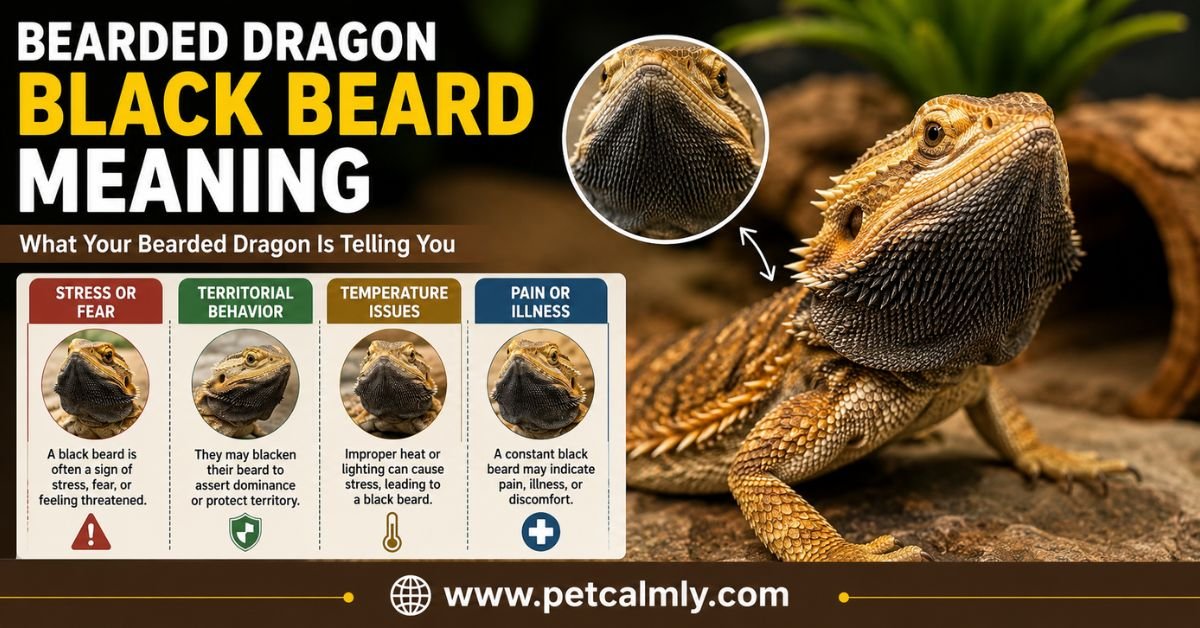
Bearded Dragon black beard meaning A black beard in a bearded dragon is a way of communicating. It usually indicates stress, fear, territorial behavior, excitement, or discomfort from illness or pain. If the beard stays black for a long time or is accompanied by lethargy, loss of appetite, or other unusual symptoms, the dragon should be examined by an exotic veterinarian.
Why It Happens and When to Be Concerned
One of the first things new bearded dragon owners notice is that their pet’s beard suddenly turns dark black. It can happen during feeding, when another pet enters the room, after handling, or seemingly for no obvious reason.
Seeing this dramatic color change can be alarming. Many owners immediately wonder:
- Is my bearded dragon angry?
- Is it sick?
- Is it in pain?
- Did I do something wrong?
The reassuring news is that a black beard is a natural way bearded dragons communicate. Just like dogs wag their tails or cats flatten their ears, bearded dragons use body language including beard color to express how they feel.
The challenge is figuring out what they’re trying to tell you.
Sometimes it’s completely normal, such as during a territorial display. Other times, a black beard can signal stress, fear, discomfort, or an underlying health problem that shouldn’t be ignored.
This guide explains the most common reasons behind a black beard, how to recognize the difference between normal and concerning behavior, and what steps you should take to help your pet stay healthy.
What Does a Black Beard Mean in Bearded Dragons?
A black beard is the darkening of the loose skin beneath a bearded dragon’s chin and throat. This area contains pigment cells called chromatophores, which can rapidly expand or contract. When they expand, the beard appears much darker.
Unlike permanent color changes, a black beard can appear within seconds and disappear just as quickly.
Think of it as your dragon’s emotional billboard.
It may be communicating:
- Stress
- Fear
- Anger
- Territorial behavior
- Excitement
- Pain
- Illness
- Discomfort
- Dominance
- Breeding behavior
Because the same signal can have several meanings, it’s important to look at your dragon’s entire body language, daily routine, and environment instead of focusing on the beard alone.
A Black Beard Doesn’t Always Mean Something Is Wrong
Many first-time owners assume a black beard automatically means their pet is seriously ill.
That’s not always true.
For example, your bearded dragon may briefly darken its beard when:
- Seeing its reflection in the glass
- Watching another bearded dragon
- Chasing live insects
- Being picked up unexpectedly
- Meeting a new pet
- Exploring unfamiliar surroundings
If the beard returns to its normal color within a short time and your dragon continues eating, basking, and behaving normally, there’s usually no cause for concern.
The real warning sign is a black beard that persists or appears together with other unusual symptoms.
Why Do Bearded Dragons Turn Their Beard Black?
Although owners often look for one simple answer, there isn’t one.
A black beard is best understood as a communication signal rather than a diagnosis.
Here are the most common reasons.
| Cause | Usually Normal? | Should You Worry? |
|---|---|---|
| Stress | Sometimes | If stress continues for days |
| Fear | Usually | Only if frequent |
| Territorial display | Yes | No |
| Mating behavior | Yes | No |
| Handling discomfort | Usually | Improve handling techniques |
| Pain | No | Yes |
| Illness | No | Yes |
| Incorrect enclosure temperatures | No | Yes |
| Poor UVB lighting | No | Yes |
| Digestive discomfort | Sometimes | Yes if ongoing |
| Environmental changes | Usually | Monitor closely |
Notice that several causes are completely harmless, while others deserve prompt attention.
The key is identifying which situation matches your dragon’s behavior.
Normal vs. Concerning Black Beard Behavior
A black beard by itself doesn’t tell the whole story.
Here’s a simple comparison.
| Normal Behavior | Concerning Behavior |
|---|---|
| Lasts only a few minutes | Lasts for several hours or days |
| Eats normally | Stops eating |
| Active and alert | Lethargic or weak |
| Basks regularly | Hides constantly |
| Bright eyes | Sunken or closed eyes |
| Normal stools | Diarrhea, constipation, or no bowel movements |
| Beard returns to normal | Beard stays black most of the day |
If several concerning signs appear together, it’s time to investigate further instead of assuming your dragon is simply “in a bad mood.”
Stress Is One of the Most Common Reasons for a Black Beard
Stress is probably the number one reason healthy pet bearded dragons develop a temporary black beard.
Unlike wild dragons that can simply move away from stressful situations, pet reptiles rely on their owners to provide a safe, stable environment.
Even small changes can trigger a stress response.
Common Sources of Stress
Moving to a New Home
New dragons often display a black beard during their first few days after arriving home.
Everything is unfamiliar:
- New smells
- New enclosure
- Different lighting
- Different sounds
- New people
This adjustment period is sometimes called relocation stress.
Most dragons gradually relax once they establish a routine.
Frequent Handling
Many owners are excited to interact with their new reptile immediately.
Unfortunately, excessive handling can overwhelm a dragon that hasn’t built trust yet.
Signs include:
- Puffing the beard
- Beard turning black
- Attempting to run away
- Flattening the body
- Opening the mouth defensively
A better approach is allowing your dragon several days to settle before increasing handling sessions gradually.
Loud Household Activity
Bearded dragons notice much more than many owners realize.
Common stressors include:
- Barking dogs
- Curious cats
- Vacuum cleaners
- Children shouting
- Loud music
- Frequent visitors
If the black beard appears only during noisy periods, reducing environmental stress may solve the problem.
Rearranging the Enclosure
Even positive changes can temporarily confuse your dragon.
Examples include:
- New decorations
- Different hides
- Changing substrate
- Moving basking rocks
- Repositioning branches
Most dragons adapt within a few days.
Territorial Behavior Can Cause a Black Beard
Bearded dragons are naturally territorial animals.
Adult males, in particular, use body language to warn competitors to stay away.
A black beard is one of their most obvious displays.
Common Territorial Triggers
Your dragon may react after seeing:
- Another bearded dragon
- Its own reflection
- A nearby reptile enclosure
- Outdoor wildlife through a window
This behavior often includes several other signals.
You Might Notice
- Beard puffing
- Head bobbing
- Standing tall
- Flattening the body
- Slow arm movements from the other dragon (submission)
- Staring intensely
This behavior is normal, especially in mature males.
If reflections seem to be the trigger, covering reflective surfaces or adjusting the enclosure angle can help reduce repeated stress.
Breeding Season Can Make the Beard Turn Black
Hormonal changes are another normal reason for beard darkening.
During breeding season, adult males become much more expressive.
Their black beard helps communicate confidence and dominance while attracting females and discouraging rival males.
You may also notice:
- Increased activity
- More head bobbing
- Glass surfing
- Restlessness
- Increased interest in surroundings
Healthy dragons usually return to their normal behavior once hormone levels settle.
Fear and Defensive Behavior
Not every black beard means aggression.
Sometimes your dragon isn’t trying to fight—it simply feels threatened.
Imagine someone much larger suddenly reaching toward you without warning.
Your first instinct might be to back away.
Bearded dragons respond in a similar way.
Situations That Can Trigger Fear
- A hand reaching from above
- A predator-like pet nearby
- Sudden movements
- Bright camera flashes
- Being chased around the enclosure
- Falling while being handled
In these moments, the black beard acts as part of a defensive display designed to make the dragon appear larger and more intimidating.
Other Defensive Behaviors to Watch For
A frightened bearded dragon may also:
- Puff out its beard
- Flatten its body against the ground
- Open its mouth wide (gaping as a warning, not basking)
- Freeze in place
- Attempt to hide
- Run away quickly
- Whip its tail in rare cases
The best response is to remove the source of fear and give your dragon time to calm down. Avoid forcing interaction, as repeated frightening experiences can make handling more difficult over time.
How to Tell if the Black Beard Is Temporary
A brief black beard is often part of normal communication. Ask yourself these questions:
- Did it happen after handling or a sudden noise?
- Did your dragon see another bearded dragon or its reflection?
- Did the beard return to its normal color within a few minutes?
- Is your dragon still eating, basking, and exploring as usual?
If you answered yes to most of these, the behavior is likely temporary and not an immediate cause for concern. Continue observing your dragon over the next day or two for any additional changes.
Medical Causes, Husbandry Problems, and When a Black Beard Signals Something More Serious
While stress and territorial displays are common reasons for a black beard, there are times when this behavior points to a deeper problem. A beard that stays black for hours—or keeps returning without an obvious trigger—deserves a closer look.
Your bearded dragon can’t tell you where it hurts. Instead, it relies on changes in behavior, appetite, posture, and body language. A persistent black beard is one of the ways it may communicate discomfort.
The key is to look at the whole picture, not just the beard color.
Can a Black Beard Mean Your Bearded Dragon Is in Pain?
Yes. Pain is one of the most important reasons a bearded dragon may develop a persistent black beard.
Unlike territorial displays, pain-related beard darkening often lasts much longer and is accompanied by noticeable changes in your dragon’s daily routine.
Signs That Pain May Be the Cause
Watch for a combination of symptoms such as:
- Refusing food for several days
- Sleeping more than usual
- Reluctance to move or climb
- Keeping the eyes closed during the day
- Weight loss
- Hiding constantly
- Difficulty walking
- Swollen joints or limbs
- Unusual posture
- Persistent black beard that doesn’t fade
One symptom alone doesn’t confirm pain, but several together should never be ignored.
Common Health Problems That Can Cause Pain
Several medical conditions may lead to a black beard because they cause discomfort or stress.
Metabolic Bone Disease (MBD)
Metabolic bone disease develops when a bearded dragon doesn’t receive enough calcium, vitamin D3, or proper UVB lighting.
Over time, weakened bones become painful and may fracture easily.
Common signs include:
- Soft jaw
- Trembling legs
- Weak grip
- Difficulty climbing
- Curved limbs
- Black beard caused by ongoing discomfort
Good UVB lighting and a balanced calcium supplementation schedule are essential for prevention.
Mouth Problems
A painful mouth can make eating uncomfortable.
Possible causes include:
- Mouth rot (infectious stomatitis)
- Injured gums
- Tooth damage
- Foreign objects stuck in the mouth
You may notice:
- Drooling
- Swelling around the mouth
- Bad odor
- Refusing insects
- Black beard during feeding attempts
These problems require prompt veterinary care.
Injuries
Even indoor dragons can become injured.
Common examples include:
- Falling from furniture
- Getting a toe caught in enclosure decorations
- Tail injuries
- Nail injuries
- Bite wounds from another dragon
Pain from these injuries may trigger a black beard until the problem is resolved.
Illness Can Also Trigger a Black Beard
When a bearded dragon feels unwell, it often becomes less active and may develop a dark beard.
The beard itself isn’t the illness—it’s part of the body’s response to discomfort.
Common Illnesses Associated with a Black Beard
These include:
- Respiratory infections
- Internal parasites
- Digestive illness
- Kidney disease
- Liver disease
- Severe dehydration
- Reproductive problems in females
Each condition has its own symptoms, which is why veterinary diagnosis is important rather than guessing based on beard color alone.
Signs Your Dragon May Be Sick
Seek veterinary advice if you notice:
- Appetite loss lasting several days
- Rapid weight loss
- Wheezing or clicking sounds
- Labored breathing
- Mucus around the nose
- Frequent diarrhea
- Bloody stool
- Vomiting or regurgitation
- Extreme lethargy
- Constant black beard
A persistent black beard combined with these symptoms should always be treated as a warning sign.
Husbandry Problems Are a Surprisingly Common Cause
Many black beard cases aren’t caused by disease at all they’re caused by an enclosure that doesn’t meet a bearded dragon’s needs.
Because these reptiles depend on their environment to regulate body temperature and metabolism, even small husbandry mistakes can cause chronic stress.
Fortunately, these issues are often fixable.
Incorrect Basking Temperature
Temperature affects nearly every aspect of a bearded dragon’s health.
If the basking spot is too cool, your dragon may struggle to:
- Digest food
- Stay active
- Maintain its immune system
- Process nutrients properly
This discomfort may contribute to a black beard.
Signs the Basking Area May Be Too Cool
Your dragon may:
- Sit under the heat lamp all day
- Eat less
- Move very little
- Digest food slowly
- Develop a darker beard more frequently
On the other hand, excessive heat can also create stress.
Signs of overheating include:
- Constant attempts to escape the enclosure
- Heavy gaping away from the basking spot
- Restlessness
- Glass surfing
- Dark beard despite trying to cool down
Always measure temperatures with a reliable digital thermometer or infrared temperature gun instead of relying on dial gauges.
Poor UVB Lighting
UVB lighting is just as important as heat.
Without adequate UVB exposure, bearded dragons cannot efficiently produce vitamin D3, making it difficult to absorb calcium from their diet.
Over time, this can lead to chronic discomfort and health problems.
Common UVB Mistakes
- Using decorative lights instead of proper UVB bulbs
- Installing the bulb too far from the basking area
- Placing glass or plastic between the bulb and the dragon
- Forgetting to replace UVB bulbs as recommended by the manufacturer
- Choosing a bulb that is too weak for the enclosure size
Even if the bulb still produces visible light, its UVB output may have declined.
Can Digestive Problems Cause a Black Beard?
Yes.
Digestive discomfort is another reason some bearded dragons develop a dark beard.
When digestion isn’t working properly, the dragon may appear uncomfortable before obvious symptoms develop.
Possible Digestive Causes
These include:
- Constipation
- Impaction
- Gas buildup
- Eating oversized feeder insects
- Dehydration
- Low basking temperatures slowing digestion
A dragon with digestive discomfort may:
- Refuse food
- Strain without producing stool
- Drag its back legs in severe impaction cases
- Stay unusually still
- Develop a prolonged black beard
Digestive problems can become serious if left untreated.
Shedding Can Occasionally Cause Mild Stress
Not every black beard is linked to illness.
Some dragons become temporarily irritable during shedding.
You may notice:
- Dull skin
- White or gray patches before the shed
- Less interest in handling
- Slight beard darkening
- Increased rubbing against decorations
This behavior usually resolves once the shed is complete.
Avoid pulling loose skin, as this can damage healthy tissue underneath.
Hormonal Changes Can Affect Behavior
Healthy adult dragons sometimes behave differently during breeding season.
Males are especially likely to show:
- Black beard
- Frequent head bobbing
- Increased pacing
- Glass surfing
- Reduced interest in food for short periods
Females may also experience behavioral changes, particularly if developing eggs.
If a female has a black beard along with digging, restlessness, or swelling around the abdomen, ensure she has access to an appropriate lay box and consult an exotic veterinarian if she appears distressed or cannot lay eggs.
How to Identify the Real Cause of a Black Beard
Instead of focusing on a single symptom, work through a simple checklist.
Step 1: Observe When It Happens
Ask yourself:
- Does it happen after handling?
- Only during feeding?
- After lights turn on?
- When another pet enters the room?
- After seeing its reflection?
Patterns often reveal the cause.
Step 2: Check the Enclosure
Review the basics:
- Basking temperature
- Cool-side temperature
- UVB lighting
- Humidity
- Clean water
- Safe enclosure size
- Proper hiding places
Many ongoing stress issues begin here.
Step 3: Watch Your Dragon’s Behavior
Healthy dragons usually:
- Bask regularly
- Eat with enthusiasm
- Explore their enclosure
- Produce normal stools
- Stay alert during the day
Any significant change is worth noting.
Step 4: Look for Other Symptoms
Ask these questions:
- Has your dragon stopped eating?
- Is it losing weight?
- Has it become unusually sleepy?
- Is breathing normal?
- Are stools regular?
- Has the beard remained black for hours?
The more “yes” answers you have, the more important it becomes to seek veterinary advice.
Common Owner Mistakes That Can Make the Problem Worse
Even experienced keepers sometimes respond in ways that increase stress.
Avoid these common mistakes.
Forcing Your Dragon to Interact
If your dragon is frightened or uncomfortable, repeated handling often increases stress.
Instead, allow it to calm down before trying again.
Assuming Every Black Beard Means Aggression
Many owners label their dragon as “mean.”
In reality, your pet may simply be:
- Scared
- Confused
- Sick
- Cold
- In pain
Understanding the context leads to a much better response.
Ignoring Husbandry
It’s easy to assume a dragon is healthy because it looks alert.
However, incorrect temperatures or poor UVB lighting can cause problems long before obvious illness appears.
Regularly checking enclosure conditions is one of the best preventive steps you can take.
Waiting Too Long to Get Help
A black beard that lasts for several days, especially when paired with appetite loss or lethargy, shouldn’t be dismissed as a “phase.”
Reptiles naturally hide signs of illness, so visible symptoms often mean they’ve been unwell for some time.
Early veterinary care generally leads to better outcomes.
When Should You Be Worried About a Black Beard?
Occasional beard darkening is usually part of normal communication.
However, you should pay close attention if the black beard:
- Lasts most of the day
- Continues for several days
- Appears with refusal to eat
- Is accompanied by rapid weight loss
- Occurs with swollen limbs or jaw
- Happens alongside breathing problems
- Is paired with severe lethargy
- Follows an injury or fall
- Appears after repeated vomiting or diarrhea
These situations suggest that the beard is a symptom—not the underlying problem.
When to Contact an Exotic Veterinarian
Arrange a veterinary examination as soon as possible if your bearded dragon has:
- A black beard that persists for more than 24–48 hours without an obvious cause
- No appetite for several days
- Difficulty moving or climbing
- Signs of injury
- Swelling of the mouth, jaw, or limbs
- Labored breathing
- Blood in the stool
- Severe constipation or suspected impaction
- Sudden, unexplained weight loss
A veterinarian experienced with reptiles can perform a physical examination and, if needed, recommend tests such as fecal exams, blood work, or imaging to identify the underlying cause.
What Should You Do If Your Bearded Dragon Has a Black Beard?
Finding your bearded dragon with a black beard doesn’t automatically mean there’s an emergency. The best approach is to stay calm, observe your pet carefully, and look for clues that explain the behavior.
Instead of reacting to the beard color alone, think about what changed just before it happened.
Ask yourself:
- Was your dragon just handled?
- Did another pet approach the enclosure?
- Has anything changed in the habitat?
- Is your dragon eating and basking normally?
- Has the beard returned to its normal color?
Answering these questions often helps narrow down the cause.
A Step-by-Step Action Plan
If your bearded dragon develops a black beard, follow these simple steps.
Step 1: Observe Without Disturbing Your Dragon
Spend a few minutes watching your dragon from a distance.
Look for:
- Normal breathing
- Alert eyes
- Comfortable posture
- Interest in its surroundings
- Regular basking behavior
Avoid picking your dragon up immediately unless it’s in danger.
Sometimes, simply removing the source of stress allows the beard to return to its normal color within minutes.
Step 2: Check the Enclosure
Many behavior changes begin with the environment.
Confirm that:
- The basking area is reaching the correct temperature.
- The cool side provides a comfortable temperature gradient.
- The UVB bulb is working properly and is positioned correctly.
- Fresh drinking water is available.
- The enclosure is clean.
- There are secure hiding spots.
- Humidity is within the recommended range.
Even experienced keepers benefit from checking these basics regularly.
Step 3: Watch Your Dragon Eat
Appetite is one of the best indicators of overall health.
A healthy bearded dragon will usually:
- Show interest in food
- Chase insects enthusiastically
- Eat vegetables appropriate for its age
- Continue basking after meals
A dragon with a black beard that also refuses food for several days should be monitored more closely.
Step 4: Monitor Bowel Movements
Healthy digestion tells you a lot about your dragon’s condition.
Watch for:
- Regular bowel movements
- Normal stool consistency
- No signs of straining
- No blood
- No unusually strong odor
Digestive problems combined with a persistent black beard deserve prompt attention.
Step 5: Reduce Stress
If stress seems to be the trigger, keep your dragon’s environment as calm and predictable as possible.
Helpful changes include:
- Limiting handling for a few days
- Keeping loud pets away from the enclosure
- Avoiding sudden enclosure changes
- Providing a quiet place to bask
- Covering reflective surfaces if reflections trigger defensive behavior
Many dragons become noticeably calmer once unnecessary stressors are removed.
What Not to Do
Good intentions can sometimes make the situation worse.
Avoid these common mistakes.
Don’t Assume Your Dragon Is Aggressive
A black beard doesn’t automatically mean your dragon has a bad temperament.
It may simply be:
- Frightened
- Startled
- Protecting its territory
- Feeling uncomfortable
- Trying to communicate discomfort
Understanding the reason behind the behavior is far more helpful than labeling the dragon.
Don’t Keep Picking It Up
Many owners repeatedly handle their dragon to “check if it’s okay.”
Unfortunately, this often increases stress.
If your dragon appears frightened, allow it time to settle before attempting another interaction.
Don’t Ignore Other Symptoms
The beard itself isn’t usually the biggest concern.
Pay closer attention to:
- Appetite
- Weight
- Energy level
- Stool quality
- Breathing
- Movement
These signs provide a much clearer picture of your dragon’s health.
Don’t Self-Medicate
Avoid giving medications, supplements, or home remedies that haven’t been recommended for your bearded dragon.
Reptiles process medications differently from mammals, and incorrect treatments can do more harm than good.
How to Prevent Frequent Black Beard Episodes
Not every black beard can be prevented, especially during breeding season or brief territorial displays.
However, good husbandry greatly reduces unnecessary stress.
Maintain Proper Habitat Conditions
A healthy enclosure should provide:
- Appropriate basking temperatures
- A cooler area for thermoregulation
- High-quality UVB lighting
- Safe enclosure furnishings
- Clean food and water dishes
- Adequate ventilation
- Enough space to move comfortably
Routine maintenance helps prevent many stress-related problems before they begin.
Feed a Balanced Diet
Nutrition supports healthy growth, digestion, and immune function.
Offer a varied diet that includes:
- Appropriately sized feeder insects
- Leafy greens
- Safe vegetables
- Occasional fruits as treats
- Calcium supplementation as recommended
- Vitamin supplementation when appropriate
Avoid overfeeding fatty insects or relying on a single food source.
Handle Your Dragon Gently
Building trust takes time.
Instead of forcing interaction:
- Approach slowly from the front or side.
- Support the entire body.
- Keep sessions short at first.
- Return your dragon to its enclosure before it becomes stressed.
Most dragons become more confident when handling is predictable and positive.
Schedule Regular Health Checks
Make it a habit to observe your dragon every day.
Look for changes in:
- Weight
- Appetite
- Skin condition
- Activity level
- Eyes
- Beard color
- Stool consistency
Small changes are often easier to address before they become serious health problems.
Daily Bearded Dragon Health Checklist
Use this quick checklist during your daily routine.
| Check | Healthy Sign |
|---|---|
| Beard color | Normal except during brief displays |
| Appetite | Eats willingly |
| Activity | Alert and active |
| Basking | Uses basking area daily |
| Eyes | Bright and open |
| Breathing | Quiet and effortless |
| Skin | Healthy with normal shedding |
| Stool | Regular and well-formed |
| Movement | Walks and climbs normally |
| Weight | Stable over time |
If several items change at once, investigate the cause rather than assuming it’s normal behavior.
Quick Troubleshooting Guide
| Symptom | Possible Cause | What You Should Do |
|---|---|---|
| Black beard after handling | Stress | Give your dragon time to settle and reduce handling temporarily. |
| Black beard while head bobbing | Territorial or breeding behavior | Usually normal; monitor and reduce visual triggers if needed. |
| Black beard with appetite loss | Illness, pain, or husbandry issue | Review enclosure setup and contact an exotic veterinarian if it persists. |
| Black beard with lethargy | Health problem | Arrange a veterinary examination promptly. |
| Black beard with glass surfing | Stress, reflections, breeding behavior, or enclosure issues | Check temperatures, UVB lighting, and possible environmental stressors. |
| Black beard lasting several days | Ongoing discomfort or illness | Seek veterinary advice without delay. |
Frequently Asked Questions
1. Is a black beard always a sign that my bearded dragon is angry?
No. While a black beard can appear during defensive or territorial displays, it can also be caused by stress, fear, excitement, pain, illness, or environmental problems. Always consider your dragon’s overall behavior before drawing conclusions.
2. Why does my bearded dragon’s beard turn black when I pick it up?
Your dragon may feel startled or insecure during handling, especially if it is new to your home or isn’t used to being held. Gentle, consistent handling and allowing your pet to approach at its own pace often help build trust.
3. Should I worry if the black beard disappears after a few minutes?
Usually not. A beard that darkens briefly during feeding, handling, or a territorial display and quickly returns to normal is often part of normal communication. Continue monitoring your dragon for any other unusual signs.
4. Can female bearded dragons get a black beard?
Yes. Although black beards are more commonly associated with males, females can also develop one when stressed, frightened, uncomfortable, experiencing pain, or during reproductive activity.
5. How long should a black beard last?
A normal behavioral display often lasts only a few minutes. If the beard remains black for many hours or continues for more than a day without an obvious cause especially if accompanied by appetite loss or lethargy it should be investigated.
6. When should I take my bearded dragon to the veterinarian?
Schedule an appointment if your dragon has a persistent black beard along with signs such as refusing food, weight loss, breathing difficulties, weakness, swelling, repeated vomiting, severe constipation, or unusual behavior. Early evaluation can help identify problems before they become more serious.
More Information About Pets, Please Visit Our Website: Can Bearded Dragons Eat Strawberries?
Bearded Dragon Lifespan in Captivity
Conclusion
A black beard is one of the clearest ways a bearded dragon communicates, but it doesn’t have a single meaning.
In many cases, it’s a short-lived response to stress, excitement, territorial behavior, or breeding instincts. These episodes are usually harmless and fade once the situation changes.
However, a beard that stays black or keeps returning without an obvious reason deserves closer attention. When it’s paired with appetite loss, lethargy, breathing problems, weight loss, or changes in movement, it may indicate pain, illness, or a husbandry issue that needs to be addressed.
The best thing you can do as an owner is observe your dragon as a whole. Check its enclosure, monitor its daily habits, and respond to changes early rather than waiting for symptoms to worsen.
With proper lighting, correct temperatures, a balanced diet, regular health checks, and a calm environment, most bearded dragons thrive and you’ll become better at understanding the subtle ways they communicate with you.