Short direct answer
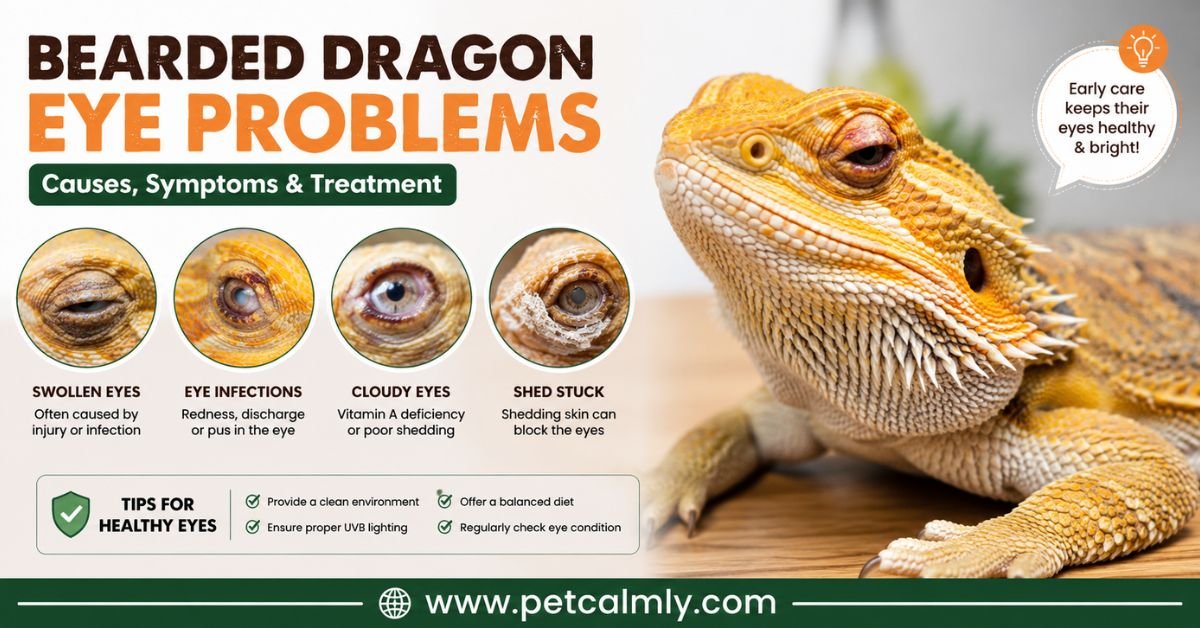
Bearded dragon eye problems are usually caused by one of a few things: normal shedding around the eyes, mild irritation from substrate or dry air, an eye infection (often linked to a respiratory infection), a corneal scratch, or less commonly an underlying husbandry issue like poor humidity or temperature. A single puffy eye that opens fully within a day and shows no discharge is often shedding-related. An eye that stays swollen shut, weeps, changes color, or is paired with lethargy or loss of appetite needs a reptile vet, not a wait-and-see approach.
If you’re staring at your dragon right now trying to decide whether this is “normal lizard weirdness” or something worse, you’re not overreacting. Eyes are one of the clearest windows into a reptile’s overall health, and bearded dragons can’t tell you what’s wrong they can only show you.
Why Bearded Dragon Eye Problems Feel So Alarming (And Why That’s Okay)
There’s something about a swollen or crusted-shut eye that hits differently than, say, a slightly off poop. Eyes feel personal. Owners often say their dragon “looks sad” or “isn’t acting like himself,” and that instinct is worth listening to bearded dragons are surprisingly expressive once you know their baseline behavior.
The tricky part is that eye issues in bearded dragons range from completely harmless to genuinely urgent, and the early signs can look almost identical. A closed eye during a lazy afternoon bask means nothing. A closed eye that stays closed for two days, paired with a dragon who’s suddenly not interested in food, means something.
This guide walks through what’s actually going on, how to tell the difference between “keep an eye on it” and “call the vet today,” and what you can safely do at home in the meantime.
How a Healthy Bearded Dragon’s Eyes Normally Behave
Before you can spot a problem, it helps to know what “normal” actually looks like because bearded dragons have a few eye-related habits that catch new owners off guard.
Brief eye bulging is normal. Bearded dragons occasionally push their eyes slightly out of their sockets, pushing against the surrounding lids and skin. This usually lasts a fraction of a second and happens so quickly that many owners never notice it. It’s thought to help clear debris or adjust the eye, and on its own it isn’t a cause for concern.
Basking with eyes closed is normal. Dragons often close one or both eyes while sitting under a heat lamp, especially during peak basking hours. This is comfort-seeking behavior, not a sign of pain.
Brumation changes eye behavior too. During brumation (a reptile’s version of hibernation), dragons sleep far more than usual and may keep their eyes closed for long stretches during the day. This is different from illness-related eye closure mainly in context: brumation typically comes with reduced appetite and lower activity across the board, usually during cooler months, rather than appearing suddenly alongside swelling or discharge.
Color and clarity should be consistent. A healthy bearded dragon’s eyes are clear, evenly colored, and free of cloudiness, outside of the brief hazy phase that can accompany shedding. Ongoing cloudiness outside of a shed cycle is one of the more reliable signs that something needs a closer look.
Knowing this baseline is genuinely useful: a lot of unnecessary owner anxiety comes from mistaking one of these normal behaviors for a medical issue, while a lot of missed early warning signs come from the opposite mistake assuming an actual problem is “just basking” or “just brumation.”
8 Common Causes of Bearded Dragon Eye Problems
1: Shedding-Related Puffiness
Bearded dragons shed in patches rather than all at once, and the skin around the eyes is thin and prone to holding onto old shed longer than the rest of the body. This can make one or both eyes look temporarily swollen, slightly bulged, or partially closed in the days leading up to and during a shed cycle.
This kind of puffiness usually:
- Affects both eyes, or shifts between them
- Comes and goes rather than staying constant
- Isn’t paired with discharge, redness, or crust
- Resolves on its own once the shed clears
If your dragon has recently been eating less, looking a bit dull-scaled, or rubbing against decor, shedding is a reasonable first guess.
2: Eye Infections and Conjunctivitis
Bacterial or, less commonly, viral infections can cause the thin membrane covering the eye (the conjunctiva) to become red, swollen, and irritated similar to conjunctivitis in mammals. This often shows up as watering, mild swelling, and sometimes a change in eye color or clarity.
Eye watering can also come from mild conjunctivitis and inflammation in the front layer of the eye caused by bacteria or a virus, and antibacterial drops from a reptile veterinarian typically help clear it up. This is a case where home remedies can soothe the surface issue, but the underlying infection generally needs a prescription to fully resolve.
Eye infections in bearded dragons frequently don’t stay isolated. Because the ear, mouth, and eye are closely connected anatomically, problems originating in the ear or mouth such as abscesses or respiratory infections — can sometimes cause the eye to bulge or appear swollen too. This is exactly why a vet exam matters even when the eye looks like the only problem: what you’re seeing may be a symptom of something happening elsewhere in the head or respiratory tract.
3: Respiratory Infections With Eye Involvement
Bearded dragons with respiratory infections may sneeze, show discharge from the eyes or nose, produce bubbles from the mouth or nose, breathe rapidly or with visible effort, and become less interested in food and activity. If your dragon’s eye issue is showing up alongside any of these signs, treat it as a respiratory concern first, not just an eye concern.
4: Corneal Injuries and Scratches
Bearded dragons explore with their faces digging, burrowing, and pushing against rough substrate or décor. This makes minor corneal scratches fairly common, especially in enclosures with loose sand, rough branches, or sharp-edged hides.
A scratched cornea typically causes squinting, watering, and sensitivity in one eye specifically (rather than both), often without the generalized puffiness seen in shedding. Vets can usually confirm this with a simple fluorescein stain test, which highlights any scratch or ulcer on the surface of the eye under a special light.
5: Foreign Material and Substrate Irritation
Loose substrates sand, walnut shell, wood shavings can get into the eye and cause the same reaction you’d have with a piece of grit in your own eye: watering, blinking, and mild redness. This is one of the more fixable causes, and it’s also one of the best arguments for using a reptile-safe, low-dust substrate like paper towel, tile, or reptile carpet, especially for younger dragons still learning to navigate their space.
6: Vitamin and Nutritional Factors
Nutritional deficiencies are frequently blamed for reptile eye problems online, but the picture is more nuanced for bearded dragons specifically. Bearded dragons are generally less prone to vitamin A deficiency than strict insect-eating lizards like leopard geckos or chameleons, because they naturally eat a more varied omnivorous diet. That said, an unbalanced diet — too few leafy greens, inconsistent calcium and multivitamin dusting, or an insect-heavy diet in an adult dragon — can still weaken overall immune function and make eye infections more likely to take hold or linger. Diet is rarely the sole cause of a swollen eye, but it’s almost always worth reviewing when a dragon’s health is off in any way.
7: Low Humidity and Dehydration
Reptiles are ectotherms, meaning their internal processes depend heavily on their external environment. Many of the medical problems reptile veterinarians see are traced back to incorrect diet, lighting, temperature, or enclosure setup rather than a standalone illness. Chronically low humidity or inadequate water intake can lead to dry, sunken-looking eyes and can also make shedding including shedding around the eyes more difficult to complete cleanly.
8: Tumors, Blocked Tear Ducts, and Other Uncommon Causes
These are less common but worth mentioning honestly rather than glossing over. Persistent one-sided swelling that doesn’t respond to basic care, doesn’t fluctuate with shedding, and keeps growing over weeks can point toward a mass, a blocked tear duct, or another structural issue. This isn’t meant to alarm you most eye problems are far more mundane but it’s the reason a lump or swelling that isn’t improving after a few days deserves imaging or a hands-on exam rather than continued home monitoring.
Recognizing the Difference: Normal vs. Concerning Bearded Dragon Eye Behavior
| Sign | Usually Normal | Usually Concerning |
|---|---|---|
| Eye closed while basking or during shed | Yes, especially both eyes | — |
| Eye stays shut for 24+ hours | — | Yes |
| Clear, occasional watering | Sometimes, mild irritation | — |
| Thick, yellow, or crusty discharge | — | Yes |
| Swelling that shifts or resolves in a day | Yes | — |
| Swelling that’s constant or worsening | — | Yes |
| Normal appetite and activity | Yes | — |
| Appetite loss or lethargy alongside eye issue | — | Yes |
| Only one eye affected, dragon otherwise active | Worth watching | Escalate if no change in 24–48 hrs |
| Eye color change (cloudy, red, purple) | — | Yes |
This table isn’t a diagnostic tool it’s a way to organize what you’re observing so you can describe it clearly to a vet if you need to call one.
What to Do at Home for Mild Bearded Dragon Eye Irritation
For eye issues that look mild some watering, a bit of puffiness, no discharge, dragon still eating and active there are a few gentle things owners can reasonably try before escalating to a vet visit:
- Offer a shallow, warm bath. A shallow bath for 15–30 minutes once or twice a day, with water around 85–90°F and depth kept at shoulder level so the head stays out of the water, can help with shedding-related or dehydration-related puffiness. Always supervise the bath.
- Check and correct humidity and temperature. Use an actual hygrometer and thermometer rather than guessing appliance-based “it feels fine” assessments are one of the most common husbandry blind spots.
- Gently wipe away loose shed or debris near (not on) the eye using a damp, soft cloth. Never pick, peel, or pull at skin near the eye.
- Review the substrate. If you’re using loose sand or shavings, consider switching to a low-dust alternative while the eye settles.
- Watch, don’t wait indefinitely. Give it 24 hours. If it’s not clearly improving, or if it worsens even slightly, that’s your signal to move from home care to professional care.
What you should avoid: human eye drops, essential oils, saline mixed at home without vet guidance, and anything marketed as a general “reptile eye cure” without a clear active ingredient list. These can do more harm than the original irritation, particularly on a cornea that may already be compromised.
When Should You Worry About Your Bearded Dragon’s Eyes?
Contact a reptile-experienced veterinarian if you notice any of the following:
- One or both eyes stay swollen shut for more than a day
- Discharge that’s thick, yellow, green, or foul-smelling (rather than clear and watery)
- Redness, purple discoloration, or cloudiness in or around the eye
- The eye bulges outward or looks visibly abnormal in shape
- Your dragon stops eating, becomes lethargic, or hides more than usual
- Any signs of respiratory trouble alongside the eye issue — wheezing, bubbling at the nose or mouth, open-mouth breathing
- A lump, mass, or swelling near the eye that isn’t going away or is growing
Veterinary assistance is generally recommended as soon as eye swelling is noticed, since this reduces the risk of untreated infection and gets treatment started without delay. A vet visit for a reptile eye issue commonly includes a physical exam, and depending on findings, a fluorescein stain to check for corneal scratches or ulcers, along with a broader assessment of overall health to rule out related issues.
There’s no shame in a vet visit that turns out to be “just shedding.” That’s a good outcome, not a wasted one — and it gives you a baseline for what your dragon’s normal shedding process looks like going forward.
What Pet Owners Should Do: A Practical Action Plan
If you’re dealing with an eye issue right now, here’s a simple order of operations:
- Observe for 24 hours, tracking eating, activity, and whether the eye changes.
- Check husbandry basics temperature gradient, humidity, substrate, cleanliness of the enclosure and water dish.
- Photograph the eye daily from the same angle. This makes it far easier to describe changes to a vet, and to notice subtle progression you might otherwise miss day to day.
- Try gentle home care (warm bath, soft-cloth cleaning) only if the issue looks mild and your dragon is otherwise acting normally.
- Call a reptile vet if there’s no improvement in 24–48 hours, or immediately if you see any of the red-flag signs listed above.
- Don’t self-medicate with drops, ointments, or substances not specifically prescribed for your dragon.
Preventing Future Eye Problems
Prevention here isn’t complicated, but it does require consistency:
- Maintain a proper temperature gradient with an accurate thermometer at both the basking spot and cool end
- Keep humidity in an appropriate range for your enclosure setup, adjusted seasonally if needed
- Offer a varied diet with appropriate greens, gut-loaded insects, and regular calcium and multivitamin dusting
- Choose low-dust, low-irritation substrate, especially for young or shedding dragons
- Provide safe, secure branches and décor without sharp edges near face level
- Schedule an annual wellness exam with a reptile-experienced vet, even when nothing looks wrong
Most serious illnesses in captive bearded dragons are preventable with correct care and eye problems are one of the clearest examples of that principle in action. Get the environment right, and a large share of “why does my dragon’s eye look weird” moments simply stop happening.
A Quick Owner Story (Illustrative Example)
Picture a fairly typical scenario: a dragon’s left eye looks slightly puffy one morning. No discharge, still eating, still basking normally. An owner in this position might reasonably do a humidity check, offer a warm soak that evening, and keep an eye on things no pun intended. If, by the next evening, the eye looks completely normal again, that’s consistent with a shed-related fluctuation and not something requiring a vet visit. But if that same eye stays puffy, starts weeping, or the dragon skips a meal, that’s the moment to stop watching and start calling. The difference between these two paths isn’t the initial symptom it’s how it behaves over the following 24 to 48 hours.
Conclusion
Bearded dragon eye problems sit on a wide spectrum from completely normal shedding fluctuations to signs of infection that need prompt veterinary care. The goal isn’t to panic at the first sign of puffiness, and it isn’t to dismiss every symptom as “probably nothing” either. It’s to watch closely, understand what’s typical for your specific dragon, correct any husbandry gaps you find along the way, and know exactly when it’s time to hand things over to a professional.
Your dragon can’t tell you what hurts. But between careful observation, a few practical home checks, and knowing the real red flags, you’re in a solid position to catch problems early which is, honestly, most of the battle in reptile care.
More Information About Pets, Please Visit Our Website: Heat Pad for Bearded Dragon at Night
Bearded Dragon Brumation or Dead?
Bearded Dragon Black Beard Meaning
Can Bearded Dragons Eat Strawberries?
Bearded Dragon Humidity Level
Best Feeder Insects for Bearded Dragons
Bearded Dragon Basking Temperature
Frequently Asked Questions
1: Why does my bearded dragon’s eye look swollen but he’s still acting normal?
Mild, temporary swelling with normal eating and activity is often linked to shedding or minor dehydration. Monitor for 24 hours; if it doesn’t resolve or new symptoms appear, contact a reptile vet.
2: Can a bearded dragon’s eye problem go away on its own?
Shedding-related puffiness and very minor irritation sometimes resolve without treatment. Infections, scratches, and anything involving discharge or persistent swelling generally need veterinary treatment to fully clear.
3: Is it normal for only one eye to be affected?
Yes, it can be corneal scratches and localized irritation often affect just one eye, while shedding-related puffiness more commonly (though not always) affects both. One-sided issues that persist deserve closer attention.
4: What does discharge from a bearded dragon’s eye mean?
Clear, occasional watering can be minor irritation. Thick, colored, or foul-smelling discharge points toward infection and warrants a vet visit.
5: Can I use human eye drops on my bearded dragon?
No. Human eye products aren’t formulated for reptile eyes and can worsen irritation or delay proper treatment. Only use products specifically prescribed by a reptile veterinarian.
6: How do I know if my bearded dragon’s eye issue is an emergency?
Treat it as urgent if the eye is bulging abnormally, your dragon has stopped eating, appears lethargic, shows any breathing difficulty, or the swelling is rapidly worsening. These combinations warrant same-day veterinary attention rather than home monitoring.
7: What will a vet actually do for a bearded dragon eye problem?
Expect a hands-on physical exam first. Depending on what the vet finds, they may run a fluorescein stain to check for corneal scratches, take a swab or culture if infection is suspected, and review your husbandry setup, since many eye issues trace back to temperature, humidity, or diet. Blood work or imaging is sometimes used for cases that don’t have an obvious cause on exam. Treatment might range from a simple husbandry adjustment to prescribed antibacterial or anti-inflammatory eye drops.