Short direct answer
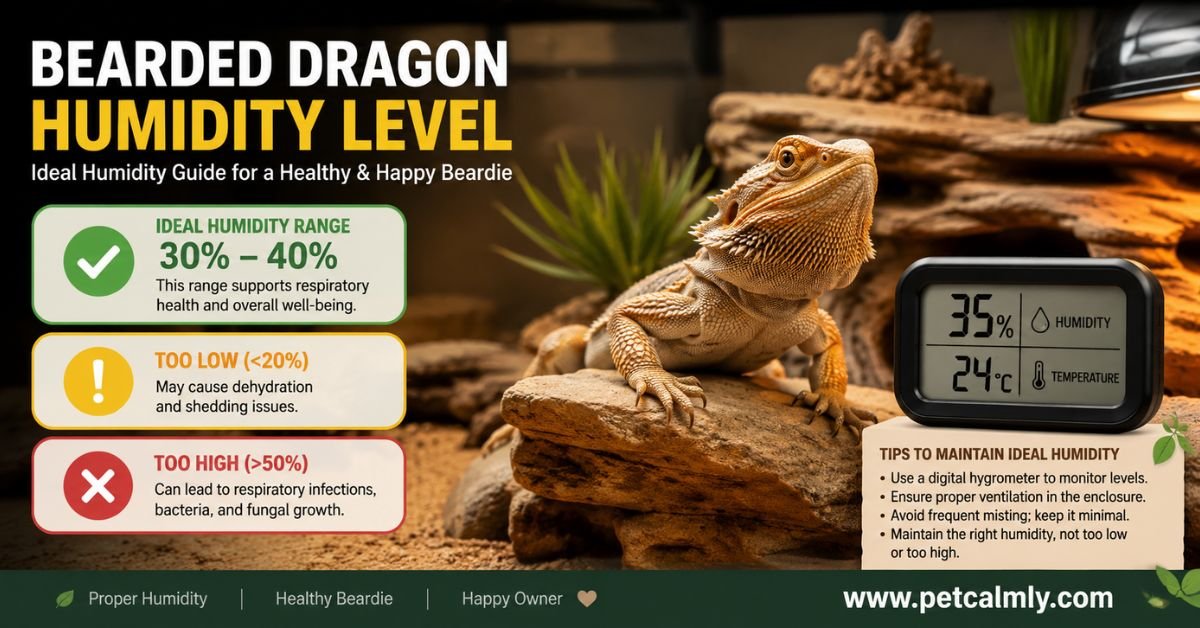
The ideal bearded dragon humidity level is 30% to 40% during the day, with brief increases up to 45% at night generally being acceptable. Keeping humidity within this range helps prevent respiratory infections, skin problems, poor shedding, and dehydration. Use a reliable digital hygrometer to monitor humidity daily, and adjust ventilation, substrate, or water placement as needed to keep your dragon comfortable and healthy.
Introduction
Getting the temperature right is only part of creating a healthy habitat for your bearded dragon. Humidity plays an equally important role, yet it’s one of the most misunderstood parts of reptile care.
Many new owners worry because the humidity in their home doesn’t match what they read online. Others assume that more moisture is always better, especially when their dragon is shedding. Unfortunately, humidity that’s too high or too low for long periods can cause real health problems.
Bearded dragons come from the dry woodlands, deserts, and scrublands of Australia. Their bodies have evolved to thrive in relatively low humidity, but that doesn’t mean they should live in bone-dry conditions all the time. The goal is to recreate a balanced environment that supports normal breathing, healthy skin, proper hydration, and natural behavior.
In this complete guide, you’ll learn:
- The ideal bearded dragon humidity level
- Why humidity matters for long-term health
- How humidity affects shedding, hydration, and breathing
- The best tools to measure humidity accurately
- Common humidity mistakes and how to avoid them
- Simple ways to maintain stable humidity year-round
Whether you’re setting up your first enclosure or trying to solve humidity problems, this guide will help you create a healthier home for your bearded dragon.
Understanding the Ideal Bearded Dragon Humidity Level
Many care sheets mention a single humidity number, but the truth is that a safe humidity range is more realistic than one exact percentage.
Recommended Bearded Dragon Humidity Range
| Time | Ideal Humidity |
|---|---|
| Daytime | 30–40% |
| Night | 30–45% (temporary increases are usually acceptable) |
| Short-term fluctuations | Up to 50% occasionally if ventilation is excellent |
Humidity naturally changes throughout the day. A brief increase after cleaning the enclosure or during rainy weather isn’t usually a cause for concern if it returns to normal within a few hours.
The real problem comes when humidity stays too high or too low for days or weeks.
Why 30–40% Works Best
This humidity range closely matches the dry environments where wild bearded dragons spend most of their lives.
Maintaining this level helps support:
- Healthy lung function
- Proper skin condition
- Comfortable shedding
- Balanced hydration
- Reduced risk of bacterial and fungal growth
- A cleaner enclosure with less mold
Instead of chasing a perfect number every hour, focus on keeping humidity reasonably stable within the recommended range.
Why Humidity Is So Important for Bearded Dragons
Temperature often gets most of the attention, but humidity affects nearly every part of a bearded dragon’s health.
When humidity stays outside the ideal range, problems usually develop gradually rather than overnight.
Proper humidity supports several important body functions.
Healthy Breathing
Bearded dragons breathe best in dry, well-ventilated air.
Excess moisture allows bacteria and fungi to grow more easily, increasing the risk of respiratory infections.
Air that’s too damp can also make it harder for the enclosure to stay warm and clean.
Healthy Skin and Normal Shedding
Many owners think higher humidity always helps shedding.
That’s only partly true.
Healthy dragons naturally shed well when they are:
- Properly hydrated
- Eating a balanced diet
- Receiving correct UVB lighting
- Living within the recommended humidity range
Constantly raising humidity to help shedding often causes more problems than it solves.
Hydration Balance
Humidity affects how quickly moisture leaves the body.
Extremely dry air may contribute to mild dehydration over time, while excessive humidity interferes with the natural dry environment bearded dragons are adapted to.
Proper hydration should come primarily from:
- Fresh drinking water
- Water-rich vegetables
- Appropriate insects
- Occasional supervised baths when needed
Humidity should never replace good hydration practices.
Overall Comfort
Healthy dragons are generally more active when their enclosure closely matches their natural habitat.
A balanced environment encourages:
- Normal basking
- Better appetite
- Healthy digestion
- Natural exploration
- More consistent daily routines
What Humidity Levels Do Bearded Dragons Experience in the Wild?
Understanding where bearded dragons come from makes indoor care much easier.
Wild bearded dragons live throughout much of inland Australia, where conditions change throughout the day.
Typical environmental conditions include:
- Warm sunny days
- Dry air
- Cooler nights
- Seasonal rainfall
- Good airflow
- Plenty of open space
Humidity isn’t completely absent in these habitats.
Morning humidity may briefly rise after cool nights before dropping again as temperatures increase.
This natural fluctuation is one reason small daily humidity changes inside an enclosure are perfectly normal.
Trying to keep humidity at exactly 35% every hour isn’t necessary.
Instead, aim for an overall dry, well-ventilated environment with gentle daily variation.
Does Humidity Need to Change as a Bearded Dragon Grows?
The ideal humidity range stays fairly consistent throughout a bearded dragon’s life, but younger dragons can be slightly more sensitive to environmental problems because they grow quickly and shed more often.
Baby Bearded Dragons
Baby dragons typically shed every few weeks.
Because they grow rapidly, owners sometimes assume they need tropical humidity.
They don’t.
Recommended range:
- 30–40% humidity
- Excellent airflow
- Daily monitoring
- Clean enclosure
Stable conditions matter far more than increasing moisture.
Juvenile Bearded Dragons
Juveniles continue growing steadily and shed frequently.
Focus on:
- Stable humidity
- Correct basking temperatures
- Strong UVB lighting
- Balanced nutrition
- Fresh greens and insects
Avoid making frequent humidity adjustments unless readings stay consistently outside the recommended range.
Adult Bearded Dragons
Adults usually shed less often than younger dragons.
For adults:
- Maintain 30–40% humidity
- Allow small daily fluctuations
- Continue regular monitoring
- Keep ventilation unobstructed
Older dragons generally tolerate small humidity changes well if other husbandry conditions remain correct.
How Humidity Affects Different Areas of the Enclosure
Humidity is rarely the same throughout the enclosure.
Different areas naturally create different microclimates.
Understanding these differences helps you interpret hygrometer readings more accurately.
The Warm Basking Area
The basking side is usually the driest part of the enclosure.
Heat lamps naturally lower relative humidity by warming the surrounding air.
This is completely normal.
The Cool Side
The cool side often has slightly higher humidity because temperatures are lower.
This difference is expected and usually isn’t harmful.
Hides
Humidity inside hides can be a little higher than the rest of the enclosure.
A slight increase is acceptable as long as the hide remains:
- Clean
- Dry
- Well ventilated
- Free from mold
Near the Water Dish
Water bowls create a small pocket of higher humidity nearby.
This doesn’t usually affect the entire enclosure if the tank has good ventilation.
Many owners place the water bowl toward the cooler end to minimize evaporation under the basking lamp.
How to Measure Bearded Dragon Humidity Accurately
Many humidity problems begin with inaccurate readings rather than poor husbandry.
Choosing the right measuring tool makes a big difference.
Use a Digital Hygrometer
Digital hygrometers are generally much more accurate than inexpensive analog dial gauges.
Look for one that provides:
- Relative humidity (%RH)
- Temperature readings
- Fast response time
- Easy-to-read display
- Reliable accuracy
Some models include separate probes, allowing you to monitor different parts of the enclosure without disturbing your dragon.
Where Should You Place the Hygrometer?
Location matters.
Avoid placing the sensor:
- Directly under the heat lamp
- Beside the water dish
- Against enclosure glass
- Inside the basking spot
Instead, position it around the middle height of the enclosure or use multiple sensors to compare humidity between the warm and cool sides.
This provides a more realistic picture of your dragon’s environment.
How Often Should You Check Humidity?
Checking humidity becomes part of a healthy daily routine.
For most owners:
Daily
- Quick glance at humidity and temperature
- Make sure equipment is functioning properly
Weekly
- Compare readings across the enclosure
- Clean sensors if dusty
- Check ventilation openings
Seasonally
- Watch for changes caused by heating or air conditioning
- Adjust enclosure setup if needed
Small daily fluctuations are normal. Consistent readings outside the recommended range deserve closer attention.
Factors That Naturally Influence Bearded Dragon Humidity
Even with the same enclosure, humidity can change throughout the year.
Several everyday factors influence moisture levels inside the habitat.
Room Humidity
Your home’s humidity directly affects the enclosure.
For example:
- Winter heating often dries indoor air.
- Rainy weather can temporarily increase humidity.
- Coastal climates may naturally have higher humidity than inland areas.
Rather than fighting every minor change, focus on maintaining a healthy overall range.
Enclosure Size
Larger enclosures tend to provide more stable environmental conditions.
Smaller tanks can experience quicker swings in humidity, especially after misting, cleaning, or adding fresh water.
Choosing an appropriately sized enclosure makes humidity easier to manage.
Ventilation
Fresh airflow is one of the most effective ways to keep humidity under control.
Well-designed enclosures allow moist air to escape while still maintaining proper temperatures.
Poor ventilation, on the other hand, can trap warm, damp air and create conditions that encourage mold and bacteria.
Substrate Choice
The type of substrate also affects humidity.
Some materials hold moisture much longer than others, while others stay relatively dry.
Selecting a suitable substrate not only helps maintain proper humidity but also supports cleanliness and overall enclosure hygiene.
What Happens if the Humidity Is Too High?
High humidity is one of the most common husbandry problems for indoor bearded dragons, especially in humid climates or poorly ventilated enclosures.
A temporary increase after cleaning the enclosure or during rainy weather is usually not harmful. However, humidity that stays above the recommended range for days or weeks can stress your dragon and create an unhealthy environment.
Bearded dragons are adapted to relatively dry conditions. Constantly damp air makes it easier for bacteria, fungi, and mold to thrive, increasing the risk of illness.
Signs the Humidity Is Too High
Your bearded dragon may not show obvious symptoms right away. Watch for changes such as:
- Spending less time basking
- Reduced appetite
- Sleeping more than usual
- Wheezing or clicking sounds while breathing
- Frequent gaping when not basking
- Sticky or damp substrate
- Condensation on enclosure glass
- Mold or mildew inside the tank
- Musty smells coming from the enclosure
These signs don’t always mean humidity is the only problem, but they should prompt you to check your enclosure conditions.
Health Risks of Long-Term High Humidity
When humidity remains consistently high, several health issues can develop over time.
Respiratory Infections
One of the biggest concerns is respiratory disease.
Warm, humid conditions encourage bacteria and other microorganisms to multiply. A bearded dragon living in this environment may develop a respiratory infection, particularly if temperatures are also too low.
Possible warning signs include:
- Open-mouth breathing when not basking
- Wheezing
- Clicking noises
- Mucus around the nose or mouth
- Labored breathing
- Lethargy
- Poor appetite
Respiratory infections require prompt veterinary care. They rarely improve on their own.
Skin Problems
Excess moisture can soften the skin and create conditions where bacteria or fungi grow more easily.
Owners may notice:
- Skin irritation
- Discolored scales
- Small sores
- Slow healing after minor injuries
Healthy skin depends on balanced humidity not constant moisture.
Mold and Bacterial Growth
High humidity doesn’t just affect your dragon.
It also encourages:
- Mold in substrate
- Bacteria in hides
- Damp wood decorations
- Foul odors
A dirty, humid enclosure quickly becomes unhealthy even if temperatures are correct.
What Happens if the Humidity Is Too Low?
Although bearded dragons like dry conditions, extremely low humidity isn’t ideal either.
Indoor heating during winter can sometimes reduce humidity well below the normal range for extended periods.
Very dry air may contribute to:
- Mild dehydration
- Tougher sheds
- Dry-looking skin
- Increased water loss
Fortunately, this is usually easier to manage than excessive humidity.
Signs Humidity May Be Too Low
Your dragon may show:
- Dry, flaky skin
- Small pieces of retained shed
- Slightly sunken eyes if dehydration is also present
- Spending more time near the water bowl
- Increased drinking
Keep in mind that these signs can also have other causes, so evaluate your overall husbandry before assuming humidity is to blame.
Can Humidity Affect Shedding?
Yes—but not in the way many people believe.
One of the biggest myths in reptile care is that bearded dragons need tropical humidity whenever they shed.
They don’t.
Healthy shedding depends on several factors working together.
The Real Factors Behind Healthy Shedding
Successful shedding is supported by:
- Correct UVB lighting
- Proper basking temperatures
- Balanced nutrition
- Good hydration
- Overall health
- Appropriate humidity
Humidity is only one piece of the puzzle.
If a dragon repeatedly struggles with shedding, increasing humidity alone rarely solves the problem.
Should You Mist a Shedding Bearded Dragon?
Routine misting is generally not recommended for healthy bearded dragons.
Heavy misting can:
- Raise enclosure humidity too much
- Leave the substrate damp
- Increase bacterial growth
- Encourage mold
Instead, focus on:
- Offering fresh water
- Feeding water-rich vegetables when appropriate
- Ensuring correct temperatures and UVB
- Providing rough surfaces like branches or rocks that help loosen old skin naturally
If retained shed becomes severe or begins restricting blood flow around the toes or tail, consult an experienced reptile veterinarian.
How to Lower High Humidity in a Bearded Dragon Tank
If your hygrometer consistently shows humidity above 40–45%, don’t panic. Small adjustments are usually enough.
Here are the safest ways to reduce humidity.
1. Improve Ventilation
Better airflow is often the simplest solution.
Check that:
- Air vents are open
- Decorations aren’t blocking airflow
- The enclosure isn’t placed in a damp room
Cross-ventilation helps humid air escape naturally.
2. Move the Water Bowl
Large water dishes placed directly under the basking lamp evaporate quickly.
Instead:
- Place the bowl on the cool side.
- Use an appropriately sized dish.
- Clean and refill it daily.
This reduces unnecessary moisture while still giving your dragon access to fresh water.
3. Choose a Dry Substrate
Some substrates retain moisture much longer than others.
Generally, dry substrates are easier to manage than moisture-holding materials.
Examples include:
- Ceramic or slate tile
- Paper towels (temporary setups)
- Reptile-safe excavator clay once fully dried
- Properly maintained bioactive systems designed for arid species
Avoid substrates that stay damp for long periods.
4. Reduce Excess Moisture During Cleaning
After disinfecting the enclosure:
- Dry all surfaces thoroughly.
- Replace wet substrate if needed.
- Allow decorations to dry completely before returning them.
Never leave standing water inside the enclosure.
5. Use a Room Dehumidifier if Necessary
If your entire home has high humidity, a room dehumidifier may help stabilize conditions.
This is often useful in:
- Coastal regions
- Rainy seasons
- Humid basements
The goal is to improve the room environment not to dry out the enclosure excessively.
How to Safely Raise Humidity if It’s Too Low
If humidity stays well below 30% for long periods, gentle adjustments are usually enough.
Avoid dramatic changes.
Instead:
- Move the enclosure away from heating vents.
- Add a slightly larger water dish if appropriate.
- Maintain proper hydration through diet.
- Check that your hygrometer is accurate before making adjustments.
Remember, bearded dragons naturally tolerate relatively dry environments.
Seasonal Humidity Changes
Many owners notice humidity changing with the seasons.
This is completely normal.
Winter
Indoor heating often causes:
- Lower humidity
- Faster evaporation
- Drier air
Continue monitoring daily but avoid overcorrecting unless humidity stays consistently below the recommended range.
Summer
Warm weather may naturally increase humidity.
If you live in a humid climate, pay closer attention to:
- Ventilation
- Air circulation
- Substrate dryness
Rainy Seasons
Humidity may temporarily rise even inside your home.
Short-term increases are usually harmless if:
- Temperatures remain correct
- Airflow is good
- Humidity returns to normal within a reasonable time
Humidity During the Day vs. Night
Humidity naturally changes over a 24-hour period.
Daytime
Heat lamps lower relative humidity.
Aim for:
30–40%
Nighttime
As temperatures drop, humidity often rises slightly.
Readings up to about 45% overnight are generally acceptable if they decrease again after the lights come on.
This small fluctuation is similar to what occurs in nature.
6 Common Humidity Mistakes New Owners Make
Many humidity problems come from well-intentioned care rather than neglect.
Here are some of the most common mistakes.
Mistake 1: Trusting an Inaccurate Analog Hygrometer
Cheap dial hygrometers can be inaccurate by a significant margin.
A quality digital hygrometer provides more dependable readings.
Mistake 2: Misting the Entire Enclosure Every Day
Unlike tropical reptiles, bearded dragons don’t need routine enclosure misting.
Daily misting often causes more problems than benefits.
Mistake 3: Covering Ventilation to “Hold Heat”
Blocking vents traps both heat and moisture.
Proper airflow is essential for maintaining healthy humidity.
Mistake 4: Using Moisture-Retaining Substrates Without Understanding Their Impact
Some substrates stay damp for extended periods, making humidity difficult to control.
Always choose enclosure materials that match the needs of an arid species.
Mistake 5: Ignoring Room Humidity
Many owners focus only on the enclosure.
Remember, the surrounding room greatly influences tank humidity.
Mistake 6: Chasing the Hygrometer All Day
Humidity naturally changes throughout the day.
Constantly making adjustments for every small fluctuation often creates more instability.
Instead, focus on the overall daily range.
A Simple Daily Humidity Checklist
A quick routine can prevent many common problems.
Each day:
- ✅ Check the digital hygrometer.
- ✅ Confirm humidity is generally between 30–40% during the day.
- ✅ Ensure the enclosure feels dry and well ventilated.
- ✅ Replace drinking water with fresh, clean water.
- ✅ Remove wet food before it spoils.
- ✅ Check for condensation or damp spots.
- ✅ Watch your dragon’s breathing, appetite, and activity.
This takes only a few minutes and helps catch small issues before they become serious.
Bearded Dragon Humidity Troubleshooting Guide
Even with the right equipment, humidity problems can happen. The good news is that most issues have simple solutions once you identify the cause.
Use this guide to troubleshoot common situations.
| Problem | Possible Cause | What You Should Do |
|---|---|---|
| Humidity stays above 45% | Poor ventilation, damp substrate, humid room | Improve airflow, dry the enclosure, consider a room dehumidifier |
| Humidity stays below 25% | Dry indoor air, heating vents, inaccurate hygrometer | Verify readings, move enclosure away from vents, maintain proper hydration |
| Condensation on the glass | Excess moisture or poor ventilation | Increase ventilation and remove excess water |
| Mold growing inside enclosure | Wet substrate or decorations | Replace contaminated substrate, disinfect décor, improve airflow |
| Persistent shedding problems | Husbandry issue, dehydration, nutritional imbalance, illness | Review UVB, temperatures, diet, hydration, and seek veterinary advice if shedding problems continue |
| Musty smell in enclosure | Damp conditions or poor hygiene | Deep-clean the enclosure, remove wet materials, and allow everything to dry completely |
| Humidity changes dramatically every day | Seasonal weather or enclosure placement | Monitor trends instead of individual readings and make gradual adjustments |
The goal is not perfect numbers every hour. Instead, aim for a stable, healthy environment over time.
Seasonal Humidity Maintenance Schedule
Humidity management becomes much easier when you adjust your routine throughout the year.
Spring
As temperatures begin to rise:
- Monitor humidity after rainy days.
- Clean ventilation screens.
- Check your hygrometer’s battery.
- Inspect decorations for mold after winter.
Summer
Summer often brings the highest indoor humidity.
Focus on:
- Excellent ventilation
- Dry substrate
- Good airflow around the enclosure
- Monitoring humidity during heat waves
If you live in a naturally humid region, you may need a room dehumidifier during this season.
Autumn
This is a good time to prepare for indoor heating.
- Replace worn hygrometers if needed.
- Check enclosure seals and vents.
- Deep-clean hides and climbing branches.
- Review your lighting setup before winter.
Winter
Indoor heating usually lowers humidity.
Continue to:
- Monitor readings daily.
- Offer fresh water.
- Watch for signs of dehydration.
- Avoid overcorrecting minor drops in humidity.
Creating the Right Environment Beyond Humidity
Humidity works together with several other aspects of bearded dragon care.
If one area is incorrect, adjusting humidity alone may not solve the problem.
A healthy enclosure should include:
Correct Basking Temperatures
Proper heat supports:
- Digestion
- Appetite
- Immune function
- Activity
- Natural behavior
Always verify temperatures with reliable thermometers rather than guessing.
High-Quality UVB Lighting
UVB lighting is essential for:
- Calcium metabolism
- Bone health
- Growth
- Muscle function
Replace UVB bulbs according to the manufacturer’s recommended schedule, even if they still produce visible light.
Nutritious Diet
Offer a varied diet that includes:
- Appropriate feeder insects
- Leafy greens
- Vegetables suitable for bearded dragons
- Calcium supplementation when recommended
A healthy diet supports proper hydration, healthy skin, and successful shedding.
Clean Habitat
Routine cleaning reduces:
- Bacteria
- Mold
- Parasites
- Unpleasant odors
Spot-clean daily and perform regular deep cleaning based on your enclosure setup.
When Should You Worry About Humidity?
Small humidity changes are normal.
However, certain situations deserve closer attention.
Contact an experienced reptile veterinarian if your bearded dragon develops:
- Wheezing
- Clicking sounds while breathing
- Open-mouth breathing when not basking
- Thick mucus around the mouth or nostrils
- Persistent lethargy
- Refusal to eat for several days (outside of normal brumation or other expected behavior)
- Significant weight loss
- Repeated retained shed affecting the toes, tail, or eyes
- Swollen or infected-looking skin
Humidity may contribute to these problems, but it is rarely the only cause.
Prompt veterinary care gives your dragon the best chance of recovery.
What Should Pet Owners Do?
If you’re unsure whether your enclosure is providing the right humidity, follow this simple action plan.
Step 1: Measure Accurately
Use a reliable digital hygrometer.
Don’t rely on guesswork.
Step 2: Aim for Stability
Keep daytime humidity around 30–40%.
Avoid making large adjustments unless readings stay outside the recommended range.
Step 3: Focus on the Whole Enclosure
Humidity is only one part of proper husbandry.
Review:
- Heating
- UVB lighting
- Diet
- Hydration
- Ventilation
- Cleanliness
All of these factors work together.
Step 4: Observe Your Dragon
Your bearded dragon often gives the best clues about its health.
Healthy dragons usually:
- Bask regularly
- Eat consistently
- Stay alert
- Shed normally
- Explore their enclosure
- Maintain a healthy body condition
Behavioral changes often appear before obvious illness.
Step 5: Don’t Chase Every Small Humidity Change
Humidity naturally rises and falls throughout the day.
Instead of reacting to every fluctuation, look for consistent patterns over several days.
This approach creates a more stable and less stressful environment for your pet.
Frequently Asked Questions
1. What is the best humidity level for a bearded dragon?
The ideal daytime humidity is 30–40%. At night, temporary increases up to about 45% are generally acceptable if humidity drops again after the lights come on.
2. Can humidity be too low for a bearded dragon?
Yes. Although bearded dragons thrive in dry conditions, humidity that stays far below the recommended range for extended periods may contribute to dehydration and more difficult sheds. Providing fresh water, a balanced diet, and proper enclosure conditions is more effective than trying to create a humid habitat.
3. Do bearded dragons need a humid hide?
Most healthy bearded dragons do not need a permanently humid hide.
A standard hide that stays clean, dry, and well ventilated is suitable for everyday use. If your dragon has persistent shedding problems, consult a reptile veterinarian before making major humidity changes.
4. Is it safe to mist a bearded dragon?
Routine enclosure misting is generally unnecessary for healthy bearded dragons and may increase humidity beyond the recommended range.
If your dragon needs additional hydration or help with a difficult shed, ask your veterinarian about safe options instead of relying on frequent misting.
5. How often should I check humidity?
Check your digital hygrometer at least once a day.
A quick daily check helps you spot equipment failures or environmental changes before they become serious problems.
6. Does humidity affect a bearded dragon’s appetite?
It can.
Humidity that remains too high for long periods may contribute to stress or respiratory illness, which can reduce appetite. However, appetite changes may also result from incorrect temperatures, inadequate UVB lighting, illness, seasonal brumation, or dietary issues.
More Information About Pets, Please Visit Our Website: 120 Gallon Bearded Dragon Tank
Best Substrate for Bearded Dragon Dig Box
Conclusion
Maintaining the correct bearded dragon humidity level doesn’t have to be complicated. A daytime range of 30–40%, combined with good ventilation, proper heating, quality UVB lighting, and a clean enclosure, provides the dry environment these Australian reptiles have adapted to over thousands of years.
Rather than chasing the exact humidity reading every hour, focus on consistency. Small daily fluctuations are normal, but long-term conditions that are too humid or too dry can affect your dragon’s comfort and health.
The best approach is to use a reliable digital hygrometer, observe your dragon’s behavior, and make gradual adjustments when needed. A healthy bearded dragon is typically alert, active, eats well, sheds normally, and spends time basking. By combining careful monitoring with good overall husbandry, you’ll create a habitat where your pet can thrive for years to come.