Short direct answer
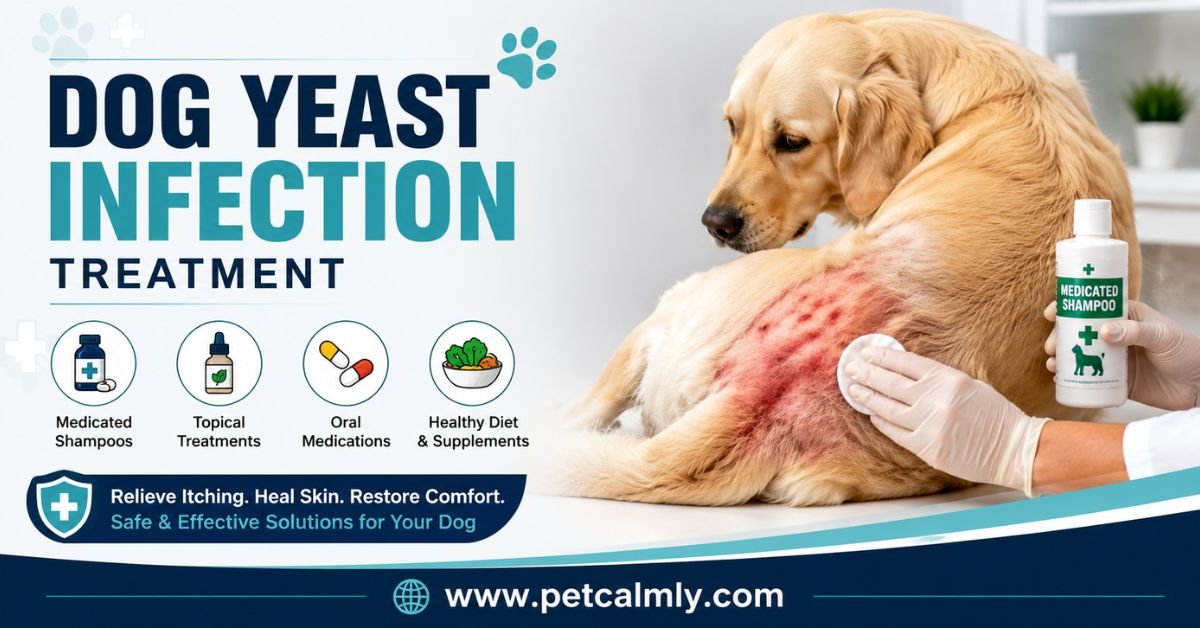
Most dog yeast infections are treated with a combination of medicated antifungal shampoos (containing miconazole, chlorhexidine, or ketoconazole), topical wipes or ear cleaners for localized spots, and oral antifungal medication for infections that are widespread or keep coming back. Just as important as the medication itself is finding and managing the underlying cause usually allergies, excess moisture, or a skin fold that traps oil because treating the yeast without addressing why it grew in the first place almost always leads to a relapse. A vet visit is the only reliable way to confirm yeast is actually the problem, since bacterial infections and mange can look nearly identical.
Why This Diagnosis Feels So Frustrating (And Why That’s Normal)
If you’re reading this at 11 p.m. because your dog won’t stop chewing their paws, you’re not overreacting. Yeast infections are itchy, smelly, and stubborn, and they have a habit of showing up again right after you think you’ve solved them.
That pattern isn’t bad luck. It’s actually a clue. Yeast dermatitis is rarely a stand-alone problem it’s usually a symptom of something else going on with your dog’s skin, immune system, or environment. Once you understand that, the whole condition starts to make a lot more sense, and the constant flare-ups stop feeling so random.
This guide walks through what’s actually happening on your dog’s skin, how vets diagnose and treat it, what you can safely do at home, and just as importantly when a home approach isn’t enough and a vet visit shouldn’t wait.
What Is a Dog Yeast Infection, Exactly?
A dog yeast infection, also called yeast dermatitis or Malassezia dermatitis, happens when a fungus called Malassezia pachydermatis multiplies far beyond its normal numbers on your dog’s skin. This yeast is normally found on the skin, but its abnormal overgrowth can cause dermatitis, or inflammation of the skin.
Here’s the part most owners don’t realize: your dog already has this yeast living on them right now, and that’s completely normal. Malassezia yeast normally resides on dogs’ skin, ears, and anal sacs without issues. A healthy immune system and balanced skin environment keep the population in check.
Problems start when something tips that balance extra oil, trapped moisture, a suppressed immune response and the yeast population explodes. The skin is host to innumerable bacteria and fungi. Under normal circumstances, these organisms do not cause a problem and are kept under control by the immune system. If conditions on the skin change or if the immune system is suppressed, these bacteria and fungi can cause infection. Vets call this an opportunistic infection, meaning the yeast isn’t invading from outside it’s an organism that was already there, taking advantage of new circumstances.
What Causes Yeast Infections in Dogs?
Understanding the “why” behind a yeast flare-up matters more than most treatment articles admit, because it changes how you approach long-term care.
Allergies Are the Most Common Trigger
The most common cause of a dog yeast infection is allergies to fleas, food, or substances in the environment. Allergies can lead to skin irritation and make skin oilier. Some dogs even develop a hypersensitivity to the yeast itself, reacting strongly even though only a small number of organisms are present.
Moisture, Skin Folds, and Warm Climates
Dogs with skin folds where heat and moisture get trapped against the skin are at greater risk of Malassezia dermatitis. Dogs living in warm, humid climates are also more susceptible. This is why breeds with folded faces, floppy ears, or wrinkled skin often deal with recurring yeast issues, especially during humid months.
Steroid Medications and Immune Suppression
Vets often prescribe steroid medications to treat dogs with autoimmune disorders and allergies… Steroids suppress the immune system, so they can make dogs more susceptible to yeast infections. This doesn’t mean steroids are a bad choice for your dog — it just means your vet needs to weigh that trade-off and may recommend antifungal support alongside them.
Genetics Play a Role, Too
Some dogs are simply built to be more prone to this. There are certain breeds thought to be genetically predisposed to developing yeast infections. These breeds include West Highland White Terrier, Basset Hound, Cocker Spaniel, Silky Terrier, Australian Terrier, Maltese Terrier, Chihuahua, Poodle, Shetland Sheepdog, Lhasa Apso, and Dachshund. If your dog is one of these breeds, chronic or recurring yeast dermatitis isn’t a sign you’re doing something wrong it’s a known tendency your vet can help you manage long term.
Signs and Symptoms of a Dog Yeast Infection
Yeast infections don’t always look the same twice, even on the same dog. Still, a few patterns show up consistently enough to be worth knowing.
Common symptoms include:
- Intense itching or scratching, especially at ears, paws, armpits, or the belly
- A distinct musty, “corn chip” or slightly sour odor
- Greasy, oily patches of skin
- Redness or inflamed skin
- Skin that looks darker or thicker than normal (a sign of a long-standing infection)
- Flaky or crusty patches
- Hair loss in the affected area
- Constant paw licking or chewing
- Head shaking or scratching at the ears
- Discharge or a waxy buildup inside the ear canal
If you notice more than one or two of these together, especially the odor combined with itching, it’s a reasonable sign to book a vet appointment rather than guess.
Where Yeast Infections Show Up Most Often
Yeast Infections in a Dog’s Ears
Ear infections caused by yeast are very common. They often bring head shaking, a strong smell, and dark, waxy discharge. Because the ear canal is warm, moist, and somewhat enclosed, it’s a favorite environment for Malassezia to thrive.
Yeast Infections on Paws
A yeast infection on your dog’s paw can develop when moisture and debris get trapped between the toes. Grass, pollen, and other outdoor allergens can trigger licking, and that licking adds even more moisture — creating a cycle that keeps feeding the problem. Owners often describe the smell here as similar to corn chips or stale bread.
Yeast Infections in Skin Folds
We also see yeast infections in skin folds, such as where the legs meet the body and around the face and neck as well as on the vulva, anus, and paws, according to Nancy Kelso, DVM, a VCA medical director quoted by Daily Paws. These areas trap heat and moisture the same way ears do, which is exactly why they’re such common trouble spots.
How Vets Diagnose a Yeast Infection
This part matters more than it might seem. Guessing at a diagnosis, then treating for the wrong condition, wastes time while your dog stays uncomfortable.
The only surefire way to tell if your dog has a yeast infection is to take him to the vet. Your vet will take a sample from your dog’s infected ear or skin by swab or scrape, with a piece of tape, or by simply pressing a microscope slide along the skin. This sample is then examined under a microscope, a process commonly called cytology.
This step isn’t just a formality. Frequently, dogs with yeast also have bacterial infections or skin mites (mange). In these cases, treating only the yeast won’t solve the problem. An over-the-counter antifungal shampoo won’t touch a bacterial infection, which is one reason home treatments sometimes seem to “stop working” they were never treating the whole picture to begin with.
Dog Yeast Infection Treatment Options
Treatment generally falls into two categories, and most vets combine them depending on how widespread the infection is.
Topical Treatment
Topical therapy is often recommended because the concentration of the antifungal is higher, allowing for a more direct way to treat the skin and ears. It also tends to come with fewer side effects and a lower cost than oral medication.
Treatment with medicated shampoos is a vital part of treating yeast dermatitis. Many dogs with greasy or oily skin will require an initial ‘degreasing’ cleansing with a shampoo containing selenium sulfide or benzoyl peroxide. After that initial degreasing step, your vet may move to an antifungal shampoo containing miconazole, ketoconazole, or chlorhexidine.
Topical therapy often includes frequent bathing (once to twice per week) with a medicated shampoo, and antifungal mousses or wipes can be used between baths to keep flare-ups under control.
For localized ear infections, treatment usually starts with a thorough ear cleaning to clear debris, followed by a medicated ear wash or ointment prescribed by your vet.
Oral Antifungal Medication
Your veterinarian may recommend administering oral antifungal medication, especially if the yeast is concentrated in your pet’s nail beds or is widespread on their body; it can be challenging in many pets to treat these sites with topical therapy alone.
Ketoconazole and its derivatives rule when it comes to oral therapy. Typically, a several-week treatment is needed, and there are numerous protocols involving different dosing schedules. Higher doses tend to be needed if recurrence is a problem. The good news for dogs (and owners) is that relief often comes quickly: the extreme itch usually improves or resolves within one week, even though the full course of medication takes longer.
For animals that do not tolerate the azole class of medications, terbinafine is a good alternative choice. Never start or stop an oral antifungal without your vet’s guidance dosing and duration depend on how deep and widespread the infection is.
Why Finding the Underlying Cause Matters More Than the Medication
This is the piece that separates a one-time treatment from a real, lasting fix. The most important treatment is diagnosing and managing the underlying cause. If left unaddressed, the underlying cause will continue to allow Malassezia to relapse.
It’s also worth setting realistic expectations early. Even if the underlying cause is managed, flare-ups can (and likely will) occur. It’s important to remember that many underlying skin conditions don’t have a cure, but with dedication and perseverance, they can often be managed. That’s not a discouraging fact — it’s actually freeing. It means an occasional flare-up isn’t a failure on your part; it’s part of managing a chronic tendency, the same way you’d manage a dog’s seasonal allergies.
Home Care That Can Support Treatment (Used Correctly)
Home care should support your vet’s treatment plan, not replace a diagnosis. A few approaches are genuinely useful once yeast has been confirmed:
- Keep the area dry. After baths, swims, or walks in wet grass, dry your dog’s ears, paws, and skin folds thoroughly. Moisture is the yeast’s best friend.
- Clean skin folds regularly. For breeds with facial or body folds, a gentle daily wipe-down prevents the buildup that feeds yeast overgrowth.
- Diluted vinegar rinses for mild cases. A mixture of water and vinegar is sometimes used as a rinse because the pet will develop a distinct vinegar odor but it can help shift skin pH away from what yeast prefers. Only use this on intact, non-raw skin, and check with your vet first.
- Stick to the full course of any prescribed treatment, even after symptoms improve. Stopping early is one of the most common reasons yeast comes right back.
What Not to Do at Home
- Don’t apply human antifungal creams without vet approval some contain ingredients that are unsafe for dogs if licked.
- Don’t use vinegar rinses or essential oils on open wounds, raw skin, or a visibly painful ear.
- Don’t skip the vet visit because symptoms “look mild.” Mild yeast overgrowth can look identical to early bacterial infection or mites under the microscope, but very different under a magnifying glass.
Diet and Long-Term Prevention
Diet doesn’t cause yeast infections directly, but it can influence the allergic and inflammatory response that allows yeast to overgrow in the first place. If your dog has a suspected food allergy, your vet may recommend an elimination diet to identify the trigger ingredient.
Ongoing prevention tends to work best when it’s boring and consistent rather than dramatic:
- Dry ears and paws fully after baths, swims, and rainy walks.
- Keep up with a regular grooming schedule, especially trimming hair around the ears and paw pads.
- Address allergies proactively with your vet’s guidance, since allergy management is often the real long-term fix.
- Use a vet-recommended maintenance shampoo for dogs prone to recurring yeast, even between flare-ups.
- Watch for early signs a faint odor or slightly pink skin so you can act before a full flare-up develops.
Common Mistakes Owners Make With Yeast Infections
- Treating the smell instead of the cause. A scented shampoo or wipe might mask odor temporarily but does nothing for the underlying overgrowth.
- Stopping treatment the moment itching stops. The yeast population can still be elevated even after your dog feels better, which is why vets prescribe a full course rather than “until symptoms improve.”
- Assuming it’s “just dry skin.” Flaky, oily, and dry skin can look similar at a glance, but they call for very different treatments.
- Ignoring recurring ear infections. A dog who gets yeast ear infections repeatedly may have an underlying allergy or anatomical issue (like narrow ear canals) that needs separate, ongoing management.
- Skipping the vet because a previous case cleared up with home care. Dogs with yeast also have bacterial infections or skin mites (mange) often enough that a repeat case deserves a fresh look, not an assumption.
When Should You Worry? Signs That Need a Vet Visit
Most yeast infections are uncomfortable rather than dangerous, but a few signs mean it’s time to stop waiting and see a vet:
- Swelling, pain, or heat around the ear or skin
- Your dog crying out, flinching, or tilting their head when touched
- Visible pus, blood, or an open sore
- A sudden change in hearing or balance
- Symptoms spreading rapidly across the body
- No improvement after 10 to 14 days of consistent home cleaning
- Repeated infections in the same spot within a short period
None of these signs are meant to alarm you they’re simply the line between “this is manageable at home for now” and “this needs professional hands on your dog today.”
What Pet Owners Should Do: A Simple Action Checklist
- Book a vet visit for a proper diagnosis (cytology, not guesswork)
- Ask whether the infection is localized or widespread, since this affects treatment choice
- Follow the full prescribed course of shampoo, ear medication, or oral antifungal — even after symptoms fade
- Discuss whether allergies, hormones, or another condition may be the underlying trigger
- Set a drying routine for ears, paws, and skin folds after baths or wet walks
- Watch for early warning signs so future flare-ups can be caught sooner
- Schedule a follow-up visit if your vet recommends confirming the infection has fully cleared
Conclusion
A dog yeast infection can feel like an endless cycle of baths, wipes, and vet visits, especially if your dog is one of the breeds prone to it. But once you understand that yeast overgrowth is usually a symptom rather than the root problem, the whole picture gets easier to manage.
The goal isn’t necessarily to eliminate every future flare-up for many dogs, especially those with allergies, that’s not realistic. The goal is to catch problems early, treat them fully, and build a routine that keeps your dog comfortable between episodes. With the right vet partnership, that’s very achievable.
More Information About Pets, Please Visit Our Website: How to Treat Dog Ear Infection Without Vet
Home Remedy for Reverse Sneezing in Dogs
Best Food for Senior Dogs to Gain Weight
Frequently Asked Questions
1: Can a dog yeast infection go away on its own?
Mild, very early cases sometimes improve with better drying and hygiene, but most established yeast infections need medicated treatment. Left alone, they tend to worsen rather than resolve, especially if an underlying allergy is driving the overgrowth.
2: Is a dog yeast infection contagious to other pets or people?
No. Malassezia yeast is part of a dog’s normal skin flora, and the overgrowth is tied to that individual dog’s skin environment and immune response, not something passed between animals or to humans through casual contact.
3: How long does it take to treat a dog yeast infection?
Itching often improves within about a week of starting treatment, but the full course especially oral antifungal medication typically runs several weeks. Stopping early is one of the most common causes of relapse.
4: What does a dog yeast infection smell like?
Owners commonly describe it as a musty, “corn chip,” or slightly sour odor. This smell alongside itching, redness, or greasy skin is a strong signal to get your dog checked.
5: Can I use human antifungal cream on my dog’s skin?
Not without checking with your vet first. Some human antifungal products contain ingredients that are unsafe if licked or absorbed, and your dog will very likely try to lick any cream applied to their skin.
6: Why does my dog keep getting yeast infections in the same spot?
Recurring infections in one area usually point to a persistent underlying cause trapped moisture in a skin fold, an allergy flare-up, or an anatomical feature like deep ear canals. Your vet can help identify and manage that root cause rather than just treating each flare-up as it comes.