Short direct answer
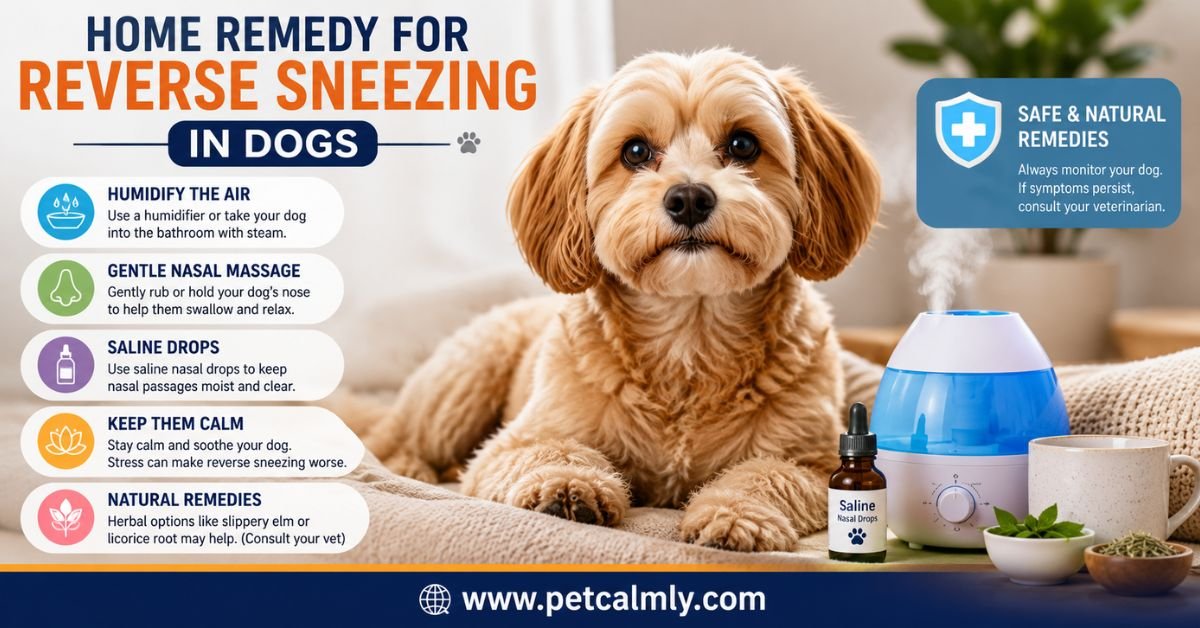
A home remedy for reverse sneezing in dogs focuses on helping your dog stay calm and gently stopping the episode without causing stress. Most reverse sneezing episodes are harmless and last less than a minute. You can often help by gently massaging your dog’s throat, lightly covering one nostril for a second or two to encourage swallowing, speaking calmly, or moving your dog away from dust, pollen, smoke, or strong scents. However, if episodes become frequent, severe, or are accompanied by breathing difficulty, coughing, weakness, or nasal discharge, your dog should be examined by a veterinarian.
Introduction
Watching your dog suddenly make loud snorting or honking sounds can be frightening. Many owners think their pet is choking, having an asthma attack, or struggling to breathe. In reality, it may simply be reverse sneezing, a common condition that often looks much worse than it actually is.
During a reverse sneeze, your dog rapidly pulls air inward through the nose instead of forcefully pushing it out like a normal sneeze. The episode can sound dramatic, but in most healthy dogs it is harmless and lasts only a few seconds to about a minute.
Knowing how to respond calmly can make a big difference. Some simple home remedies may help shorten an episode or make your dog more comfortable. Just as importantly, you’ll learn when reverse sneezing is normal and when it could signal a more serious health problem that needs veterinary attention.
This guide explains everything pet owners need to know, including safe home remedies, common triggers, warning signs, prevention tips, and practical advice for keeping your dog comfortable.
What Is Reverse Sneezing in Dogs?
Reverse sneezing, also called paroxysmal respiration or inspiratory paroxysmal respiration, happens when the muscles around the throat and soft palate temporarily spasm. Instead of pushing air out through the nose, your dog repeatedly pulls air inward with a loud snorting or honking sound.
Although it can look alarming, reverse sneezing is usually not an emergency.
A Typical Reverse Sneezing Episode
Many dogs will:
- Suddenly stop what they’re doing
- Extend their neck forward
- Stand still with elbows slightly apart
- Make repeated snorting or honking noises
- Breathe rapidly through the nose
- Recover completely within seconds
Afterward, most dogs return to playing, walking, or relaxing as though nothing happened.
What Does Reverse Sneezing Sound Like?
Many owners describe it as sounding like:
- A goose honking
- Loud snorting
- Gasping through the nose
- Rapid sniffing
- Choking noises
- A pig-like snort
Because these sounds resemble choking, many first-time dog owners panic.
One helpful clue is that a dog experiencing reverse sneezing usually remains conscious and can still move normally. A choking dog often becomes distressed, paws frantically at the mouth, and may struggle to get air in or out.
Why Do Dogs Reverse Sneeze?
Reverse sneezing occurs when something irritates the nose, throat, or upper airway.
Think of it as your dog’s way of trying to clear irritation from the back of the nose or soft palate.
Common Causes of Reverse Sneezing in Dogs
Allergies
Seasonal allergies are one of the most common reasons dogs experience reverse sneezing.
Common allergy triggers include:
- Pollen
- Grass
- Mold spores
- Dust
- Household mites
Dogs with allergies may have episodes more often during spring and fall.
Strong Smells
Dogs have an incredibly sensitive sense of smell.
Strong odors can irritate the nasal passages, including:
- Perfume
- Air fresheners
- Cleaning sprays
- Cigarette smoke
- Scented candles
- Essential oil diffusers
If reverse sneezing begins shortly after exposure to a strong scent, irritation may be the trigger.
Excitement
Many owners notice reverse sneezing after:
- Playing fetch
- Greeting visitors
- Zoomies
- Eating quickly
- Barking excitedly
Rapid breathing during excitement may temporarily irritate the throat.
Pulling on the Collar
Pressure on the throat can sometimes trigger muscle spasms around the soft palate.
Dogs that pull hard on traditional collars may experience episodes more frequently than those using a properly fitted harness.
Drinking or Eating Too Fast
Fast eating or gulping water may briefly irritate the throat.
This is especially common after vigorous exercise.
Temperature Changes
Sudden exposure to:
- Cold outdoor air
- Air conditioning
- Dry indoor heating
can irritate sensitive airways in some dogs.
Mild Respiratory Irritation
Occasionally, mild viral infections or irritation from dust can trigger temporary reverse snezing.
If symptoms continue for several days or are accompanied by coughing, nasal discharge, fever, or lethargy, your veterinarian should examine your dog.
Anatomy
Certain breeds naturally have narrower airways and longer soft palates, making reverse sneezing more common.
These include:
- Pugs
- Bulldogs
- Boston Terriers
- Shih Tzus
- Boxers
- Chihuahuas
- Yorkshire Terriers
Small dogs also seem more likely to experience occasional episodes.
Is Reverse Sneezing Dangerous?
In most cases, no.
Occasional reverse sneezing in an otherwise healthy dog is considered harmless.
Many dogs experience episodes for years without developing any serious medical condition.
However, frequent or worsening episodes deserve veterinary evaluation because similar symptoms can also occur with:
- Nasal mites
- Respiratory infections
- Foreign objects in the nose
- Nasal tumors
- Collapsing trachea
- Elongated soft palate
- Dental disease affecting the nasal cavity
The key is looking at the whole picture rather than focusing on one episode.
Safe Home Remedy for Reverse Sneezing in Dogs
Most reverse sneezing episodes stop without treatment. Your main goal is to help your dog stay calm while encouraging the muscles in the throat to relax.
1. Stay Calm Yourself
Dogs are very good at picking up their owner’s emotions.
If you panic, yell, or grab your dog suddenly, they may become more anxious, which can prolong the episode.
Instead:
- Speak softly.
- Avoid sudden movements.
- Let your dog stand comfortably.
- Reassure them with a calm voice.
Many episodes end naturally within 30 to 60 seconds.
2. Gently Massage Your Dog’s Throat
A light massage under the jaw and along the throat may encourage swallowing, which can help stop the muscle spasm.
How to do it safely:
- Allow your dog to remain standing.
- Place your hand gently beneath the chin.
- Massage downward using light pressure.
- Continue for several seconds.
Never squeeze or press firmly on your dog’s throat.
3. Encourage Swallowing
Swallowing often helps relax the irritated muscles.
Some owners find success by:
- Offering a tiny sip of fresh water after the episode slows.
- Gently rubbing the throat to stimulate swallowing.
- Speaking calmly until normal breathing returns.
Avoid forcing water into your dog’s mouth while they are actively reverse sneezing.
4. Briefly Cover One Nostril (With Care)
This technique is commonly recommended by veterinarians for calm, cooperative dogs because it may encourage swallowing and reset normal breathing.
How to do it:
- Cover one nostril only with a finger.
- Hold it for about one to two seconds.
- Remove your finger immediately.
- Allow your dog to swallow naturally.
Do not attempt this if your dog is panicking, struggling, aggressive, or has difficulty breathing.
5. Move Away From the Trigger
If you suspect something in the environment caused the episode, calmly move your dog to an area with clean, fresh air.
Possible irritants include:
- Smoke
- Dust
- Aerosol sprays
- Strong fragrances
- Freshly mowed grass
- Household cleaners
Reducing exposure may help prevent future episodes as well.
6. Help Your Dog Relax After the Episode
Once normal breathing returns:
- Offer praise.
- Let your dog rest.
- Avoid vigorous exercise for a few minutes.
- Monitor for repeated episodes.
Many dogs resume normal activity almost immediately.
Home Remedies You Should Never Try
When owners panic, they sometimes try unsafe techniques they find online. These can do more harm than good.
Avoid these methods:
- Forcing food into your dog’s mouth
- Pouring water down the throat
- Pulling on the tongue aggressively
- Holding your dog’s mouth shut
- Shaking your dog
- Blowing forcefully into the nose
- Giving human allergy or cold medications without veterinary guidance
- Using essential oils near your dog’s face
These methods can increase stress or even create a choking risk.
How Long Does Reverse Sneezing Usually Last?
Most episodes last:
| Episode Length | What It Usually Means |
|---|---|
| 5–15 seconds | Very common and usually harmless |
| 15–30 seconds | Still considered typical |
| 30–60 seconds | Often normal if your dog quickly recovers |
| More than 1 minute | Monitor closely and contact your veterinarian if episodes continue or become frequent |
A dog that returns to normal behavior immediately after an isolated episode is generally less concerning than one who appears weak, distressed, or continues having repeated attacks.
Signs Your Dog Is Recovering Normally
After a typical reverse sneezing episode, you should notice that your dog:
- Breathes normally within a minute.
- Acts alert and responsive.
- Walks, plays, or rests comfortably.
- Shows normal gum color.
- Eats and drinks as usual.
- Does not continue coughing or gagging.
These signs suggest the episode has resolved without complications.
How to Prevent Reverse Sneezing in Dogs
You can’t prevent every reverse sneezing episode, especially if your dog has a naturally sensitive airway. However, reducing common triggers can make episodes less frequent and less severe.
The goal isn’t to eliminate every sneeze it’s to create an environment that keeps your dog’s nose and throat as comfortable as possible.
Reduce Environmental Irritants
Many dogs reverse sneeze because something irritates their nasal passages.
Simple changes around your home can help.
Keep the Air Clean
Good indoor air quality supports healthy breathing.
Try to:
- Vacuum carpets and furniture regularly.
- Wash your dog’s bedding every week.
- Replace HVAC filters as recommended.
- Dust shelves and hard surfaces often.
- Keep humidity at a comfortable level (around 30–50%).
A cleaner home may reduce irritation from dust, pollen, and other airborne particles.
Avoid Strong Fragrances
A dog’s nose is far more sensitive than ours.
Limit exposure to:
- Air fresheners
- Perfumes
- Scented candles
- Incense
- Aerosol sprays
- Essential oil diffusers
- Cigarette or cigar smoke
If you enjoy scented products, use them in rooms your dog doesn’t spend much time in.
Watch Seasonal Allergies
Some dogs reverse sneeze more often during allergy season.
Signs that allergies may be involved include:
- Itchy skin
- Paw licking
- Watery eyes
- Frequent sneezing
- Mild nasal discharge
- Ear infections
If you notice a seasonal pattern, your veterinarian can recommend safe allergy management options.
Never give human allergy medications unless your veterinarian specifically instructs you to do so.
Switch From a Collar to a Harness
Dogs that pull during walks may place repeated pressure on their throat.
A well-fitted chest harness reduces strain on:
- The trachea
- The soft palate
- Neck muscles
This simple change often helps dogs that experience reverse sneezing after walks.
Slow Down Fast Eaters
Eating too quickly may irritate the throat.
Helpful strategies include:
- Slow-feeder bowls
- Puzzle feeders
- Dividing meals into smaller portions
- Feeding in a calm environment
The same applies to dogs that gulp large amounts of water after exercise.
Maintain a Healthy Weight
Excess body weight increases pressure on the respiratory system.
Keeping your dog at an ideal weight may reduce breathing difficulties, especially in flat-faced breeds.
A healthy lifestyle includes:
- Daily exercise appropriate for your dog’s age
- Balanced nutrition
- Portion control
- Regular veterinary checkups
Keep Your Dog Calm During Excitement
Some dogs reverse sneeze whenever they become overly excited.
Common situations include:
- Visitors arriving
- Walk preparation
- Car rides
- Play sessions
- Mealtime
Rather than encouraging intense excitement, try teaching calm routines.
For example:
- Ask for a sit before opening the door.
- Reward relaxed behavior.
- Allow excitement to settle before starting play.
These small habits may reduce episodes in sensitive dogs.
Dogs That Are More Likely to Reverse Sneeze
Although any dog can experience reverse sneezing, some breeds appear more prone because of their airway structure.
Brachycephalic (Flat-Faced) Breeds
These dogs naturally have shorter skulls and narrower airways.
Examples include:
- Pug
- French Bulldog
- English Bulldog
- Boston Terrier
- Shih Tzu
- Pekingese
- Boxer
These breeds may also experience other breathing problems, so frequent reverse sneezing should not automatically be dismissed as normal.
Small Dog Breeds
Many veterinarians also see reverse sneezing in smaller breeds such as:
- Chihuahua
- Yorkshire Terrier
- Toy Poodle
- Maltese
- Papillon
- Miniature Pinscher
These dogs often recover quickly, but recurring episodes still deserve discussion during routine veterinary visits.
Puppies
Puppies sometimes reverse sneeze because they are curious and constantly sniff new environments.
Dust, grass, pollen, and playful excitement can temporarily irritate the nose.
Most puppies outgrow frequent episodes as they mature.
Reverse Sneezing vs. Choking: How to Tell the Difference
One of the biggest fears for dog owners is confusing reverse sneezing with choking.
The differences are important.
| Reverse Sneezing | Choking |
|---|---|
| Dog pulls air inward through the nose | Airway may be blocked |
| Loud snorting or honking | Gagging or silent struggling |
| Dog usually stays alert | Dog may panic |
| Episode often stops within one minute | Symptoms usually continue until obstruction is removed |
| Dog recovers normally afterward | Emergency veterinary care may be needed |
If your dog cannot breathe, collapses, turns blue, or appears unable to get air, treat it as an emergency.
Reverse Sneezing vs. Kennel Cough
These conditions are sometimes confused because both involve unusual breathing sounds.
| Reverse Sneezing | Kennel Cough |
|---|---|
| Short episodes | Persistent cough |
| Usually no fever | Fever may occur |
| Dog appears normal afterward | Dog often continues coughing |
| Triggered by irritation | Caused by infectious disease |
| Usually harmless | Requires veterinary evaluation |
Reverse Sneezing vs. Collapsing Trachea
Collapsing trachea is more serious and often requires long-term management.
Common signs include:
- Chronic “goose honk” cough
- Exercise intolerance
- Wheezing
- Persistent coughing
- Breathing difficulty
Unlike reverse sneezing, collapsing trachea doesn’t usually stop within seconds.
5 Common Mistakes Dog Owners Make
When owners witness reverse sneezing for the first time, panic is understandable.
However, some reactions can make the situation worse.
Mistake 1: Assuming Your Dog Is Choking
Many owners immediately reach into the dog’s mouth.
Unless you clearly see an object blocking the airway, avoid placing your hands inside your dog’s mouth.
A frightened dog may bite accidentally.
Mistake 2: Panicking
Dogs often mirror human emotions.
Remaining calm helps your dog relax more quickly.
Mistake 3: Using Human Medications
Never give:
- Human decongestants
- Cold medicine
- Allergy medication
- Nasal sprays
Many common medications are toxic to dogs or require veterinary dosing.
Mistake 4: Ignoring Frequent Episodes
An occasional reverse sneeze is usually harmless.
However, episodes that become frequent or severe deserve investigation.
Your veterinarian may identify:
- Allergies
- Nasal mites
- Dental disease
- Respiratory infection
- Foreign body
- Nasal polyps
- Structural airway abnormalities
Mistake 5: Using Tight Collars
Dogs that pull constantly may benefit from switching to a harness.
Reducing neck pressure is a simple change that often helps.
When Should You Worry About Reverse Sneezing?
Most episodes are harmless.
However, some situations require veterinary attention.
Contact Your Veterinarian If:
- Episodes become more frequent.
- Reverse snezing suddenly starts in an older dog.
- Episodes last longer than one minute regularly.
- Your dog seems distressed afterward.
- Symptoms interfere with eating or sleeping.
- Episodes continue for several days without improvement.
Keeping a simple diary of episodes can help your veterinarian identify patterns or triggers.
Record:
- Date
- Time
- Duration
- Activity beforehand
- Possible trigger
- Recovery time
Seek Emergency Veterinary Care Immediately If Your Dog:
- Has blue or gray gums.
- Collapses.
- Cannot catch their breath.
- Coughs up blood.
- Has severe facial swelling.
- Experiences repeated respiratory distress.
- Shows signs of choking.
- Has difficulty breathing even after the episode ends.
These symptoms are not typical of uncomplicated reverse sneezing and should never be ignored.
How Veterinarians Diagnose Reverse Sneezing
Diagnosis usually begins with a detailed history.
Your veterinarian may ask:
- How often does it happen?
- How long do episodes last?
- Can you record a video?
- Does it happen after exercise?
- Is it seasonal?
- Has your dog been around smoke or perfumes?
A smartphone video is often one of the most helpful diagnostic tools because episodes rarely occur during the appointment.
Physical Examination
Your veterinarian will examine:
- Nose
- Mouth
- Throat
- Teeth
- Lymph nodes
- Heart
- Lungs
Many healthy dogs have completely normal examinations.
Additional Tests (If Needed)
If episodes are unusual, persistent, or severe, testing may include:
- Chest X-rays
- Skull or nasal imaging
- Blood work
- Rhinoscopy (camera inside the nasal passages)
- Airway examination under anesthesia
- Testing for infectious diseases
Testing helps rule out conditions that mimic reverse sneezing.
Medical Treatment for Frequent Reverse Sneezing
There is no single medication for reverse sneezing itself.
Treatment focuses on the underlying cause.
Depending on the diagnosis, your veterinarian may recommend:
Allergy Management
If allergies are triggering episodes, treatment may include:
- Prescription allergy medication
- Environmental management
- Allergy testing in select cases
Treating Infections
If a bacterial infection is present, your veterinarian may prescribe appropriate antibiotics. Viral infections are managed with supportive care, as antibiotics do not treat viruses.
Removing Foreign Objects
Grass seeds, foxtails, or other debris lodged in the nasal passages may require removal under sedation or anesthesia.
Managing Structural Problems
Dogs with an elongated soft palate or other airway abnormalities may benefit from surgical correction if symptoms are severe.
This is most common in brachycephalic breeds.
Parasite Treatment
If nasal mites are suspected, your veterinarian can prescribe medications that specifically target the parasite.
What Should Pet Owners Do After an Episode?
Once your dog has recovered:
✔ Praise them calmly.
✔ Offer fresh water if they seem interested.
✔ Note what happened before the episode.
✔ Check for recurring triggers.
✔ Monitor breathing for the next several minutes.
✔ Schedule a veterinary visit if episodes are becoming more common.
Avoid overreacting after every isolated episode. Most dogs recover completely and continue with their day as if nothing happened.
Practical Checklist for Dogs That Reverse Sneeze Often
If your dog experiences reverse sneezing regularly, this simple checklist can help you manage episodes and identify patterns:
- Keep a log of when episodes happen.
- Reduce exposure to smoke, dust, and strong scents.
- Use a harness instead of a neck collar.
- Slow down eating with a puzzle or slow-feeder bowl.
- Maintain a healthy body weight.
- Stay up to date with routine veterinary checkups.
- Record a video of an episode to show your veterinarian.
- Watch for new symptoms such as coughing, nasal discharge, lethargy, or difficulty breathing.
These steps won’t cure every case, but they can make it easier to recognize triggers and ensure your dog gets the right care if the pattern changes.
Helping Your Dog Recover After a Reverse Sneezing Episode
Most dogs recover within seconds and go right back to playing, walking, or napping. Even though the episode may have looked dramatic, your dog usually doesn’t need special care once normal breathing returns.
However, taking a few simple steps afterward can help your dog stay comfortable and may reduce future episodes.
Give Your Dog a Few Minutes to Relax
Avoid jumping straight back into vigorous exercise.
Instead:
- Let your dog rest quietly.
- Speak in a calm, reassuring voice.
- Avoid exciting games immediately afterward.
- Watch their breathing for a few minutes.
If your dog acts completely normal, there’s usually no reason to worry.
Offer Fresh Water
Some dogs like a small drink after an episode.
Fresh water may help soothe mild throat irritation, but don’t force your dog to drink if they aren’t interested.
Watch for Recurring Patterns
If reverse sneezing happens occasionally, it’s often difficult to identify a trigger.
Over time, however, you may notice patterns like:
- After walks during pollen season
- Following vigorous play
- When visitors arrive
- After eating too quickly
- Around cleaning products or perfumes
- During cold weather
Recognizing these patterns makes it easier to reduce triggers.
Keeping a Reverse Sneezing Journal
A simple notebook or phone app can provide valuable information for both you and your veterinarian.
Track:
| Information to Record | Example |
|---|---|
| Date | July 15 |
| Time | 7:30 AM |
| Duration | 20 seconds |
| Activity | Morning walk |
| Possible Trigger | Fresh-cut grass |
| Recovery | Normal immediately |
After several weeks, recurring patterns often become easier to spot.
Can Reverse Sneezing Be Completely Cured?
That depends on the cause.
If the trigger is temporary such as dust, a mild irritant, or excitement episodes may disappear on their own.
If an underlying condition is responsible, such as allergies or an elongated soft palate, managing that condition can significantly reduce how often reverse sneezing occurs.
For many healthy dogs, occasional reverse sneezing simply becomes a harmless part of life.
The important thing is ensuring that nothing more serious is causing the episodes.
More Information About Pets, Please Visit Our Website: Reverse Sneezing in Dogs
Early Signs of Heart Disease in Dogs
Working Dog Nutritional Requirements Percentages
Easy Dog Food Recipes at Home
Best Food for Senior Dogs
Frequently Asked Questions
1. What is the best home remedy for reverse sneezing in dogs?
The safest approach is to stay calm, gently massage your dog’s throat, encourage swallowing, and remove any obvious irritants like smoke or strong fragrances. Most episodes stop on their own within 30 to 60 seconds.
2. Should I take my dog to the vet after one reverse sneezing episode?
Usually not.
A single, brief episode in an otherwise healthy dog isn’t typically a cause for concern. However, if episodes become frequent, severe, or are accompanied by coughing, nasal discharge, lethargy, difficulty breathing, or changes in appetite, schedule a veterinary examination.
3. Can allergies cause reverse sneezing?
Yes.
Seasonal pollen, dust mites, mold, and other allergens can irritate the nasal passages and throat, making reverse sneezing more likely in some dogs.
4. Why does my dog reverse sneeze when excited?
Excitement often causes rapid breathing, which may temporarily irritate the soft palate or upper airway. Many dogs experience episodes after playing, greeting visitors, or anticipating a walk.
Teaching calm routines before exciting activities may help reduce episodes.
5. Is reverse sneezing painful for dogs?
Reverse sneezing doesn’t appear to be painful in most cases, but it can feel uncomfortable or startling. Dogs may look anxious during the episode because they’re trying to restore normal breathing.
Once it ends, most dogs behave completely normally.
6. Can puppies grow out of reverse sneezing?
Many puppies experience occasional reverse sneezing as their airways develop and they explore new environments.
Some outgrow frequent episodes, while others continue to have occasional reverse sneezes throughout adulthood without any health problems.
What to Do During a Reverse Sneezing Episode
If your dog starts reverse sneezing, remember these simple steps:
- Stay calm and avoid panicking.
- Let your dog stand comfortably.
- Speak softly to reassure them.
- Gently massage the throat.
- If your dog is calm, briefly cover one nostril for one to two seconds to encourage swallowing.
- Move your dog away from smoke, dust, or strong odors if possible.
- Offer fresh water only after the episode has ended.
- Monitor your dog and note any recurring patterns.
- Contact your veterinarian if episodes become frequent, prolonged, or are accompanied by other concerning symptoms.
Saving these steps on your phone or printing them can be helpful, especially if multiple family members care for your dog.
Mistakes to Avoid
When your dog reverse sneezes, avoid these common mistakes:
- Don’t panic or shout.
- Don’t force food or water into your dog’s mouth.
- Don’t stick your fingers into your dog’s throat.
- Don’t shake or restrain your dog unnecessarily.
- Don’t use human medications without veterinary advice.
- Don’t ignore frequent or worsening episodes.
- Don’t assume every noisy breathing episode is reverse sneezing some conditions require urgent care.
Conclusion
Reverse sneezing can be one of the most alarming sounds a dog makes, especially if you’ve never seen it before. Fortunately, in most healthy dogs, it’s a temporary and harmless event that resolves without treatment.
Knowing the difference between reverse sneezing and a true breathing emergency can help you respond with confidence instead of panic. Simple home remedies such as staying calm, gently massaging your dog’s throat, encouraging swallowing, and reducing environmental irritants are often all that’s needed during an occasional episode.
That said, your instincts as a pet owner matter. If episodes become more frequent, last longer than usual, or occur alongside coughing, nasal discharge, fainting, blue gums, or difficulty breathing, don’t hesitate to contact your veterinarian. Early evaluation can identify underlying conditions before they become more serious.
With careful observation, a calm response, and regular veterinary care, most dogs that experience reverse sneezing continue to live happy, active, and healthy lives.