Short direct answer
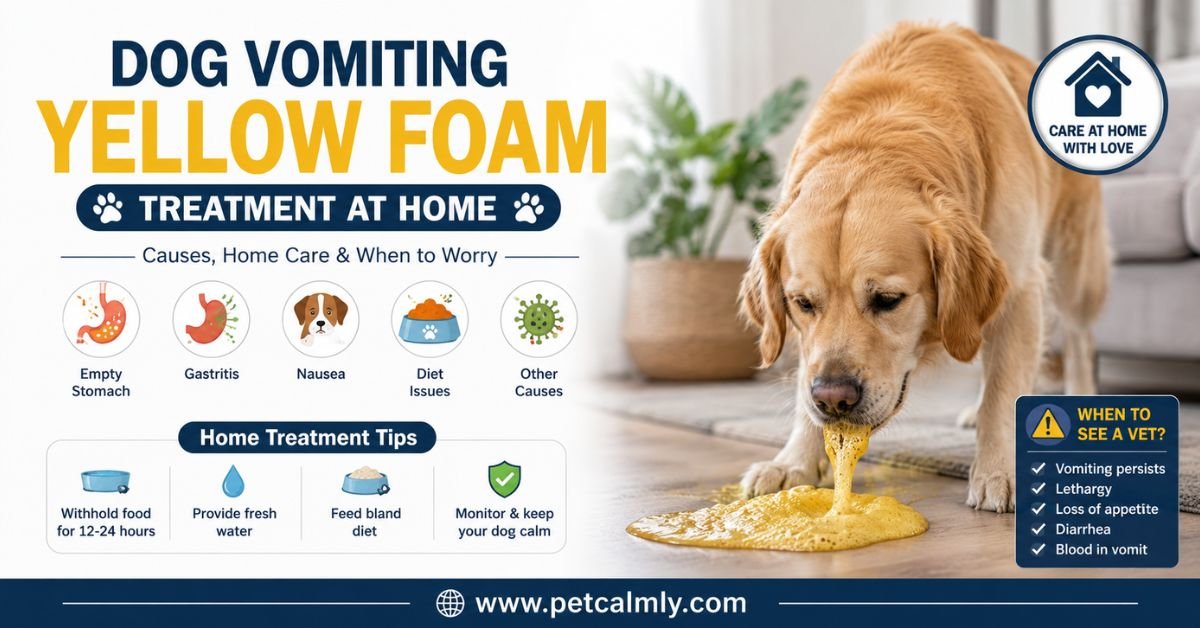
If your dog vomited yellow foam once and is otherwise acting normal, it’s usually bile reflux caused by an empty stomach often from going too many hours between meals. Withhold food (not water) for 8–12 hours, then offer a small, bland meal like boiled chicken and rice. Feeding a small snack before bed or splitting meals into smaller, more frequent portions usually stops it from happening again. If the vomiting repeats, includes blood, or your dog seems lethargic, painful, or won’t eat, call your veterinarian the same day.
That’s the short version. Now let’s walk through why this happens, what you can safely do at home, and just as importantly how to tell when this is more than an empty-stomach problem.
Why Is My Dog Throwing Up Yellow Foam?
The yellow color you’re seeing is bile a digestive fluid made by the liver and stored in the gallbladder. It gets released into the small intestine to help break down fats. When a dog’s stomach sits empty for too long, that bile can back up into the stomach and irritate the lining, which triggers vomiting. Vets sometimes call this bilious vomiting syndrome, and it’s one of the more common and least serious reasons dogs vomit.
It tends to happen most often:
- First thing in the morning, before breakfast
- Late at night, hours after the last meal
- In dogs fed once a day instead of twice
- In dogs who skip a meal because they’re stressed, traveling, or at a boarding facility
Picture a dog who eats dinner at 6 p.m. and breakfast at 8 a.m. the next day. That’s a 14-hour gap plenty of time for the stomach to empty completely and for bile to start pooling where it shouldn’t. The foam texture comes from bile mixing with stomach mucus and air as it’s brought up.
This is different from vomiting caused by something your dog ate, an infection, or a blockage, which we’ll cover further down. The pattern matters more than the color alone.
What Causes Bile Reflux in Dogs Besides an Empty Stomach?
An empty stomach is the most common trigger, but it’s not the only one. Other contributing factors include:
- Irregular feeding schedules meals at inconsistent times confuse the digestive rhythm
- Dietary indiscretion grass, garbage, or scraps that irritate the stomach lining
- Stress or anxiety a nervous stomach can slow digestion and delay emptying
- Age-related changes senior dogs sometimes have slower gastric motility
- Underlying GI motility issues in chronic cases, a vet may look at how efficiently the stomach empties overall
Most of these are manageable at home once you know what’s driving them. A dog who vomits yellow foam every few weeks after a long overnight fast is a very different situation from one doing it daily regardless of feeding times.
Is Yellow Foam Vomit in Dogs Serious?
Usually not but “usually” is doing some work in that sentence, so let’s be specific.
Typically not an emergency when:
- It happens once, or occasionally, and is tied to meal timing
- Your dog is bright, alert, and eating normally afterward
- There’s no blood, no straining, no bloated belly
- Energy levels and bathroom habits are unchanged
Worth a same-day vet call when:
- Vomiting happens repeatedly over 24 hours
- Your dog is lethargic, hiding, or unusually quiet
- There’s blood (looks red, pink, or like coffee grounds)
- Your dog is retching without bringing anything up
- Their abdomen looks swollen or feels tender
- They’ve stopped drinking water or show signs of dehydration (dry gums, sunken eyes, loss of skin elasticity)
- You know or suspect they ate something toxic, a foreign object, or human medication
That distinction occasional and otherwise-normal versus repeated and accompanied by other symptoms — is the single most useful thing to keep in mind. Vomiting itself is a symptom, not a diagnosis, and the surrounding picture tells you far more than the color of the vomit does.
Dog Vomiting Yellow Foam: Home Treatment Steps
If your dog fits the “not an emergency” description above, here’s a safe, practical approach you can start right away.
Step 1: Withhold Food, Not Water
Give the stomach a break by skipping the next meal — typically 8 to 12 hours, not longer. Water should stay available the whole time in small, frequent amounts rather than one large bowl your dog might gulp and immediately bring back up.
Step 2: Reintroduce a Bland Diet
Once the resting period is over, offer a small portion of something gentle:
- Boiled boneless, skinless chicken breast (plain, no seasoning)
- Plain white rice, well cooked
- A small amount of plain canned pumpkin (not pie filling) for extra fiber and stomach comfort
Start with a portion smaller than their normal meal. If it stays down for a few hours, offer another small portion. Gradually work back up to their regular food over 2–3 days rather than switching back all at once.
Step 3: Adjust Feeding Frequency
If bile reflux keeps happening, the schedule itself is usually the fix. Try:
- Splitting daily food into three smaller meals instead of two
- Adding a small snack before bed (a few pieces of kibble or a spoon of pumpkin)
- Feeding at consistent times, even on weekends
Step 4: Monitor for the Next 24 Hours
Keep a mental or written note of:
- How many times they vomited
- Whether they ate and kept food down
- Energy level and mood
- Normal urination and bowel movements
If things trend back to normal within a day, you’ve likely handled it. If not, that’s your signal to escalate.
Feeding Schedule Fixes That Prevent Yellow Foam Vomiting
Since an empty stomach is the leading cause, prevention comes down to closing the overnight gap. A simple comparison:
| Feeding Pattern | Overnight Gap | Bile Reflux Risk |
|---|---|---|
| One meal per day (evening only) | 20+ hours | High |
| Two meals, 12 hours apart | 12 hours | Moderate |
| Two meals + small bedtime snack | 6–8 hours | Low |
| Three smaller meals | Under 8 hours | Low |
For most adult dogs, feeding twice a day with a small snack before bed closes that gap enough to stop the cycle. Puppies and senior dogs often do better with three smaller meals simply because their digestion moves at a different pace.
Common Mistakes Owners Make When Dealing With This
- Withholding food for too long. Extending the fast past 12–24 hours can actually make bile reflux worse, not better, since it recreates the empty-stomach problem you’re trying to solve.
- Switching foods abruptly. A sudden change from bland food back to regular kibence can upset digestion again.
- Giving over-the-counter human medication without guidance. Anti-nausea or antacid medications made for people aren’t automatically safe for dogs, and dosing differs significantly by species and weight.
- Assuming every yellow vomit is the same thing. Owners sometimes treat a repeat, worsening pattern the same way they treated a one-off morning vomit, which delays getting help when it’s actually needed.
- Ignoring the behavior alongside the vomit. A dog who vomits once but is playing normally afterward is telling you something different than a dog who vomits and then goes and lies down somewhere quiet and dark.
Real-World Example: What This Often Looks Like
A common scenario: a dog eats dinner around 6 p.m., then vomits a small amount of yellow foam around 6 or 7 the next morning, before breakfast. The dog then acts completely normal tail wagging, ready to eat, no other symptoms. This is the classic bilious vomiting pattern, and it’s almost always resolved by feeding a small snack before bed or moving breakfast earlier.
Compare that to a dog who vomits yellow foam three times in one afternoon, seems uninterested in food or water, and is unusually still. That pattern points toward something beyond a simple feeding gap possibly gastritis, pancreatitis, an obstruction, or another condition that needs veterinary evaluation rather than home management.
When Should You Worry? Red Flags That Need a Vet Visit
Reach out to your veterinarian promptly if you notice any of the following alongside yellow foam vomiting:
- Vomiting more than 2–3 times within a few hours
- Vomiting that continues into a second day
- Visible blood in the vomit
- A distended, hard, or painful abdomen
- Diarrhea occurring at the same time
- Weakness, collapse, or unusual disorientation
- Known ingestion of something toxic (xylitol, grapes, chocolate, certain plants) or a foreign object
- Dogs that are very young, senior, pregnant, or have existing health conditions — these groups have less reserve to cope with fluid loss
When in doubt, a phone call to your vet or an emergency clinic costs you nothing but a few minutes, and they can tell you whether it’s safe to monitor at home or whether your dog needs to be seen.
What Pet Owners Should Do Long-Term
For dogs with recurring bilious vomiting, a few ongoing habits help keep it from becoming a pattern:
- Standardize meal timing so your dog’s digestive system runs on a predictable rhythm.
- Keep a simple log if vomiting recurs date, time since last meal, and any other symptoms. This is genuinely useful information for a vet visit if one becomes necessary.
- Avoid table scraps and rich treats, which can trigger unrelated stomach upset that looks similar on the surface.
- Schedule a check-up if the pattern continues despite feeding adjustments persistent bile reflux can sometimes point to a motility issue or mild gastritis that benefits from a tailored plan.
- Ask your vet about your specific dog before starting any supplement or medication, since breed, age, and health history all affect what’s appropriate.
Conclusion
Yellow foam vomit in dogs is unsettling to see, but in most cases it’s simply your dog’s stomach telling you it went too long without food. Adjusting meal timing, offering a bland diet during recovery, and watching for the surrounding symptoms will handle the vast majority of cases at home. What matters most is paying attention to the pattern how often it happens, and how your dog is acting in between rather than fixating on the color alone. When the pattern shifts toward frequent, worsening, or symptom-heavy vomiting, that’s your cue to loop in a veterinarian rather than continue managing it solo.
More Information About Pets, Please Visit Our Website: Dog Yeast Infection Treatment
How to Treat Dog Ear Infection Without Vet
Reverse Sneezing in Dogs
Frequently Asked Questions
1. Why does my dog only vomit yellow foam in the morning?
This is the classic sign of an empty stomach overnight. Bile builds up with nothing to digest, irritates the stomach lining, and comes back up before breakfast. A small bedtime snack usually resolves it.
2. Is yellow foam vomit different from white foam vomit in dogs?
Yes. Yellow foam typically indicates bile from the small intestine, while white foam is often just saliva and swallowed air, sometimes linked to nausea, motion sickness, or mild indigestion. Both are usually mild, but persistent vomiting of either color deserves attention.
3. Can I give my dog Pepcid or Pepto-Bismol for yellow foam vomiting?
Some human medications are used in dogs under veterinary guidance, but dosing and safety vary by product and by dog. Don’t administer any human medication without first checking with your vet, since some common over-the-counter ingredients are unsafe for dogs.
4. How long can a dog go without eating before it’s a problem?
Healthy adult dogs can typically skip a single meal without harm, but going 24 hours or more without eating especially alongside vomiting or lethargy warrants a vet call, particularly for puppies, seniors, or small-breed dogs.
5. What should I feed my dog after vomiting yellow foam?
A bland, low-fat option like boiled chicken and plain rice in small portions is the standard first step. Gradually reintroduce their regular diet over a couple of days once vomiting has stopped.
6. When does yellow foam vomiting mean something serious, like pancreatitis?
If vomiting is frequent, paired with abdominal pain, lethargy, loss of appetite, or diarrhea, it could point to pancreatitis or another underlying condition rather than simple bile reflux. This combination of symptoms is a reason to see a vet rather than manage it at home.