Short direct answer
Dog constipation means your dog is struggling to pass stool, going less often than usual, or straining without much result. Mild cases are often caused by low fiber, dehydration, low activity, or your dog swallowing something indigestible like grass, fur, or a bone. You can usually help at home by adding water or plain canned pumpkin to meals, encouraging gentle exercise, and giving your dog time in a calm, unhurried spot to go. If your dog hasn’t pooped in more than 48 hours, is straining without producing anything, vomiting, or seems painful or lethargic, call your veterinarian the same day. Constipation that goes untreated can progress to a more serious blockage or a condition called megacolon.
That’s the short version. If you want to actually understand what’s happening inside your dog’s gut, why it’s happening, and how to stop it from becoming a repeat problem, keep reading. This is the kind of guide I wish more dog owners had before their first middle-of-the-night “why isn’t my dog pooping” panic.
Why This Happens More Often Than You’d Think
Most people don’t think much about their dog’s bathroom habits until something goes wrong. Then suddenly you’re standing in the backyard at 11 p.m., watching your dog circle the same patch of grass for the fifth time, and wondering if this is normal or something to worry about.
Here’s the reassuring part: constipation is one of the more common digestive complaints in dogs, and most cases are mild and resolve with a few simple changes at home. The tricky part is telling the difference between “my dog just needs more fiber” and “this could be an obstruction that needs a vet today.” That distinction is really what this guide is built around.
What Counts as Constipation in Dogs?
Constipation is a difficulty passing feces or having infrequent bowel movements, and it happens for reasons ranging from a simple lack of dietary fiber to more serious problems like an intestinal blockage.
In plain terms: your dog’s colon is supposed to move waste out on a fairly predictable schedule. Most healthy dogs poop somewhere between one and three times a day, generally tied to how often they eat. When that rhythm breaks down the stool sits too long, dries out, and gets hard to pass that’s constipation.
It’s worth noting that occasional irregularity isn’t automatically a red flag. A dog who skips a day after a stressful car ride or a diet change probably doesn’t have a medical problem. What matters is the pattern, and whether other symptoms show up alongside it.
Common Signs Your Dog May Be Constipated
You don’t need to be a vet tech to spot the early signs. Most owners notice a change in behavior around bathroom time before anything else.
Watch for:
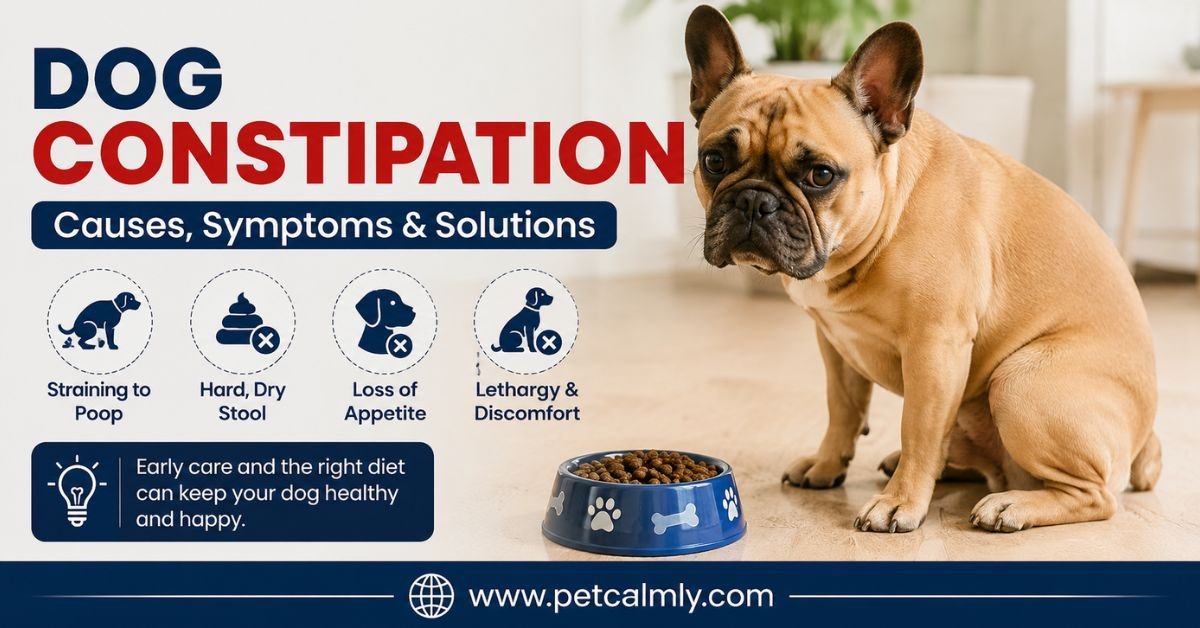
- Straining or squatting for a long time with little or no stool coming out
- Small, hard, dry stools that look nothing like your dog’s usual poop
- Going more than 24–48 hours without a bowel movement
- Whining, pacing, or tensing up while trying to go
- Scooting across the floor or grass
- A firm, tender, or slightly bloated abdomen
- Low energy or reduced appetite, especially if constipation has lasted more than a day
Some dogs will also lick or bite at their rear end because the area feels irritated or uncomfortable. It’s easy to mistake this for an anal gland issue, and sometimes it is one the two problems can overlap, since a dog straining to defecate can also irritate the anal glands in the process.
What Causes Dog Constipation? (The Real Reasons, Not Just a List)
Understanding why constipation happens makes it much easier to prevent it from coming back. Here are the causes that show up again and again.
Not Enough Fiber or Water
Fiber adds bulk to stool and helps it move through the intestines efficiently. Without enough of it, stool can become dense and slow-moving. Water plays an equally important role the colon’s main job is to absorb water from waste, so a dehydrated dog often ends up with drier, harder stool that’s genuinely painful to pass.
Eating Something They Shouldn’t Have
This is one of the most common triggers. The most frequent cause of constipation is eating irritating or indigestible substances, such as plant matter or bones. Sticks, bones, fabric, grass, and even large amounts of dirt can sit in the digestive tract and slow everything down. If your dog is a known scavenger on walks, this is often the first suspect.
Low Activity Levels
Movement stimulates the intestines. Dogs who are recovering from surgery, dealing with an injury, aging, or simply living a fairly sedentary lifestyle often move waste through their system more slowly than active dogs.
Excessive Grooming or Long Hair
Dogs with long hair, or those that lick or groom themselves excessively, are also at higher risk of constipation, because swallowed fur can accumulate in the digestive tract in much the same way hairballs affect cats.
Stress, Travel, or a Change in Routine
Some dogs genuinely “hold it” when they’re anxious about a new environment a boarding kennel, a road trip, or even a rearranged living room. The longer stool sits, the more water gets absorbed out of it, which makes it harder and harder to pass the longer the dog delays.
Medications and Supplements
Certain medications, including some pain relievers, antihistamines, and iron supplements, are known to slow gut motility as a side effect. If constipation started shortly after a new prescription, mention this timing to your vet.
Underlying Medical Conditions
Less commonly, constipation is a symptom of something bigger an enlarged prostate in unneutered male dogs, a pelvic injury that narrows the space stool needs to pass through, a tumor, a hernia, or a neurological issue affecting the nerves that control the colon. This is why constipation that keeps coming back deserves a proper veterinary workup rather than repeated home remedies.
Dog Constipation vs. Straining From a Blockage: Know the Difference
This is the part owners most often get wrong, and it matters because the two situations call for very different responses.
Constipation usually means stool is present but difficult to pass — think dry, hard, pebble-like pieces that eventually come out, even if it takes effort.
A blockage (intestinal obstruction) is more serious. Your dog may strain repeatedly and produce nothing at all, may vomit, may seem distressed, and may have a hard, painful belly. This can happen after swallowing a toy, a sock, a bone fragment, or a large amount of something indigestible.
There’s one distinction that matters more than almost anything else in this guide: if your dog is straining and nothing is coming out, and you’re not sure whether it’s stool or urine, treat it as an emergency. A blocked urinary tract can look similar to constipation at first glance but is life-threatening within hours. When you’re not certain which one you’re dealing with, let a veterinarian make that call rather than waiting to see what happens.
How to Help a Constipated Dog at Home (Safe First Steps)
If your dog is otherwise acting normal — eating, drinking, alert, no vomiting — and this seems like a mild, early case, these steps are commonly recommended as safe first responses.
- Add water to meals. Simply mixing warm water or low-sodium broth into dry food increases moisture intake without any risk.
- Offer a spoonful of plain canned pumpkin. Pumpkin is high in fiber and moisture, and most dogs enjoy the taste. Make sure it’s 100% pumpkin, not pumpkin pie filling, which often contains sugar and spices.
- Encourage a short walk. Gentle movement stimulates intestinal activity in a way that resting on the couch doesn’t.
- Check hydration. Make sure fresh water is always available, and consider a second water bowl if your dog seems to be drinking less than usual.
- Give them privacy and time. Some dogs won’t go if they feel rushed, watched, or uneasy about their surroundings, especially in a new location.
- Avoid giving human laxatives or stool softeners unless a veterinarian has specifically told you the product and dose to use. Many over-the-counter human products are not dosed safely for dogs.
If you try these steps and your dog still hasn’t produced a normal stool within 24 hours, or if any warning signs below appear, it’s time to call your vet rather than continue troubleshooting at home.
Foods and Diet Changes That Support Regular Bowel Movements
Diet is where most long-term prevention happens. A few practical, low-risk adjustments:
- Increase fiber gradually — sudden fiber increases can cause gas or loose stool, so introduce changes over several days
- Canned pumpkin or cooked, plain sweet potato in small amounts, added to regular meals
- Wet food or moisture-added kibble for dogs who don’t drink much water on their own
- Probiotic supplements formulated for dogs, which may support a healthier gut microbiome (ask your vet for a brand recommendation)
- Consistent, unhurried mealtimes, since irregular feeding schedules can throw off bathroom regularity too
Avoid making several diet changes at once it makes it much harder to identify what actually helped, and abrupt diet swings are themselves a common cause of digestive upset.
Mistakes Owners Commonly Make
A few patterns show up again and again in constipation cases that could have been caught earlier:
- Waiting too long to intervene, assuming it will “resolve on its own” past the 48-hour mark
- Giving human medications like mineral oil or laxatives without veterinary guidance
- Assuming it’s “just constipation” when a dog is also vomiting or clearly in pain — these combined symptoms deserve same-day veterinary attention
- Not mentioning recent chew toys, bones, or scavenging to the vet, which can be the single most useful clue for diagnosis
- Overcorrecting with too much fiber too fast, which can cause new digestive upset
When Should You Worry? Signs That Need a Vet Visit
Most constipation is manageable, but some situations move past “watch and wait” territory. Veterinary sources are consistent on this point: contact your vet if your dog hasn’t had a bowel movement in more than 48 hours, or sooner if any of the following appear.
Call your veterinarian the same day if your dog shows:
- No bowel movement for 48 hours or more
- Repeated straining with nothing coming out
- Vomiting alongside constipation
- Visible pain, whining, or a hunched posture
- A swollen, tight, or tender abdomen
- Lethargy or noticeable loss of appetite
- Blood in the stool or straining that produces only mucus
- Straining that could be urinary rather than digestive (this is an emergency don’t wait)
If your dog has a history of pelvic injury, prostate problems, or a prior episode of megacolon, treat repeated constipation as something to bring up promptly rather than managing it at home again.
What Should Pet Owners Do? A Simple Action Plan
When you’re in the moment and not sure what step to take next, this order of operations helps:
- Assess the timeline. How long has it actually been since a normal bowel movement?
- Check for other symptoms. Vomiting, pain, or lethargy changes the urgency immediately.
- Rule out access to problem items. Did your dog get into the trash, chew a bone, or eat something on a walk recently?
- Try safe home support water, pumpkin, gentle activity only if your dog seems otherwise well and it’s been under 24–48 hours.
- Call your vet if there’s no improvement, if symptoms worsen, or if you’re simply unsure. It’s always reasonable to call and describe what you’re seeing, even if you’re not certain it’s an emergency.
Veterinary offices field these calls regularly, and describing the timeline and symptoms over the phone is often enough for a vet tech to help you decide whether it’s a same-day visit or something to monitor overnight.
What Happens at the Vet: A Quick Overview
If you do end up at the clinic, it helps to know what to expect so it feels less overwhelming.
Your vet will typically start with a physical exam, sometimes followed by blood tests and urinalysis to check for dehydration, infection, or other underlying conditions. In more involved cases, an abdominal ultrasound or X-ray may be used to identify the cause, and if a mass or narrowing is suspected, a biopsy might be recommended.
Treatment depends on severity, and may include an enema, manual removal of impacted stool, or prescription laxatives. In rare, more advanced cases, a dog may need hospitalization for fluid therapy or repeated treatment. Most dogs improve quickly once the impacted stool is addressed and the underlying cause is treated.
A Word on Megacolon (Why Chronic Constipation Isn’t Something to Ignore)
Megacolon is a less common but serious condition where the colon becomes so stretched and weakened that it loses the ability to push stool out effectively. It can develop as a long-term consequence of repeated, untreated constipation, or it can occur as a primary condition on its own. This is really the core reason vets encourage owners not to let recurring constipation slide an occasional mild episode is normal, but a pattern of repeated episodes is worth investigating before the colon itself is affected.
Prevention: Keeping Your Dog Regular Long-Term
Once an episode resolves, the goal shifts to preventing a repeat. A few habits make the biggest difference over time:
- Keep fresh water available at all times, and monitor intake if your dog is an older or less active drinker
- Feed a consistent, appropriately balanced diet with adequate fiber
- Maintain regular daily exercise, even if it’s just consistent short walks
- Groom long-haired dogs regularly to reduce swallowed fur
- Supervise chewing on bones, sticks, and toys that could be swallowed
- Schedule routine veterinary checkups, especially for senior dogs or those with a history of digestive issues
Prevention isn’t about being rigid it’s about giving your dog’s digestive system the consistency it needs to work smoothly.
Frequently Asked Questions
1: How long can a dog go without pooping before it’s an emergency?
Most healthy dogs poop at least once a day. If it’s been more than 48 hours with no bowel movement, or your dog is straining and showing signs of pain, it’s time to call your vet rather than wait it out.
2: Can I give my dog milk for constipation?
Some owners use small amounts of milk as a mild home remedy, since it can have a laxative effect for some dogs. However, many dogs are lactose intolerant, and milk can cause diarrhea or stomach upset instead of solving the problem. Plain canned pumpkin or added water is generally a safer first choice.
3: Is canned pumpkin actually good for dog constipation?
Yes, plain canned pumpkin (not pie filling) is a commonly recommended source of fiber and moisture that can help soften stool. A spoonful mixed into a meal is a reasonable first step for mild, short-term constipation in an otherwise healthy dog.
4: What does constipated dog poop look like?
Typically small, dry, hard, and pellet-like, sometimes passed in small amounts despite visible straining. This looks noticeably different from your dog’s normal, well-formed stool.
5: Can stress cause a dog to become constipated?
Yes. Dogs experiencing anxiety, a change in environment, or a disrupted routine sometimes delay going to the bathroom, and the longer stool sits in the colon, the more water is absorbed from it, making it harder to pass later.
6: Should I be worried if my dog is straining but nothing is coming out?
This deserves prompt attention. Repeated straining with no result can indicate either significant constipation or, in some cases, a urinary blockage, which is a true emergency. If you can’t tell which one it is, contact your vet the same day rather than waiting.
More Information About Pets, Please Visit Our Website: Dog Vomiting Yellow Foam Treatment at Home
Dog Yeast Infection Treatment
How to Treat Dog Ear Infection Without Vet
Conclusion
Constipation is uncomfortable for your dog, but in most cases it’s manageable once you understand what’s driving it. The goal isn’t to panic over every skipped bathroom trip it’s to know the difference between a minor, fixable hiccup and a pattern that needs professional attention. Trust the timeline, watch for the warning signs, and when in doubt, a quick call to your vet is always the safer move than guessing.