Short direct answer
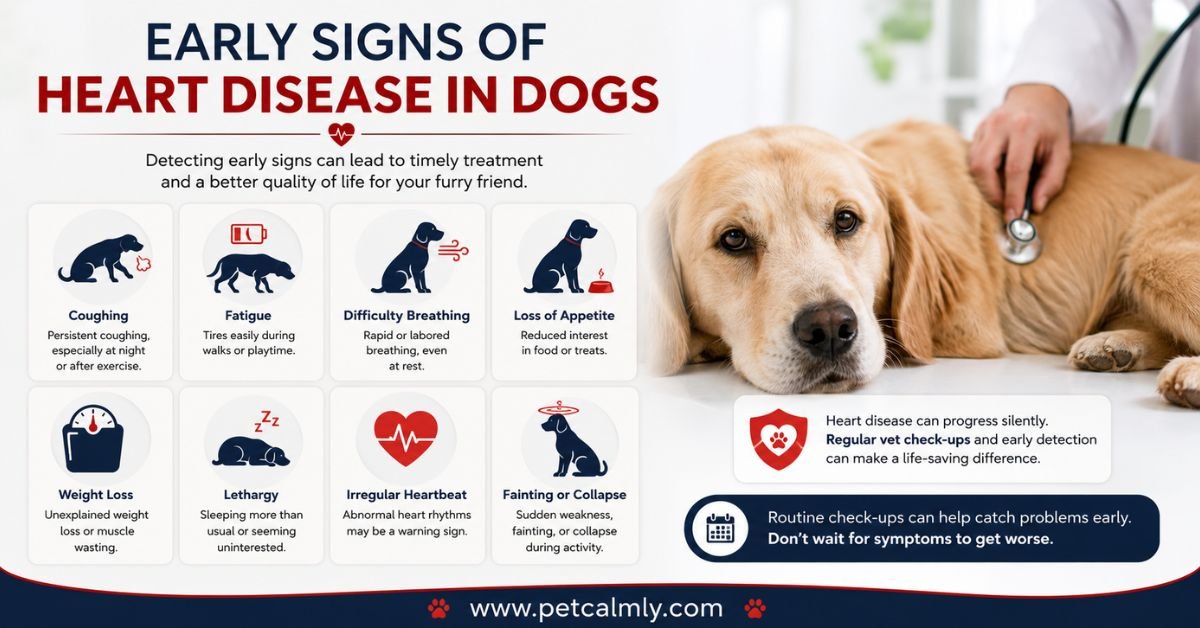
The early signs of heart disease in dogs are often subtle and easy to mistake for normal aging. A persistent cough, tiring more quickly during walks, heavier breathing after mild activity, reduced interest in exercise, restlessness at night, and fainting episodes can all be early warning signs. Some dogs may also lose weight, develop a swollen belly, or show changes in behavior before obvious symptoms appear. If you notice any of these changes lasting more than a few days, schedule a veterinary examination. Detecting heart disease early can improve treatment options and help many dogs enjoy a better quality of life for years.
Introduction
Many dog owners expect heart disease to appear suddenly, but in reality, it usually develops gradually. The earliest warning signs are often so mild that they’re dismissed as getting older, slowing down, or simply having an “off day.”
Perhaps your normally energetic Labrador now wants to head home halfway through a walk. Maybe your small senior dog has started coughing after getting excited, or your once-playful companion spends more time resting than chasing a favorite toy. These changes can seem harmless at first, but they may signal that the heart is working harder than it should.
Heart disease affects dogs of all breeds and ages, although older dogs and certain breeds face a higher risk. The encouraging news is that many heart conditions can be managed successfully when identified early. Modern veterinary medicine offers medications, lifestyle recommendations, and monitoring strategies that help many dogs continue enjoying happy, active lives.
In this guide, you’ll learn how to recognize the earliest symptoms, understand why they happen, identify which dogs are more likely to develop heart disease, and know when veterinary care becomes urgent. You’ll also discover practical ways to support your dog’s heart health at home while avoiding common mistakes that can delay diagnosis.
What Is Heart Disease in Dogs?
Heart disease is a broad term describing conditions that affect how a dog’s heart functions. The heart is responsible for pumping oxygen-rich blood throughout the body. When it cannot pump efficiently, every organ receives less oxygen and fewer nutrients.
Some heart problems develop because heart valves wear out with age. Others involve the heart muscle itself, abnormal electrical rhythms, or birth defects that have been present since puppyhood.
Many heart diseases progress slowly over months or even years. During the early stages, the body often compensates well, making symptoms difficult to notice. This is one reason routine veterinary checkups become increasingly important as dogs grow older.
Without treatment, the heart gradually becomes less efficient. Eventually, fluid may build up in the lungs or abdomen, making breathing difficult and significantly affecting quality of life.
The goal isn’t simply to diagnose heart disease it is to detect it before it reaches this advanced stage.
Early Signs of Heart Disease in Dogs
Recognizing the early signs of heart disease in dogs gives your veterinarian the best opportunity to slow disease progression and improve long-term outcomes.
Many symptoms appear gradually rather than all at once. A dog may seem completely normal one week and only slightly different the next.
Let’s look at the most common early warning signs.
Persistent or Frequent Coughing
One of the earliest and most overlooked symptoms is a cough that doesn’t seem to go away.
Dogs with developing heart disease often cough:
- After exercise
- During excitement
- At night
- Early in the morning
- After lying down for long periods
The cough happens because an enlarged heart may place pressure on nearby airways, or fluid may begin accumulating in the lungs.
Owners sometimes mistake this for:
- Kennel cough
- Allergies
- Dust irritation
- Aging
- A hairball (especially in small breeds)
A cough lasting more than a week always deserves veterinary attention, particularly in middle-aged or senior dogs.
Becoming Tired More Easily
Dogs naturally slow down as they age, but there is a difference between normal aging and abnormal fatigue.
You may notice your dog:
- Stops during walks
- Sleeps longer than usual
- Doesn’t greet visitors enthusiastically
- Gives up playing sooner
- Avoids stairs
- Doesn’t want to chase toys anymore
Because the heart isn’t pumping blood efficiently, muscles receive less oxygen. As a result, everyday activities become more exhausting.
Many owners only realize how much their dog has slowed down after comparing videos taken months apart.
Faster or Heavier Breathing
Healthy dogs recover fairly quickly after exercise.
Dogs with early heart disease may:
- Pant longer after activity
- Breathe faster while resting
- Seem short of breath after climbing stairs
- Struggle to catch their breath after excitement
A dog sleeping peacefully should breathe quietly and comfortably.
If you consistently notice rapid breathing while your dog is resting, it’s worth contacting your veterinarian.
Reduced Interest in Exercise
Some dogs gradually lose interest in activities they once loved.
Examples include:
- Refusing longer walks
- Walking behind instead of ahead
- Quitting games early
- Hesitating before jumping into the car
- Choosing to stay indoors
Owners sometimes assume their dog has become lazy.
Instead, your dog may simply be avoiding activities that make breathing difficult.
Restlessness During the Night
Dogs with early heart problems sometimes struggle to sleep comfortably.
You may notice them:
- Frequently changing positions
- Waking repeatedly
- Pacing
- Sitting upright instead of lying flat
- Asking to go outside more often
Difficulty breathing while lying down can make restful sleep challenging.
Nighttime restlessness often appears alongside coughing.
Mild Fainting or Collapse
Although less common during early disease, brief fainting episodes should never be ignored.
A dog may:
- Suddenly wobble
- Fall over briefly
- Lose consciousness for a few seconds
- Recover quickly afterward
Reduced blood flow to the brain can cause temporary collapse.
Even if your dog seems completely normal afterward, immediate veterinary evaluation is recommended.
Reduced Appetite
Some dogs begin eating less.
Others:
- Leave food unfinished
- Become picky
- Skip breakfast
- Lose interest in treats
Poor circulation and reduced energy can affect appetite before more obvious symptoms develop.
Weight Loss
Unexpected weight loss can occur because the body uses more energy simply trying to maintain normal circulation.
Dogs with advancing heart disease may gradually lose muscle along their back and hips.
If your dog is losing weight without a diet change, don’t assume it’s simply old age.
Changes in Behavior
Dogs often communicate discomfort through behavior rather than obvious pain.
You might notice your dog becoming:
- Less playful
- More withdrawn
- Less social
- Easily irritated
- Unusually clingy
- Less confident outdoors
These personality changes may develop slowly and accompany physical symptoms.
Pale or Bluish Gums
Healthy gums should appear pink and moist.
Poor circulation may cause gums to look:
- Pale
- Gray
- Bluish
This is considered a serious sign and should be evaluated promptly.
Swollen Belly
Fluid accumulation inside the abdomen usually occurs in more advanced heart disease but can occasionally develop earlier depending on the underlying condition.
The abdomen may appear:
- Rounder than normal
- Firm
- Enlarged without weight gain
Some owners mistakenly believe their dog has simply gained weight.
Exercise Recovery Takes Longer
Pay attention to how quickly your dog returns to normal after activity.
A healthy dog generally recovers within minutes.
Dogs with early heart disease may:
- Continue panting
- Need extended rest
- Refuse additional activity
- Lie down immediately after exercise
Recovery time often becomes longer before owners notice obvious illness.
Quick Checklist: Early Signs of Heart Disease in Dogs
If your dog shows two or more of these symptoms consistently, it’s time to schedule a veterinary appointment.
✔ Persistent cough
✔ Tires easily
✔ Heavy breathing
✔ Faster breathing at rest
✔ Less interest in walks
✔ Nighttime coughing
✔ Restlessness while sleeping
✔ Reduced appetite
✔ Unexplained weight loss
✔ Fainting episodes
✔ Pale gums
✔ Swollen abdomen
Remember, many of these symptoms can also be caused by lung disease, infections, obesity, or other medical conditions. Only a veterinarian can determine the underlying cause.
Which Dogs Are Most at Risk?
Although early signs of heart disease in dogs can appear in any breed, some dogs have a much higher chance of developing heart problems due to genetics, age, or underlying health conditions.
Knowing whether your dog belongs to a higher-risk group helps you recognize subtle changes sooner and discuss preventive screening with your veterinarian.
Senior Dogs
Age is one of the strongest risk factors for heart disease.
As dogs grow older, the heart valves and heart muscle naturally experience wear and tear. While not every senior dog develops heart disease, the likelihood increases significantly with age.
Many dogs begin showing early changes after the age of seven, though large and giant breeds may experience age-related heart issues slightly earlier than smaller dogs.
Because symptoms often develop slowly, annual wellness exams may no longer be enough for older pets. Many veterinarians recommend twice-yearly checkups for senior dogs, allowing subtle heart changes to be detected before they become serious.
Small Dog Breeds
Small breeds are especially prone to degenerative mitral valve disease, the most common acquired heart disease in dogs.
Breeds that commonly develop valve disease include:
- Cavalier King Charles Spaniels
- Miniature Poodles
- Chihuahuas
- Dachshunds
- Yorkshire Terriers
- Maltese
- Shih Tzus
These dogs may develop a heart murmur years before showing noticeable symptoms. Early monitoring can help determine when treatment is needed.
Large and Giant Breeds
While small breeds often experience valve disease, larger dogs are more likely to develop conditions affecting the heart muscle itself, such as dilated cardiomyopathy (DCM).
Breeds with a higher risk include:
- Doberman Pinschers
- Great Danes
- Boxers
- Irish Wolfhounds
- Newfoundlands
- Saint Bernards
Because DCM can progress quietly, some dogs appear healthy until symptoms become more obvious. Regular veterinary checkups are especially important for these breeds.
What Causes Heart Disease in Dogs?
Heart disease isn’t a single condition. Instead, it’s a group of disorders that affect how well the heart pumps blood. Understanding the cause can help you make sense of your veterinarian’s diagnosis and the treatment plan they recommend.
Some causes are linked to aging, while others are inherited or develop because of an underlying health problem.
Degenerative Valve Disease
The most common cause of heart disease in adult and senior dogs is degenerative mitral valve disease (DMVD).
Inside the heart are valves that keep blood moving in the correct direction. Over time, the mitral valve can become thickened and worn, allowing blood to leak backward instead of flowing efficiently.
At first, the heart compensates by working harder. Eventually, the extra workload may enlarge the heart and lead to fluid buildup in the lungs if left untreated.
This condition is especially common in small and toy breeds and often develops gradually over several years.
Common Signs of Degenerative Valve Disease
- Soft heart murmur detected during a routine exam
- Mild coughing
- Reduced stamina
- Faster breathing after exercise
- Fatigue during walks
Dilated Cardiomyopathy (DCM)
Dilated cardiomyopathy affects the heart muscle rather than the valves.
The heart chambers become enlarged and the muscle weakens, making it difficult to pump blood effectively. Some dogs show very few symptoms until the disease has progressed, which is why routine checkups are especially important for breeds at higher risk.
Dogs More Commonly Affected
- Doberman Pinschers
- Great Danes
- Boxers
- Irish Wolfhounds
- Newfoundlands
Some cases may also be associated with nutritional deficiencies or diets that are not nutritionally balanced. If your veterinarian suspects a diet-related issue, they may recommend changing your dog’s food along with medical treatment.
Congenital Heart Defects
Some puppies are born with structural abnormalities of the heart.
These are known as congenital heart diseases, meaning they are present from birth. Depending on the defect, symptoms may appear during puppyhood or not become obvious until later in life.
Examples include:
- Narrowed blood vessels
- Abnormal heart valves
- Holes between heart chambers
- Defects affecting blood flow
Responsible breeders often screen breeding dogs for inherited heart conditions, but congenital defects can still occur.
Heartworm Disease
In regions where mosquitoes are common, heartworm disease can seriously damage the heart and lungs.
Heartworms grow inside blood vessels connected to the heart, interfering with circulation and placing tremendous strain on the cardiovascular system.
Fortunately, this cause of heart disease is largely preventable with year-round parasite prevention prescribed by your veterinarian.
High Blood Pressure
Persistent high blood pressure forces the heart to work harder than normal.
Although less common than valve disease, hypertension may occur alongside kidney disease, hormonal disorders, or other chronic illnesses.
Treating the underlying condition often helps reduce additional stress on the heart.
Obesity
Extra body weight doesn’t directly cause every type of heart disease, but it increases the heart’s workload.
Overweight dogs often experience:
- Reduced exercise tolerance
- Faster breathing
- Joint pain that limits activity
- Increased risk of other chronic diseases
Maintaining a healthy body condition supports overall heart health and makes it easier to notice changes in stamina.
Chronic Lung Disease
Heart and lung diseases often produce similar symptoms.
Long-term respiratory problems can increase pressure within blood vessels of the lungs, forcing the right side of the heart to work harder.
Because coughing and breathing changes overlap, veterinary testing is important before assuming the heart is the cause.
Types of Heart Disease in Dogs
Different heart diseases affect different parts of the heart. Knowing the type helps explain why symptoms and treatments vary from one dog to another.
| Type | What Happens | Dogs Most Often Affected |
|---|---|---|
| Degenerative Mitral Valve Disease | Heart valve leaks blood backward | Small and senior breeds |
| Dilated Cardiomyopathy (DCM) | Heart muscle weakens and enlarges | Large and giant breeds |
| Congenital Heart Disease | Structural abnormality present at birth | Puppies and young dogs |
| Heartworm Disease | Parasites damage the heart and lungs | Dogs without preventive medication |
| Cardiac Arrhythmias | Abnormal heart rhythm affects circulation | Various breeds and ages |
Why Early Symptoms Are Often Missed
One reason heart disease is frequently diagnosed later than owners expect is that dogs naturally adapt to gradual physical changes.
Unlike people, dogs rarely complain or visibly show discomfort until they can no longer compensate.
Dogs Hide Weakness
Many dogs continue eating, wagging their tails, and following family routines despite developing heart disease.
Instead of dramatic symptoms, owners may notice only small changes, such as:
- Sleeping a little more
- Walking more slowly
- Preferring shorter play sessions
- Taking longer to recover after activity
These subtle differences often develop over several months.
Symptoms Look Like Normal Aging
It’s easy to assume an older dog is simply slowing down.
However, while aging may reduce energy slightly, it should not cause:
- Persistent coughing
- Labored breathing
- Fainting
- Collapse
- Rapid breathing during rest
These signs deserve veterinary attention regardless of your dog’s age.
Many Signs Mimic Other Illnesses
Heart disease can resemble several other conditions.
For example:
| Symptom | Could Also Be Caused By |
|---|---|
| Coughing | Kennel cough, allergies, collapsing trachea |
| Fatigue | Arthritis, obesity, anemia |
| Panting | Heat, anxiety, pain |
| Weight loss | Kidney disease, cancer, diabetes |
| Reduced activity | Joint disease or muscle pain |
This overlap explains why diagnostic testing is so important.
How Veterinarians Diagnose Heart Disease in Dogs
If your veterinarian suspects heart disease, they’ll combine your dog’s medical history, physical examination, and diagnostic tests to determine what’s happening.
The goal isn’t just to confirm heart disease it is to identify the specific condition and its stage.
Physical Examination
Your veterinarian will check:
- Heart rate
- Heart rhythm
- Heart murmurs
- Lung sounds
- Gum color
- Pulse quality
- Body condition
- Breathing pattern
A heart murmur is often the first clue that further testing is needed, although not every murmur means severe heart disease.
Chest X-Rays
Chest radiographs allow veterinarians to evaluate:
- Heart size
- Shape of the heart
- Fluid in the lungs
- Changes affecting the airways
- Lung disease
These images help distinguish heart disease from respiratory disorders that cause similar symptoms.
Echocardiogram (Heart Ultrasound)
An echocardiogram is one of the most valuable tools for diagnosing heart disease.
This painless ultrasound shows:
- Heart valves
- Heart muscle movement
- Blood flow
- Chamber size
- Pumping strength
It helps determine exactly which type of heart disease is present.
Electrocardiogram (ECG)
An ECG records the heart’s electrical activity.
This test is particularly useful for dogs experiencing:
- Irregular heartbeat
- Collapse
- Fainting
- Weakness
- Suspected arrhythmias
Blood Pressure Measurement
High blood pressure can worsen heart disease and may indicate another underlying health problem.
Monitoring blood pressure also helps guide treatment decisions.
Blood Tests
Blood work helps evaluate your dog’s overall health before starting medication.
Your veterinarian may also check for:
- Kidney function
- Liver function
- Electrolyte balance
- Thyroid disease
- Evidence of infection
Some clinics may recommend specialized cardiac blood tests that help assess stress on the heart.
Treatment Options for Heart Disease in Dogs
Treatment depends on the type of heart disease, its severity, and whether your dog is already showing symptoms.
There is no single treatment plan that fits every dog.
Medications
Many dogs benefit from medications that help the heart work more efficiently.
Depending on the diagnosis, your veterinarian may prescribe medicines that:
- Improve heart pumping ability
- Reduce fluid buildup
- Lower blood pressure
- Relax blood vessels
- Control abnormal heart rhythms
Never adjust medication doses or stop treatment without veterinary advice, even if your dog appears to feel better.
Lifestyle Adjustments
Simple changes at home can make a meaningful difference.
These may include:
- Maintaining a healthy weight
- Avoiding strenuous exercise
- Providing frequent rest breaks
- Reducing stress during hot weather
- Feeding a balanced diet
- Keeping fresh water available
Dogs with mild heart disease often continue enjoying walks and play, but activity may need to be adjusted to match their energy level.
Nutritional Support
Nutrition plays an important role in supporting dogs with heart disease.
Your veterinarian may recommend:
- Appropriate calorie intake
- High-quality protein
- Controlled sodium levels (when medically indicated)
- Omega-3 fatty acids
- Maintaining lean muscle mass
Avoid making major dietary changes without professional guidance, especially if your dog has kidney disease or other medical conditions.
Regular Monitoring
Heart disease usually requires ongoing follow-up rather than one-time treatment.
Monitoring may include:
- Repeat chest X-rays
- Echocardiograms
- Blood pressure checks
- Blood tests
- Resting respiratory rate at home
Keeping a simple journal of your dog’s symptoms can help your veterinarian recognize changes between appointments.
Daily Care Tips for Dogs with Heart Disease
Living with heart disease doesn’t mean your dog can’t enjoy life.
Many dogs continue to be happy companions for years with consistent care.
Keep Exercise Gentle
Instead of long, exhausting walks, aim for:
- Shorter outings
- Frequent breaks
- Comfortable walking pace
- Avoiding intense games during hot weather
Watch your dog rather than the clock. If they slow down or begin panting heavily, it’s time to rest.
Maintain a Healthy Weight
Extra pounds force the heart to work harder.
Ask your veterinarian to assess your dog’s body condition and recommend an appropriate target weight if needed.
Count Resting Breaths
One of the simplest home-monitoring tools is measuring your dog’s resting respiratory rate while asleep.
If you notice a consistent increase over several days, contact your veterinarian. It may be an early sign that heart disease is progressing.
Minimize Stress
Excitement and stress temporarily increase heart workload.
Helpful strategies include:
- Predictable daily routines
- Comfortable sleeping areas
- Avoiding overheating
- Calm introductions to visitors
- Gentle grooming sessions
Never Skip Follow-Up Visits
Dogs often appear stable even when heart disease is slowly progressing.
Regular veterinary rechecks allow treatment to be adjusted before symptoms become severe.
When Should You Worry About the Early Signs of Heart Disease in Dogs?
Not every cough or tired day means your dog has heart disease. However, some symptoms should never be ignored because they may indicate that your dog’s heart is struggling to pump blood effectively.
The sooner your veterinarian identifies the cause, the better the chances of slowing disease progression and keeping your dog comfortable.
Schedule a Veterinary Appointment Within a Day or Two If Your Dog Has:
- A cough lasting more than a week
- Reduced energy that doesn’t improve with rest
- Heavy panting after mild activity
- Difficulty keeping up on walks
- Loss of appetite lasting more than 24 hours
- Mild, unexplained weight loss
- Restlessness or coughing at night
- A newly detected heart murmur (if your veterinarian recommends further testing)
These symptoms are not always caused by heart disease, but they do warrant a professional examination.
Seek Emergency Veterinary Care Immediately If Your Dog Has:
Some signs suggest a medical emergency and should not wait for a routine appointment.
Contact the nearest emergency veterinary clinic immediately if your dog:
- Struggles to breathe, even while resting
- Collapses or faints repeatedly
- Has blue, gray, or very pale gums
- Cannot stand because of weakness
- Has severe abdominal swelling that develops suddenly
- Appears distressed and cannot settle because of breathing difficulty
- Coughs up pink, frothy fluid
These symptoms may indicate advanced heart disease, severe respiratory disease, or another life-threatening condition.
Tip: If you’re unsure whether your dog’s symptoms are urgent, it’s always safer to call your veterinarian for advice. A quick phone conversation can help you decide whether your dog should be seen immediately.
What Should Pet Owners Do Next?
If you suspect your dog may be showing the early signs of heart disease in dogs, avoid panicking. Many heart conditions progress slowly, and early veterinary care often makes a significant difference.
Here’s a practical action plan.
1. Observe and Record Symptoms
Small details can help your veterinarian identify patterns.
Keep track of:
- When coughing occurs
- How long it lasts
- Changes in appetite
- Exercise tolerance
- Sleeping habits
- Breathing rate while resting
- Any fainting or collapse
A simple notebook or phone note can provide valuable information during your appointment.
2. Avoid Self-Diagnosing
Many conditions look similar to heart disease, including:
- Respiratory infections
- Allergies
- Collapsing trachea
- Obesity
- Arthritis
- Chronic lung disease
Only a veterinary examination and appropriate diagnostic tests can determine the true cause.
3. Don’t Restrict Activity Completely
Unless your veterinarian advises otherwise, gentle activity is usually better than strict rest.
Allow your dog to:
- Walk at a comfortable pace
- Take breaks when needed
- Stop if they become tired
- Avoid strenuous games or long hikes
Let your dog’s energy level guide the activity.
4. Follow Your Veterinarian’s TreatmentPlan
If your dog is diagnosed with heart disease:
- Give medications exactly as prescribed.
- Attend all follow-up appointments.
- Report any new or worsening symptoms.
- Never stop medication without veterinary guidance.
Consistency is one of the most important factors in long-term management.
5. Focus on Quality of Life
Many dogs with well-managed heart disease continue to enjoy:
- Family walks
- Gentle play
- Car rides
- Favorite treats (when appropriate)
- Time with their family
Small adjustments to your routine can help your dog stay comfortable while still enjoying daily life.
5 Common Mistakes Pet Owners Should Avoid
Even attentive owners can overlook early warning signs. Avoiding these common mistakes may lead to an earlier diagnosis and better outcomes.
1: Assuming It’s “Just Old Age”
While senior dogs naturally slow down, persistent coughing, labored breathing, or fainting are not normal parts of aging.
If something feels different, trust your instincts and arrange a veterinary visit.
2: Ignoring Mild Symptoms
Heart disease often develops gradually.
A cough that seems minor today may become more frequent over several weeks.
Don’t wait until symptoms become severe before seeking advice.
3: Changing Medications Without Veterinary Advice
Human heart medications and supplements are not automatically safe for dogs.
Never:
- Adjust prescription doses
- Skip medications
- Start over-the-counter products without asking your veterinarian
Some products can interfere with prescribed treatment or worsen existing conditions.
4: Letting Your Dog Become Overweight
Excess weight places additional strain on the heart and can make breathing more difficult.
Maintaining a healthy body condition supports your dog’s overall health and may improve mobility and stamina.
5: Missing Routine Checkups
Many dogs are diagnosed with heart disease during routine wellness exams before obvious symptoms appear.
Regular checkups allow your veterinarian to:
- Detect heart murmurs early
- Monitor changes over time
- Recommend testing when needed
- Adjust treatment before complications develop
Can Heart Disease in Dogs Be Prevented?
Not every form of heart disease is preventable, especially conditions linked to genetics or aging. However, healthy lifestyle choices can support your dog’s cardiovascular health and reduce the risk of complications.
Keep Your Dog at a Healthy Weight
Maintaining an ideal body condition reduces unnecessary strain on the heart.
Ask your veterinarian whether your dog is at a healthy weight and adjust feeding or exercise if needed.
Feed a Complete and Balanced Diet
Choose a diet that meets recognized nutritional standards for your dog’s life stage.
Avoid making major dietary changes or adding supplements unless recommended by your veterinarian, particularly if your dog already has a diagnosed heart condition.
Provide Regular Exercise
Daily activity supports heart health, muscle strength, and weight management.
The right amount of exercise depends on:
- Age
- Breed
- Overall health
- Existing medical conditions
For dogs with diagnosed heart disease, your veterinarian can help determine a safe exercise routine.
Use Year-Round Heartworm Prevention
In areas where heartworm is present, monthly prevention is one of the most effective ways to protect your dog’s heart and lungs.
Follow your veterinarian’s recommendations for parasite prevention and routine testing.
Attend Routine Wellness Exams
Annual examinations and more frequent visits for senior dogs help identify heart murmurs or subtle changes before symptoms become obvious.
Early detection often leads to more treatment options and better long-term management.
Quick Checklist: Is It Time to Call the Vet?
Use this checklist if you’re unsure whether your dog needs an appointment.
Call Your Veterinarian If Your Dog Has:
☐ A cough lasting more than one week
☐ Tires easily during normal walks
☐ Breathes faster than usual while resting
☐ Pants heavily after mild activity
☐ Eats less than normal
☐ Has unexplained weight loss
☐ Seems less interested in play
☐ Is restless or coughs at night
☐ Has fainted or briefly collapsed
☐ Has pale or bluish gums
If you checked one or more boxes especially if symptoms are persistent or worsening schedule a veterinary examination.
Frequently Asked Questions
1. What is usually the first sign of heart disease in dogs?
One of the earliest signs is often a persistent cough, especially after exercise, excitement, or while resting at night. Other early clues include tiring more quickly on walks, breathing faster than normal, and becoming less interested in physical activity.
2. Can a dog have heart disease without coughing?
Yes. Some dogs never develop a cough during the early stages. Instead, they may show subtle symptoms such as reduced stamina, faster breathing, fainting, decreased appetite, or changes in behavior. This is why regular veterinary checkups are important, particularly for senior dogs and breeds at higher risk.
3. How long can dogs live with heart disease?
Life expectancy varies depending on the type of heart disease, how early it is diagnosed, and how well it responds to treatment. Many dogs with mild or well-managed heart disease continue to live comfortably for several years, while advanced disease may carry a more guarded outlook. Your veterinarian can provide the best estimate based on your dog’s individual condition.
4. Is heart disease painful for dogs?
Heart disease itself is not typically painful, but it can make dogs feel tired, weak, or short of breath. As the condition progresses, fluid buildup or reduced oxygen delivery may cause discomfort and limit normal activities. Appropriate treatment aims to improve comfort and quality of life.
5. Can diet improve heart disease in dogs?
A complete and balanced diet supports overall heart health, but nutrition alone cannot cure heart disease. Some dogs may benefit from specific dietary adjustments recommended by a veterinarian, especially if they have additional health concerns such as kidney disease or obesity.
6. Should I exercise a dog with heart disease?
In many cases, yes but the type and intensity of exercise should be tailored to your dog’s condition. Gentle walks and light activity are often encouraged, while strenuous exercise may not be appropriate. Follow your veterinarian’s recommendations and watch for signs that your dog needs to rest.
More Information About Pets, Please Visit Our Website: Working Dog Nutritional Requirements Percentages
Easy Dog Food Recipes at Home
Best Food for Senior Dogs to Gain Weight
Best Food for Senior Dogs
Conclusion
Noticing small changes in your dog’s behavior can make a remarkable difference. A cough that lingers, a reluctance to finish a favorite walk, or heavier breathing after light activity may seem minor on their own, but together they can signal that the heart needs attention.
The good news is that many dogs with heart disease continue to enjoy happy, active lives when the condition is identified early and managed appropriately. Modern veterinary care, regular monitoring, and thoughtful lifestyle adjustments can slow disease progression and improve both comfort and longevity.
If you suspect your dog is showing the early signs of heart disease in dogs, don’t wait for symptoms to become severe. Schedule a veterinary examination, share the changes you’ve observed, and follow the recommended diagnostic plan. Acting early not only provides peace of mind but also gives your dog the best opportunity for effective treatment and a better quality of life.