Short direct answer
A dog’s sleeping position usually reflects how safe, warm, and relaxed they feel in that moment. Curled-up positions conserve heat and protect vital organs, often signaling mild alertness or a cooler room. Sprawled positions like the “superman” pose or belly-up sleeping usually mean deep trust and full-body relaxation. Sleeping pressed against you or another pet often points to a strong bond and a need for comfort or security. Occasional shifts between positions are completely normal, but sudden, lasting changes in how a dog sleeps can sometimes be worth mentioning to your vet.
Why Dog Sleeping Positions Actually Matter
Most dog owners have paused mid-scroll on their phone to watch their dog sleep, half-smiling at how ridiculous — or oddly graceful their pup looks curled into a pretzel or flopped flat on the tile floor. It’s easy to assume it’s just random. It isn’t.
Dogs are descendants of animals that had to think about safety even while resting. That instinct hasn’t fully disappeared, even in dogs who’ve never known anything but a soft bed and a locked front door. The way a dog positions their body during sleep is shaped by a mix of instinct, body temperature, trust level, past experiences, and sometimes physical comfort or pain.
Understanding these patterns isn’t about diagnosing your dog from a photo. It’s about learning to read the small signals your dog is already giving you, so you can respond to their comfort, anxiety, or health needs a little more thoughtfully.
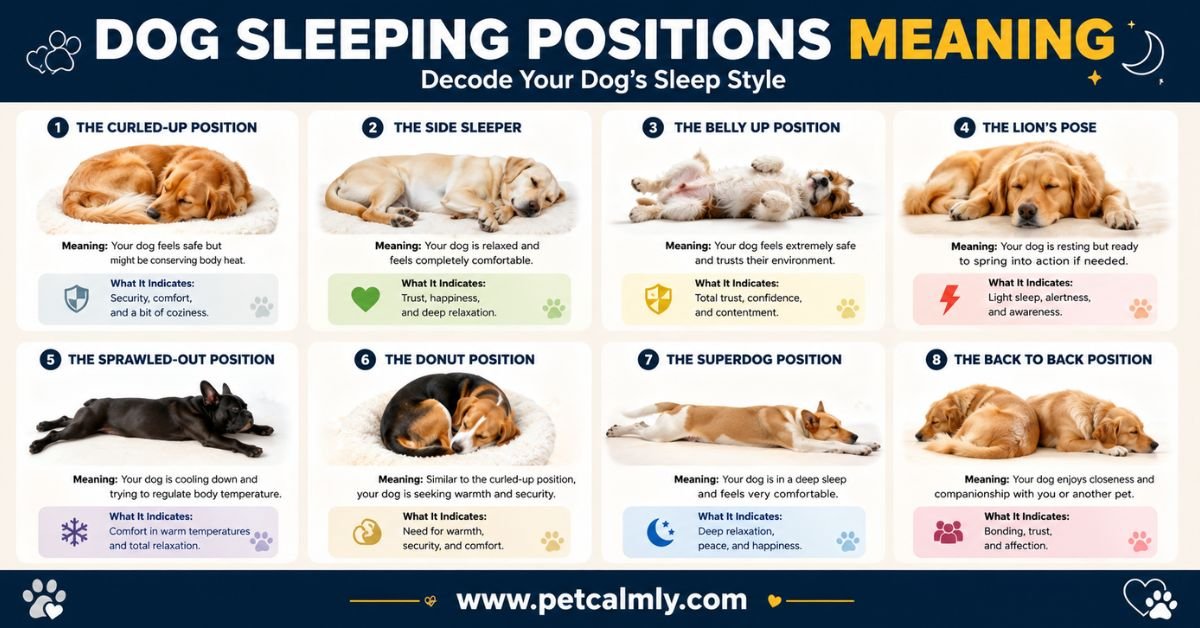
The Curled-Up “Donut” Position
This is one of the most common dog sleeping positions, and for good reason.
In this pose, a dog tucks their nose near their tail, pulls their legs in close, and rounds their body into a tight circle. It looks cozy because it is but it also serves a practical purpose.
Why dogs sleep curled up:
- It conserves body heat by minimizing exposed surface area
- It protects the belly and vital organs, an instinct carried over from wild canine ancestors who needed to stay ready to react
- It can signal that a dog feels slightly more cautious or is in a new or unfamiliar environment
- It’s simply a comfortable, space-efficient way to rest, especially for smaller breeds
This position doesn’t automatically mean a dog is anxious. Many dogs curl up out of habit, especially in cooler rooms or during light naps rather than deep sleep. Context matters more than the position alone — a dog who curls up on a chilly night and stretches out once the room warms is just regulating temperature, not expressing distress.
The Side Sleeper Position
Side sleeping is often considered one of the clearest signs of a relaxed, trusting dog.
In this position, the dog lies on one side with legs extended outward, sometimes with the head resting flat or slightly tilted. Breathing tends to be slow and even, and dogs in this pose are often in deeper sleep stages, including REM sleep — the stage associated with dreaming, which is why you might notice twitching paws or soft muffled barks.
Side sleeping exposes the belly and throat, two vulnerable areas. A dog who sleeps this way regularly, especially in a shared living space, is generally showing that they feel physically safe and don’t perceive an immediate need to stay guarded.
The Superman or Belly-Flop Position
If you’ve ever seen a dog sprawled flat on their stomach with all four legs stretched out — front legs forward, back legs behind, like they’re mid-flight you’ve seen the “superman” pose.
This position is especially common in puppies and young, energetic dogs. It often shows up during short naps rather than long overnight sleep, and it tends to happen on cool surfaces like tile or hardwood.
What this position usually indicates:
- The dog is warm and trying to cool down through contact with a cooler surface
- The dog is ready to spring back into action quickly, which is common after or between bursts of play
- It’s a light, low-commitment nap rather than deep rest
This pose is rarely a cause for concern. It’s more about temperature regulation and readiness than emotional state.
The Belly-Up “Dead Bug” Position
This is the pose that makes almost every dog owner laugh out loud legs in the air, belly fully exposed, sometimes with the tongue lolling out to one side.
From a behavioral standpoint, this is considered one of the strongest indicators of comfort and trust a dog can show. The belly is the most vulnerable part of a dog’s body, so exposing it fully during sleep suggests the dog doesn’t feel any need for self-protection in that environment.
There’s also a practical temperature-related reason for this position. Dogs don’t sweat the way humans do — they release heat primarily through panting and through areas with less fur, like the belly and paw pads. Sleeping belly-up can help a warm dog cool down more efficiently.
If your dog sleeps like this often, it’s generally a good sign of both emotional security and normal temperature regulation, not something to worry about.
Sleeping Pressed Against You or Another Pet
Some dogs consistently choose to sleep touching a person or another animal, whether that’s curled against your leg, leaning into a housemate dog, or draped partially over a cat who tolerates it.
This behavior is rooted in social bonding. Dogs are social animals, and physical closeness during rest — a behavior sometimes called co-sleeping or contact resting can reflect:
- A strong attachment bond with you or another household pet
- A learned association between closeness and safety, especially in rescue dogs or dogs who experienced early instability
- A simple preference for warmth and companionship, particularly in short-haired or small breeds
This is one of the more misunderstood sleeping behaviors. Contact-seeking sleep is not automatically “clingy” or “needy” in an unhealthy sense. For many dogs, it’s simply how they’ve always shown trust. The exception is when the behavior is paired with visible distress when separated that combination points toward separation-related anxiety rather than ordinary affection, and may benefit from a gradual desensitization approach or guidance from a certified trainer or veterinary behaviorist.
The Burrower
Some dogs consistently dig, nudge, and tunnel their way under blankets, pillows, or laundry before settling down to sleep — sometimes disappearing completely.
This instinct traces back to den behavior. Wild canine ancestors and even modern wolves use dens for warmth, safety, and a sense of enclosure while vulnerable during sleep. Burrowing recreates that same feeling of being tucked away and protected.
Breeds with a strong denning instinct, such as Dachshunds, terriers, and other historically burrow-hunting breeds, tend to show this behavior more frequently, though any dog can develop the habit.
Burrowing is typically a comfort-seeking behavior rather than a warning sign. If it becomes excessive constant blanket-shredding, restlessness, or an inability to settle even after burrowing it may be worth looking at as a possible sign of anxiety rather than simple preference.
Head and Paws Draped Over an Object
Some dogs like to rest their chin or front paws over the edge of a couch cushion, a dog bed rim, or even your leg while they sleep.
This position often reflects a dog who wants to stay slightly aware of their surroundings while still relaxing. It’s common in watchful or naturally alert breeds, and it can also simply be a comfortable neck position, especially for dogs with longer snouts who find full head-down positions less comfortable.
It’s generally considered a light-alertness pose — relaxed, but not fully “off duty.”
Back-to-Back or Curled Against a Wall
Sleeping with their back pressed against a wall, piece of furniture, or another pet is another security-driven position. It reduces the number of directions a dog needs to stay aware of while resting, since one side is already “covered.”
This is especially common in multi-dog households, shelters, or homes where a dog is still adjusting after a recent move or rehoming. Over time, as a dog becomes more settled, many will gradually shift toward more open, exposed sleeping positions like side-sleeping or belly-up rest.
Comparing Common Dog Sleeping Positions at a Glance
| Sleeping Position | Common Meaning | Typical Sleep Depth |
|---|---|---|
| Curled-up donut | Heat conservation, mild alertness | Light to moderate |
| Side sleeper | Deep trust, full relaxation | Deep, often REM |
| Superman/belly-flop | Cooling down, ready to move | Light nap |
| Belly-up “dead bug” | High trust, temperature regulation | Deep |
| Pressed against you/pet | Bonding, warmth, security | Varies |
| Burrowed under blankets | Den instinct, comfort-seeking | Varies |
| Head/paws draped over edge | Light alertness, relaxed watchfulness | Light |
| Back against wall/furniture | Security, reduced exposure | Light to moderate |
This table is a general guide, not a diagnostic tool. The same dog may use several of these positions in a single night depending on temperature, noise, and how tired they are.
What Influences a Dog’s Sleeping Position
No single factor decides how a dog sleeps — it’s usually a combination of the following.
Breed and Body Type
Short-haired and small breeds often seek out curled or contact-sleeping positions more frequently because they lose body heat faster. Larger or double-coated breeds may sprawl out more often, especially in warmer rooms, to avoid overheating.
Room Temperature
Dogs are highly responsive to temperature. A cold room tends to encourage curled or burrowed positions, while a warm room often leads to sprawled, belly-exposed sleeping. Watching how your dog’s position shifts with the seasons is a normal and healthy pattern.
Age
Puppies often sleep in sprawled, superman-style positions because they nap frequently between bursts of activity and don’t yet have a strong “settling in for the night” routine. Senior dogs may favor curled positions, sometimes due to joint stiffness that makes fully stretched-out positions less comfortable.
Trust and Environment
A newly adopted dog, a dog in an unfamiliar space, or a dog recovering from a stressful event will often sleep in more guarded positions — curled up, back against a wall, or close to a trusted person. As trust builds, sleeping positions frequently become more open and relaxed.
Physical Comfort or Discomfort
Sometimes a change in sleeping position is about the body, not the mind. Joint pain, arthritis, digestive discomfort, or an injury can all make a dog avoid certain positions they used to sleep in comfortably.
When Should You Worry About a Dog’s Sleeping Position?
Most sleeping position changes are harmless and simply reflect temperature, mood, or environment. That said, certain patterns are worth paying closer attention to.
Consider speaking with your veterinarian if you notice:
- A sudden, lasting shift away from a dog’s normal sleeping position, especially toward more guarded or restless positions
- Difficulty getting comfortable, repeated repositioning, or apparent pain when lying down or getting up
- Restlessness, pacing before lying down, or an inability to settle at all
- Whimpering, panting, or stiffness that appears specifically during rest
- Noticeable behavior changes alongside the sleep change, such as reduced appetite, limping, or withdrawal
These signs don’t automatically point to something serious, but they’re the kind of details a veterinarian can properly evaluate, especially since pain and mobility issues in dogs are often easier to manage the earlier they’re identified. According to the Cornell University College of Veterinary Medicine, changes in rest patterns can sometimes be an early, subtle indicator of discomfort before more obvious symptoms appear.
What Pet Owners Should Actually Do
Reading your dog’s sleeping position is genuinely useful, but the goal isn’t to overanalyze every nap. It’s to use these patterns as one more way to understand your dog’s comfort and wellbeing.
A few practical steps:
- Notice patterns, not single moments. One curled-up nap means very little. A consistent shift in how your dog sleeps over several days is more meaningful.
- Match the sleep environment to the season. Offer a warm, enclosed bed option in cooler months and a cooler, open surface in warmer months so your dog can self-regulate.
- Give anxious or newly adopted dogs a low-pressure setup. A bed placed against a wall or in a quiet corner can help a dog who needs to feel more secure while settling in.
- Watch for comfort cues in senior dogs. Orthopedic bedding can make a real difference for older dogs who are avoiding fully stretched-out positions due to joint stiffness.
- Don’t panic over one unusual night. A single odd sleeping position is rarely meaningful on its own — context and consistency matter far more.
If you’re building out your dog’s overall rest routine, it also helps to look at their broader sleep environment, including bed type, noise levels, and bedtime consistency small adjustments there often do more for sleep quality than the position itself.
The Bigger Picture: Sleep Position Is One Piece of the Puzzle
It’s worth saying clearly: sleeping position alone should never be used to diagnose anxiety, pain, or illness in a dog. It’s one data point among many alongside appetite, energy levels, mobility, and general behavior — that can help you build a fuller picture of how your dog is doing.
Dogs communicate constantly through body language, and sleep is simply one of the more visible, and often overlooked, parts of that communication. Learning to notice it doesn’t require any special training just a bit of regular attention and familiarity with what’s normal for your specific dog.
More Information About Pets, Please Visit Our Website: Why Do Dogs Shake Their Bodies
Why Dogs Lick You So Much
Can Dogs Eat Shrimp Tails?
Best Dog Food for Small Breeds with Sensitive Stomachs
What to Use to Clean Dogs Ears Home Remedies
What Kills Fleas on Dogs Instantly Without Bathing
Why Is My Dog Always Hungry Even After Eating?
Frequently Asked Questions
1: Why does my dog sleep with their back turned to me?
This usually isn’t a rejection. Many dogs sleep back-to-back or with their back toward a trusted person because it feels physically comfortable and still keeps them close enough to feel secure. It’s more about positioning for warmth and contact than emotional distance.
2: Is it bad if my dog changes sleeping positions every night?
No. Healthy dogs often shift between several sleeping positions depending on temperature, tiredness, and where they are in a sleep cycle. Variety is normal; it’s a sudden, consistent shift away from a dog’s usual habits that’s worth noting.
3: Why does my dog sleep on my feet or right next to my legs?
This is typically a bonding and security behavior. Your feet or legs offer warmth, a familiar scent, and a sense of closeness. It’s common in dogs with strong attachment to their owner and isn’t usually a cause for concern on its own.
4: Do dogs sleep belly-up because they trust you?
Often, yes. Belly-up sleeping exposes the most vulnerable part of a dog’s body, so it generally reflects a strong sense of safety. Temperature also plays a role, since this position helps dogs release heat more efficiently.
5: Can a dog’s sleeping position indicate pain?
It can be one clue. Dogs experiencing joint pain, arthritis, or discomfort may avoid fully stretched-out positions, reposition frequently, or seem unable to get comfortable. If this appears alongside other symptoms like limping or reduced activity, a veterinary check-up is a reasonable next step.
6: Why does my puppy sleep in strange, sprawled-out positions?
Puppies often nap in short bursts between play, which is why they frequently fall asleep in sprawled “superman” positions rather than settling into a longer, more structured sleep routine. This is developmentally normal and tends to shift as they mature.
Conclusion
Watching your dog sleep might seem like a small, ordinary part of daily life, but it’s actually one of the more honest windows into how they’re feeling. Dogs don’t perform or posture while they rest the way they sometimes do while awake — their sleeping position is simply a reflection of comfort, trust, temperature, and instinct, working together in real time.
You don’t need to analyze every nap. Just keep half an eye on the patterns, celebrate the belly-up naps for what they are — a genuine sign of trust and treat any sudden, lasting changes as a gentle nudge to check in, either with a closer look at their environment or a conversation with your vet.