
Short direct answer
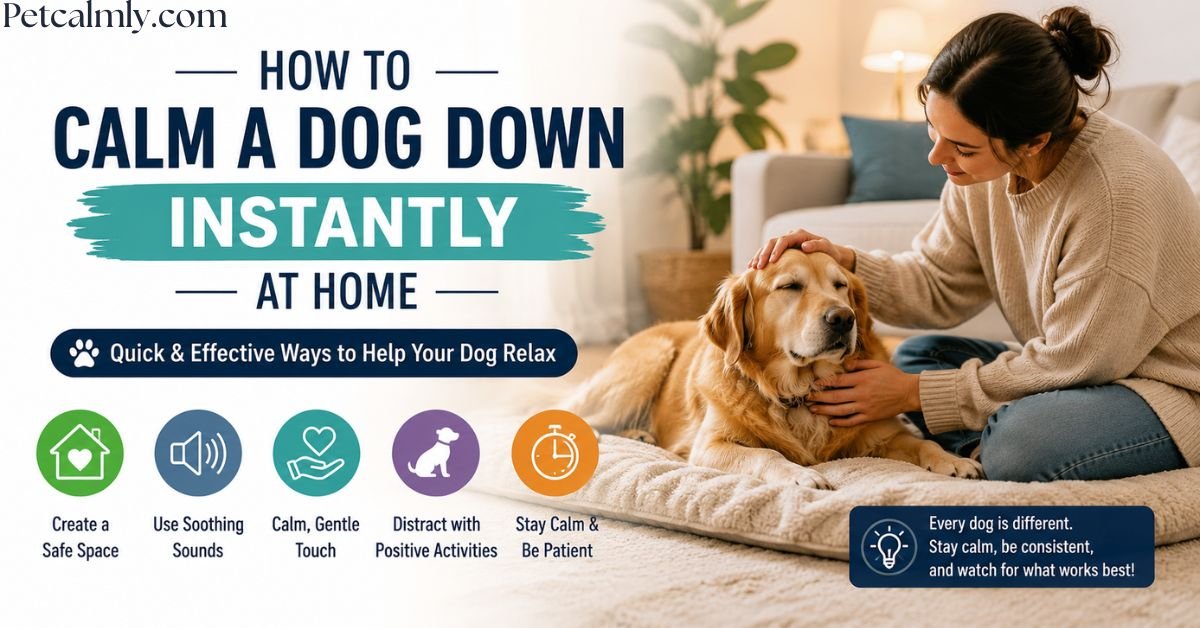
To calm a dog down instantly at home, try deep pressure (gentle body wraps or firm holds), remove the trigger from sight, speak in a slow and low voice, and redirect attention with a favorite chew or treat. Most dogs respond within 1–3 minutes when these methods are used together. Consistency is the key.
Why This Matters to Every Dog Owner
It’s 10 PM. You’ve had a long day. Suddenly your dog starts spinning in circles, barking nonstop, or trembling behind the couch and you have no idea why.
This happens to dog owners every single day.
Whether it’s a thunderstorm, a knock at the door, a car ride, or nothing you can visibly identify an anxious or overstimulated dog can be exhausting to deal with. And when it happens late at night or out of nowhere, you need solutions that actually work fast.
This article gives you those solutions. No guesswork. No vague advice.
You’ll learn exactly what to do in the moment, why your dog behaves this way, and how to build long-term habits that keep your dog calmer overall. By the end, you won’t need to Google this again.
Why Dogs Get Overstimulated or Anxious
Before you can calm a dog down, it helps to understand what’s driving the behavior. Dogs don’t become frantic for no reason their nervous system is just reacting to something.
Here are the most common triggers:
Loud noises:
Thunderstorms, fireworks, construction sounds, and loud music are among the biggest culprits. A dog’s hearing is far more sensitive than ours, which means sounds that feel “normal” to us can feel overwhelming to them.
Separation anxiety:
Some dogs genuinely panic when left alone even for short periods. You might come home to a chewed-up couch, torn curtains, or a dog that acts like it hasn’t seen you in years.
Strangers or unfamiliar environments:
A new house, a visitor, or a trip to a new neighborhood can put a dog on high alert. This is especially common in rescue dogs with unknown histories.
Boredom and pent-up energy:
A dog that hasn’t been walked or played with can spiral into hyperactive or destructive behavior. It’s not anxiety exactly it’s just a full tank with nowhere to go.
Medical discomfort:
Sometimes what looks like anxiety is actually pain or nausea. A dog that suddenly becomes restless, pants heavily, or refuses to settle may be reacting to something physical.
Understanding the root cause helps you pick the right calming method and know when it’s time to call your vet.
Signs Your Dog Needs to Be Calmed Down Right Now
Dogs communicate through body language, and once you learn to read it, you’ll recognize the early warning signs before things escalate.
Watch for:
- Panting even when the room isn’t hot
- Pacing back and forth without settling
- Trembling or shaking without a clear physical reason
- Excessive barking, whining, or howling
- Yawning repeatedly in a short span
- Lip licking or air licking
- Tail tucked firmly between the legs
- Ears pinned flat against the head
- Hiding in corners, under furniture, or behind you
- Destructive behavior like chewing, digging, or scratching
If you see three or more of these signs at once, your dog is likely in a state of real distress and it’s time to step in.
How to Calm a Dog Down Instantly at Home
These are the methods that work fastest. Some take 60 seconds. Some take a few minutes. Most work best when combined.
1. Remove or Reduce the Trigger
This is always step one. If the noise, person, or situation is still present, no calming technique will work as well.
Close the blinds during a thunderstorm. Move your dog to a quieter room during a party. Turn down the volume if music or TV is causing stress.
Even a 30% reduction in stimulus can make a huge difference in your dog’s ability to settle.
2. Use the Power of Touch Calmly and Firmly
Gentle, sustained pressure has a measurable calming effect on dogs. It works similarly to weighted blankets for people with anxiety.
Sit beside your dog and apply steady, calm pressure along the sides of their body. Don’t pat rapidly or rub hard that can actually increase arousal. Instead, use long, slow strokes from neck to tail.
You can also try a anxiety wrap or snug T-shirt technique: wrapping a bandana or cloth snugly (not tightly) around the dog’s torso mimics the effect of being held and can reduce cortisol levels quickly.
3. Lower Your Own Energy First
Dogs read humans constantly. If you rush over in a panic saying “It’s okay! It’s okay! Don’t be scared!” you’re actually signaling to your dog that something IS wrong.
Take a slow breath. Sit down. Move calmly. Speak in a low, slow, steady voice. Your nervous system will influence theirs.
Think of it this way: your dog is looking to you for information. If you seem relaxed, they’re more likely to decide the situation is safe.
4. Create a “Safe Space” They Can Go To
Many dogs naturally seek enclosed, quiet spaces when stressed under a bed, in a closet, behind the couch. This is an instinctive denning behavior.
If your dog has a crate, keep it available with a blanket inside and the door open. Play soft white noise or calming music nearby. Don’t drag your dog out of their hiding spot. Let them choose to be there.
Over time, introducing a cue like “go to your place” teaches them exactly where to go when things feel overwhelming and that becomes its own calming signal.
5. Redirect With Scent or Food
Smell is a dog’s most powerful sense. Introducing a new scent or food can rapidly shift their focus away from whatever is triggering them.
Try offering a long-lasting chew like a bully stick, frozen Kong, or lick mat. The physical act of licking and chewing activates the parasympathetic nervous system — which is literally the body’s “calm down” mechanism.
Some pet owners also use lavender-based sprays or dog-safe calming balms on bedding. Research on this is still limited, but many owners report noticeable improvement.
6. Try the Tellington TTouch Method
This is a gentle massage technique developed specifically for animals. The basic version involves making small, slow circular motions with your fingertips across your dog’s body starting at the ears, moving to the neck, shoulders, and back.
It sounds simple, but it’s remarkably effective for dogs mid-panic. Many trainers and vets recommend it for situations like vet visits, car rides, or storm anxiety.
7. Use Calming Commands They Already Know
If your dog is trained, familiar verbal cues can interrupt an anxiety spiral. Ask for a “sit” or “down” in a calm tone not as a correction, but as something for their brain to focus on.
Following through on a known behavior engages the thinking part of their brain (the prefrontal cortex equivalent), which competes with the reactive, emotional part. A dog who is “working” even briefly is a dog who is less reactive.
Follow up immediately with a calm reward. Keep it low-key. No excited “yes! good boy!” a quiet, slow “good dog” is more useful here.
8. Try Dog-Safe Calming Products
There are several vet-approved products that can help in the moment or over time:
- Adaptil (DAP) diffusers or sprays: These release synthetic pheromones that mimic the comforting scent a mother dog produces. Plug-in diffusers work well for home environments
. - CBD oil for dogs: Some pet owners report good results with veterinary-formulated CBD drops. Always consult your vet before starting these.
- Calming chews: Products containing L-theanine, melatonin, or chamomile may take the edge off in mild anxiety situations.
- Prescription medication: For severe anxiety, your vet may recommend short-term options like trazodone or situational medications. These aren’t meant for daily use but for events like fireworks, they can be genuinely helpful.
When Should You Be Concerned?
Most dog anxiety is manageable at home. But there are situations where you need professional guidance and waiting can make things worse.
See your vet if:
- Your dog’s anxiety seems to have appeared suddenly with no clear cause
- The dog is hurting itself (scratching until bleeding, chewing paws raw, self-mutilation)
- Nothing you try works, and episodes are getting longer or more intense
- The dog is also showing signs of physical illness vomiting, diarrhea, refusal to eat
- Aggression is part of the anxiety response (growling, snapping, biting)
- The dog cannot be left alone at all without destroying the home or injuring itself
Sudden onset anxiety in adult dogs can sometimes indicate a medical issue including thyroid problems, neurological changes, or pain from an injury or arthritis. Your vet can rule these out quickly.
If behavioral anxiety is confirmed, a certified veterinary behaviorist (DACVB) or a professional dog trainer who specializes in fear and anxiety can create a tailored plan.
What Should Dog Owners Do Long-Term?
Calming a dog in the moment is one thing. Building a lifestyle that reduces anxiety overall is another. Here’s what actually works with consistent practice:
Regular exercise:
A tired dog is a calmer dog. Aim for at least 30–60 minutes of walking, running, or active play daily adjusted for your dog’s age and breed. High-energy breeds like Border Collies or Huskies may need much more.
Daily mental stimulation:
Sniff walks, puzzle feeders, and training sessions burn mental energy and reduce overall anxiety. A dog who uses their brain regularly is better equipped to handle stress.
Consistent routine:
Dogs thrive on predictability. Feeding, walking, and play at the same times each day builds a sense of safety and reduces ambient anxiety.
Gradual desensitization:
If your dog fears specific things thunderstorms, strangers, other dogs systematic exposure at low intensity over time can reduce the fear response. This is best done with guidance from a trainer.
Avoid inadvertent reinforcement:
If you always pet and soothe your dog when it panics, you may be unintentionally reinforcing the anxious behavior. Instead, reward calm behavior even brief moments of calm during a stressful event.
Build positive associations:
Play with your dog during mild versions of the trigger. For example, give treats and play while a recording of distant thunder plays softly. Gradually increase the volume over many sessions. This is called counter-conditioning and it works.
Conclusion
A panicking or hyperactive dog is stressful for everyone in the house including the dog itself. But you now have a real toolkit to use.
Start by removing the trigger. Apply calm, steady pressure. Lower your own energy. Use scent, chewing, or a safe space to help your dog settle. Build long-term habits of exercise, routine, and positive training.
Most dogs can be meaningfully calmed within minutes using these techniques. And with consistent practice, you’ll likely see fewer episodes overall.
If the anxiety is severe or sudden, don’t guess talk to your vet. There’s no reason a dog should live in persistent fear when effective help is available.
More Information About Pets, Please Visit Our Website: How to Calm a Dog Down From Anxiety?
Frequently Asked Questions
1: What is the fastest way to calm a dog down during a thunderstorm?
Move your dog to an interior room with fewer windows. Use a snug wrap or anxiety vest. Play white noise or calming music to mask the thunder sounds. Stay calm yourself your dog takes emotional cues from you. Many dogs also respond well to a frozen treat or lick mat as a distraction.
2: Can I use essential oils to calm my dog?
Use extreme caution. Many essential oils including tea tree, eucalyptus, and peppermint are toxic to dogs. Lavender is generally considered safer in very diluted amounts and some owners report it helps. However, never apply oils directly to a dog’s skin, and make sure the room is well-ventilated. Consult your vet before trying aromatherapy with pets.
3: Why does my dog suddenly get anxious for no reason?
This is more common than you’d think. Sometimes the trigger is subtle a smell, a sound outside, a change in barometric pressure before a storm. In other cases, sudden-onset anxiety in an adult dog may signal a health issue like pain, thyroid imbalance, or early cognitive decline. If it happens repeatedly with no obvious cause, a vet visit is the right move.
4: Does holding a dog calm it down?
It depends on the dog. Some dogs find being held very comforting especially if they’re used to it. Others feel more trapped and anxious when physically restrained. The key is reading your dog’s response. If the dog leans in and relaxes, holding is helping. If it squirms, struggles, or pants more let go and try another approach.
5: How do I calm a hyper dog at night?
Evening hyperactivity often means the dog hasn’t had enough physical or mental exercise during the day. A short walk before bed, a puzzle feeder at dinner, and a consistent bedtime routine can help significantly. Avoid exciting play or rough games in the last hour before bed. A calming chew or frozen Kong in their sleeping area can also help them wind down.
6: Are calming chews safe for dogs?
Most veterinary-grade calming chews are safe when used as directed. Look for products that list L-theanine, melatonin, or chamomile as active ingredients and avoid anything with artificial sweeteners especially xylitol, which is toxic to dogs. Always check with your vet before adding any new supplement, especially if your dog is on other medications or has a health condition.