Short direct answer
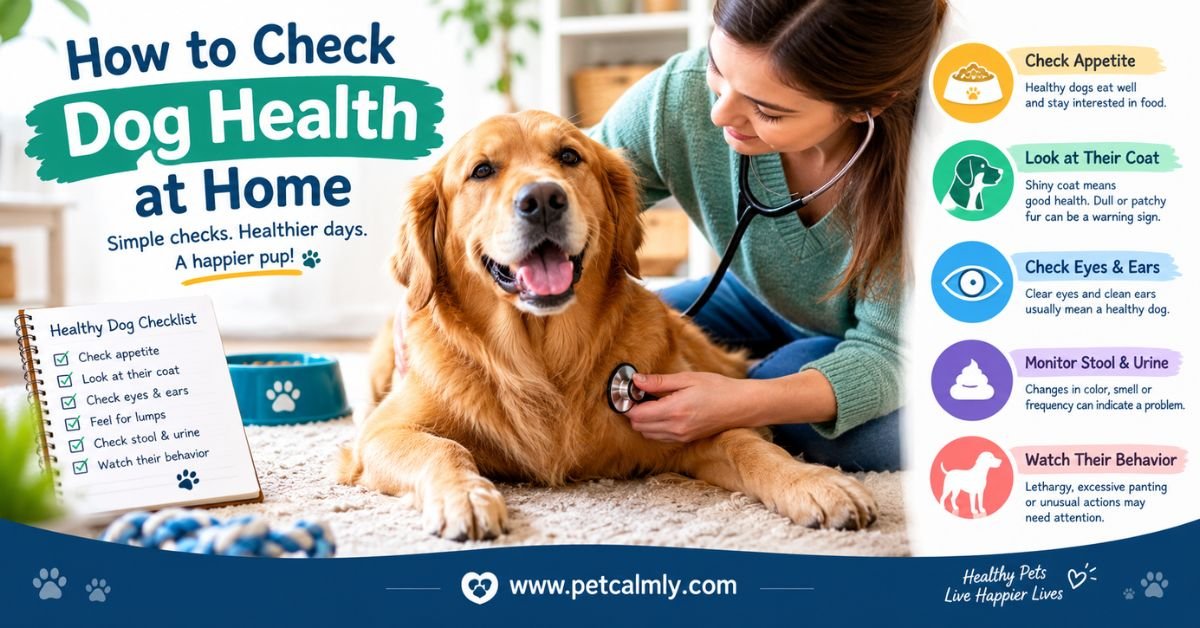
To check dog health at home, examine your dog’s eyes, ears, gums, coat, and body weekly, and monitor breathing rate, appetite, energy, and bathroom habits daily. Healthy gums are pink and moist, breathing at rest should sit around 15–30 breaths per minute, and a healthy coat should feel smooth without bald patches or excessive scratching. These simple checks won’t replace a veterinary exam, but they help you notice small changes early, before they turn into bigger problems.
That’s the short version. Now let’s walk through exactly how to do each check, what’s normal, what’s a little “keep an eye on it,” and what genuinely needs a vet’s attention.
Why Home Health Checks Matter More Than Owners Realize
Dogs are experts at hiding discomfort. It’s not stubbornness it’s instinct. In the wild, showing weakness makes an animal a target, and that survival wiring never really left our domestic dogs. So by the time a dog is visibly limping, refusing food, or lying still all day, the issue has often been building quietly for days or weeks.
This is exactly why home checks matter. You’re not trying to diagnose anything. You’re building a baseline — a sense of what “normal” looks like for your specific dog so that when something shifts, you notice it fast. A ten-minute weekly routine can be the difference between catching a problem early and discovering it late.
Think of it less like a medical exam and more like knowing your dog well enough to say, “Something’s off today,” even if you can’t quite explain why.
What Counts as a “Normal” Baseline for Your Dog
Every dog is a little different. A senior Labrador’s resting heart rate won’t match a young Jack Russell’s, and a flat-faced breed like a Pug will naturally breathe louder than a Border Collie. Before you can spot something abnormal, you need a few basic numbers and observations to compare against.
Here’s a simple baseline table you can fill in for your own dog after a calm, resting period (not right after exercise or excitement):
| Vital Sign | Normal Range (Adult Dog) | Notes |
|---|---|---|
| Heart rate | 60–140 beats per minute | Smaller dogs run higher, larger breeds lower |
| Respiratory rate | 15–30 breaths per minute | Count while the dog is resting, not panting |
| Temperature | 101°F–102.5°F (38.3°C–39.2°C) | Rectal thermometer gives the most accurate reading |
| Gum color | Pink and moist | Pale, blue, or bright red gums are concerning |
| Capillary refill time | Under 2 seconds | Press gum, release, watch color return |
Write these down somewhere a notes app, a fridge magnet chart, whatever works. It sounds unnecessary until the one day it isn’t.
Daily Signs to Watch: The 5-Minute Check
You don’t need a stethoscope for this part. Most daily observation happens naturally if you’re paying a little attention during normal routines like feeding, walks, and cuddle time.
Appetite and Water Intake
A healthy dog usually eats with enthusiasm and drinks a fairly consistent amount of water each day. Watch for:
- Skipping meals for more than one day
- Sudden increase in thirst
- Eating but then vomiting shortly after
- Picking at food instead of eating normally
One skipped meal because it’s hot outside or your dog is a little stressed isn’t usually a big deal. Two or more skipped meals, especially paired with low energy, is worth a closer look.
Energy and Behavior
You know your dog’s normal rhythm better than anyone. A dog who’s usually bouncing at the door and suddenly wants to sleep all day is telling you something, even if nothing looks physically wrong.
Common early behavior changes worth noting:
- Reluctance to jump on furniture or climb stairs
- Hiding or seeking unusual amounts of alone time
- Increased clinginess or restlessness
- Sudden sensitivity to touch in a specific area
Bathroom Habits
Stool and urine patterns are one of the most underrated health indicators. Normal stool is firm, holds its shape, and is a consistent brown color. Keep an eye out for:
- Diarrhea lasting more than 24 hours
- Straining without producing much
- Blood in urine or stool
- Noticeably increased urination frequency
A single soft stool after a diet change usually isn’t alarming. A pattern over several days is different.
Weekly Physical Home Health Checks
This is the hands-on part, and most dogs actually enjoy it once it becomes a routine it starts to feel like affectionate attention rather than an exam.
How to Check Your Dog’s Eyes for Health Problems
Healthy eyes should be clear, bright, and free of excessive discharge. Gently look for:
- Redness in the whites of the eyes
- Cloudiness over the pupil
- Excessive tearing or thick discharge
- Squinting or pawing at the eye
Cloudiness in older dogs can sometimes be a normal aging change called nuclear sclerosis, but it can look similar to cataracts, so it’s worth mentioning at your next vet visit rather than guessing.
Checking Ears for Infection or Irritation
Lift the ear flap and take a quick look and sniff. A healthy ear is pale pink inside, odor-free, and free of dark discharge.
Signs of a possible ear problem:
- A strong yeasty or musty smell
- Dark brown or black debris
- Redness or swelling
- Frequent head shaking or scratching at the ears
Floppy-eared breeds like Cocker Spaniels and Basset Hounds are more prone to ear infections because airflow is limited, so they may need this check more often than upright-eared breeds.
Examining Gums and Teeth
Gently lift your dog’s lip and look at the gums and teeth. This is one of the fastest ways to catch both dental disease and early signs of circulation problems.
What to look for:
- Gum color (should be pink, not pale, white, blue, or bright red)
- Bad breath beyond normal “dog breath”
- Brown tartar buildup along the gumline
- Loose or broken teeth
- Bleeding when you touch the gums
Dental disease is one of the most common health issues in adult dogs, and it’s also one of the most preventable with regular brushing and checkups.
Feeling the Coat and Skin
Run your hands slowly over your dog’s entire body — not just a quick pat, but an actual sweep from head to tail. You’re feeling for texture, lumps, and reaction.
Things to note:
- New lumps or bumps (size, firmness, whether they’re painful to touch)
- Bald patches or thinning fur
- Flaky, greasy, or unusually dry skin
- Redness, scabs, or hot spots
- Excessive scratching or licking in one spot
Most lumps in dogs turn out to be harmless fatty deposits, but any new lump should still be checked by a vet, since the only way to know for sure is with a proper exam.
Checking Paws and Nails
Paws take a beating from daily walks, so they deserve regular attention.
- Look between the toes for redness, swelling, or foreign objects like grass seeds
- Check nail length — nails clicking loudly on the floor usually mean they’re overdue for a trim
- Feel pads for cracks, cuts, or unusual warmth
- Watch how your dog walks; favoring one paw is a clear signal
Weighing Your Dog and Tracking Body Condition
You don’t need a fancy scale. For small dogs, weigh yourself holding the dog, then subtract your own weight. For larger dogs, many vet clinics let you use their lobby scale for free between visits.
Beyond the number, feel your dog’s body condition:
- You should be able to feel ribs with light pressure, but not see them
- A visible waist should be noticeable from above
- No sagging belly when viewed from the side
Weight loss or gain that isn’t tied to an obvious diet change is one of the more reliable early signs that something needs medical attention.
How to Take Your Dog’s Vital Signs at Home
If you want to go a step further than the visual checks above, these three vitals give you a clearer picture.
Checking Heart Rate
Place your hand on the left side of the chest, just behind the front leg, where you can feel the heartbeat. Count the beats for 15 seconds and multiply by four. Do this while your dog is calm and resting for the most accurate number.
Checking Respiratory Rate
Watch (don’t touch) your dog’s chest rise and fall while they’re resting or sleeping. Count one full breath cycle (in and out) for 30 seconds and multiply by two. Panting doesn’t count — this only works when your dog is breathing normally through the nose.
Checking Temperature
A digital rectal thermometer, lubricated with a bit of petroleum jelly, gives the most reliable reading at home. Insert about one inch and wait for the beep. It’s not glamorous, but it’s genuinely one of the most useful tools in a home health kit, especially if your dog seems off and you’re trying to decide how urgent the situation is.
Common Mistakes Pet Owners Make When Checking Dog Health at Home
- Only checking when something already looks wrong. By then, you’ve lost the comparison point of “normal.”
- Confusing panting with labored breathing. Panting after play or in heat is normal; labored breathing at rest is not.
- Assuming a wagging tail means a happy, healthy dog. Tail wagging communicates arousal, not necessarily happiness — a stressed or fearful dog can still wag.
- Ignoring small behavior changes because “they’re probably just tired.” Sometimes they are. Sometimes it’s the first sign of something bigger.
- Trying to diagnose instead of observe. Your job at home is to notice and describe changes clearly to a vet, not to land on a diagnosis yourself.
When Should You Worry? Signs That Need a Vet, Not Just a Home Check
Home checks are about awareness, not treatment. Some signs mean it’s time to stop monitoring and start calling your veterinarian.
Seek Same-Day Veterinary Care If You Notice:
- Persistent vomiting or diarrhea (more than 24 hours, or with blood)
- Refusal to eat or drink for more than a day
- Noticeable lethargy that doesn’t improve with rest
- A new lump that’s growing quickly or seems painful
- Limping that doesn’t resolve within a day or two
- Pale, white, or bright red gums
- Labored or rapid breathing at rest
Seek Emergency Veterinary Care Immediately If You Notice:
- Difficulty breathing or gasping
- Collapse or inability to stand
- Bloated, hard, or painful abdomen
- Seizures
- Suspected poisoning or ingestion of a toxic substance
- Pale or blue-tinged gums
- Uncontrolled bleeding
If you’re ever unsure whether something is an emergency, calling your vet clinic or a pet poison helpline is always safer than waiting to see if it resolves on its own.
What Pet Owners Should Do With This Information
Turning this into a habit is more useful than doing it once and forgetting about it. A simple approach that works for most households:
- Pick one calm time each week after a walk, before bed, whatever fits your routine and do the full physical check.
- Glance over appetite, energy, and bathroom habits daily; this takes seconds once it’s a habit.
- Keep a simple log, even just a note on your phone, of anything unusual and when you noticed it.
- Bring that log to vet visits. It gives your vet real information instead of a vague “he’s been acting different lately.”
- Trust your instincts. You know your dog. If something feels off even when you can’t pinpoint why, that’s worth mentioning to a professional.
Regular home checks also make actual vet exams less stressful for your dog, because being touched, examined, and handled becomes familiar rather than something that only happens when they’re already unwell.
Conclusion
Checking your dog’s health at home isn’t about replacing your veterinarian it’s about becoming a more observant, prepared partner in your dog’s care. A few minutes a week spent looking at eyes, ears, gums, coat, and posture, combined with daily awareness of appetite and energy, gives you the kind of insight that helps catch problems while they’re still small and manageable. The goal isn’t perfection or diagnosing every symptom yourself. It’s simply knowing your dog well enough to notice when something changes, and having the confidence to act on that instinct.
More Information About Pets, Please Visit Our Website: How to Prevent Dog Ear Infections After Swimming
Best Protein Food for Dogs
Can Dogs Eat Rice Every Day?
Best Dog Food for Skin Allergies
What Human Food Can Dogs Eat Safely?
How to Stop Reverse Sneezing in Dogs
How to Stop Dog Barking at Strangers
How to Cut an Uncooperative Dogs Nails
Frequently Asked Questions
1: How often should I check my dog’s health at home?
A quick daily glance at appetite, energy, and bathroom habits is enough for most dogs, with a more thorough physical check (eyes, ears, gums, coat, weight) once a week.
2: What are the first signs of a sick dog?
Early signs often include reduced appetite, low energy, changes in bathroom habits, and subtle behavior shifts like hiding or increased clinginess, rather than obvious symptoms.
3: Can I check my dog’s temperature without a rectal thermometer?
Ear thermometers designed for pets exist, but they tend to be less accurate than digital rectal thermometers, which remain the most reliable option for home use.
4: What does it mean if my dog’s gums are pale?
Pale gums can indicate poor circulation, anemia, or shock, and should be treated as a reason to contact your veterinarian promptly rather than something to monitor at home.
5: Is heavy panting always a sign of a health problem?
Not necessarily panting after exercise, excitement, or in warm weather is normal, but panting at rest, especially combined with restlessness or blue-tinged gums, needs veterinary attention.
6: How do I know if my dog’s lump is serious?
There’s no reliable way to tell from touch alone whether a lump is harmless or concerning, which is why any new lump should be examined by a veterinarian rather than assessed at home.