Short direct answer
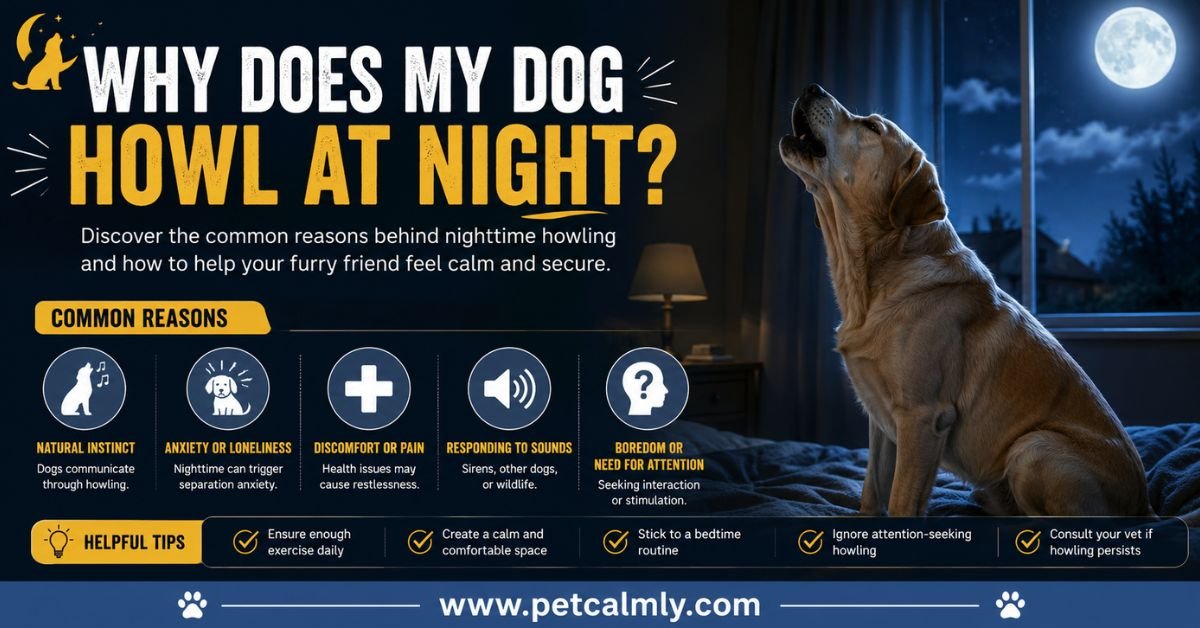
Dogs howl at night for many reasons: separation anxiety, medical discomfort, attention-seeking, environmental triggers (sirens, other dogs), or their natural pack instinct to communicate. Some breeds, like Huskies and Malamutes, are genetically predisposed to howling. If your dog just started howling and seems otherwise healthy, it’s usually behavioral. If howling is accompanied by other symptoms limping, whining, restlessness your vet should rule out pain or illness first.
Introduction
It’s 2 a.m. Your dog is howling. Your neighbors are going to hate you. Your sleep is gone. Your stress is climbing. And your first thought is probably: What is wrong with my dog?
The truth might surprise you: nothing is necessarily “wrong.” Howling is a completely normal dog behavior it’s hardwired into them from their wolf ancestors. But the timing and frequency of your dog’s nighttime howling absolutely matters, and it usually tells a story about what your dog is experiencing.
I’ve worked with hundreds of frustrated dog owners who thought their dog’s nighttime howling was either a medical emergency or a behavioral nightmare. Most often, it’s somewhere in between a fixable communication that requires understanding what your dog is really trying to tell you.
This guide walks you through the real reasons dogs howl at night, how to figure out what your specific dog is experiencing, and what actually works to reduce it (not the TikTok shortcuts, but the real solutions that stick).
Why Dogs Howl: Understanding the Roots of This Behavior
Before you can solve the howling, you need to understand what’s actually happening in your dog’s head and body. Howling isn’t a single behavior with a single cause it’s a symptom of several different underlying situations.
The Ancestral Communication Instinct
Wolves howl to gather the pack, warn of danger, and mark territory. Your dog still has this ancient instinct. When they howl, they’re engaging in a behavior that’s literally millions of years old it’s not a behavioral problem, it’s a species trait that survived domestication.
Some dogs howl more than others because of this. Breed matters here. Siberian Huskies, Alaskan Malamutes, Beagles, and other northern or scent-hound breeds are genetically predisposed to vocalize more. It’s not a flaw in training—it’s in their DNA.
For these dogs, some nighttime howling might just be who they are. That doesn’t mean you’re stuck with it, but it does mean managing expectations is important. You’re working with their nature, not against it.
Separation Anxiety and Loneliness
This is the most common reason I see dogs howling at night, and it’s often misdiagnosed as “just being dramatic.”
Separation anxiety isn’t your dog being stubborn. It’s genuine distress. When your dog associates nighttime with being alone (even if you’re just in the other room), their stress hormones spike. Howling is their way of saying: “Come back. I need you. Where did you go?”
Dogs are pack animals. In the wild, being alone at night meant danger predators, no protection, no resources. Your dog’s brain doesn’t fully understand that the couch is safe. It only understands that the pack (you) is gone, and that triggers an ancient survival response.
Separation anxiety at night often looks like:
- Howling that escalates if you don’t respond
- Howling that stops the moment you appear
- Pacing or destructive behavior alongside the howling
- Your dog seeming panicked, not just demanding
Medical Issues and Pain
Here’s where you need to pay attention: not all nighttime howling is behavioral. Some is your dog’s way of communicating that something hurts.
Dogs can’t tell you they’re in pain using words. They use behavior. Chronic pain from arthritis, ear infections, dental problems, or other conditions can cause:
- Howling that’s more distressed or urgent than usual
- Howling paired with limping, restlessness, or changed sleep patterns
- Sudden onset of howling (your dog wasn’t doing this last month)
- Howling that sounds different—more like whining or crying than their normal vocalizations
Older dogs especially can develop age-related cognitive dysfunction (similar to canine dementia), which can trigger nighttime confusion, restlessness, and vocalization. A dog that’s been silent for years and suddenly starts howling at night deserves a vet visit to rule this out.
Environmental Triggers and Learned Behavior
Some dogs howl at night because they’ve learned it works. If your dog howls and you:
- Rush to them
- Let them out of their room
- Give them attention (even negative attention)
- Feed them
…you’ve just taught them: Howling = you come running.
This isn’t your fault—it’s how dog learning works. They’re incredibly efficient at figuring out what gets results. But it means the behavior can become habitual and harder to interrupt over time.
Environmental triggers also matter: sirens in your neighborhood, other dogs barking, weather changes, or even your own stress levels (dogs pick up on our anxiety). Some nights have more of these triggers than others, which is why your dog might howl sporadically rather than every single night.
How to Figure Out Why Your Dog Is Howling at Night
Before you implement solutions, you need to be a detective. The reason matters, because the solution is different for separation anxiety than it is for pain, or for attention-seeking, or for environmental triggers.
Keep a Howling Diary
For one week, write down:
- When the howling starts (right after you leave the room? At 3 a.m.? When sirens pass?)
- How long it lasts
- What the howling sounds like (urgent and panicked? Lazy and sporadic? Distressed?)
- What happens right before (did you just go to bed? Leave for work? Change the dog’s routine?)
- What your response was (did you get up? Did the howling stop?)
- Any other symptoms (limping, restlessness, changed eating/drinking, or changes in daytime behavior?)
This simple log reveals patterns that your memory alone might miss. Separation anxiety looks totally different from excitement howling, which looks different from pain-related vocalization.
Observe the Context
Separation anxiety howling often:
- Starts within minutes of you leaving or closing the door
- Continues for extended periods
- Is accompanied by pacing, panting, or other signs of distress
- Stops the moment you return
- Happens even during the day if your dog is alone
Attention-seeking howling often:
- Happens when your dog knows you’re awake and nearby
- Stops immediately if you respond
- Is more like a conversation than panic
- Happens consistently at times when you might respond (early morning, bedtime routine)
Medical howling often:
- Is new or different from your dog’s baseline
- Sounds distressed or urgent
- Doesn’t have an obvious trigger
- Is paired with other symptoms (difficulty moving, excessive panting, change in appetite)
Breed/instinctive howling often:
- Happens sporadically and seasonally
- Is sometimes triggered by sounds (sirens, other dogs)
- Isn’t paired with anxiety symptoms
- Your dog seems calm, just vocal
Common Causes of Nighttime Dog Howling (And What They Look Like)
Loneliness and Separation Anxiety
Separation anxiety is a real anxiety disorder, not a behavioral quirk. Your dog’s nervous system is genuinely activated. The howling is a coping mechanism—sometimes the only way they know to reach out.
Signs it’s separation anxiety:
- Howling begins within 5-15 minutes of you leaving
- Your dog shows signs of panic (panting, pacing, destructive behavior)
- Patterns suggest your dog is fine all day with family but panics at night when alone
- The howling is urgent and escalates if ignored
Why it happens at night: Darkness amplifies isolation for dogs. Their predatory instincts quiet down, and without daytime stimulation, they sit with their discomfort. If your dog has been alone all day at work, nighttime is when they finally crack.
Pain, Illness, or Medical Discomfort
Dental disease is wildly underdiagnosed in dogs and causes more discomfort than owners realize. Ear infections, urinary tract infections, arthritis, and other conditions cause pain that often worsens at night when your dog is lying down and trying to sleep.
Medical reasons to consider:
- Ear infections: Head shaking, scratching, discharge, or odor from ears
- Dental disease: Bad breath, difficulty eating, drooling, pawing at mouth
- Arthritis: Stiffness, limping (especially after rest), difficulty rising
- Urinary issues: Frequent urination, accidents, straining
- Cognitive dysfunction (older dogs): Confusion, disorientation, changed sleep patterns, wandering at night
- Neuropathic pain: Restlessness, licking at paws or legs, seeming uncomfortable without obvious cause
Breed Predisposition and Genetic Temperament
Certain breeds were literally bred to howl. Huskies and Malamutes howled to communicate across frozen tundras. Beagles bayed to alert hunters. These breeds’ brains are wired differently for vocalization than, say, a Golden Retriever’s.
If you own a naturally vocal breed, some howling is just part of the deal. You’re not training it away—you’re managing it.
Highly vocal breeds:
- Siberian Huskies
- Alaskan Malamutes
- Alaskan Klee Kai
- Beagles
- Basset Hounds
- Bloodhounds
- Coonhounds
- Some mixed breeds with these in their lineage
Environmental and Auditory Triggers
Your dog hears things you don’t. That siren three blocks away? They hear it crystal clear. Other dogs howling in the distance? Your dog feels compelled to respond. Low-frequency sounds from weather, trucks, or even electrical interference can trigger vocalization in sensitive dogs.
Common environmental triggers:
- Sirens or emergency vehicles
- Other dogs howling or barking
- Wind or weather changes
- Low-frequency sounds (thunderstorms, construction nearby)
- Changes in the home environment (new furniture, windows open)
Attention-Seeking Behavior
If your dog has learned that howling gets a reaction—any reaction—they’ll keep doing it. This is especially common in homes where the dog was rewarded early on for howling, or where every howl triggered an immediate human response.
This looks like:
- Howling that’s more casual than panicked
- Strategic timing (when you’re awake and nearby)
- Stopping the moment you acknowledge them
- Behavior that’s somewhat predictable based on your routine
Medical Causes That Require Veterinary Attention
You need to rule out medical issues before assuming this is purely behavioral. Here’s what to discuss with your vet:
Pain or Discomfort
- Arthritis (especially in older dogs)
- Ear, eye, or skin infections
- Dental disease (extremely common)
- Digestive issues or gastric discomfort
- Post-surgical pain
- Injury or trauma
Age-Related Issues
- Cognitive Dysfunction Syndrome (CDS): Confusion, disorientation, and vocalization, usually in dogs over 10-15 years old
- Hearing loss: Can cause disorientation and vocalization
- Vision loss: Can increase anxiety and nighttime confusion
Metabolic or Systemic Conditions
- Thyroid disorders
- Cushing’s disease
- Kidney disease
- Other endocrine imbalances
Neurological Issues
- Seizure disorders
- Neuropathy
- Spinal cord disease
When to call your vet: If the howling is new, accompanied by other symptoms, or if your dog is over 8 years old and just started doing this. Even if it turns out to be behavioral, you’ll have peace of mind knowing nothing physical is causing the issue.
Training and Behavior Modification Strategies That Actually Work
Once you’ve ruled out medical causes and identified the likely behavioral cause, here’s how to reduce the howling. These strategies take time and consistency we’re not talking about overnight fixes.
Managing Separation Anxiety
If your dog is howling because they’re anxious about being alone, the goal isn’t to punish the howling. It’s to help your dog feel less anxious about separation in the first place.
Gradual desensitization: Start small. Close your dog in a room for 30 seconds while you’re visible and nearby. Reward calm behavior with treats or praise. Gradually extend the time and distance. The idea is to teach your dog: Being alone is not dangerous; you always come back; I can handle this.
This takes weeks, not days. But it’s the actual solution, not a bandage.
Create a safe sleeping space: Some dogs sleep better when confined to a smaller area (a bedroom, crate, or small room) where they feel more secure. Others do better with white noise or calming sounds that mask outside triggers. Experiment with what helps your specific dog.
Use calming aids thoughtfully: Some dogs benefit from:
- Calming supplements (ask your vet about options like L-theanine or adaptogenic herbs)
- Anxiety wraps designed for dogs
- Pheromone diffusers (like Adaptil)
- Calming music or sound apps designed for dogs
These aren’t solutions on their own, but they can support your training efforts.
Exercise and mental stimulation: A tired dog is less likely to spiral into anxiety at night. Make sure your dog is getting:
- At least 30-60 minutes of aerobic exercise daily (depending on breed and age)
- Mental stimulation (puzzle toys, training, sniff walks)
- A solid routine so they know what’s coming
Breaking Attention-Seeking Howling
If your dog is howling because they’ve learned it works, the solution is consistent non-response.
The extinction process:
- Stop responding to the howling. Don’t yell, don’t get up, don’t give attention of any kind.
- Respond only to quiet. The moment there’s a pause in the howling, mark it with “Yes!” and reward.
- This teaches: Howling gets nothing. Quiet gets everything.
This is brutally hard because the behavior usually gets worse before it gets better (called an extinction burst). Your dog tries harder when the old trick stops working. But if you can weather 2-3 weeks of patience, the behavior fades.
Prevent rewarding the behavior:
- Don’t let your dog out of their room/crate when they’re howling
- Don’t engage in conversation or debate
- Don’t get angry (anger is still attention)
- Do reward moments of quiet proactively
Managing Environmental Triggers
If your dog is howling at sirens or other dogs, you can’t eliminate the triggers, but you can reduce the response.
Desensitization and counter-conditioning:
- Play recordings of trigger sounds at very low volumes during calm, happy times
- Gradually increase the volume as your dog stays calm
- Pair the sound with treats and praise
- This teaches your dog’s brain: Siren sounds = good stuff happens
It’s not a quick fix, but over months it can significantly reduce reactivity.
Manage the environment:
- Close windows if traffic/neighbor dogs are triggers
- Use white noise or fans to mask external sounds
- Keep your dog away from windows when you know triggers are coming
For Naturally Vocal Breeds
If you have a breed that’s genetically inclined to howl, acceptance is important. You’re not training this away—you’re channeling it appropriately.
Redirect rather than eliminate:
- Allow structured howling during the day (when it won’t disturb neighbors)
- Reward quiet at night
- Give your dog frequent outlets for their natural vocalizations during daylight hours
- Some owners of Huskies actually enjoy the “conversations” with their dogs during the day it’s the nighttime that’s the problem
What Your Daily Routine Should Look Like
Small adjustments to your routine can make a big difference in nighttime howling.
Before Bed Routine
- Exercise your dog at least 2-3 hours before bed (not right before they need time to wind down)
- Take them out for a potty break 30 minutes before sleep
- Offer a chew toy or puzzle to keep them occupied
- Keep the bedtime routine consistent (dogs are creatures of habit)
- Avoid exciting play or high-energy interaction in the evening
Throughout the Day
- Provide mental enrichment (training, puzzle toys, scent work)
- Ensure adequate exercise appropriate to your dog’s age and breed
- Maintain a predictable schedule (dogs are calmer when they know what comes next)
- Spend quality time with your dog during daylight hours
Nighttime Setup
- Decide where your dog sleeps (same place every night)
- Use white noise if external sounds are triggers
- Keep the environment calm and cool
- Don’t respond to howling; do respond to quiet
When to Contact Your Veterinarian
Howling by itself isn’t necessarily an emergency, but certain situations absolutely warrant a vet visit:
Contact your vet within 24 hours if:
- Your dog has suddenly started howling and this is new behavior
- The howling is accompanied by other symptoms (limping, vomiting, loss of appetite, lethargy, incontinence)
- Your dog is a senior (8+ years) and just started this behavior
- The howling sounds distressed, pained, or different from their normal vocalizations
- Your dog isn’t eating or drinking normally
- There are signs of injury, discharge from eyes/ears/nose, or other physical changes
Schedule a routine vet appointment if:
- Your dog has been howling for more than 2 weeks despite behavior management efforts
- You want to rule out medical causes before assuming it’s behavioral
- Your dog seems anxious or restless in other ways too
- You’d like to discuss safe calming supplements or anxiety management options
Seek emergency care if:
- Your dog is howling and seems in acute distress
- Howling is accompanied by inability to stand, uncontrollable panting, or collapse
- Your dog has had a recent injury or trauma
- Howling is paired with seizure activity or loss of consciousness
The Truth About Punishment and “Quick Fixes”
Let me be direct: yelling at your dog, using punishment-based training methods, or trying to shock them out of howling doesn’t work. It actually makes things worse.
When you yell at a dog that’s anxious, you’re adding to their stress, not teaching them anything useful. They don’t think: Oh, I shouldn’t howl. They think: The situation is even scarier now.
Punishment-based methods also damage trust and can create new behavioral problems (fear-based aggression, increased anxiety, suppressed communication that emerges elsewhere).
The methods that actually work—desensitization, counter-conditioning, extinction, enrichment, exercise take time. There’s no 3-day fix for legitimate separation anxiety or breed-specific vocalization. But there is a real, lasting solution if you commit to it.
Frequently Asked Questions
1: Why does my dog howl at night but not during the day?
Most likely: separation anxiety, attention-seeking (they know you’re nearby and reactive), or circadian rhythm (some dogs are more active at certain times). If it’s only happening at night, it’s usually about the change in their environment or your availability, not about a medical issue (unless it’s accompanied by other symptoms).
If your dog is fine all day and falls apart at night, that’s classic separation anxiety timing. The solution is gradual desensitization to alone time and possibly adjusting where/how they sleep.
2: Is howling a sign my dog is sick?
Not necessarily—but it can be. Howling caused by pain or illness is usually accompanied by other symptoms: limping, restlessness, changed eating/drinking, discharge, or behavioral changes. A healthy dog who’s just being vocal is eating, moving normally, and otherwise happy.
Exception: Older dogs (8+) can develop cognitive dysfunction where confusion and disorientation cause vocalization. This is worth discussing with your vet.
3: Can I make my dog stop howling completely?
For most dogs: probably not completely, and that’s okay. If your dog is a naturally vocal breed or has deep-rooted anxiety, the goal isn’t total silence—it’s manageable levels during appropriate times.
For attention-seeking or some environmental triggers: yes, you can significantly reduce or eliminate it with consistent training.
For medical causes: once the underlying issue is treated, the howling typically stops.
4: Should I ignore my dog when they howl?
If you’ve ruled out medical issues and it’s attention-seeking: yes, completely ignore it. Don’t make eye contact, don’t talk, don’t get up. Respond only to quiet moments.
If it’s separation anxiety: ignoring can help, but it’s only part of the solution. You also need to address the underlying anxiety through desensitization and environmental management.
If you’re unsure of the cause: keep that howling diary and see a vet to rule out pain or illness first.
5: Does howling mean my dog wants to go outside?
Sometimes. Some dogs howl specifically to communicate: I need a bathroom break. If your dog immediately quiets down after you let them outside, that’s likely what was happening.
But frequent howling for bathroom breaks often indicates a medical issue (urinary tract infection, diabetes, or other metabolic problems) rather than behavioral demand. A healthy adult dog shouldn’t need to go out multiple times at night.
6: My dog only howls when I leave for work. Is this separation anxiety?
Almost certainly, yes. This is textbook separation anxiety: fear triggered by your departure, expressed through vocalization. Your neighbors might also be reporting it.
The solution is a combination of:
- Gradual desensitization to your leaving (practice leaving for short periods)
- Building your dog’s confidence during alone time
- Possibly rearranging your work schedule or using doggy daycare for some days
- In some cases, talking to your vet about anti-anxiety medication while you train
This is fixable, but it requires patience and consistency.
More Information About Pets, Please Visit Our Website: Dog Anxiety Medication Side Effects Long-Term Use
Dog Behavior Training for Anxiety
How to Crate Train an Anxious Puppy
Why Is My Dog Scared of People?
How to Desensitize a Dog to Strangers
How to Stop Dog Barking in Seconds at Night
Conclusion
Your dog’s nighttime howling isn’t a personality flaw or a training failure. It’s communication. Your job is to figure out what they’re trying to tell you and respond thoughtfully.
Most dogs stop howling at night (or reduce it significantly) once the underlying cause is addressed. That might mean:
- Getting them treated for a medical issue
- Helping them feel less anxious about separation
- Teaching them that quiet gets rewards
- Accepting that your vocal breed is just a little chatty
The timeline matters too. Behavior change takes weeks or months, not days. But if you’re consistent, most dogs do improve. The frustrated owners I hear from years later aren’t the ones who complain about the method taking too long they’re the ones who are grateful their dog finally sleeps through the night.
You’re not alone in this, and your dog’s nighttime howling doesn’t make you a bad pet owner. You’re here reading this because you care enough to figure it out. That’s what your dog needs: a patient owner who’s willing to understand what’s really going on underneath the noise.