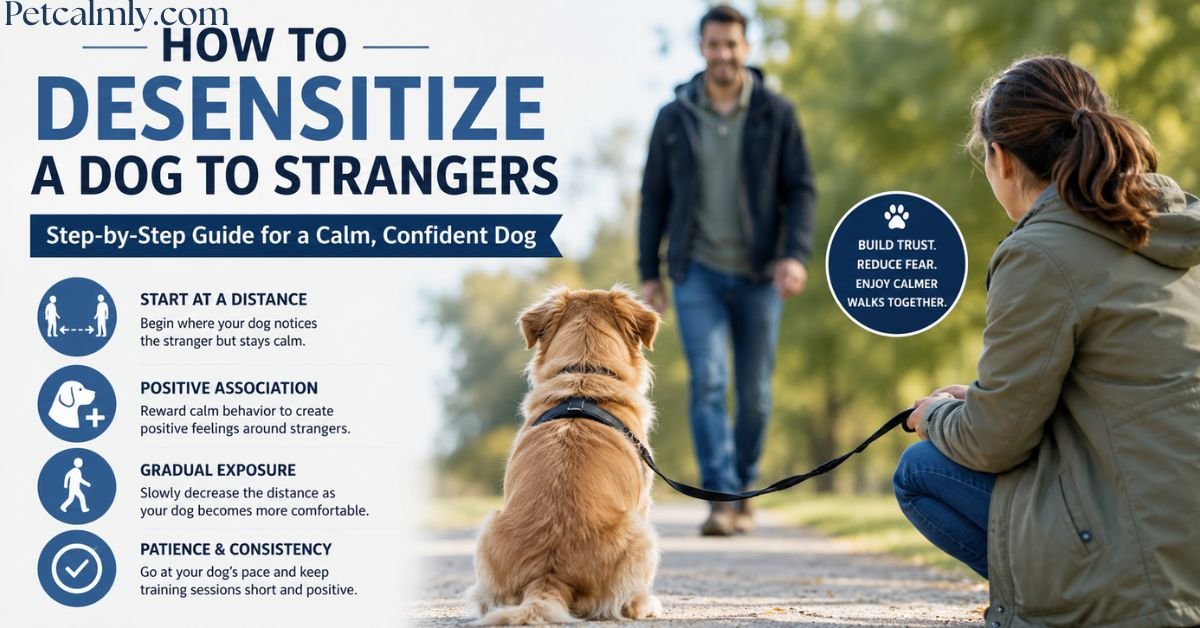
Short direct answer
To desensitize a dog to strangers, slowly expose your dog to unfamiliar people at a distance where they still feel safe and calm. Pair each positive encounter with rewards like treats, praise, or play. Over time, gradually decrease the distance and increase interaction only when your dog remains relaxed. Avoid forcing greetings, punishment, or overwhelming situations, since these can increase fear and reactivity. Patience, consistency, and controlled experiences are the key to helping a dog feel safer around strangers.
Introduction
Many dogs feel nervous, defensive, or overstimulated around unfamiliar people. Some bark loudly from behind windows. Others hide behind their owners, growl during walks, or panic when guests enter the house. For pet owners, this behavior can feel stressful, embarrassing, and sometimes even frightening.
The good news is that most dogs can improve significantly with calm, structured desensitization training. Dogs are not trying to “be bad” when they react to strangers. In many cases, they are scared, uncertain, or simply under-socialized.
Learning how to desensitize a dog to strangers takes patience and realistic expectations, but small daily improvements often lead to major long-term progress. In this guide, you’ll learn why dogs react this way, how desensitization works, common mistakes to avoid, and practical step-by-step methods that actually help dogs build confidence safely.
Why Dogs React to Strangers
Not every dog loves meeting new people. Some dogs are naturally social, while others are cautious by temperament. A dog’s past experiences, breed tendencies, environment, and training history all influence how they respond to unfamiliar people.
Common Reasons Dogs Fear or React to Strangers
Lack of Early Socialization
Puppies that were not safely exposed to different people during their early development period may struggle later in life. This is especially common in rescue dogs or dogs raised in isolated environments.
Previous Bad Experiences
A dog that was yelled at, grabbed unexpectedly, cornered, or hurt by a person may associate strangers with danger.
Protective or Territorial Behavior
Some dogs become reactive near their home, yard, car, or owner because they feel the need to guard resources or territory.
Genetic Temperament
Certain dogs are naturally more cautious or sensitive. Herding breeds, guardian breeds, and some working dogs may be more alert around unfamiliar people.
Overstimulation or Anxiety
Busy environments, loud noises, crowded sidewalks, or unpredictable movements can overwhelm anxious dogs quickly.
Signs Your Dog Is Uncomfortable Around Strangers
Recognizing early stress signals helps prevent escalation. Many owners only notice barking or lunging, but dogs often show discomfort long before that point.
Early Warning Signs
- Lip licking
- Yawning when not tired
- Turning away
- Avoiding eye contact
- Tail tucked low
- Stiff body posture
- Whale eye (showing white of the eyes)
- Pacing
- Excessive panting
- Trembling
More Serious Reactions
- Growling
- Snapping
- Barking aggressively
- Lunging on leash
- Trying to escape
- Hiding intensely
- Freezing in place
A dog that appears “calm” but is frozen and stiff may still be extremely stressed internally.
What Does Desensitization Mean?
Desensitization is a gradual training process that helps dogs become less reactive to something they fear or dislike.
In simple terms, your dog learns:
Strangers are not dangerous, and good things happen when they appear.”
The goal is not to force affection. Your dog does not need to love every stranger. The real goal is helping your dog stay calm, manageable, and emotionally safe.
Desensitization works best when combined with:
- Positive reinforcement
- Controlled exposure
- Patience
- Consistency
- Respect for the dog’s comfort threshold
Counterconditioning vs. Desensitization
These terms are often used together because they work hand in hand.
| Method | Purpose |
|---|---|
| Desensitization | Gradually reduces fear through controlled exposure |
| Counterconditioning | Changes emotional response by pairing strangers with rewards |
For example:
- Stranger appears at a safe distance
- Dog receives tasty treats
- Stranger disappears
- Dog relaxes
Eventually, the dog begins associating strangers with positive experiences instead of fear.
Step-by-Step: How to Desensitize a Dog to Strangers
Step 1: Identify Your Dog’s Threshold
Your dog has a “threshold distance” where they notice a stranger but can still remain calm enough to eat treats and respond to you.
This might be:
- 10 feet away
- Across the street
- At the end of a parking lot
Every dog is different.
Signs Your Dog Is Under Threshold
- Can take treats
- Responds to their name
- Body stays loose
- Minimal tension
- Curious instead of panicked
Signs They Are Over Threshold
- Barking uncontrollably
- Ignoring food
- Lunging
- Freezing
- Shaking heavily
Training works best under threshold.
Step 2: Start at a Comfortable Distance
Do not rush closer.
One of the biggest mistakes owners make is assuming exposure alone fixes fear. Flooding a dog with stressful interactions often makes behavior worse.
Instead:
- Begin far away from strangers
- Reward calm observation
- End sessions before stress increases
A nervous dog sitting calmly 40 feet away is making progress.
Step 3: Use High-Value Rewards
Ordinary kibble may not be motivating enough during stressful situations.
Try:
- Small chicken pieces
- Cheese
- Freeze-dried treats
- Peanut butter squeeze tubes
- Favorite toys for play-driven dogs
The reward should feel exciting and valuable.
Step 4: Let the Dog Observe Without Pressure
Your dog does not need to greet strangers immediately.
In fact, forcing interaction often slows progress.
A helpful early exercise:
- Sit at a park or quiet sidewalk
- Allow your dog to watch people from a distance
- Reward calm behavior
- Leave before stress escalates
This teaches neutral observation instead of panic.
Step 5: Practice “Look at That” Training
This popular positive reinforcement method works well for reactive dogs.
How It Works
- Dog notices stranger
- You say “Yes!” or click
- Give reward
- Stranger remains at safe distance
Over time, your dog learns:
“Seeing strangers predicts good things.”
This changes emotional associations gradually.
Step 6: Reduce Distance Slowly
Only decrease distance when your dog consistently stays relaxed.
Progress may look like:
- 40 feet
- 35 feet
- 30 feet
- 25 feet
Some dogs improve quickly. Others need weeks at one stage.
That is normal.
Step 7: Controlled Guest Practice at Home
Dogs often react more strongly inside their home.
Invite calm, dog-savvy friends to help with training.
Safe Guest Introduction Routine
Before the Guest Arrives
- Exercise your dog first
- Prepare treats
- Use leash or baby gate if needed
- Avoid high excitement
During Arrival
- Ignore the dog initially
- No direct eye contact
- No reaching toward the dog
- Toss treats gently nearby
Let the Dog Choose
Your dog should decide whether to approach.
A dog that voluntarily sniffs and walks away is still succeeding.
5 Common Mistakes That Slow Progress
Forcing Greetings
Many people pressure dogs into uncomfortable interactions because they think exposure builds confidence.
Usually, the opposite happens.
Punishing Fear Responses
Yelling, leash corrections, or punishment can increase anxiety and create stronger negative associations with strangers.
The dog may learn:
“Strangers really are dangerous because bad things happen around them.”
Moving Too Fast
Improvement often happens in tiny steps.
Owners sometimes progress from:
- Watching strangers calmly
to - Allowing direct petting too quickly
This can trigger setbacks.
Letting Strangers Crowd the Dog
Even friendly strangers may unknowingly overwhelm nervous dogs.
Common problems include:
- Leaning over the dog
- Reaching toward the head
- Staring directly
- Fast movements
- Loud voices
Inconsistent Training
A few training sessions will not fully change emotional responses.
Short, consistent practice matters more than long occasional sessions.
Helpful Training Tools
Some tools can make desensitization safer and easier.
Useful Equipment
Front-Clip Harness
Helps reduce pulling pressure safely.
Long Training Leash
Allows controlled freedom while maintaining safety.
Treat Pouch
Quick reward timing improves learning.
Baby Gates
Useful for controlled guest exposure indoors.
Calming Enrichment
Lick mats, snuffle mats, and food puzzles can reduce overall stress levels.
Should Strangers Give Treats?
Sometimes yes but not always.
For fearful dogs, tossing treats gently nearby often works better than hand-feeding directly.
Direct reaching can feel intimidating.
Good Stranger Behavior
- Sideways body posture
- Calm voice
- No leaning over
- No forced touching
- Allow dog to approach voluntarily
Dogs usually trust people faster when pressure is removed.
How Long Does Desensitization Take?
There is no universal timeline.
Some dogs improve within weeks. Others need months of consistent work.
Progress depends on:
- Severity of fear
- Past experiences
- Genetics
- Training consistency
- Environment
- Owner patience
Real improvement is rarely perfectly linear.
Many owners notice:
- Good days
- Small setbacks
- Sudden confidence jumps later
That is completely normal during behavior work.
Can Older Dogs Learn to Be Comfortable Around Strangers?
Yes. Adult dogs absolutely can improve.
Older dogs may take longer because emotional patterns are deeply established, but positive reinforcement training still works very effectively.
In many cases, mature dogs actually progress well because:
- Routines are more stable
- Owners better recognize triggers
- Training becomes more structured
Patience matters more than age.
Real-Life Example
A rescue dog named Milo barked intensely whenever visitors entered the apartment. His owner initially tried forcing greetings so he would “get used to people.” Instead, Milo became more reactive.
Training changed once they slowed down.
They started:
- Keeping visitors behind a baby gate
- Tossing treats when guests appeared
- Ignoring direct interaction
- Rewarding calm behavior
After several weeks, Milo stopped barking continuously. A few months later, he voluntarily approached visitors calmly and relaxed nearby without fear.
This type of gradual emotional change is common when dogs feel safe during training.
When Should You Be Concerned?
Some behaviors require professional guidance sooner rather than later.
Warning Signs to Take Seriously
- Biting or attempted biting
- Intense lunging
- Severe panic
- Redirected aggression
- Escaping dangerously
- Aggression toward children
- Multiple escalating incidents
If your dog’s reactions are becoming stronger, unpredictable, or unsafe, contact:
- A certified positive reinforcement trainer
- A veterinary behaviorist
- Your veterinarian
Medical issues, pain, or chronic anxiety can sometimes contribute to behavioral changes.
What Should Pet Owners Do?
If your dog struggles with strangers, focus on realistic progress instead of perfection.
Practical Daily Steps
Keep Sessions Short
5–10 minute sessions are often enough.
Watch Body Language Carefully
Subtle stress signals matter.
Reward Calm Choices
Even small moments of relaxation deserve reinforcement.
Advocate for Your Dog
Politely tell strangers:
“He’s in training and needs space.”
Build Confidence Outside Stranger Training
Confidence games, scent work, enrichment, and predictable routines often help anxious dogs overall.
Stay Calm Yourself
Dogs frequently notice owner tension. Calm handling creates a safer learning environment.
Quick Dos and Don’ts
| Do | Don’t |
|---|---|
| Reward calm behavior | Punish fear |
| Start at safe distances | Force greetings |
| Use high-value treats | Rush progress |
| Allow choice and space | Corner the dog |
| Practice consistently | Expect overnight change |
| Watch body language | Ignore stress signs |
Beginner-Friendly Stranger Desensitization Checklist
Before Training
- ✔ Bring treats
- ✔ Use secure equipment
- ✔ Choose quiet locations
- ✔ Keep sessions short
During Training
- ✔ Stay under threshold
- ✔ Reward calm observation
- ✔ End positively
- ✔ Give breaks
After Training
- Allow decompression
- Avoid overwhelming events
- Track improvements
- Adjust difficulty slowly
Can Medication Help Some Dogs?
In severe anxiety cases, veterinary support may help.
Some dogs are so stressed that learning becomes difficult because they remain in a constant state of fear.
A veterinarian or veterinary behaviorist may discuss:
- Anxiety management plans
- Environmental adjustments
- Temporary medication support
Medication should never replace training, but it can sometimes make behavior work more effective and humane.
Building Long-Term Confidence
Desensitization is not only about reducing barking or lunging. It is about helping your dog feel safer in everyday life.
Confident dogs tend to:
- Recover faster from stress
- Explore calmly
- Make better decisions
- Show fewer defensive reactions
Small wins matter:
- Looking at a stranger calmly
- Walking past someone quietly
- Relaxing while guests visit
These moments are real progress.
Conclusion
Learning how to desensitize a dog to strangers takes patience, structure, and empathy. Most fearful or reactive dogs improve best through slow exposure, positive reinforcement, and safe experiences that build trust gradually.
Avoid forcing interaction or expecting instant transformation. Dogs learn faster when they feel safe enough to stay calm and think clearly.
Some dogs eventually become social butterflies. Others simply learn to tolerate unfamiliar people peacefully and that is perfectly okay too.
Focus on steady progress, celebrate small improvements, and remember that confidence grows through consistent positive experiences over time.
More Information About Pets, Please Visit Our Website: Can Anxiety in Dogs Cause Aggression?
My Female Dog Is Hiding and Acting Strange
Frequently Asked Questions
1: How do I stop my dog from barking at strangers?
Start by increasing distance from triggers and rewarding calm behavior before barking begins. Avoid punishment, since it can increase anxiety and worsen reactivity.
2: Can a fearful dog ever become friendly with strangers?
Many fearful dogs improve greatly with gradual desensitization and positive experiences. Some become social, while others simply become calmer and more comfortable.
3: Should strangers pet my nervous dog?
Usually not at first. Allow the dog to approach voluntarily instead of forcing interaction. Calm observation is often more helpful early on.
4: How often should I practice desensitization training?
Short daily or near-daily sessions usually work best. Consistency matters more than long training sessions.
5: Why does my dog react more strongly at home?
Dogs often feel territorial or protective in familiar environments. Home reactions are very common in fearful or reactive dogs.
6: When should I hire a professional dog trainer?
Seek professional help if your dog shows aggression, biting, severe fear, escalating reactions, or if training feels unsafe or overwhelming.