Short direct answer
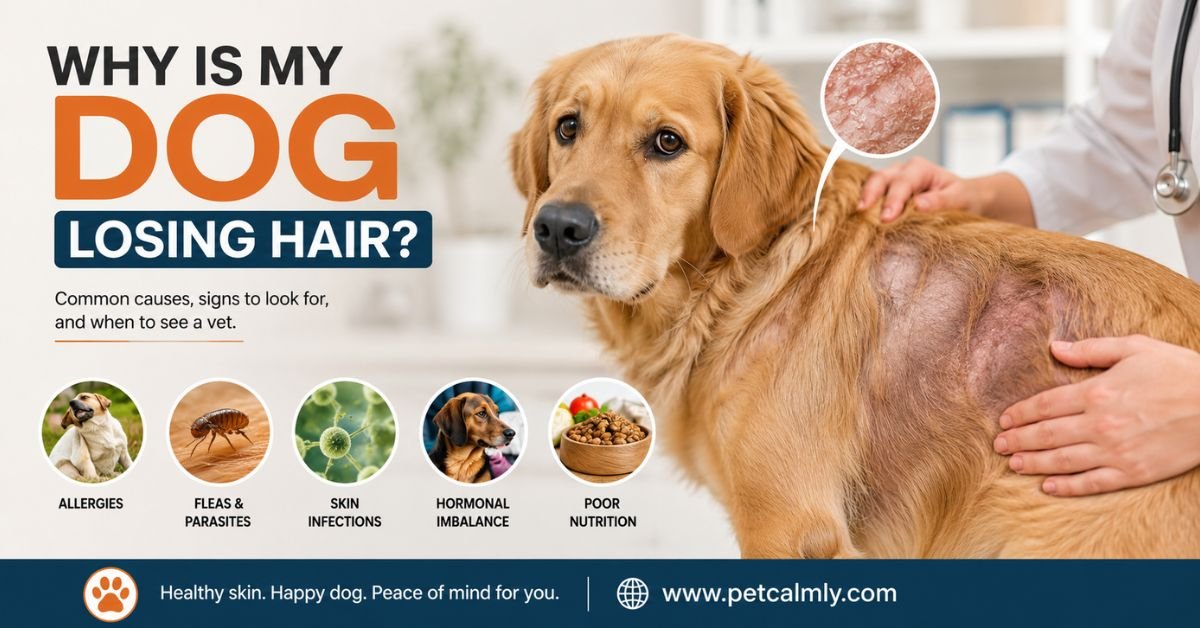
Dogs lose hair for many reasons, and most of them are treatable once you know what you’re dealing with. The most common causes are allergies (food, environmental, or flea-related), parasites like fleas or mites, hormonal imbalances such as thyroid disease, skin infections, stress, and poor nutrition. Some hair loss is completely normal, like seasonal shedding. But patchy bald spots, redness, constant scratching, or hair loss that comes on suddenly usually points to something that needs closer attention sometimes from you, sometimes from your vet.
When You Notice the Fur on the Couch Isn’t Normal Anymore
Every dog owner knows the feeling of finding hair on their clothes, the carpet, and somehow in their coffee mug. That’s just life with a dog. But there’s a difference between “my house is covered in fur” and “my dog has a bald patch behind her ear that wasn’t there last week.”
If you’re reading this, you’ve probably already noticed something’s off. Maybe it’s thinning fur along your dog’s back. Maybe it’s a bald spot near the tail. Maybe your dog won’t stop chewing at one leg, and now there’s less hair there than there used to be. Whatever brought you here, you’re not overreacting by looking into it hair loss in dogs (called alopecia in veterinary terms) is one of the most common reasons owners bring their dogs in for a skin check, and there’s almost always a reason behind it.
This guide walks through the real causes, what they typically look like, which ones you can manage at home, and which ones genuinely need a veterinarian’s eyes on them. No guesswork, no scare tactics just what’s actually going on with your dog’s coat.
Normal Shedding vs. Abnormal Hair Loss: How to Tell the Difference
Before diving into causes, it helps to know what you’re actually looking at.
Normal shedding usually means:
- Hair comes out evenly across the body
- Skin underneath looks healthy, pink, and undamaged
- There’s no redness, scabbing, or odor
- It often follows a seasonal pattern, especially in double-coated breeds like Huskies, German Shepherds, and Golden Retrievers
Abnormal hair loss, on the other hand, tends to show up as:
- Patchy or uneven bald spots
- Skin that looks red, flaky, greasy, or thickened
- Hair loss concentrated in one area (like around the eyes, ears, tail base, or belly)
- Accompanying symptoms like scratching, licking, odor, or visible irritation
If your dog’s coat is thinning all over but the skin looks normal and calm, you’re probably dealing with shedding, a coat blowing out after pregnancy, or a natural aging change. If you’re seeing bald patches with irritated skin, that’s your cue to keep reading — and possibly to book a vet visit sooner rather than later.
7 Common Causes of Hair Loss in Dogs
There isn’t one single reason dogs lose hair. It’s usually one of a handful of categories, and figuring out which one applies to your dog often comes down to where the hair loss is happening and what else is going on with their skin.
1: Allergies: The Most Common Culprit
Allergies are, by a wide margin, the reason most dogs end up with itchy skin and patchy fur. Dogs can be allergic to:
- Environmental triggers like pollen, dust mites, or mold (often called atopic dermatitis)
- Fleas, even from a single bite, in dogs with flea allergy dermatitis
- Food ingredients, most commonly certain proteins or grains
What makes allergies tricky is that they don’t just cause sneezing like they might in a person. In dogs, allergies usually show up on the skin. The itching leads to scratching, licking, or chewing, and that repeated self-trauma is often what causes the actual hair loss not the allergy itself, but the dog’s response to it.
A telltale sign of allergy-related hair loss is that it tends to cluster around the paws, belly, armpits, ears, and face. If your dog is constantly licking their paws or rubbing their face on the carpet, allergies are a reasonable first suspect.
2: Parasites: Fleas, Mites, and Mange
Even one flea can trigger intense itching in a sensitive dog, and the scratching that follows can strip hair from the lower back and tail area surprisingly fast.
Mites are another common cause, and they fall into two main types:
- Demodectic mange, caused by Demodex mites that live in hair follicles. Most dogs carry small numbers of these mites without issue, but an overwhelmed immune system — often in puppies or older dogs — can let them multiply, leading to patchy hair loss, especially around the eyes and muzzle.
- Sarcoptic mange (scabies), which is intensely itchy and contagious to other pets and even to humans in some cases. It tends to affect the ears, elbows, and belly first.
Both types usually require a vet to diagnose through a skin scraping, since they look similar to other skin conditions but need very different treatment.
3: Hormonal Imbalances
When a dog’s hormones are out of balance, the coat is often one of the first places it shows. Two conditions are especially common:
- Hypothyroidism, where the thyroid gland doesn’t produce enough hormone. This tends to cause symmetrical hair thinning, especially along the trunk and tail, along with weight gain, low energy, and a dull coat.
- Cushing’s disease (hyperadrenocorticism), where the body produces too much cortisol. This often causes thinning hair on the belly and sides, along with increased thirst, increased appetite, and a pot-bellied appearance.
These conditions are more common in middle-aged and older dogs, and they’re diagnosed through bloodwork rather than a visual exam, so home treatment isn’t really on the table here. If your dog’s hair loss is paired with changes in energy, appetite, or body shape, a hormonal cause is worth ruling out.
4: Skin Infections: Bacterial and Fungal
Sometimes hair loss isn’t the primary problem it’s a side effect of an infection that’s already taken hold. Bacterial skin infections (often secondary to allergies or a compromised skin barrier) can cause circular patches of hair loss, sometimes with a musty smell or crusty texture.
Ringworm, despite the name, is actually a fungal infection, not a worm. It typically causes circular, scaly bald patches and can spread between pets and people, which makes it one of the more important conditions to catch early.
5: Stress, Anxiety, and Behavioral Hair Loss
This one surprises a lot of owners, but stress can genuinely cause hair loss in dogs, usually through a behavior called excessive licking or acral lick dermatitis. Dogs left alone for long stretches, dogs going through a major change (a move, a new pet, a loss in the family), or dogs with underlying anxiety may develop a compulsive licking habit focused on one leg or paw.
Over time, that repeated licking irritates the skin, removes hair, and can even create an open sore called a lick granuloma. The hair loss here isn’t caused by a skin disease at all it’s a coping behavior that’s gone on long enough to leave a physical mark.
If you’re noticing this pattern, it’s worth reading more about managing separation anxiety in dogs and looking at what’s changed in your dog’s routine recently.
6: Nutritional Deficiencies
A dog’s coat is a direct reflection of what’s happening inside their body. Diets that are low in quality protein, essential fatty acids (like omega-3s and omega-6s), zinc, or certain vitamins can result in a dry, brittle coat that sheds more than it should. This is less common with commercial diets that meet AAFCO standards, but it does show up in dogs on poorly balanced homemade diets or those with digestive issues that prevent proper nutrient absorption.
7: Genetics and Natural Patterns
Some breeds are simply predisposed to certain types of hair loss. Doberman Pinschers, Dachshunds, and Chihuahuas, for example, are more prone to a condition called color dilution alopecia, which affects dogs with diluted coat colors like blue or fawn. This tends to appear gradually and isn’t linked to any illness it’s just how that dog’s coat is built.
Post-clipping alopecia is another genetics-adjacent issue, where a dog’s coat (often in double-coated breeds) is slow to grow back after a close shave, sometimes taking months longer than expected.
How Veterinarians Actually Diagnose the Cause
It helps to know what a vet visit for hair loss usually looks like, since it takes a lot of the mystery out of the process.
Most appointments start with a physical exam and a conversation about timeline: when the hair loss started, whether it’s spreading, and what else has changed (diet, environment, routine, other pets in the house). From there, common next steps include:
- A skin scraping, which checks for mites like Demodex or Sarcoptes under a microscope
- A fungal culture or Wood’s lamp exam, used to check for ringworm
- Bloodwork, which can flag thyroid problems, Cushing’s disease, or general organ function
- A food trial, typically an eight- to twelve-week elimination diet using a novel or hydrolyzed protein source, used when a food allergy is suspected
- Cytology, where cells from the skin surface are examined for bacteria or yeast
None of these are invasive or especially stressful for most dogs, and having a clear diagnosis usually means treatment works faster than guessing ever would. It’s also worth mentioning that more than one cause can be present at once a dog with underlying allergies, for example, is more prone to developing a secondary bacterial or yeast infection on top of it, which is part of why self-diagnosing from photos online often falls short.
How Age and Life Stage Change the Picture
The likely cause of hair loss shifts quite a bit depending on how old your dog is, which is a detail owners often overlook.
Puppies are more likely to deal with demodectic mange, since their immune systems are still developing, or with ringworm picked up from littermates or a shelter environment. Hair loss in a young puppy is rarely age-related and usually points to something parasitic or infectious.
Adult dogs, roughly one to seven years old, tend to see hair loss driven by allergies, whether environmental, flea-related, or food-based. This is also the age range where behavioral licking from stress or boredom shows up most often.
Senior dogs are more likely to develop hormonal causes like hypothyroidism or Cushing’s disease, along with age-related thinning that isn’t tied to any disease at all. A senior dog with new hair loss alongside weight or energy changes is a reasonable candidate for a wellness bloodwork panel, even if nothing else seems obviously wrong.
Keeping your dog’s life stage in mind narrows the list of likely causes considerably before you even walk into a vet’s office.
Signs and Symptoms to Watch Alongside Hair Loss
Hair loss rarely shows up completely on its own. Paying attention to what’s happening around it can actually tell you more than the bald spot itself.
| Symptom Alongside Hair Loss | Possible Cause |
|---|---|
| Intense itching, red skin | Allergies or parasites |
| Circular bald patches, scaly texture | Ringworm or fungal infection |
| Symmetrical thinning, weight gain, low energy | Hypothyroidism |
| Increased thirst/appetite, pot-belly | Cushing’s disease |
| One localized spot, constant licking | Stress-related lick granuloma |
| Greasy coat, odor | Bacterial or yeast infection |
| Hair loss with no irritation at all | Genetics or natural shedding |
Mistakes Dog Owners Commonly Make With Hair Loss
A few well-meaning habits tend to make things harder to diagnose or slower to heal.
- Bathing too frequently. Over-bathing, especially with human shampoo, strips natural oils and can worsen irritation.
- Guessing and switching foods repeatedly. Constant diet changes make it nearly impossible to identify a true food allergy, since the gut never gets a stable baseline.
- Using leftover medication from another pet or a previous issue. Skin conditions look similar but need very different treatments mange medication won’t help a bacterial infection, and vice versa.
- Waiting too long to act on sudden, severe hair loss. Some causes, like acute mange or infections, get significantly harder to treat the longer they’re left alone.
- Assuming it’s “just stress” without ruling out physical causes first. Anxiety-driven licking is real, but it’s a diagnosis of exclusion meaning other causes should be ruled out before settling on it.
How to Help Your Dog at Home: A Practical Care Guide
For mild cases, or while you’re waiting for a vet appointment, there are things you can do that genuinely help without overcomplicating things.
- Check for fleas first. Use a flea comb near the tail base and belly. It’s the fastest, cheapest way to rule out one of the most common causes.
- Look at the diet. Make sure your dog is on a complete, balanced food appropriate for their life stage. If you suspect a food allergy, ask your vet about a proper elimination diet trial rather than guessing.
- Reduce bathing frequency and switch to a gentle, dog-specific shampoo if you’re bathing often.
- Add omega-3 fatty acids (like fish oil, under vet guidance on dosage) if the coat looks dry or dull rather than actively infected.
- Address the environment, not just the symptom. If licking seems tied to boredom or being left alone, more enrichment, structured exercise, and a consistent routine can make a real difference.
- Keep the affected area clean and dry, and try to prevent further licking or scratching with a recovery cone if needed, so the skin gets a chance to heal.
- Track the pattern. Note when the hair loss started, where it’s located, and whether it’s spreading. This information is genuinely useful for a vet and can speed up diagnosis.
When Should You Worry? Signs That Need a Veterinarian
Home care is appropriate for mild, non-progressing hair loss with no other symptoms. But certain signs mean it’s time to stop guessing and get a professional opinion:
- Hair loss that’s spreading or worsening over days or weeks
- Open sores, scabs, or bleeding skin
- A strong odor coming from the skin
- Hair loss paired with weight changes, lethargy, or increased thirst/appetite
- Circular, scaly patches (possible ringworm, which can spread to people)
- Visible parasites, or intense scratching that doesn’t improve with basic flea control
- Hair loss in a puppy, senior dog, or dog with an existing health condition
None of these mean panic most causes of hair loss are very manageable once identified. But they do mean a proper diagnosis matters more than home guessing at this point. According to the Merck Veterinary Manual, persistent or worsening skin changes in dogs generally warrant a veterinary skin exam, since several causes look similar on the surface but require very different treatments.
What Should Pet Owners Do Next? A Simple Action Plan
If you’re not sure where to start, here’s a straightforward path:
- Observe first. Note the location, pattern, and any other symptoms for a few days.
- Rule out fleas and diet issues, since they’re the easiest to check at home.
- Book a vet visit if hair loss is spreading, if the skin looks irritated, or if it’s been going on for more than two to three weeks without improvement.
- Ask about diagnostic testing. A skin scraping, fungal culture, or bloodwork can identify the exact cause far faster than trial and error.
- Follow the treatment plan fully, even after symptoms start improving — many skin conditions relapse if treatment is stopped early.
- Reassess the environment and routine if stress or anxiety seems to be part of the picture, alongside any medical treatment.
Preventing Future Hair Loss
Once the current issue is under control, a few habits help lower the odds of it coming back:
- Stay consistent with flea and parasite prevention year-round, not just in summer
- Feed a complete, balanced diet suited to your dog’s age and health needs
- Groom regularly, but avoid over-bathing
- Keep up with routine vet checkups, especially for middle-aged and senior dogs, since hormonal conditions develop gradually
- Provide enough physical and mental stimulation to reduce stress-driven behaviors
- Introduce new foods, products, or environments gradually rather than all at once
Conclusion
Hair loss in dogs almost always has a clear, identifiable reason behind it, even when it feels confusing at first. Some causes, like mild seasonal shedding, need nothing more than a good brushing routine. Others, like allergies, parasites, or hormonal conditions, need a bit more attention sometimes home care, sometimes a proper vet visit. The most reassuring part is that once you know the cause, the path forward is usually pretty clear. Trust what you’re seeing on your dog’s skin and coat, act on the signs that matter, and don’t hesitate to loop in your vet when something doesn’t add up on its own.
More Information About Pets, Please Visit Our Website: Why Is My Dog Drinking So Much Water?
Why Is My Dog Coughing Like Something is Stuck in his throat?
Why Does My Dog Howl at Night
Early Signs of Worms in Dogs
Frequently Asked Questions
1: Why is my dog losing hair in clumps?
Hair loss in clumps is often linked to a coat “blowing,” which happens seasonally in double-coated breeds, or to a skin condition like an allergy flare or fungal infection. If clumping is paired with redness or odor, it’s worth a vet check rather than just more brushing.
2: Can stress really cause a dog to lose hair?
Yes. Stress and anxiety can lead to compulsive licking or chewing, usually focused on one leg or paw, which gradually removes hair and can damage the skin underneath. This is a genuine behavioral cause, not just an owner’s assumption.
3: Is dog hair loss always a sign of a serious illness?
No. Many cases are mild and manageable, like seasonal shedding, minor dietary gaps, or a single flea issue. Serious causes, like Cushing’s disease, are less common but tend to come with other clear symptoms like changes in thirst, appetite, or energy.
4: What home remedy helps a dog with hair loss?
There’s no universal home remedy since the right approach depends on the cause. That said, checking for fleas, ensuring a balanced diet, reducing bath frequency, and adding vet-approved omega-3 supplements are safe first steps for mild cases.
5: How long does it take for a dog’s hair to grow back?
It depends on the cause and the breed. Minor irritation-related hair loss can regrow within a few weeks once the trigger is resolved. Hormonal or shave-related hair loss can take several months, and in some genetic cases, regrowth may be incomplete.
6: Should I be worried if only one small bald spot appears?
A single small spot isn’t usually an emergency, but it’s worth monitoring closely for a week or two. If it grows, becomes scaly, or your dog seems bothered by it, a vet visit is the safer next step rather than waiting it out indefinitely.