
Short Direct Answer
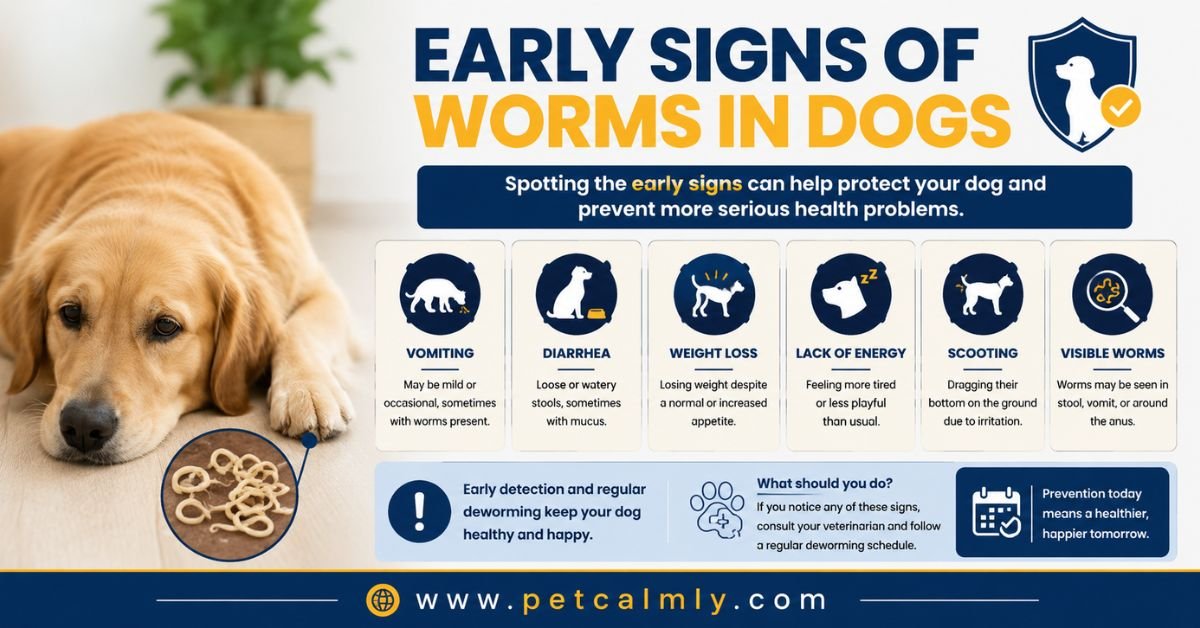
The early signs of worms in dogs often include changes in appetite, occasional vomiting, diarrhea, scooting, a dull coat, mild weight loss, bloating, and lower energy levels. Some dogs may also lick their rear excessively or have visible worms or worm segments in their stool. Because symptoms can start subtly, recognizing these warning signs early can help prevent more serious health problems and ensure your dog receives timely treatment.
Early Signs of Worms in Dogs: What Every Concerned Owner Should Watch For
Many dog owners don’t realize their pet has worms until symptoms become obvious.
The challenge is that intestinal parasites often start causing small changes that are easy to overlook. A dog may seem slightly less energetic, eat differently, or occasionally have an upset stomach. These signs may not immediately raise alarm bells, especially if your dog otherwise appears healthy.
The good news is that most worm infections are treatable when identified early.
In this guide, you’ll learn how to recognize the early signs of worms in dogs, understand why they happen, know when veterinary care is needed, and discover practical steps to protect your pet’s health.
Understanding Worms in Dogs
Worms are parasites that live inside a dog’s body and feed off nutrients intended for the dog.
Several types of worms commonly affect dogs:
- Roundworms
- Hookworms
- Whipworms
- Tapeworms
- Heartworms
While heartworms affect the heart and lungs rather than the intestines, the other types typically live within the digestive tract.
Puppies, senior dogs, shelter dogs, hunting dogs, and pets that spend a lot of time outdoors are often at greater risk.
What Are the Earliest Signs of Worms in Dogs?
Quick Answer
The earliest signs usually involve digestive changes, mild behavioral shifts, and subtle physical symptoms rather than severe illness.
Many dogs show:
- Slight appetite changes
- Occasional diarrhea
- Mild vomiting
- Scooting
- Increased licking around the rear
- Reduced energy
- Pot-bellied appearance
- Poor coat condition
These symptoms can develop gradually
Changes in Appetite
One of the first clues can be an unexpected change in eating habits.
Some dogs become unusually hungry because parasites are consuming nutrients inside their bodies.
Others lose interest in food due to digestive discomfort.
You might notice:
- Begging more often
- Constant hunger
- Skipping meals
- Reduced enthusiasm for treats
- Eating grass more frequently
A sudden shift in appetite that lasts several days deserves attention.
Unexplained Weight Loss
Weight loss is one of the most common indicators of intestinal parasites.
Why It Happens
Worms compete with your dog for nutrients.
Even if your dog continues eating normally, their body may not absorb enough nutrients because the parasites are consuming part of their food supply.
Signs include:
- Visible ribs
- Loss of muscle tone
- Thinner waistline
- Reduced body condition
In puppies, weight loss can occur surprisingly quickly.
Digestive Upset and Diarrhea
Many worm infections irritate the digestive tract.
This irritation can lead to:
- Loose stools
- Soft stools
- Mucus in feces
- Intermittent diarrhea
- Increased bowel movements
Sometimes diarrhea comes and goes, making it easy to dismiss as a temporary stomach issue.
Persistent digestive problems should never be ignored.
Vomiting
Some dogs with worms experience occasional vomiting.
In short, parasites can irritate the stomach and intestines enough to trigger nausea.
Watch for:
- Vomiting after meals
- Repeated gagging
- Foam or bile vomit
- Worms appearing in vomit
While not every infected dog vomits, recurring episodes warrant investigation.
Scooting Across the Floor
Scooting is often associated with anal gland problems, but worms can also cause irritation around the rear end.
Dogs may:
- Drag their bottom on carpets
- Rub against furniture
- Frequently sit and scoot
This behavior occurs because parasites or worm segments can create itching and discomfort.
Excessive Rear-End Licking
Many owners first notice something is wrong when their dog constantly licks the area beneath the tail.
This may happen because:
- Worm segments cause irritation
- The skin feels itchy
- Digestive discomfort increases sensitivity
If rear-end licking becomes obsessive, it’s worth discussing with a veterinarian.
A Bloated or Pot-Bellied Appearance
A swollen abdomen is especially common in puppies with heavy roundworm infections.
The belly may appear:
- Rounded
- Tight
- Distended
- Larger than normal
Meanwhile, the rest of the puppy may seem thin.
This combination of a pot belly and poor body condition is a classic warning sign.
Low Energy and Fatigue
Dogs carrying parasites may become less active than usual.
You might notice:
- More sleeping
- Less interest in walks
- Reduced enthusiasm for play
- Slower movement
The main reason is that worms can reduce nutrient availability and sometimes contribute to anemia.
Changes in Coat Quality
A healthy coat often reflects overall health.
Parasites can interfere with nutrient absorption, causing the coat to become:
- Dry
- Brittle
- Dull
- Thinner than normal
Some dogs also develop flaky skin.
While many conditions can affect coat quality, worms are one possible cause.
Visible Worms in Stool
Not all infected dogs pass visible worms.
However, when they do, owners may notice:
Roundworms
Appear similar to spaghetti strands.
Tapeworm Segments
Look like:
- Small rice grains
- Sesame seeds
- Tiny moving white segments
These may be visible near the anus, in bedding, or in stool.
Signs of Worms in Puppies
Puppies often show symptoms more dramatically than adult dogs.
Watch for:
- Poor growth
- Pot belly
- Diarrhea
- Weight loss
- Weakness
- Dull coat
- Vomiting
Because young dogs have developing immune systems, prompt veterinary attention is particularly important.
Common Types of Worms and Their Symptoms
| Worm Type | Common Early Signs |
|---|---|
| Roundworms | Pot belly, vomiting, diarrhea, poor growth |
| Hookworms | Weakness, pale gums, diarrhea |
| Whipworms | Chronic diarrhea, weight loss |
| Tapeworms | Scooting, visible segments, licking |
| Heartworms | Coughing, exercise intolerance, fatigue |
Each parasite affects the body differently, which is why professional diagnosis matters.
How Dogs Get Worms
Many owners are surprised by how easily dogs can become infected.
Common sources include:
Contaminated Soil
Parasite eggs can survive in soil for extended periods.
Eating Infected Animals
Rodents, rabbits, and wildlife may carry parasites.
Fleas
Tapeworm infections frequently begin when dogs swallow infected fleas.
Mother to Puppies
Some worms pass from mother dogs during pregnancy or nursing.
Fecal Exposure
Dogs may accidentally ingest parasite eggs while sniffing or licking contaminated areas.
Behavioral Changes Owners Often Miss
Not every symptom is physical.
Some dogs display subtle behavioral shifts before obvious illness develops.
These changes may include:
- Restlessness
- Increased irritability
- Sleeping more
- Reduced playfulness
- Seeking isolation
Owners sometimes attribute these behaviors to age, weather, or mood changes.
In reality, discomfort from parasites may be contributing.
Mistakes Pet Owners Commonly Make
1: Assuming It Is Just a Sensitive Stomach
Recurring digestive issues should not automatically be blamed on food.
2: Ignoring Mild Symptoms
Early signs are often subtle.
Waiting for severe symptoms can allow infections to worsen.
3: Using Random Home Remedies
Many internet remedies lack scientific support and may delay effective treatment.
4: Skipping Routine Fecal Exams
Even healthy-looking dogs can carry parasites.
Regular testing helps catch infections early.
Daily Checklist: Signs That May Suggest Worms
Use this quick checklist.
✓ Recent diarrhea
✓ Occasional vomiting
✓ Increased scooting
✓ Excessive rear licking
✓ Pot-bellied appearance
✓ Weight loss
✓ Dull coat
✓ Low energy
✓ Visible worm segments
✓ Appetite changes
The more boxes you check, the more important it becomes to schedule a veterinary visit.
Can Dogs Have Worms Without Symptoms?
Yes.
Many dogs show no obvious symptoms during the early stages of infection.
This is why routine veterinary screenings remain important.
A dog may appear healthy while still shedding parasite eggs into the environment.
Regular fecal testing helps identify hidden infections before complications develop.
When Should You Worry?
Seek Veterinary Care Promptly If You Notice:
- Persistent diarrhea
- Repeated vomiting
- Significant weight loss
- Blood in stool
- Severe bloating
- Pale gums
- Weakness
- Collapse
- Difficulty breathing
Puppies, senior dogs, and dogs with existing health conditions should be evaluated sooner rather than later.
Potential Emergency Situations
Contact a veterinarian immediately if your dog develops:
- Extreme lethargy
- Severe dehydration
- Breathing problems
- Sudden collapse
- Significant abdominal swelling
These symptoms may indicate serious complications.
What Should Pet Owners Do?
If you suspect worms, take a practical and calm approach.
Step 1: Observe Symptoms
Keep notes about:
- Stool changes
- Vomiting episodes
- Appetite
- Energy levels
Step 2: Collect a Stool Sample
Fresh stool samples often help veterinarians identify parasites.
Step 3: Schedule a Veterinary Appointment
Accurate diagnosis determines the correct treatment.
Different worms require different medications.
Step 4: Follow Treatment Instructions
Complete the full treatment plan, even if symptoms improve quickly.
Step 5: Clean the Environment
Reduce reinfection risk by:
- Picking up waste promptly
- Washing bedding
- Vacuuming frequently
- Maintaining flea control
Preventing Worms in Dogs
Prevention is easier than treatment.
Helpful strategies include:
- Routine veterinary exams
- Regular fecal testing
- Monthly parasite prevention when recommended
- Flea control
- Prompt waste removal
- Preventing scavenging behavior
- Limiting exposure to contaminated environments
Consistency makes a big difference.
Products That May Help Prevent Parasite Problems
Always consult your veterinarian before choosing parasite prevention products.
Common options include:
- Monthly preventive medications
- Flea and tick preventives
- Prescription dewormers
- Combination parasite-control products
The right choice depends on:
- Your dog’s age
- Lifestyle
- Geographic location
- Health history
Recovery: What to Expect After Treatment
Many dogs improve quickly once parasites are eliminated.
Owners often notice:
- Better appetite regulation
- Increased energy
- Healthier stools
- Improved coat quality
- Weight gain when needed
Some dogs recover within days, while others require several weeks for full nutritional restoration.
Patience is important, especially in puppies recovering from significant infestations.
Related Topics Pet Owners Often Explore
If you’re researching parasite health, you may also find these topics useful:
- Why dogs eat grass
- Causes of yellow foam vomiting
- Sudden anxiety in dogs
- Dog digestive health
- Puppy wellness checklists
- Flea prevention strategies
- Healthy dog weight management
These topics often overlap because digestive health affects many aspects of canine well-being.
Conclusion
The early signs of worms in dogs can be surprisingly easy to miss. Small changes in appetite, energy, digestion, coat quality, or bathroom habits may be the first clues that something isn’t right.
Fortunately, most worm infections can be treated effectively when caught early. Paying attention to subtle symptoms, maintaining regular veterinary care, and following a consistent parasite prevention plan can help keep your dog healthy and comfortable.
If you suspect worms, don’t panic. A prompt veterinary evaluation and proper treatment plan are usually the fastest path back to a happy, healthy dog.
More Information About Pets, Please Visit Our Website: Dog Vomiting Yellow Foam Causes
Why Is My Dog Licking Paws All the Time?
What Are the Best Dental Products for Dogs?
Frequently Asked Questions
1: How do I know if my dog has worms without seeing them?
Many infected dogs never pass visible worms. Symptoms such as diarrhea, weight loss, scooting, vomiting, low energy, and appetite changes may provide the first clues.
2: What is usually the first sign of worms in dogs?
Digestive changes are often among the earliest signs. Mild diarrhea, occasional vomiting, appetite changes, or scooting frequently appear before more obvious symptoms.
3: Can worms make a dog act differently?
Yes. Some dogs become tired, less playful, irritable, or restless. Discomfort and reduced nutrient absorption can affect normal behavior.
4: Do all dogs with worms lose weight?
Not necessarily. Some dogs maintain normal weight initially, especially during mild infections. Weight loss becomes more common as parasite burdens increase.
5: Can indoor dogs get worms?
Yes. Indoor dogs can become infected through fleas, contaminated soil brought indoors, infected prey, or exposure during walks and outdoor activities.
6: How often should dogs be checked for worms?
Veterinarians commonly recommend routine fecal examinations during wellness visits. Puppies generally require more frequent testing and deworming than adult dogs.