
Short direct answer
Yes, in most cases you can put a small amount of pure, unrefined coconut oil on the outer flap and entrance of a dog’s ear to soothe dryness, flaking, or minor irritation. It should not be used inside the ear canal, and it is not a treatment for ear infections, ear mites, or yeast overgrowth. If your dog’s ears are red, swollen, smelly, or sensitive to touch, coconut oil should wait that’s a job for your veterinarian.
That’s the short version. But if your dog has been shaking her head, scratching at her ear, or you’re just trying to keep her ears healthy before a problem starts, there’s more you’ll want to know including what actually works, what doesn’t, and where the line between “safe home care” and “see a vet now” really sits.
Why This Question Matters to Dog Owners
Many dog owners use coconut oil for skin, paws, and coats, so it’s natural to wonder if it’s safe for ears too. Ear problems are common in dogs, and using the wrong home remedy can delay proper treatment or cause more pain. This guide explains when coconut oil may help, when it’s risky, and what vets recommend instead.
Can You Safely Put Coconut Oil in a Dog’s Ears?
The Short, Honest Answer
Coconut oil is not unsafe by default, but it’s easy to misuse. Dogs’ ears are delicate, warm, and dark perfect conditions for bacteria and yeast. Adding oil when there’s already a problem can trap moisture and worsen infections.
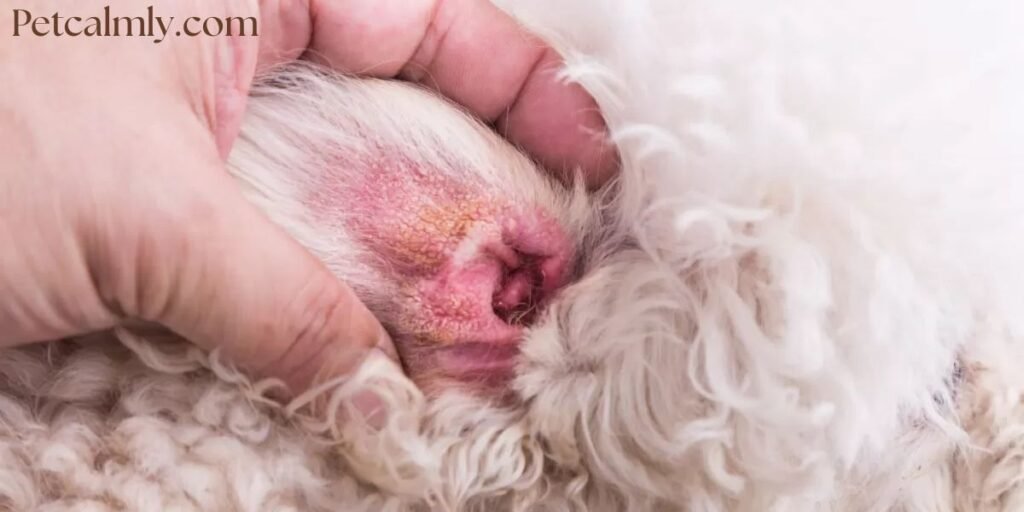
When Coconut Oil May Be Okay for Dogs’ Ears
Mild Dryness or Flaky Ear Skin
If your dog has:
- Dry, flaky skin on the outer ear flap
- No redness, smell, or discharge
- No head shaking or scratching
A tiny amount of coconut oil can help moisturize the skin.
Minor Surface Irritation (Outer Ear Only)
For dogs with:
- Slight irritation from cold weather
- Dry skin related to allergies (not infections)
Coconut oil may soothe the outer ear skin, not the ear canal.
Important: This applies only to the visible outer ear, not deep inside.
When You Should NOT Put Coconut Oil in Dogs’ Ears
Suspected Ear Infection
Do not use coconut oil if your dog has:
- Head shaking
- Constant ear scratching
- Red, swollen ears
- Bad or sweet smell
- Brown, yellow, or black discharge
- Pain when ears are touched
Oil can feed yeast and bacteria, making infections worse.
Yeast Ear Infections
Coconut oil has mild antibacterial properties, but:
- It does not kill yeast effectively
- Yeast thrives in oily, moist environments
This can turn a mild issue into a severe infection.
Dogs with Chronic Ear Problems
Dogs prone to ear infections (like Cocker Spaniels, Bulldogs, or Labs) should never have oil placed in their ears without vet guidance.
Is Coconut Oil Good for Dog Ear Infections?
What Science and Vets Say
There is no veterinary evidence that coconut oil cures dog ear infections.
While coconut oil contains lauric acid:
- It works poorly inside ear canals
- It doesn’t reach infection deep in the ear
- It can delay proper treatment
Vets consistently warn against using oils for active ear infections.

Risks of Putting Coconut Oil in Dogs’ Ears
Trapped Moisture
Oil blocks airflow and traps moisture, encouraging bacterial growth.
Worsening Yeast Overgrowth
Yeast feeds on warm, oily environments.
Delayed Diagnosis
Home remedies can mask symptoms while the infection spreads deeper.
Hearing Damage (Rare but Serious)
Untreated infections can damage the eardrum and affect hearing.
How to Use Coconut Oil Safely (If You Must)
Only for Outer Ear Skin
- Never pour oil into the ear canal
- Apply only to dry, flaky outer ear flap
Use the Smallest Amount Possible
- Use a pea-sized amount
- Rub between fingers to melt
- Gently massage onto the skin
Frequency
- No more than 1–2 times per week
- Stop immediately if symptoms worsen
Better Alternatives to Coconut Oil for Dog Ears
Vet-Approved Ear Cleaners
These:
- Dry excess moisture
- Balance ear pH
- Reduce bacteria and yeast
Prescription Treatments
For infections, vets may prescribe:
- Antifungal drops
- Antibiotic ear meds
- Anti-inflammatory treatments
These work faster and are safer.
When Should You Be Concerned?
You should contact a vet immediately if your dog shows:
- Head tilting or loss of balance
- Crying when ears are touched
- Swelling or heat in the ear
- Strong odor
- Discharge of any color
- Symptoms lasting more than 2–3 days
Early treatment prevents chronic ear disease.
What Should Pet Owners Do?
Step-by-Step Safe Approach
- Check the ears – Look, smell, and gently touch.
- If anything seems off, don’t use home remedies.
- Clean only with vet-approved products.
- See a vet for ongoing or painful symptoms.
- Use coconut oil only for dry outer ear skin, not medical issues.
More Information About Pets, Please Visit Our Website: How Often Should I Bathe My Dog with Skin Allergies
What to Use to Clean Dogs Ears Home Remedies: 6 Remedies
Conclusion
So, can you put coconut oil in dogs’ ears? Yes but very carefully and only for mild, dry outer ear skin. It should never replace proper ear treatment or be used for infections. When in doubt, skip the oil and consult your vet. Your dog’s ears are too sensitive to risk guesswork.
FAQs
Can coconut oil cure a dog’s ear infection?
No. Coconut oil cannot treat bacterial or yeast ear infections and may make them worse by trapping moisture.
Is coconut oil safe for cleaning dog ears?
Not recommended. Oil doesn’t clean ears and can push debris deeper. Use a vet-approved ear cleaner instead.
How do I know if my dog has an ear infection?
Common signs include head shaking, scratching, bad smell, redness, discharge, and pain when touched.
Can I use coconut oil for itchy dog ears?
Only if the itch is from dry skin on the outer ear. If itching is intense or persistent, see a vet.
What home remedies are safe for dog ears?
Very few. Most vets recommend avoiding home remedies and using professional ear cleaners or medications.
How often can I apply coconut oil to my dog’s ears?
At most 1–2 times per week, only on the outer ear skin, and only if there are no signs of infection.