Short direct answer
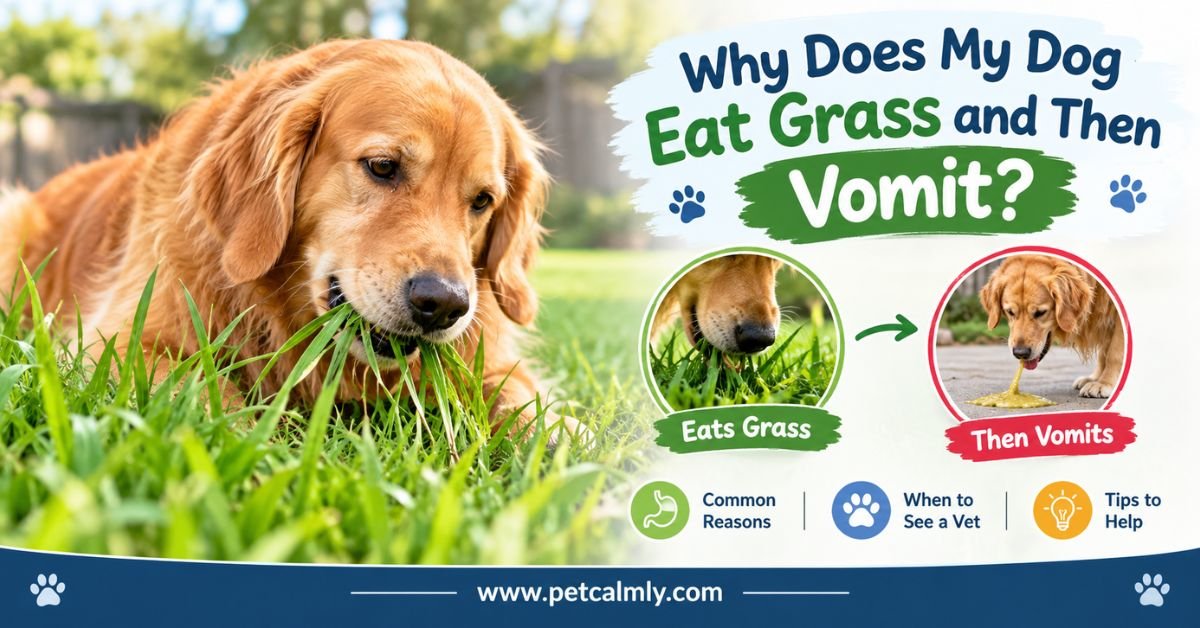
Why does my dog eat grass and then vomit? Most of the time it is a mix of instinct, boredom, curiosity, or a mildly upset stomach. Some dogs seem to eat grass when they feel nauseous, and the rough blades can irritate the stomach lining and trigger a vomit. A single episode in an otherwise happy, energetic dog is usually not an emergency. Repeated vomiting, lethargy, blood, or a swollen belly always deserves a call to your vet.
Why You’re Probably Standing in the Yard Feeling Worried
You let your dog out for a quick potty break, and suddenly they are chewing grass like a tiny lawnmower. Ten minutes later there is a puddle of green foam on the rug. Your first thought is probably, what did they eat, and is something wrong?
Take a breath. This is one of the most common questions dog owners ask, and the answer is usually far less scary than it feels in the moment. Still, it is not always harmless, so it helps to know how to tell the difference.
In this guide, we will walk through why dogs eat grass, why it sometimes ends in vomiting, what the colour and texture of the vomit can tell you, which warning signs mean you should phone a vet, and how to gently reduce the habit. No scare tactics, just practical information you can use today.
Why Does My Dog Eat Grass and Then Vomit? The Most Common Reasons
Here is the honest truth: nobody knows for certain why dogs eat grass. Veterinarians and animal behaviorists have several theories, and different dogs probably have different reasons. Often, more than one thing is going on at once.
1: An Upset Stomach or Nausea
This is the explanation most owners suspect first, and it is a reasonable one. Some dogs seem to gulp grass when their stomach feels off, almost like a person reaching for antacids. The grass may tickle the throat or irritate the stomach lining, which can set off vomiting and bring relief.
The interesting part is that research does not show this is the whole story. A well-known owner survey from the University of California, Davis, found that only a small share of grass-eating dogs seemed sick beforehand, and only a minority threw up afterward. So an upset stomach explains some cases, not all of them.
2: Instinct and Natural Scavenging Behavior
Dogs are descended from wild canids that were opportunistic eaters. Plant material, berries, and the stomach contents of prey were part of the menu. Some researchers believe a bit of grass eating is simply leftover instinct, a behavior that is built in rather than a sign of illness.
That helps explain why a perfectly healthy puppy with a full bowl of quality food may still graze on the lawn every evening.
3: Boredom, Anxiety, and Attention-Seeking
Dogs that are understimulated often invent their own entertainment. Grass is available, it smells interesting, and chewing it feels good. Some dogs also learn that eating grass makes their human jump up and react, which is a fine reward if you are a bored dog.
Anxious dogs may graze as a self-soothing habit, much like nail biting in people. If your dog eats grass mostly when you are leaving, when guests arrive, or after a stressful event, emotions may be part of the picture.
4: A Possible Fiber or Nutrient Gap
Grass is high in fiber. Some dogs seem to eat it to help move things along in the gut, especially if their diet is low in fiber. It is a popular theory, but it is not proven, and plenty of dogs on excellent diets still eat grass.
If grass eating started right after a food change, your vet can help you decide whether the diet is a good fit.
5: They Simply Like It
Some dogs just enjoy the taste and texture, especially fresh spring grass. If your dog nibbles calmly, acts completely normal, and never gets sick, this is the most likely explanation.
Is It Normal for a Dog to Eat Grass and Throw Up?
Occasional grass eating is very common and generally considered normal dog behavior. Throwing up now and then afterward is also common, and one episode in an otherwise bright, hungry, playful dog usually does not signal a serious problem.
The key words are occasional and otherwise normal. A pattern changes the picture. If your dog eats grass and vomits every day, or if the vomiting comes with other symptoms, something besides habit may be going on.
A useful rule of thumb many vets share: ask yourself whether this is a one-time event or a trend, and whether your dog is acting like themselves in between. Those two questions tell you a lot.
Does Grass Make Dogs Vomit, or Do They Eat It to Vomit?
Both can happen, and this is where many articles oversimplify.
Dogs That Eat Grass Because They Feel Sick
In these dogs, nausea comes first. They may drool, lick their lips, swallow repeatedly, or walk around restlessly before heading to the lawn. They tend to eat grass quickly and urgently rather than casually. Vomiting follows, and they may seem a bit better afterward.
Dogs That Vomit Because of the Grass Itself
Other dogs feel fine, nibble grass out of habit, and the blades simply irritate their throat or stomach. Swallowing long strands without chewing is more likely to cause this. These dogs usually bounce right back and ask for dinner.
How to Tell the Difference
Watch the lead-up. A dog who eats grass calmly, with a wagging tail, is probably browsing. A dog who frantically gulps grass, gulps air, drools, and looks uncomfortable is more likely trying to settle a queasy stomach. Noticing which one you have tells you whether to relax or to keep a closer eye on them.
What Your Dog’s Vomit Can Tell You
It is not pleasant, but looking at the vomit gives useful clues. Take a quick photo before cleaning up. Your vet may ask for it.
Dog Vomiting Grass and Yellow Foam or Bile
Yellow or greenish-yellow foam is usually bile, a digestive fluid made in the liver. Dogs often bring it up on an empty stomach, which is why it shows up so often in the early morning or after a long gap between meals.
If your dog eats grass and vomits yellow bile occasionally, a slightly later dinner or a small bedtime snack may help. Frequent bile vomiting is worth mentioning to your vet, because it can be linked to stomach irritation or other digestive problems.
White Foam
White, bubbly foam is mostly saliva and stomach fluid. A single episode after grass eating is common. Repeated white foam with retching and a tight, bloated belly is a different story, and we will cover that in the warning-signs section.
Whole Blades of Grass and Undigested Food
Seeing intact grass in the vomit simply means your dog swallowed it and then brought it back up. Undigested food can point to eating too fast, or to a stomach that is not emptying well. A one-off is rarely a worry. A pattern deserves a conversation with your vet.
Blood, Brown Material, or Something Unusual
Red streaks, coffee-ground-looking material, or anything that looks like plastic, fabric, or toy pieces is not something to wait on. Call your vet or an emergency clinic promptly.
The Hidden Dangers of Grass Eating
The grass itself is rarely the problem. What is on it, in it, or hiding near it is a bigger concern.
Pesticides, Herbicides, and Fertilizers
Lawn treatments are one of the most important risks. Dogs can be harmed by chemicals on grass, and the effects may include drooling, vomiting, diarrhea, tremors, or weakness. If your dog ate grass on a recently treated lawn, in a park, or on a neighbor’s yard and then vomited, call your vet or a pet poison hotline right away and have the product name ready.
As a habit, avoid letting your dog graze on grass where you do not know the treatment history, and follow the waiting times on product labels for your own lawn.
Intestinal Parasites
Grass and soil contaminated with other animals’ droppings can carry roundworms, hookworms, and other parasites. This is one reason regular fecal tests and preventive care matter, especially for dogs who love to graze in shared spaces.
Toxic Plants Hiding in the Yard
Grass is not the only green thing in a garden. Some common ornamental plants, including sago palm, certain lilies (a major concern for cats), azalea, and oleander, are toxic. A dog that is chewing vegetation widely, not just lawn, can end up in real trouble. The ASPCA keeps a searchable list of toxic and non-toxic plants that is worth bookmarking.
Foreign Objects Mixed In
Sticks, foxtails, seed heads, string, and litter often hide in grass. These can cause irritation, choking, or blockages. Foxtails in particular can lodge in the nose, ears, and throat.
When Should You Worry About a Dog Eating Grass and Vomiting?
Most cases are mild, but certain patterns mean a vet visit is the safer choice. If you are unsure, calling your clinic is never an overreaction. Many practices will happily advise over the phone about whether to come in.
Call Your Vet Soon If You See These Signs
- Vomiting that happens repeatedly, or keeps going for more than a day
- Your dog refuses food or water
- Lethargy, hiding, or a clear change in personality
- Diarrhea along with vomiting
- Grass eating that suddenly becomes frequent or compulsive
- Weight loss over time
- Puppies, senior dogs, small breeds, or dogs with existing health conditions who vomit more than once
Go to an Emergency Vet Immediately If You See These
- Repeated unproductive retching with nothing coming up
- A swollen, hard, or painful belly
- Blood in the vomit or stool, or black tarry stool
- Pale gums, collapse, or difficulty breathing
- Tremors, seizures, or heavy drooling after possible chemical or plant exposure
- Signs of a swallowed object, such as repeated vomiting and refusing everything
Unproductive retching combined with a tight belly, especially in large, deep-chested breeds, can signal bloat (gastric dilatation-volvulus), which is life-threatening. Do not wait to see if it passes.
Quick Reference Table
| What you see | Usually means | What to do |
|---|---|---|
| One episode, dog acts normal | Mild stomach irritation or habit | Monitor at home |
| Yellow bile, mostly in the morning | Empty stomach | Adjust meal timing, mention to vet if repeated |
| Vomiting several times in a day | Possible illness or irritation | Call your vet |
| Blood, retching with nothing coming up, swollen belly | Possible emergency | Go to an emergency vet now |
| Vomiting after eating grass on a treated lawn | Possible toxin exposure | Call vet or poison hotline immediately |
What to Do When Your Dog Eats Grass and Vomits
First, stay calm. Dogs pick up on our stress, and a worried owner can make a nauseous dog feel worse. Then work through these steps.
Step by Step Right After Vomiting
- Stop the grazing. Bring your dog inside or gently lead them away from the area.
- Look at the vomit. Note the colour, whether there is blood, foam, or foreign material, and take a photo.
- Check your dog. Are the gums pink and moist? Is the belly soft? Are they alert?
- Think about the lawn. Was it recently treated, or could they have reached garden plants?
- Let the stomach rest briefly. For a healthy adult dog, many vets suggest a short break before offering food, then small, bland meals. Check with your vet first if your dog is a puppy, a small breed, a senior, or has diabetes or another health condition.
- Offer small amounts of water. Frequent small sips are gentler than a big bowl at once.
What to Watch Over the Next 24 Hours
Keep a simple note on your phone: how many times they vomit, when they last ate, whether they poop normally, and how energetic they seem. If things settle and appetite returns, that is encouraging. If symptoms continue or worsen, bring your notes to the vet. It makes the appointment much more useful.
Common Mistakes Owners Make
- Giving human medications without veterinary guidance. Some, like ibuprofen, can be dangerous for dogs.
- Scolding the dog. It does not stop the behavior and can make some dogs sneak around to graze.
- Ignoring a pattern because each single episode seems minor.
- Feeding a big meal immediately after vomiting.
- Assuming it must be the grass, when something else was swallowed.
How to Stop Your Dog From Eating Grass
If your dog is healthy and the habit is more annoying than dangerous, you can often reduce it with a few gentle changes. Expect progress over weeks, not days.
Teach a Solid Leave It Cue
Start indoors with a treat in your closed hand. When your dog stops nosing at it, mark with a calm yes and reward from the other hand. Practice, then move outdoors to a quiet area, then toward tempting grass. Always reward the choice to walk away. A strong leave it cue helps with sticks, litter, and garbage too.
Redirect With Better Things to Do
Carry a favorite toy or a few small treats. The moment your dog lowers their head toward the lawn, call their name and offer an alternative: a quick game of fetch, a sniff-and-search with scattered kibble, or a short training session. Sniffing games often satisfy the same urge to forage.
Review Their Diet and Meal Timing
If your dog tends to vomit bile in the morning, spreading meals into smaller, more frequent portions or moving dinner a bit later can help. If you suspect a fiber issue, ask your vet before changing foods or adding supplements. Sudden diet swaps can upset the stomach by themselves.
Add Exercise and Mental Enrichment
A tired, mentally satisfied dog is far less likely to graze out of boredom. Try puzzle feeders, snuffle mats, a longer walk with plenty of sniff time, or short training sessions during the day. Enrichment is often the missing piece for dogs who graze while you are busy.
Use a Lead or Long Line Where Needed
If your dog tends to dive for grass on walks, a long line gives freedom while still letting you steer away from risky patches. For dogs who consume everything they find, a basket muzzle introduced slowly and positively can be a useful safety tool on walks, ideally discussed with a trainer.
Consider Safe Alternatives
Some owners grow pet-safe grass or herbs indoors for supervised nibbling. This gives dogs a clean, chemical-free option. Offer it in moderation and confirm with your vet that the plants you choose are safe.
Real-Life Examples: Three Scenarios Owners Often Describe
These are composite examples, written to illustrate common situations rather than real patient cases.
The Morning Grazer
A lab mix wakes up, rushes to the backyard, gulps grass, and brings up yellow foam about once a week. She acts totally normal afterward and eats breakfast eagerly. The pattern suggests an empty stomach. Moving dinner an hour later and adding a small bedtime snack often reduces these mornings. A mention at the next checkup is reasonable.
The Sudden New Habit
A calm senior dog who never touched grass starts eating it daily and vomiting several times a week. He is also leaving food in his bowl. A sudden change like this is a good reason to schedule a vet visit, since it can go along with stomach or other health conditions.
The Neighborhood Walk
A young terrier eats grass at a park edge, vomits twice within an hour, and then drools heavily. Because the area may have been treated, this is a call-the-vet situation rather than a wait-and-see one. Bringing in the photo of the vomit and the location details helps the vet decide what to do.
What About Puppies, Senior Dogs, and Cats?
Puppies
Puppies explore the world with their mouths, so grass munching is common. They also dehydrate faster when they vomit, and they are more vulnerable to parasites, so repeated vomiting in a puppy should not be waited out. Call your vet.
Senior Dogs
Older dogs may develop conditions that cause nausea, such as kidney or digestive disease. A new grass-eating habit in a senior dog is worth a checkup, even if they seem fine otherwise.
Cats Who Eat Grass and Vomit
Cats do this too, and it is just as common. It may help them bring up hairballs or simply taste good. Cat owners should be especially careful about lilies, which are highly toxic to cats. If your cat has chewed a lily, treat it as an emergency.
Quick Checklist: Is It Probably Fine?
If you can answer yes to most of these, a single grass-and-vomit episode is likely minor:
- Your dog is an adult, not a very young puppy or frail senior
- They vomited once or twice at most
- They are alert, playful, and interested in food and water
- The vomit has no blood or unusual material
- You know the grass was not treated with chemicals
- Stools are normal
- Your dog is up to date on parasite prevention
If you are answering no to several, make the call to your vet.
Conclusion
A dog who eats grass and then vomits is usually dealing with something simple: a rumbling stomach, a bit of boredom, or an instinct as old as the breed. One episode in a bright, happy dog is typically no cause for alarm.
What matters most is the pattern. Watch how often it happens, what the vomit looks like, and how your dog acts in between. Keep your lawn chemical-free where you can, give your dog plenty of things to do, and do not hesitate to call your vet when something feels off. You know your dog better than anyone, and your gut feeling counts.
More Information About Pets, Please Visit Our Website: How to Tell if Your Dog Has Worms or Parasites
48 Signs Your Dog Has Cancer
Heatstroke in Dogs Signs and Symptoms
Dog Shivering or Trembling
Why Is My Dog Throwing Up Undigested Food?
Why Is My Dog Not Eating His Food But Will Eat Treats?
Frequently Asked Questions
1: Why does my dog eat grass and throw up every morning?
Morning grass eating followed by yellow foam often points to an empty stomach and bile irritation. Try moving dinner later or adding a small bedtime snack. If it continues, or you notice weight loss, appetite changes, or other symptoms, ask your vet to check for an underlying issue.
2: Should I let my dog eat grass if they keep throwing up?
It is best to discourage it. Repeated vomiting means something is not right, and grass can add irritation or expose your dog to chemicals and parasites. Redirect them and speak with your vet about the pattern.
3: Is it okay if my dog eats grass once in a while?
Yes, in most cases. Occasional grass eating is common in healthy dogs. Make sure the lawn is free of pesticides and herbicides, and watch for changes in frequency or behavior.
4: How long after eating grass will a dog vomit?
It varies. Some dogs vomit within minutes, others a bit later, and many never vomit at all. If vomiting does not stop, comes with other symptoms, or you suspect chemicals or plants, call your vet instead of waiting.
5: Can grass eating be a sign of worms or another illness?
It can be linked to digestive problems or parasites in some dogs, though many healthy dogs eat grass too. Keep up with regular fecal tests and preventives, and see your vet if the habit is sudden, frequent, or paired with other signs.
6: What can I give my dog after they vomit from eating grass?
For a healthy adult dog, many vets suggest a short rest from food, small sips of water, and then small portions of a bland diet if vomiting has stopped. Ask your vet first for puppies, small breeds, seniors, or dogs with medical conditions, and do not give human medications without veterinary advice.