Short direct answer
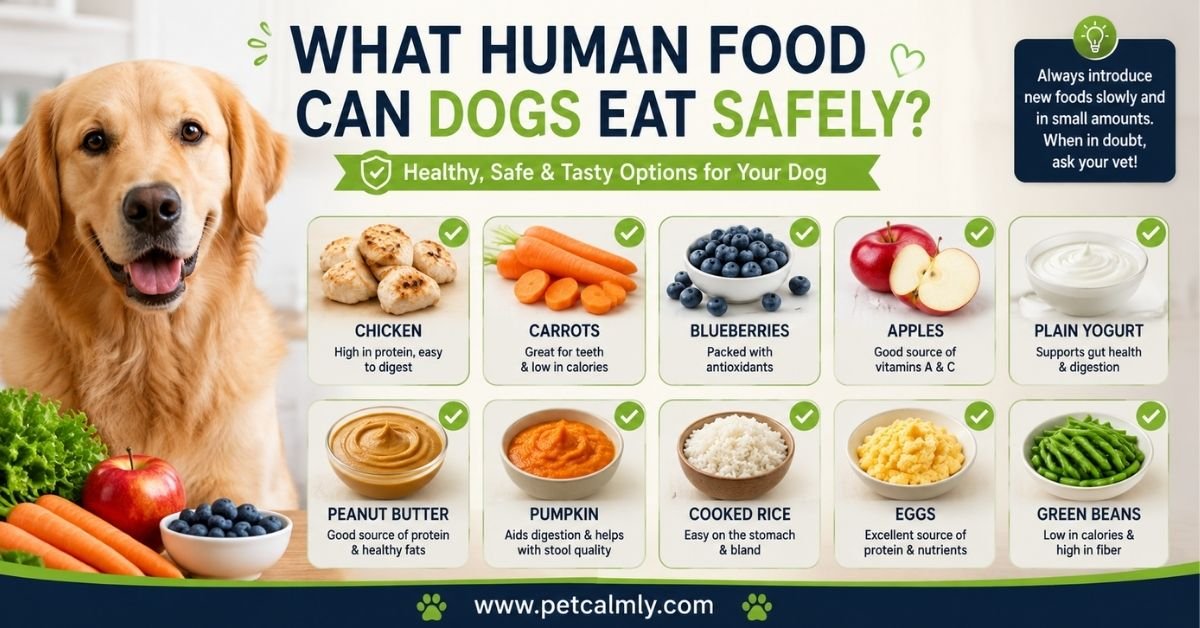
What Human Food Can Dogs Eat Safely small, plain portions, including cooked chicken, plain rice, pumpkin, carrots, apples (no seeds), blueberries, green beans, peanut butter without xylitol, and plain cooked eggs. These foods are safe because they’re low in harmful fats, free of toxic compounds, and easy for a dog’s digestive system to process. The key is moderation, plain preparation with no added salt, sugar, butter, or seasoning, and knowing which foods like grapes, onions, chocolate, and xylitol are always off the table.
That’s the short version. But “safe” isn’t always black and white, and the amount, preparation, and your dog’s individual health all matter. Let’s walk through it properly.
Why This Question Comes Up So Often
Most people don’t ask this question out of curiosity. They ask because their dog just ate something off the counter, or because a toddler dropped a grape and the dog got to it first, or because they simply want to give their dog a bit of “real food” as a treat without accidentally poisoning them.
That instinct makes sense. Dogs have shared human meals for thousands of years, and a little variety in their diet isn’t inherently bad. The problem is that a dog’s body processes food very differently from ours. Something as ordinary as a slice of onion or a stick of sugar-free gum can be genuinely dangerous for a dog, while something that sounds unusual, like plain boiled pumpkin, is actually one of the gentlest things you can feed them.
This guide covers what’s genuinely safe, what to avoid completely, how much is too much, and how to tell the difference between a harmless upset stomach and something that needs a vet visit.
Why Dogs Process Human Food Differently Than We Do
It helps to understand why a food that’s completely fine for a person can be risky for a dog. Dogs are smaller, their livers and kidneys filter certain compounds more slowly, and their gut bacteria are tuned to a different baseline diet than ours. A 150-pound person and a 15-pound dog aren’t just different in size they metabolize theobromine, xylitol, and certain plant compounds at very different rates, which is why “just a little” can mean a completely different dose relative to body weight.
There’s also a behavioral piece to this. Dogs don’t ration themselves the way people often do. A bowl of grapes left on a coffee table looks like an opportunity, not a moderate snack, which is part of why so many toxic ingestions happen with foods that were simply left within reach rather than deliberately fed. Understanding this helps explain why so much of “food safety” for dogs is really about storage habits and supervision, not just knowing a list of ingredients.
Safe Human Foods for Dogs (Complete List)
Think of these foods as “yes, but plain and in moderation.” Nothing here should replace a balanced commercial dog food or a vet-formulated diet these are appropriate as occasional treats or toppers, generally making up no more than 10% of your dog’s daily calories, a common guideline recommended by veterinary nutritionists.
Fruits Dogs Can Eat Safely
- Apples — remove the seeds and core first; the seeds contain trace amounts of cyanogenic compounds
- Blueberries — a favorite low-calorie training treat, rich in antioxidants
- Bananas — high in natural sugar, so a few small slices is plenty
- Watermelon — remove seeds and rind; great for hot weather hydration
- Strawberries — fine in moderation, and the natural sugars mean small portions are best
- Pineapple — small chunks only, skip the core
Vegetables Dogs Can Eat Safely
- Carrots — raw or cooked, and the crunch can help with dental chewing habits
- Green beans — plain, unsalted, steamed or raw
- Pumpkin — plain canned pumpkin (not pie filling) is often recommended by vets for mild digestive upset
- Sweet potato — cooked and unseasoned, never raw
- Cucumber — low calorie, hydrating, generally well tolerated
- Broccoli — small amounts only; too much can cause gas or mild stomach irritation
Proteins and Dairy in Moderation
- Cooked chicken, turkey, or lean beef — no bones, skin, or seasoning
- Plain cooked eggs — a good source of protein, but should be fully cooked
- Peanut butter — only if it does not contain xylitol, which is highly toxic to dogs (check the label every time, since manufacturers sometimes change recipes)
- Plain yogurt — small amounts, unsweetened, and only if your dog isn’t lactose sensitive
- Salmon — cooked and boneless, never raw or smoked, due to parasite risk
Grains and Carbs That Are Safe for Dogs
- Plain white or brown rice — often used by vets as part of a bland diet for dogs with upset stomachs
- Plain oatmeal — cooked, no sugar or flavoring
- Plain pasta — in small amounts, no sauce
Human Foods That Are Dangerous or Toxic to Dogs
This is the part that matters most, because the consequences of getting it wrong can range from a bad night to a genuine emergency. According to the ASPCA Animal Poison Control Center and veterinary toxicology resources, the following foods are considered unsafe for dogs, regardless of quantity.
| Food | Why It’s Dangerous | Risk Level |
|---|---|---|
| Chocolate (especially dark/baking) | Contains theobromine and caffeine, which dogs metabolize slowly | High |
| Grapes and raisins | Linked to acute kidney failure in dogs; the exact toxic mechanism is still being studied | High |
| Onions, garlic, chives, leeks | Damage red blood cells, potentially causing anemia | High |
| Xylitol (sugar-free gum, some peanut butters, baked goods) | Causes rapid insulin release, leading to dangerous drops in blood sugar | Severe |
| Alcohol | Even small amounts can cause dangerous drops in blood sugar, blood pressure, and coordination | High |
| Macadamia nuts | Causes weakness, tremors, and elevated body temperature in dogs | Moderate to High |
| Cooked bones | Splinter easily and can puncture the digestive tract | Moderate |
| Avocado | Contains persin, which can cause vomiting and diarrhea in dogs | Moderate |
| Raw yeast dough | Expands in the stomach and can produce alcohol as it ferments | Moderate to High |
| Caffeine (coffee, tea, energy drinks) | Affects the heart and nervous system similarly to chocolate | High |
Foods That Seem Harmless But Aren’t
Some of the riskiest foods are the ones owners least expect. Sugar-free peanut butter is a good example many brands now use xylitol as a sweetener, and a small serving that would be totally fine in a regular peanut butter can be life-threatening in the xylitol version. Bread dough is another one; it looks completely innocent sitting on the counter, but if a dog eats raw dough, the yeast keeps working inside their warm stomach, which can cause dangerous bloating and alcohol toxicity.
This is why reading labels matters more than trusting your memory of “is this food generally okay.” Recipes change, brands change, and what was fine last year might not be fine today.
How Much Human Food Is Too Much? (Portion & Moderation Guide)
Even foods on the safe list can cause problems if given in the wrong amounts. A general rule many veterinarians recommend is the 90/10 guideline: at least 90% of a dog’s daily calories should come from a complete and balanced dog food, leaving roughly 10% for treats, including human food.
A few practical ways to keep portions sensible:
- For small dogs (under 20 lbs), a “treat portion” is often a teaspoon-sized piece, not a handful
- For medium dogs (20–50 lbs), a few small pieces spread across the day is plenty
- For large dogs (50+ lbs), portions can be slightly larger, but “slightly” is the operative word
- Avoid feeding human food every single day out of habit occasional is safer than routine
- Watch for weight gain over time, which is one of the quietest but most common consequences of regular table scraps
Owners sometimes assume that because a food is “safe,” there’s no upper limit. Broccoli is a good example it’s fine in small amounts, but too much can cause gas and loose stools because of its high fiber content. The line between a healthy treat and a stomach upset is often just about quantity.
How to Safely Introduce New Foods to Your Dog
If you want to add a new safe food to your dog’s routine, doing it gradually protects their digestive system and gives you a chance to catch any reaction early.
- Start small. A single bite or a teaspoon is enough for the first try.
- Wait 24 hours. Watch for vomiting, diarrhea, itching, or unusual lethargy before offering it again.
- Introduce one food at a time. If you add three new foods in one week and your dog has an upset stomach, you won’t know which one caused it.
- Keep preparation plain. No butter, oil, salt, sugar, or seasoning even “dog-safe” foods can cause problems when they’re covered in extras meant for human taste buds.
- Note the reaction, good or bad. Some dogs tolerate dairy fine; others get gas or soft stools from even a small amount of yogurt. This is individual, not universal.
This slow approach matters especially for dogs with known sensitivities, food allergies, or conditions like pancreatitis, where fat content needs to stay low.
6 Common Mistakes Owners Make When Feeding Table Scraps
A lot of table-scrap problems don’t come from clearly toxic foods they come from small habits that build up over time.
- Feeding straight from the plate during dinner. This reinforces begging behavior and makes portion control almost impossible to track.
- Assuming “a little bit” is always harmless. A little bit of onion powder in leftover pasta sauce is still onion, and it adds up in a small dog’s body faster than people expect.
- Not checking ingredient labels on processed foods, especially anything labeled “sugar-free” or “reduced sugar.”
- Giving cooked bones as a treat. Cooked bones become brittle and can splinter, unlike raw bones, which carry their own separate risks around bacteria and tooth fractures.
- Feeding fatty trimmings or skin, which can trigger digestive upset or, in more serious cases, contribute to pancreatitis.
- Ignoring existing health conditions. A dog with kidney disease, diabetes, or a history of pancreatitis needs a much more careful approach to any human food, even foods considered generally safe for healthy dogs.
When Should You Worry? Signs of Food-Related Distress
Not every upset stomach is an emergency, but certain symptoms mean it’s time to call your veterinarian or an animal poison control hotline right away rather than waiting to see if it passes.
Seek veterinary attention promptly if your dog shows:
- Repeated vomiting or vomiting that contains blood
- Diarrhea lasting more than 24 hours, or diarrhea with blood
- Tremors, seizures, or unusual disorientation
- Rapid breathing, weakness, or collapse
- Swollen abdomen or signs of pain when touched
- Pale gums or unusual lethargy
- Known ingestion of chocolate, grapes, xylitol, onions, or garlic even without symptoms yet, since some toxic effects take hours to appear
Milder signs that still deserve attention, but may not be emergencies:
- A single episode of vomiting followed by normal behavior
- Mild gas or one loose stool after a new food
- Slight decrease in appetite for one meal
The general rule vets often give owners: if in doubt, call. It costs nothing to make a phone call to your vet or a pet poison hotline and describe what happened. Waiting to see if symptoms develop is where things can go wrong, especially with toxins like xylitol or grapes, where early treatment makes a real difference in outcome.
What Should You Do If Your Dog Eats Something Unsafe?
If you catch your dog eating something from the danger list, don’t wait for symptoms before acting.
- Stay calm and remove any remaining food so your dog can’t eat more.
- Note what and how much was eaten, including brand names if it’s a packaged food this helps your vet assess the risk accurately.
- Call your veterinarian or an animal poison control hotline immediately. In the U.S., the ASPCA Animal Poison Control Center and the Pet Poison Helpline are both available for exactly this kind of situation.
- Do not induce vomiting unless a vet or poison control specifically tells you to. Some substances cause more damage coming back up than staying down, and timing matters.
- Follow professional guidance exactly, even if your dog seems fine. Some toxins have a delayed onset, and your dog may look completely normal in the first few hours.
This is one of those moments where a quick phone call is far better than searching symptoms online. Professionals can tell you within minutes whether this is a “monitor at home” situation or a “come in right now” situation.
Special Considerations for Senior Dogs, Puppies, and Dogs With Health Conditions
Age and existing health conditions change the safety math quite a bit, and it’s worth treating these dogs as separate cases rather than applying the same rules across the board.
Senior dogs often have reduced kidney or liver function even without a formal diagnosis, which means their bodies clear certain compounds more slowly. Rich, fatty, or salty foods that a younger dog might shrug off can sit heavier with an older dog and contribute to digestive upset or, over time, added strain on organs that are already working harder than they used to.
Puppies have digestive systems that are still maturing, and their immune systems aren’t fully developed either. New foods should be introduced even more slowly than with adult dogs, and rich or fatty foods are more likely to trigger vomiting or diarrhea in a young dog than in a mature one.
Dogs with diagnosed conditions need individualized guidance. A dog with pancreatitis needs to avoid fatty foods almost entirely, including skin, trimmings, and any oily preparation. A diabetic dog needs sugar and high-glycemic foods like bananas or white rice kept to a minimum and only with veterinary input. A dog with kidney disease may need to avoid high-protein or high-phosphorus treats that would otherwise be perfectly safe for a healthy dog. If your dog falls into any of these categories, it’s worth asking your vet for a specific, personalized list rather than relying on general guidance like this article.
Safe Feeding Checklist for Busy Pet Owners
Keep this nearby for quick reference before you hand over a piece of your dinner:
- Is the food on the safe list, in its plain, unseasoned form?
- Have I checked the label for xylitol, added sugar, or onion/garlic seasoning?
- Is the portion small relative to my dog’s size?
- Have I removed seeds, pits, cores, skins, or bones where needed?
- Is this an occasional treat, not a daily habit?
- Does my dog have any health condition (kidney issues, diabetes, pancreatitis) that changes the answer?
- If unsure, have I checked with my vet rather than guessing?
Frequently Asked Questions
1: Can dogs eat cooked rice and chicken every day?
Plain rice and chicken are commonly used as a short-term bland diet for dogs recovering from an upset stomach, but they aren’t nutritionally complete on their own. For daily feeding, dogs need a balanced commercial diet or a vet-formulated homemade recipe that includes the right vitamins and minerals.
2: Is peanut butter safe for dogs?
Yes, as long as it doesn’t contain xylitol. Always check the ingredient label, since some “natural” or “sugar-free” peanut butters use xylitol as a sweetener, and it’s highly toxic to dogs even in small amounts.
3: What human foods can puppies eat safely?
Puppies can have the same general safe foods as adult dogs, but in smaller amounts and introduced even more gradually, since their digestive systems are still developing. It’s especially important to avoid fatty or rich foods, which can upset a puppy’s stomach more easily than an adult dog’s.
4: Can dogs eat scrambled eggs?
Yes, plain scrambled or hard-boiled eggs with no butter, salt, or seasoning are a safe, protein-rich option for most dogs.
5: My dog ate a grape what should I do?
Contact your veterinarian or a pet poison control hotline immediately, even if your dog seems fine. Grapes and raisins are linked to sudden kidney failure in dogs, and the risk isn’t always dose-dependent, meaning even a small amount can be a concern for some dogs.
6: Can dogs eat cheese?
Small amounts of plain, low-fat cheese are generally tolerated by most dogs, but some dogs are lactose sensitive and may develop gas or diarrhea. It’s best treated as an occasional treat rather than a regular addition to meals.
More Information About Pets, Please Visit Our Website: Homemade Food for Dogs With Allergies
Best Food for German Shepherd Puppy
How to Cut Dog Hair with Scissors
How to Clean Dog Eyes Crust at Home
Why Is My Dog Drinking Too Much Water?
Why Does My Dog Keep Sneezing?
Why Is My Dog Scratching So Much?
Conclusion
Sharing food with your dog isn’t inherently a bad thing it’s often just an act of affection that needs a little more information behind it. The safest approach is simple: keep portions small, keep preparation plain, know the foods that are always off-limits, and don’t hesitate to call your vet when something feels uncertain.
Most dogs live long, healthy lives with the occasional slice of apple or spoonful of plain pumpkin. The goal isn’t to avoid human food entirely it’s to know which foods belong on the “yes” list, which belong on the “never” list, and to trust your gut (and your vet) when something falls in between.