Short direct answer
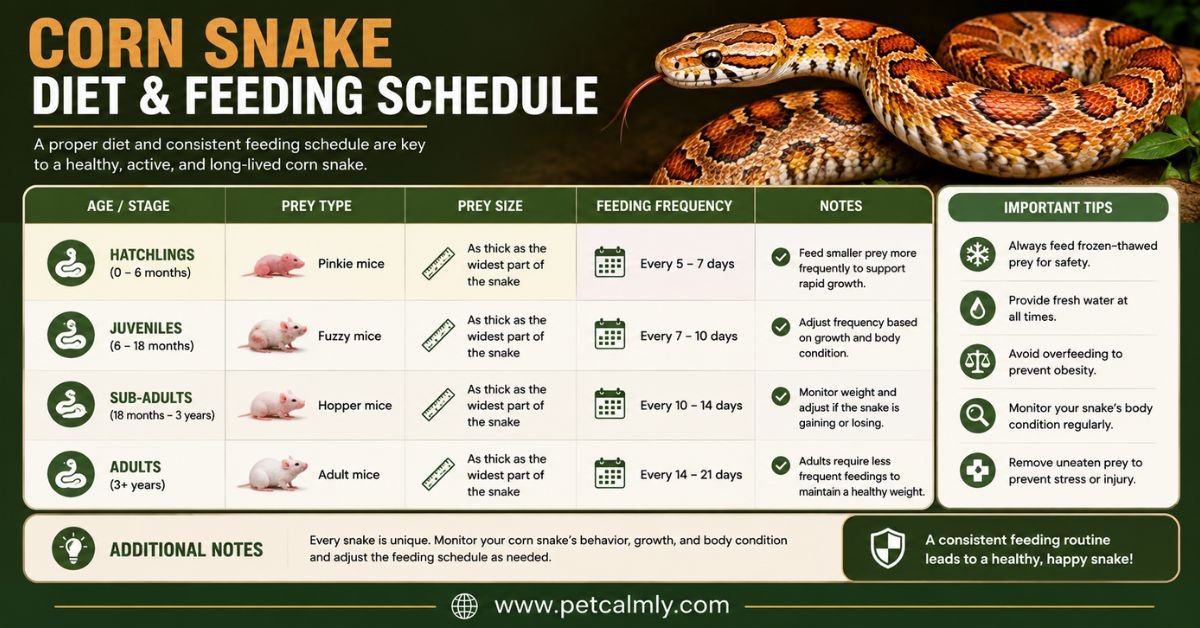
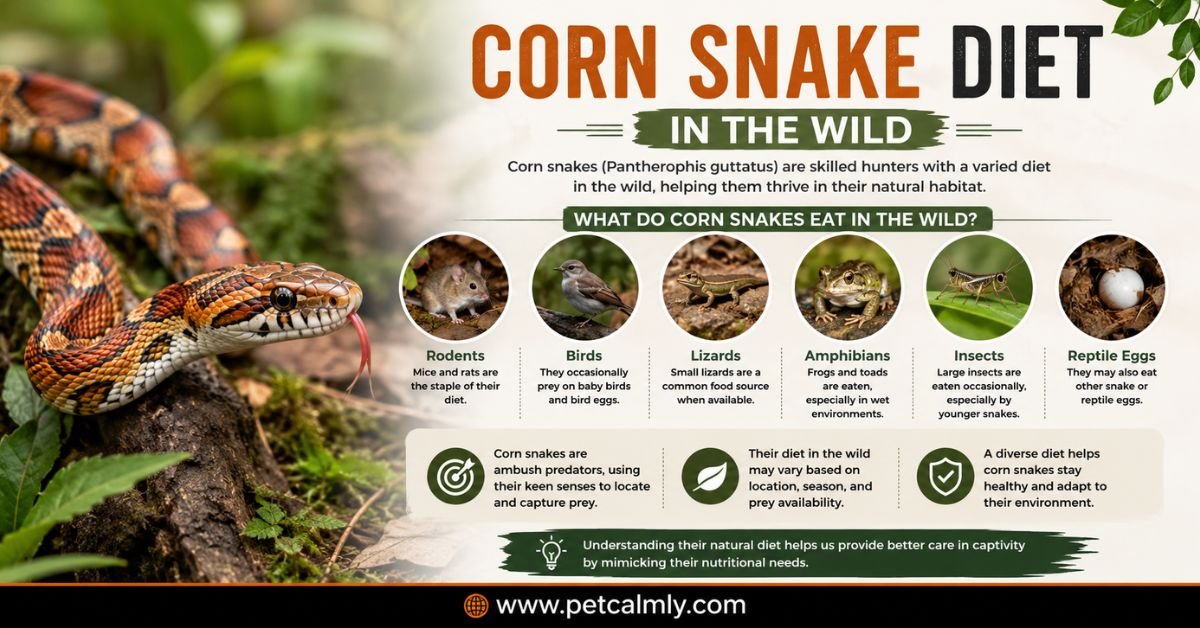
A corn snake diet in the wild mainly consists of small rodents such as mice, young rats, voles, and other small mammals. Wild corn snakes may also eat birds, bird eggs, lizards, frogs, and occasionally other small prey when available. They are opportunistic hunters, meaning they eat what is easiest to catch in their environment. Understanding what corn snakes naturally eat helps owners provide a healthier captive diet that closely matches their nutritional needs.
Understanding the Corn Snake Diet in the Wild
If you’ve ever watched your corn snake carefully stalk a mouse or wondered what it would eat if it lived outdoors, you’re not alone.
Many snake owners want to know whether captive feeding reflects a corn snake’s natural lifestyle. It’s a great question because a snake’s wild diet reveals a lot about its nutritional requirements, hunting behavior, growth patterns, and overall health.
Corn snakes have survived across the southeastern United States for thousands of years without commercial feeders, supplements, or feeding schedules. Their success comes from being adaptable predators that take advantage of whatever prey is available.
In this guide, you’ll learn:
- What wild corn snakes eat
- How hunting habits change with age
- Seasonal feeding patterns
- Common prey animals
- How wild diets compare to captive diets
- Mistakes owners make when feeding pet corn snakes
- Signs of proper nutrition
- Frequently asked questions about natural feeding behavior
By the end, you’ll have a much clearer picture of how these fascinating reptiles survive in nature.
What Do Corn Snakes Eat in the Wild?
The Main Food Source
The primary food source in a corn snake diet in the wild is small mammals.
Most wild corn snakes spend much of their time searching for rodents because they provide excellent nutrition and a relatively high calorie payoff for the effort required to catch them.
Common prey includes:
- House mice
- Deer mice
- Cotton rats
- Young rats
- Voles
- Shrews
- Small squirrels
- Baby rabbits (occasionally)
Rodents are rich in:
- Protein
- Fat
- Calcium
- Essential nutrients
This makes them an ideal prey item for growing and adult corn snakes.
Other Animals Wild Corn Snakes Eat
Corn snakes are opportunistic feeders.
If a rodent isn’t available, they won’t necessarily wait for one to appear.
Other prey may include:
- Small birds
- Nestling birds
- Bird eggs
- Lizards
- Tree frogs
- Small frogs
- Bats
- Small reptiles
Young snakes especially may consume more reptiles and amphibians than adults.
The availability of prey often depends on:
- Habitat type
- Season
- Weather
- Local ecosystem
- Competition from predators
Where Corn Snakes Find Their Food
Natural Hunting Locations
Corn snakes are highly adaptable and can hunt in many environments.
They are commonly found in:
- Forest edges
- Pine woodlands
- Overgrown fields
- Farmland
- Abandoned buildings
- Barns
- Grain storage areas
- Swamps
- Rocky outcrops
These locations attract rodents, which naturally attract corn snakes.
This relationship explains why farmers historically appreciated corn snakes around barns and crop storage areas. The snakes helped reduce rodent populations that damaged stored grain.
Why They’re Called “Corn Snakes”
One popular explanation is that corn snakes were frequently found around corn storage structures where rodents gathered.
As mice and rats fed on stored grain, corn snakes followed the food source.
Another theory suggests the name comes from the snake’s checkerboard belly pattern, which resembles kernels of corn.
Regardless of the exact origin, rodents and grain storage areas have long been associated with these snakes.
How Corn Snakes Hunt in the Wild
Ambush and Active Hunting
Corn snakes use two primary hunting strategies:
Ambush Hunting
The snake waits quietly near:
- Rodent trails
- Burrow entrances
- Bird nests
- Feeding areas
When prey comes close, the snake strikes rapidly.
Active Searching
Corn snakes also actively explore:
- Logs
- Hollow trees
- Rodent nests
- Rock crevices
- Barn structures
This strategy helps them locate hidden prey.
Constriction: How They Kill Prey
Unlike venomous snakes, corn snakes rely on constriction.
After striking:
- The snake grabs prey with its teeth.
- It quickly wraps coils around the animal.
- Each exhale by the prey allows the coils to tighten.
- Blood circulation becomes restricted.
- The prey dies quickly.
- The snake swallows it whole.
This method is extremely effective for capturing mammals and birds.
What Baby Corn Snakes Eat in the Wild
Hatchling Feeding Habits
Baby corn snakes face unique challenges.
A newly hatched snake cannot safely consume the same prey as an adult.
Instead, hatchlings typically eat:
- Small lizards
- Tiny frogs
- Baby rodents
- Nestling animals
Because of their small size, young corn snakes must target prey they can easily overpower.
Why Juveniles Eat Different Foods
Young snakes are vulnerable to predators and have limited energy reserves.
Smaller prey offers several advantages:
- Easier to catch
- Lower injury risk
- Faster digestion
- Greater availability
As the snake grows, larger rodents become the dominant food source.
Seasonal Changes in the Corn Snake Diet
Spring Feeding Behavior
Spring often brings increased feeding activity.
After cooler months, wild corn snakes emerge looking to replenish energy reserves.
During this time they may:
- Hunt more frequently
- Travel longer distances
- Target active rodent populations
Rodent breeding seasons also create an abundance of young prey.
Summer Feeding Patterns
Summer offers excellent hunting opportunities.
Food sources are often plentiful because:
- Rodent populations increase
- Bird nests are active
- Reptiles are abundant
Warm temperatures also support efficient digestion.
Fall Feeding Activity
Many corn snakes increase feeding before winter.
This helps build energy reserves for periods of reduced activity.
They may consume larger meals or feed more frequently when prey is available.
Winter Feeding
Wild corn snakes generally reduce activity during colder months.
Depending on location, they may:
- Enter brumation
- Become less active
- Feed rarely
- Remain hidden for extended periods
As a result, food consumption drops significantly.
How Often Do Wild Corn Snakes Eat?
Less Often Than Pet Corn Snakes
One common misconception is that wild snakes eat constantly.
In reality, successful hunts are unpredictable.
Wild corn snakes may eat:
- Several times in a month during prey-rich periods
- Only occasionally during prey shortages
Large meals can sustain them for surprisingly long periods.
Factors Affecting Feeding Frequency
Several variables influence how often a wild corn snake eats:
| Factor | Effect on Feeding |
|---|---|
| Temperature | Influences digestion and activity |
| Prey availability | Determines hunting success |
| Age | Younger snakes often eat more frequently |
| Habitat quality | Affects prey density |
| Season | Changes feeding opportunities |
| Health | Impacts hunting efficiency |
Why Rodents Are So Important
Complete Nutrition
Rodents provide nearly everything a corn snake needs.
Whole prey contains:
- Muscle tissue
- Bones
- Organs
- Fat
- Minerals
This creates a balanced nutritional package.
Natural Calcium Source
Many new reptile owners worry about calcium supplementation.
Fortunately, whole rodents naturally contain:
- Calcium-rich bones
- Phosphorus
- Trace minerals
This is one reason feeding whole prey is considered the gold standard for corn snakes.
Comparing Wild and Captive Diets
Wild Diet vs Pet Diet
| Wild Corn Snake | Pet Corn Snake |
|---|---|
| Variety of prey | Usually mice or rats |
| Irregular feeding | Scheduled feeding |
| Seasonal food availability | Consistent food supply |
| Variable meal sizes | Controlled portions |
| Energy spent hunting | Food provided directly |
Although captive diets are less diverse, frozen-thawed rodents generally provide excellent nutrition.
Do Pet Corn Snakes Need Dietary Variety?
Most healthy corn snakes thrive on appropriately sized mice.
Occasional variety may be offered by experienced keepers, but it isn’t usually necessary.
A balanced whole-prey diet remains the safest and most practical option.
Common Myths About the Corn Snake Diet in the Wild
Myth 1: Corn Snakes Only Eat Mice
Not true.
Mice make up a large portion of their diet, but wild corn snakes consume many prey types depending on availability.
Myth 2: Corn Snakes Drink Milk
This myth has circulated for generations.
Corn snakes do not naturally drink milk and cannot properly digest it.
Fresh water is all they need.
Myth 3: Corn Snakes Eat Every Day
Wild corn snakes often go days or even weeks between meals.
Their metabolism is designed for intermittent feeding.
Myth 4: Bigger Meals Are Always Better
Oversized prey can cause:
- Regurgitation
- Digestive stress
- Feeding complications
Appropriately sized prey is always safer.
Environmental Factors That Influence Wild Feeding
Habitat Quality
Healthy ecosystems support:
- Rodent populations
- Bird populations
- Amphibians
- Small reptiles
More prey generally means healthier snakes.
Weather Conditions
Corn snakes often become more active during favorable weather.
Factors influencing hunting success include:
- Temperature
- Humidity
- Rainfall
- Seasonal changes
Extreme conditions can reduce feeding opportunities.
Human Development
Urbanization may alter prey availability.
However, corn snakes are surprisingly adaptable and may still thrive around:
- Farms
- Rural properties
- Barns
- Agricultural land
Provided shelter and food remain available.
Signs a Corn Snake Is Getting Proper Nutrition
Whether in the wild or captivity, healthy nutrition supports overall wellness.
Look for:
Healthy Body Condition
- Rounded body shape
- Visible muscle tone
- No protruding spine
Consistent Growth
Young snakes should gradually gain size as they mature.
Successful Shedding
Complete sheds often indicate good hydration and overall health.
Alert Behavior
Healthy corn snakes typically show:
- Curiosity
- Normal tongue flicking
- Appropriate activity levels
5 Common Feeding Mistakes New Corn Snake Owners Make
Understanding the corn snake diet in the wild can help avoid several beginner errors.
1: Feeding Too Frequently
Captive snakes often require fewer meals than owners expect.
Overfeeding may contribute to obesity.
2: Offering Incorrect Prey Size
Prey should generally be about the same width as the snake’s widest body section.
3: Feeding Live Rodents Unnecessarily
Frozen-thawed prey is usually safer.
Live rodents can bite and seriously injure snakes.
4: Constantly Changing Food Types
Frequent dietary changes can sometimes create feeding difficulties.
Consistency usually works best.
5: Ignoring Temperature Requirements
Even perfect nutrition cannot compensate for poor husbandry.
A snake needs proper temperatures to digest food efficiently.
What Should Pet Owners Learn From the Wild Diet?
The biggest lesson from nature is surprisingly simple.
Wild corn snakes thrive by eating whole prey that matches their size and nutritional needs.
Pet owners can mimic this by:
- Feeding appropriately sized rodents
- Maintaining proper enclosure temperatures
- Avoiding unnecessary supplements
- Providing fresh water
- Respecting natural feeding intervals
Nature has already created an effective blueprint.
When Should You Worry?
Most feeding variations are normal.
However, seek guidance from a qualified reptile veterinarian if your corn snake:
- Refuses food for an unusually long period
- Rapidly loses weight
- Regurgitates repeatedly
- Shows difficulty swallowing
- Appears lethargic
- Has swelling around the mouth
- Exhibits signs of respiratory illness
Young snakes are especially vulnerable to nutritional problems and should be monitored closely.
What Should Pet Owners Do?
If you’re caring for a corn snake, focus on replicating the nutritional principles found in nature.
Practical Action Plan
- Feed appropriately sized frozen-thawed rodents.
- Maintain correct enclosure temperatures.
- Provide clean water at all times.
- Track feeding dates and body condition.
- Avoid overfeeding.
- Watch for normal shedding and growth.
- Consult a reptile veterinarian when concerns arise.
For broader reptile care, consider reading related guides on enclosure setup, humidity management, shedding issues, and signs of illness in pet snakes.
Quick Dos and Don’ts
Do
✔ Feed whole prey items
✔ Use correct prey size
✔ Maintain proper heating
✔ Monitor body condition
✔ Provide fresh water
✔ Follow age-appropriate feeding schedules
Don’t
✘ Feed milk
✘ Overfeed
✘ Offer oversized prey
✘ Ignore weight loss
✘ Feed solely based on appetite
✘ Neglect enclosure temperatures
Corn Snake Diet in the Wild: At-a-Glance Checklist
| Question | Answer |
|---|---|
| Main food source? | Small rodents |
| Do they eat birds? | Yes |
| Do they eat eggs? | Occasionally |
| Do they eat frogs and lizards? | Especially when young |
| How do they kill prey? | Constriction |
| Do they hunt every day? | No |
| Do they need dietary variety in captivity? | Usually not |
| Can they drink milk? | No |
Frequently Asked Questions
1: What is the primary food in a corn snake diet in the wild?
Small rodents are the primary food source. Mice, voles, rats, and similar mammals provide the nutrition wild corn snakes rely on most often.
2: Do wild corn snakes eat birds?
Yes. Corn snakes frequently raid nests and may eat eggs, hatchlings, or small birds when opportunities arise.
3: Do baby corn snakes eat mice?
Baby corn snakes can eat newborn rodents, but they often consume small lizards, frogs, and other tiny prey that match their size.
4: How often do wild corn snakes eat?
It varies depending on prey availability, weather, and season. Some may eat multiple times in a month, while others go weeks between meals.
5: Can pet corn snakes eat the same foods as wild corn snakes?
Captive corn snakes usually do best on appropriately sized frozen-thawed mice or rats. These provide balanced nutrition without requiring dietary variety.
6: Why is understanding the corn snake diet in the wild important?
Knowing what corn snakes naturally eat helps owners make better feeding decisions, avoid common mistakes, and support long-term health in captivity.
More Information About Pets, Please Visit Our Website: How to Tell If a Corn Snake Is Healthy
Conclusion
The corn snake diet in the wild is far more diverse than many people realize, but rodents remain the foundation of their nutrition. These adaptable snakes take advantage of whatever prey is available, whether that’s mice in a barn, a nestling bird, a frog near a wetland, or a small lizard hiding beneath a log.
For pet owners, the most valuable takeaway is that corn snakes evolved to eat whole prey. When captivity mirrors those natural nutritional principles through properly sized rodents, correct husbandry, and sensible feeding schedules—most corn snakes thrive for many years.