Short direct answer
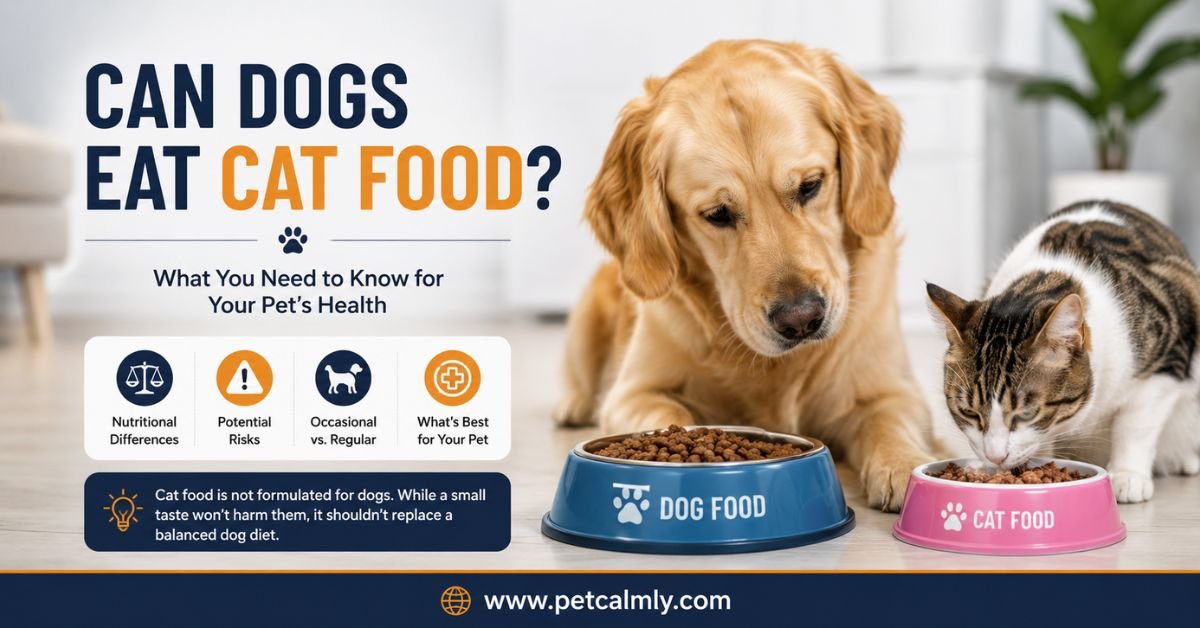
Yes, dogs can eat cat food, but it is not a healthy or safe long-term diet for them. A few bites here and there usually won’t cause serious harm, but cat food is much richer in fat and protein than dogs need. If a dog eats it regularly, it can lead to digestive upset, weight gain, or even more serious issues like pancreatitis in sensitive dogs. Dogs and cats have very different nutritional needs, so cat food should never replace a balanced dog diet.
Introduction
If you’ve ever caught your dog sneaking into your cat’s bowl, you’re not alone. Many pet owners deal with this daily—dogs seem to find cat food strangely irresistible. It smells stronger, tastes richer, and is often easier to access if the cat doesn’t finish their meal quickly.
But once the guilt kicks in, the real question appears: Is this actually safe?
The truth is a bit more nuanced than a simple yes or no. Dogs eating cat food occasionally is common, but turning it into a habit can quietly create health problems over time. In this guide, we’ll break down exactly what happens when dogs eat cat food, why they love it so much, what risks to watch for, and how to stop the behavior without stress for you or your pets.
Why Dogs Love Cat Food So Much
Before worrying about health risks, it helps to understand why dogs are so obsessed with cat food in the first place.
Cat food is designed to be:
- Higher in fat
- Higher in animal protein
- Stronger in smell and flavor
- More calorie-dense
From a dog’s perspective, it basically smells like a concentrated meat feast.
Dogs are naturally opportunistic eaters. If something smells richer and more rewarding, their brain immediately labels it as “high value food.” That’s why even well-trained dogs may suddenly become counter-surfers when a cat bowl is nearby.
Another factor is routine behavior. If a dog learns that cat food is available at certain times, they will actively wait or sneak around for it. This isn’t stubbornness—it’s learning through reward.
What Happens When Dogs Eat Cat Food?
A small amount of cat food usually doesn’t cause immediate danger in healthy dogs. However, the effects depend on:
- How much they ate
- How often they eat it
- Your dog’s size and health condition
1. Mild Digestive Upset
The most common reaction is stomach irritation, especially if the dog is not used to rich food.
You may notice:
- Loose stool or diarrhea
- Gas and bloating
- Mild vomiting
- Temporary loss of appetite
This happens because cat food is much richer than dog food, and a dog’s digestive system may struggle to process it.
2. Weight Gain Over Time
Cat food is calorie-dense by design. If a dog eats it regularly, even in small amounts, it can quickly lead to weight gain.
Extra weight may increase the risk of:
- Joint stress
- Heart strain
- Reduced activity levels
- Long-term metabolic issues
This is especially important for indoor dogs with low exercise levels.
3. Risk of Pancreatitis (Important Warning)
One of the more serious concerns is pancreatitis, especially in small breeds or dogs with sensitive digestion.
High-fat food can trigger inflammation of the pancreas, leading to:
- Severe abdominal pain
- Repeated vomiting
- Lethargy
- Loss of appetite
This condition requires veterinary attention and should never be ignored.
4. Nutritional Imbalance
Even if a dog “enjoys” cat food, it does not provide the correct nutrient balance they need.
Cat food is designed for obligate carnivores (cats), while dogs are omnivores. Dogs need:
- More balanced carbohydrates
- Specific fiber levels
- Controlled fat intake
- Different vitamin ratios
Long-term feeding of cat food can slowly create deficiencies or imbalances that are not immediately visible.
Can Puppies Eat Cat Food?
Puppies are more sensitive than adult dogs, so the answer is more cautious.
A puppy eating a small amount of cat food once is unlikely to be dangerous. However, regular intake can cause:
- Digestive instability
- Poor growth balance
- Excess calorie intake
- Difficulty establishing proper feeding habits
Puppies also learn habits quickly. If they start associating cat food as a “better meal,” it can become a lifelong behavior problem.
Why Some Dogs Prefer Cat Food Over Their Own Food
This is one of the most frustrating situations for pet owners: you buy good-quality dog food, but your dog still prefers the cat’s bowl.
Here’s why:
1. Stronger aroma
Cat food contains higher animal protein and fat, making it smell more appealing.
2. Higher fat content
Dogs naturally crave fat because it signals energy-rich food.
3. Accessibility
Cats often eat slowly and leave food behind, making it easy for dogs to “finish the job.”
4. Behavioral reinforcement
If a dog successfully eats cat food once, the reward memory is strong.
4 Common Mistakes Pet Owners Make
Many owners accidentally encourage this behavior without realizing it.
1: Feeding pets in the same area
When bowls are placed together, dogs learn quickly that cat food is within reach.
2: Leaving food out for long periods
Free-feeding allows dogs to sneak bites throughout the day.
3: Not supervising mealtime
Dogs often wait for the cat to leave the bowl.
4: Assuming “a little is fine”
Occasional bites are okay, but frequent small amounts add up.
How to Stop Dogs from Eating Cat Food
You don’t need punishment or strict control just smart management.
1. Feed pets in separate rooms
This is the most effective solution. Controlled eating spaces prevent competition.
2. Use elevated surfaces for cat bowls
Cats prefer higher places, and dogs usually cannot reach them.
3. Schedule feeding times
Remove bowls after 15–20 minutes instead of leaving them out all day.
4. Train a “leave it” command
This helps control impulsive eating behavior over time.
5. Use baby gates or pet barriers
Simple physical separation often solves the problem instantly.
Simple Daily Routine to Prevent the Problem
Here’s a practical routine that works for most homes:
- Feed the cat in a quiet elevated area
- Feed the dog separately on the floor
- Remove both bowls after eating
- Clean feeding areas to remove scent attraction
- Reward the dog for ignoring cat food
Consistency matters more than intensity here.
When Should You Worry?
If your dog eats cat food occasionally, there is usually no need to panic. But you should be cautious if you notice:
- Repeated vomiting
- Persistent diarrhea
- Sudden lethargy
- Abdominal pain or whining
- Refusal to eat dog food
- Rapid weight gain
Seek veterinary help if symptoms are strong or last more than 24–48 hours.
Dogs with a history of pancreatitis or digestive sensitivity should avoid cat food entirely.
What Should Pet Owners Do?
If your dog has access to cat food, the goal is not punishment it’s prevention and structure.
Focus on:
- Feeding separation
- Controlled meal timing
- Better food placement strategy
- Consistent training cues
- Monitoring behavior patterns
Over time, most dogs naturally lose interest when cat food is no longer easily available.
If your dog is highly food-motivated, you may also consider enrichment feeding (like slow feeders or puzzle toys) to reduce scavenging behavior.
Can Dogs Eat Cat Food Occasionally? (Realistic Answer)
Yes, occasional accidental bites are not dangerous for most healthy dogs. Think of it like eating fast food once in a while—it’s not ideal, but not immediately harmful.
The problem starts when it becomes:
- Daily behavior
- Large portions
- A replacement for dog food
That’s when health risks begin to build quietly.
Comparison: Dog Food vs Cat Food
| Feature | Dog Food | Cat Food |
|---|---|---|
| Protein level | Balanced | High |
| Fat content | Moderate | High |
| Calories | Controlled | Dense |
| Digestibility for dogs | Ideal | Heavy |
| Long-term safety | Yes | No |
This difference is why feeding rules matter so much.
Prevention Tips That Actually Work
- Keep cat food out of reach immediately after feeding
- Don’t leave unattended bowls on the floor
- Train impulse control commands early
- Reward calm behavior around cat food
- Maintain consistent feeding schedules
Small habits prevent long-term problems.
Conclusion
Dogs eating cat food once in a while is usually harmless, but making it part of their routine can slowly lead to digestive issues, weight gain, and nutritional imbalance. The key is not panic it’s structure.
With separate feeding spaces, consistent routines, and a little training, most dogs quickly learn that cat food is not their meal. And once that boundary is clear, life becomes easier for both pets.
At the end of the day, your dog isn’t being “naughty” they’re just following instinct. Your job is to guide that instinct in a healthier direction.
More Information About Pets, Please Visit Our Website: Best Dog Supplements for Homemade Food
Frequently Asked Questions
1. Is it dangerous if my dog eats cat food once?
No, a single small incident is usually not dangerous for healthy dogs. You may see mild stomach upset, but serious harm is unlikely.
2. Why does my dog prefer cat food over dog food?
Cat food is richer in fat and protein, which makes it smell and taste more appealing to dogs.
3. Can cat food make dogs sick?
Yes, especially if eaten regularly. It can cause vomiting, diarrhea, or in severe cases, pancreatitis.
4. What should I do if my dog keeps eating cat food?
Separate feeding areas, use elevated cat bowls, and remove food immediately after meals.
5. Can puppies eat cat food?
Occasional bites are okay, but regular consumption is not safe for puppies due to nutritional imbalance.
6. How long does it take for symptoms to show after eating cat food?
Digestive symptoms can appear within a few hours, especially if the dog ate a large amount.