Short direct answer
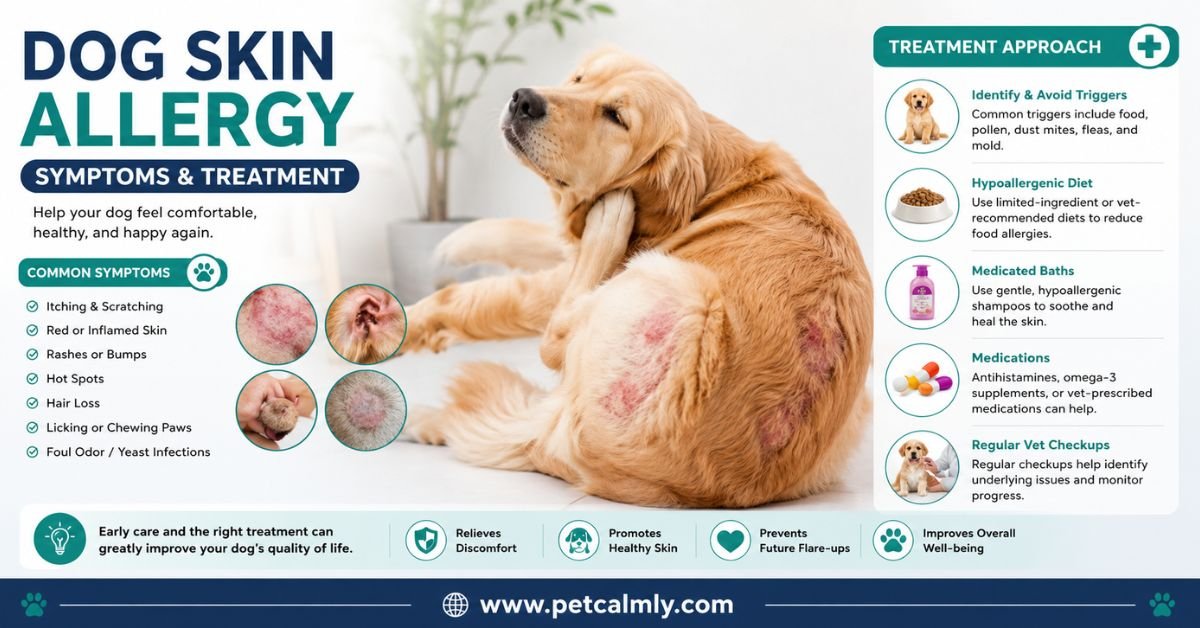
Dog skin allergies often cause itching, red skin, licking, scratching, ear infections, hair loss, rashes, and irritated paws. Treatment depends on the underlying trigger, which may include environmental allergens, food sensitivities, flea allergies, or contact irritants. Most dogs improve with a combination of allergen management, skin care, dietary support, veterinary treatment when needed, and preventing excessive scratching that can lead to infections.
If your dog is constantly scratching, chewing their paws, or developing recurring skin problems, identifying the cause early can make a huge difference in their comfort and long-term skin health.
Why Skin Allergies Are So Frustrating for Dogs
Many dog owners initially assume scratching is normal.
A little scratching is perfectly normal. Constant scratching is not.
One of the most difficult things about skin allergies is that they often develop gradually. A dog may start licking their paws occasionally, rubbing their face on the carpet, or scratching behind their ears a bit more than usual. Over time, these behaviors become daily habits.
The result can be:
- Sleepless nights for the dog
- Damaged skin from scratching
- Secondary bacterial infections
- Chronic ear problems
- Hair loss
- Significant discomfort
What makes allergies especially challenging is that the symptoms often look similar regardless of the cause. That’s why understanding the different types of allergies is so important.
In this guide, you’ll learn how to recognize dog skin allergy symptoms, understand common causes, explore treatment options, and know when veterinary help is necessary.
Understanding Dog Skin Allergies
A skin allergy occurs when a dog’s immune system overreacts to a substance that would normally be harmless.
These substances are called allergens.
When exposed to an allergen, the immune system releases inflammatory chemicals that trigger itching, redness, swelling, and irritation.
The most common allergy categories include:
| Allergy Type | Common Triggers |
|---|---|
| Environmental Allergies | Pollen, grass, mold, dust mites |
| Food Allergies | Certain proteins or ingredients |
| Flea Allergy Dermatitis | Flea saliva |
| Contact Allergies | Cleaning products, fabrics, shampoos |
| Seasonal Allergies | Pollens and outdoor allergens during specific seasons |
Although symptoms may overlap, treatment often depends on identifying which category is responsible.
Dog Skin Allergy Symptoms
The Most Common Signs
In short, persistent itching is usually the earliest and most noticeable symptom.
Watch for:
- Frequent scratching
- Constant licking
- Chewing paws
- Red or inflamed skin
- Hair loss
- Hot spots
- Recurring ear infections
- Face rubbing
- Excessive shedding
- Scabs or crusty skin
- Thickened skin over time
- Body odor caused by skin infections
Many owners notice behavioral changes before obvious skin damage appears.
A normally relaxed dog may become:
- Restless
- Irritable
- Less interested in play
- Distracted
- Unable to settle comfortably
The itching itself can be exhausting.
Paw Licking and Chewing
Paw licking is one of the most overlooked allergy symptoms.
Dogs with allergies frequently:
- Lick between their toes
- Chew at their feet
- Develop red or brown staining on fur
- Show swollen paws
Environmental allergies are often responsible because paws regularly contact grass, pollen, dirt, and other allergens.
If your dog’s paws seem constantly wet or irritated, allergies should be considered.
Ear Problems Linked to Allergies
Many owners don’t realize recurring ear infections often start with allergies.
Common signs include:
- Head shaking
- Ear scratching
- Red ear canals
- Unpleasant odor
- Wax buildup
- Sensitivity around the ears
When allergies create inflammation inside the ears, infections can develop repeatedly.
Hot Spots
Hot spots are painful, inflamed patches of skin caused by excessive licking, scratching, or chewing.
They often appear:
- On the neck
- Behind the ears
- On the hips
- Around the tail base
Hot spots can develop surprisingly fast sometimes within a day.
Because they are uncomfortable and prone to infection, they usually require prompt attention.
What Causes Skin Allergies in Dogs?
Environmental Allergies (Atopy)
Environmental allergies are among the most common causes of chronic itching.
Triggers may include:
- Grass pollen
- Tree pollen
- Weed pollen
- Dust mites
- Mold spores
Unlike people who often sneeze from allergies, dogs frequently show skin symptoms first.
Commonly affected areas include:
- Paws
- Face
- Belly
- Ears
- Armpits
Environmental allergies may worsen during specific seasons or persist year-round.
Food Allergies
Food allergies are less common than many people assume but can still cause significant skin issues.
Potential triggers include:
- Beef
- Chicken
- Dairy
- Eggs
- Wheat
- Soy
Dogs with food allergies often experience:
- Chronic itching
- Ear infections
- Paw licking
- Digestive upset
- Skin inflammation
One important misconception is that a dog can suddenly develop an allergy to a food they’ve eaten for years. This can absolutely happen.
Flea Allergy Dermatitis
The main reason flea allergies are so severe is that a single flea bite can trigger intense itching.
Dogs affected by flea allergy dermatitis commonly scratch:
- Lower back
- Tail base
- Hindquarters
Even if you rarely see fleas, the allergy may still be present.
This is why consistent flea prevention remains an important part of allergy management.
Contact Allergies
Contact allergies occur when skin directly touches an irritating substance.
Possible triggers include:
- Household cleaners
- Carpet treatments
- Lawn chemicals
- Certain fabrics
- Plastic bowls
- Some shampoos
Symptoms typically appear where contact occurs.
For example, a dog allergic to a cleaning product may develop redness on their belly after lying on a treated floor.
Breeds More Prone to Skin Allergies
Although any dog can develop allergies, some breeds appear more susceptible.
These include:
- Labrador Retrievers
- Golden Retrievers
- French Bulldogs
- Boxers
- West Highland White Terriers
- Bulldogs
- German Shepherds
- Cocker Spaniels
- Shih Tzus
- Pit Bull-type breeds
Genetics can influence how the immune system responds to allergens.
However, breed predisposition does not guarantee a dog will develop allergies.
Dog Skin Allergy Symptoms Treatment Options
The Main Goal of Treatment
Most importantly, treatment should focus on both:
- Reducing itching and inflammation
- Identifying and managing the underlying trigger
Simply treating symptoms without addressing the cause often leads to recurring flare-ups.
Veterinary Allergy Medications
Veterinarians may recommend medications designed to reduce allergic reactions and itching.
Options may include:
- Prescription anti-itch medications
- Allergy injections
- Immune-modulating therapies
- Antihistamines in selected cases
- Short-term anti-inflammatory treatments
The best choice depends on:
- Allergy type
- Severity
- Age of the dog
- Overall health
Never start medications without veterinary guidance.
Medicated Shampoos
Bathing can provide significant relief for many allergic dogs.
Benefits include:
- Removing allergens from fur
- Reducing inflammation
- Moisturizing skin
- Controlling bacteria and yeast
Look for veterinarian-recommended products designed specifically for sensitive skin.
Over-bathing with harsh shampoos can worsen irritation.
Managing Food Allergies
When food allergies are suspected, veterinarians often recommend an elimination diet.
This involves feeding:
- A novel protein diet, or
- A hydrolyzed protein diet
Consistency is critical.
Even small treats or table scraps can interfere with results.
Most elimination trials require several weeks before meaningful conclusions can be made.
Flea Control
Even indoor dogs need reliable flea prevention.
Effective flea management often includes:
- Year-round flea preventives
- Treating all pets in the household
- Cleaning bedding
- Vacuuming carpets regularly
Many chronic skin issues improve dramatically once flea allergies are addressed.
Omega-3 Fatty Acids
Omega-3 fatty acids may support skin health and reduce inflammation.
Potential benefits include:
- Improved skin barrier function
- Reduced dryness
- Healthier coat condition
- Less inflammatory response
They work best as part of a comprehensive treatment plan rather than a standalone solution.
A Simple Daily Care Routine for Dogs with Skin Allergies
Many owners find that consistent daily management reduces flare-ups significantly.
Morning
- Check skin for redness
- Inspect paws
- Wipe paws after outdoor walks
- Provide prescribed medications if needed
Afternoon
- Ensure fresh water is available
- Monitor scratching behavior
- Avoid known allergens when possible
Evening
- Brush the coat gently
- Check ears
- Examine problem areas
- Clean bedding regularly
Weekly
- Wash bedding
- Vacuum thoroughly
- Bathe according to veterinary recommendations
- Inspect for fleas
Small habits often make a bigger difference than occasional intensive treatments.
4 Common Mistakes Dog Owners Make
Waiting Too Long
Many owners hope the problem will simply disappear.
Unfortunately, allergies usually worsen when left untreated.
Early intervention can prevent infections and chronic skin damage.
Switching Foods Too Frequently
Constantly changing diets without a structured plan can create confusion.
It becomes difficult to identify whether food is truly involved.
A veterinarian-guided elimination diet is usually more effective.
Using Human Skin Products
Human creams, lotions, and medications may contain ingredients unsafe for dogs.
Always consult a veterinarian before applying topical products.
Ignoring Ear Symptoms
Ear infections often accompany allergies.
Treating skin symptoms while overlooking ear problems can delay recovery.
What to Avoid if Your Dog Has Skin Allergies
Avoid:
- Harsh shampoos
- Strong fragrances
- Unapproved medications
- Excessive bathing
- Inconsistent flea prevention
- Random diet changes
- Letting hot spots worsen
Instead:
- Follow a consistent care plan
- Use veterinarian-approved products
- Track symptoms
- Monitor seasonal patterns
- Keep follow-up appointments
Can Skin Allergies Affect a Dog’s Behavior?
Absolutely.
Chronic itching affects more than the skin.
Imagine feeling itchy all day and all night.
Many allergic dogs become:
- Less patient
- More restless
- Easily distracted
- Sleep deprived
- Less interested in training sessions
Some owners mistakenly interpret these changes as behavioral problems when discomfort is actually the root cause.
Once the itching is controlled, behavior often improves noticeably.
How Long Does Recovery Take?
Recovery depends on:
- The allergy type
- Severity
- Presence of infections
- Consistency of treatment
Mild cases may improve within days.
More chronic allergies often require ongoing management and several weeks before significant improvement becomes obvious.
Skin healing generally takes longer than owners expect.
Even after itching improves, damaged skin may need additional time to recover fully.
When Should You Worry?
Seek veterinary care promptly if you notice:
- Open wounds
- Bleeding skin
- Severe swelling
- Persistent ear infections
- Sudden widespread rash
- Pus or discharge
- Strong skin odor
- Extreme discomfort
- Loss of appetite
- Lethargy
These signs may indicate infection or another medical condition requiring professional treatment.
What Should Pet Owners Do?
If you suspect your dog has skin allergies:
- Monitor symptoms carefully.
- Take photos of affected areas.
- Note seasonal patterns.
- Check for fleas.
- Avoid changing multiple things at once.
- Schedule a veterinary examination.
- Follow treatment plans consistently.
- Keep bedding and living areas clean.
- Consider allergy triggers in the environment.
- Track improvements in a journal.
This information can help veterinarians identify patterns and develop a more effective treatment plan.
Quick Comparison: Allergy Types at a Glance
| Allergy Type | Common Symptoms | Typical Areas Affected |
| Environmental | Paw licking, itching, ear issues | Paws, face, ears, belly |
| Food Allergy | Chronic itching, ear infections | Entire body, ears, paws |
| Flea Allergy | Intense scratching | Tail base, lower back |
| Contact Allergy | Localized redness | Areas touching irritants |
Supporting Long-Term Skin Health
Managing allergies isn’t always about finding a permanent cure.
For many dogs, success means controlling symptoms well enough that they can live comfortably.
Helpful habits include:
- Routine grooming
- Balanced nutrition
- Healthy weight maintenance
- Consistent flea prevention
- Early treatment of flare-ups
- Regular veterinary checkups
Dogs with allergies often do best when care remains consistent rather than reactive.
Frequently Asked Questions
1: What are the first signs of skin allergies in dogs?
The earliest signs are usually itching, paw licking, face rubbing, and frequent scratching. Many dogs show behavioral changes before visible skin damage appears.
2: Can dog skin allergies go away on their own?
Mild irritation may improve if the trigger disappears, but true allergies usually require management. Persistent symptoms should be evaluated by a veterinarian.
3: Why does my dog keep licking their paws?
Paw licking commonly occurs with environmental allergies, food allergies, irritation, or infections. Persistent licking deserves investigation because it can lead to skin damage.
4: What food causes skin allergies in dogs most often?
Common triggers include beef, chicken, dairy, eggs, wheat, and soy. However, identifying a food allergy requires a structured elimination diet rather than guessing.
5: Are skin allergies painful for dogs?
The itching itself can become extremely uncomfortable. Repeated scratching may cause sores, infections, hot spots, and painful inflammation.
6: Can indoor dogs develop skin allergies?
Yes. Indoor dogs can react to dust mites, mold, household products, food ingredients, and even fleas brought indoors by people or other pets.
More Information About Pets, Please Visit Our Website: How to Soothe Itchy Skin in Dogs
Conclusion
Dog skin allergy symptoms and treatment can feel overwhelming at first, especially when your dog seems uncomfortable and you can’t immediately identify the cause. The good news is that most allergic dogs improve significantly once the underlying trigger is recognized and managed appropriately.
Pay close attention to signs such as itching, paw licking, ear infections, redness, hair loss, and recurring skin irritation. Early action often prevents more serious problems later. Whether the cause is environmental allergens, food sensitivities, flea allergies, or contact irritants, a consistent treatment plan can help your dog feel comfortable again.
Most importantly, don’t ignore persistent scratching. Your dog’s skin is often telling you something important, and addressing the problem early can lead to a happier, healthier life for both of you.