Short direct answer
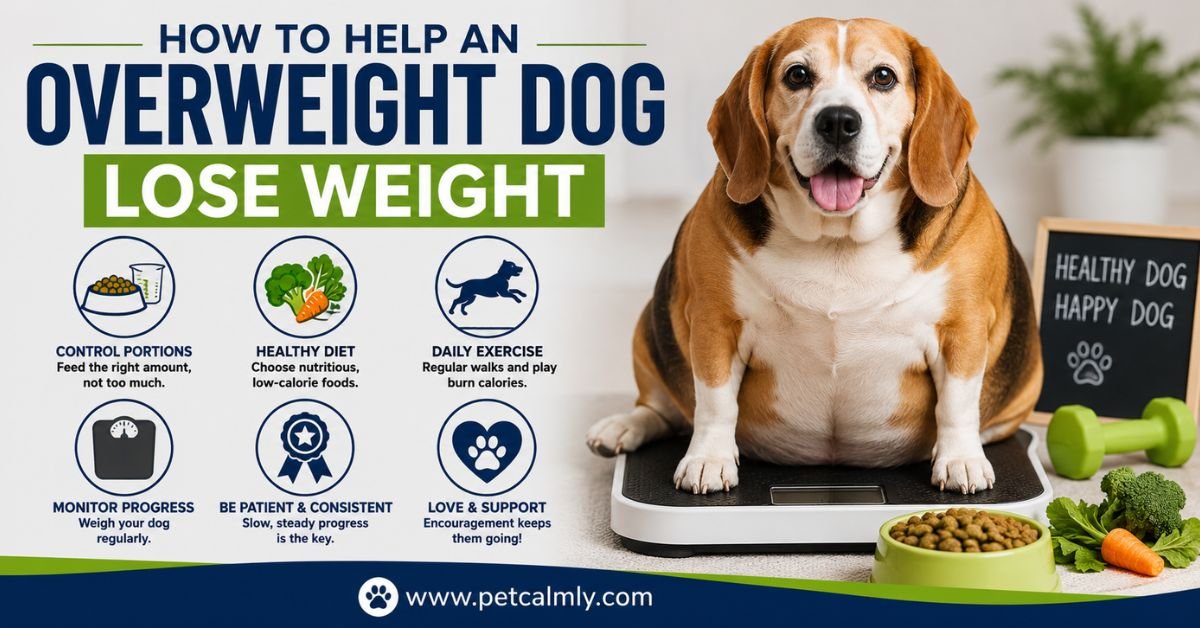
The most effective way to help an overweight dog lose weight is to combine three things: a calorie-controlled diet (reducing daily calories by about 25%), consistent daily exercise tailored to your dog’s fitness level, and close monitoring with your veterinarian. Most dogs safely lose weight over 12–24 weeks with patience, realistic expectations, and a plan adjusted specifically for their age, breed, and health status. Start by measuring your dog’s current food portions, increase daily movement gradually, and expect steady loss of about 1–2% of body weight per week.
Why Your Dog’s Weight Matters (and Why You’re Not Alone in Worrying)
If you’ve noticed your dog is gaining weight or you’ve heard the words “overweight” from your vet, you’re in a situation millions of pet owners face every year. It’s one of those moments where concern mixes with a little self-blame—Did I give too many treats? Should I have walked them more? but the good news is that dog weight loss is absolutely achievable and one of the most rewarding things you can do for your pet’s health and longevity.
Carrying extra weight affects nearly every system in a dog’s body. It doesn’t just mean a softer middle; excess weight increases the strain on joints, makes breathing harder, raises the risk of diabetes and heart disease, and can even shorten your dog’s lifespan. A dog at a healthy weight typically lives longer, moves with more comfort, and responds better to training and play.
But here’s what’s important to understand: weight loss in dogs isn’t about restriction or punishment. It’s about helping your dog feel better, move easier, and live longer with you. The process is gradual, requires consistency, and works best when you have the right information and support from your vet.
This guide walks you through everything you need to know from understanding whether your dog is actually overweight, to building a weight loss plan that actually works, to recognizing signs that something needs to change.
Understanding Dog Weight: How to Tell If Your Dog Is Actually Overweight
Before you overhaul your dog’s diet and exercise routine, it helps to know if weight loss is actually necessary. Many owners worry their dog is overweight when they’re actually at a healthy weight and some don’t realize it until the problem becomes serious.
How Vets Assess Dog Body Condition
Veterinarians use a standardized scoring system to evaluate whether a dog is at a healthy weight. The most common is the Body Condition Score (BCS), which ranges from 1 (very underweight) to 9 (very obese). A healthy weight for a dog typically falls between 4 and 5 on this scale.
Here’s what this looks like in practical terms:
At a healthy weight (BCS 4–5), you should:
- Feel your dog’s ribs easily when you gently press their sides, but not see them protruding visibly
- See a visible waist when viewing your dog from above
- See an abdominal tuck (the belly line goes up slightly toward the back legs) when viewing from the side
- Feel your dog’s spine and hip bones with light pressure, but they shouldn’t be bony or prominent
If your dog is overweight (BCS 6–7), you’ll notice:
- Difficulty feeling the ribs without applying firm pressure
- A faint or absent waist when viewing from above
- A sagging belly or no abdominal tuck
- Visible weight around the hips and shoulders
If your dog is obese (BCS 8–9):
- Ribs that are impossible to feel
- No visible waist or waist that’s inverted (wider at the belly than the chest)
- Sagging belly, thick fat deposits over the chest and limbs
- Waddling walk or difficulty moving
What Your Vet Actually Sees
During a wellness check, your vet will assess your dog’s body score, review their medical history for weight-related issues, and potentially recommend bloodwork to check for thyroid problems or diabetes. This matters because sometimes weight gain is a symptom of an underlying condition like hypothyroidism rather than purely a diet and exercise issue.
Some dogs are genetically predisposed to weight gain (looking at you, Labrador Retrievers and Beagles), but that doesn’t make weight loss impossible; it just means it may require more discipline and consistency.
Why Dogs Gain Weight: The Real Causes (It’s Usually Not What You Think)
Most owners assume their dog is overweight because they get too many treats or don’t exercise enough. While those factors matter, the reality is more nuanced.
Calorie Imbalance (The Root Cause)
At the end of the day, dogs gain weight when they consume more calories than they burn. This isn’t complicated physics it’s real-world math. But here’s where it gets tricky: most owners dramatically underestimate how many calories their dog is actually consuming.
A single peanut butter treat might be 100 calories. A “pinch” of table scraps? Add 50–200 more. A mid-morning dental chew? Another 50–100. By the end of the day, a dog can consume 30–50% more calories than their portion of kibble suggests, without anyone realizing it.
Reduced Activity Levels
Older dogs naturally become less active. Puppies and young dogs burn enormous amounts of energy just by being, well, puppies. As dogs age, they nap more, play less, and if they’re not given intentional exercise, their activity level can drop without owners noticing.
Indoor dogs or dogs without a yard are also at higher risk of weight gain because they have fewer opportunities to burn energy throughout the day.
Age-Related Metabolic Changes
Dogs’ metabolic rates slow as they age, just like ours do. A dog that maintained a healthy weight eating two cups of kibble a day at age 4 may need only 1.5 cups at age 8, even if nothing else changes. But owners often keep portions the same, and the weight creeps up gradually.
Underlying Health Conditions
Several medical conditions can cause or contribute to weight gain:
- Hypothyroidism is extremely common, especially in middle-aged and older dogs, and causes a sluggish metabolism and weight gain even when diet and exercise haven’t changed
- Cushing’s syndrome (hyperadrenocorticism) causes abnormal cortisol levels, leading to appetite increase and belly fat distribution
- Diabetes and insulin resistance can contribute to weight gain
- Joint problems or pain cause dogs to move less, which compounds the problem
- Medications like corticosteroids increase appetite and reduce metabolism
This is why a vet visit isn’t optional for dogs trying to lose weight. Your vet can run simple bloodwork to rule out thyroid issues, which are extremely common and easily managed with medication.
Behavioral and Emotional Eating
Some dogs eat for comfort, boredom, or attention, not hunger. Dogs that spend long stretches alone, live in stress-filled environments, or lack mental stimulation may eat more as a coping mechanism. Interestingly, some anxious dogs eat less, while others stress-eat. Understanding your dog’s unique personality and emotional state matters.
Food Quality and Formulation
Not all dog foods are created equal. Some commercial dog foods are higher in fat and calories than necessary, while others are formulated for active dogs but fed to sedentary ones. Additionally, some dogs feel less satisfied by lower-quality foods and beg for more, while higher-protein, nutrient-dense diets often leave dogs feeling fuller longer.
Building Your Dog’s Weight Loss Plan: Step by Step
Weight loss in dogs isn’t rocket science, but it does require a plan. Random changes rarely work. Here’s how to build a realistic, sustainable approach.
Step 1: Get a Baseline from Your Vet
Before changing anything, schedule a vet visit. This accomplishes several things:
- Confirms your dog is overweight and establishes how much weight loss is appropriate
- Rules out underlying medical conditions like hypothyroidism
- Establishes your dog’s ideal weight based on breed, age, and frame size
- Provides medication adjustments if your dog is on drugs that affect weight
- Gives you a starting weight to track progress
Some vets will also calculate your dog’s daily calorie requirement (called Resting Energy Requirement, or RER, and Maintenance Energy Requirement, or MER). Ask if they can help with this, as it’s incredibly valuable for portion control.
Step 2: Calculate Your Dog’s Daily Calorie Target
Once you know your dog’s current weight and ideal weight, the general rule is:
For weight loss, feed approximately 25% fewer calories than your dog currently consumes. This creates a calorie deficit without leaving your dog feeling constantly hungry.
If your vet doesn’t calculate this for you, here’s a rough estimate:
- Small dogs (10–20 lbs): approximately 200–400 calories per day
- Medium dogs (30–50 lbs): approximately 400–600 calories per day
- Large dogs (60–100 lbs): approximately 800–1200 calories per day
- Giant dogs (100+ lbs): 1200+ calories per day
But here’s the catch: these are rough starting points. Individual dogs have different metabolic rates. A neutered dog may need 25–30% fewer calories than an intact dog of the same weight. An older, sedentary dog needs fewer calories than a younger, active dog.
The most practical approach is to:
- Keep a food diary for a week, including all treats, table scraps, and extras
- Calculate the total calories your dog currently consumes
- Reduce by approximately 25%
- Reassess in 4 weeks
Step 3: Measure Everything—No Guessing
This is non-negotiable. Get a kitchen scale and weigh your dog’s kibble rather than using a measuring cup. Measuring cups vary in size, and different kibbles have different densities. What looks like one cup of kibble A might be 250 calories, while one cup of kibble B might be 350.
Keep a feeding log with:
- Time of day
- Amount fed (by weight)
- Calories consumed
- Treat type and amount
This might sound tedious, but it’s the difference between weight loss that works and weight loss that stalls. Most owners who struggle with dog weight loss are unknowingly feeding too much.
Step 4: Choose the Right Food
You have several options here:
Weight loss prescription diets (from your vet) are formulated specifically to support weight loss. They’re typically higher in fiber and protein (which keeps dogs feeling fuller longer) and lower in fat and calories. Yes, they’re more expensive than regular kibble, but they’re often worth it because your dog feels satisfied on smaller portions.
High-quality regular kibble with a good protein-to-fat ratio can work if you measure portions precisely. Look for foods where:
- Protein is 20–30% (supports muscle maintenance)
- Fat is 8–15% (not the lowest, but not high either)
- Fiber is moderate to high (fiber adds bulk without calories, keeping dogs feeling full)
Fresh or raw diets can work for weight loss, but they require even more careful portion control and nutritional balance. Consult your vet before switching to homemade diets.
What NOT to do: Don’t buy “diet” dog foods that are extremely low in fat and filled with fillers. Dogs feel constantly hungry on these, and the quality is often poor.
Step 5: Eliminate Hidden Calories (The Biggest Game-Changer)
Here’s what changes the game for most owners: accounting for every single calorie.
Common hidden calories include:
- Training treats and snacks — these often add 300+ calories daily
- Table scraps — even small pieces add up fast
- “Just a bite” of human food — multiply by 365 days, and it’s substantial
- Dental chews — a single rawhide or bully stick can be 100–150 calories
- Kong stuffing or peanut butter — extremely calorie-dense
- Extra meals or snacks — if another family member feeds the dog without others knowing
A realistic approach:
- Designate one person as the primary feeder so there’s no confusion about who fed the dog and when
- Use training treats strategically — choose low-calorie options (plain carrots, green beans, or tiny kibble portions) for training
- Reserve higher-calorie treats for special occasions — not daily
- Communicate with family members about the weight loss plan so everyone’s on board
If your dog begs for human food during dinner, give them their own “dog dinner” at the same time a measured portion of kibble or a low-calorie snack in their own bowl. This satisfies the ritual without adding excess calories.
Exercise and Activity: Building a Realistic Movement Plan
Diet controls weight; exercise improves fitness and supports the weight loss process. But here’s the thing: you can’t out-exercise a bad diet, and you can’t rush an overweight dog into intense exercise without risking injury.
Starting Where Your Dog Is (Not Where You Wish They Were)
An overweight dog is already working harder just by existing. Extra weight strains joints, taxing the heart and lungs. This means:
- Start slow and build gradually — walks that feel easy to you might be exhausting for your overweight dog
- Watch for signs of overheating — overweight dogs overheat more easily and can’t cool off as efficiently
- Stop if your dog is struggling — panting excessively, lagging behind, or limping means it’s time to rest
- Plan shorter, frequent outings rather than one long walk
A realistic starting point for most overweight dogs is two 10–15 minute walks daily, at a comfortable pace where your dog can maintain a conversation (not sprinting, not barely moving).
Types of Exercise That Work
Leash walks are the foundation. They’re manageable, controllable, and you can adjust intensity and duration based on your dog’s fitness level.
Swimming and water exercise are excellent because water supports weight and reduces joint stress while still burning calories. If you have access to a dog-friendly pool or beach, even 10–15 minutes of swimming can be very effective.
Fetch and retrieval games get dogs moving in short bursts, which can work for some dogs, but be cautious—they can also encourage overweight dogs to push too hard and risk injury.
Treadmill work (yes, dog treadmills exist and some dogs enjoy them) allows controlled, gradual exercise, especially in bad weather.
Agility or parkour training at a slow pace can be great for mentally stimulating overweight dogs while they exercise, though wait until your dog has lost significant weight before attempting jumping or climbing.
The Weekly Exercise Target
Aim for at least 150 minutes of moderate-intensity activity per week, broken into manageable sessions. For most overweight dogs, this looks like:
- Two 15–20 minute walks daily (7 days)
- One longer 30-minute walk or swimming session (if tolerated)
This doesn’t have to be formal “exercise.” Regular playtime, running in the yard, or even active indoor games count toward daily activity.
Increasing Intensity Gradually (The Safe Way)
As your dog loses weight, they’ll naturally become more active and energetic. You can gradually increase:
- Walk duration (by 2–5 minutes every 2 weeks)
- Walk pace (from slow stroll to normal pace)
- Frequency (from twice daily to including shorter midday walks)
- Terrain (flat pavement → hills or uneven surfaces require more effort)
A good rule of thumb: increase exercise intensity by no more than 10% every 1–2 weeks to avoid overuse injuries.
6 Common Weight Loss Mistakes (And How to Avoid Them)
Mistake 1: Changing Too Much at Once
Owners often go from feeding free-choice and lots of treats to suddenly strict portioning and zero treats. Dogs resist this change, owners give up, and nothing changes long-term.
Better approach: Make one change at a time over 1–2 weeks. Start by measuring kibble portions. Then reduce by 10–15% and observe for a week. Then eliminate table scraps. Then swap treats for lower-calorie options. Gradual is sustainable; dramatic is often temporary.
Mistake 2: Underfeeding Out of Frustration
Some owners see their dog isn’t losing weight and cut calories dramatically. This backfires—dogs become obsessively food-focused, beg constantly, and may develop nutritional deficiencies.
Weight loss should be steady but gradual: approximately 1–2% of body weight per week. For a 60-lb dog, that’s about 0.6–1.2 lbs per week. If your dog isn’t losing weight, the solution isn’t to feed less; it’s to:
- Investigate hidden calories
- Increase activity level
- Consider underlying medical issues (thyroid, metabolic conditions)
- Switch to a higher-quality food that’s more satisfying
Mistake 3: Assuming Your Dog Isn’t Hungry (They Probably Are)
Overweight dogs often become expert beggars. Owners mistake excessive begging for “my dog is still hungry” and feed more. In reality, dogs can feel satisfied on appropriate portions; they just aren’t used to it yet.
The reality: A dog on a calorie-restricted diet will beg more initially. That’s normal. After 2–3 weeks, most dogs adapt and begging decreases as they adjust to new portion sizes.
Mistake 4: Not Involving the Whole Family
If one family member is strict about portions while another sneaks treats, weight loss stalls. This is incredibly common and creates frustration.
Solution: Family meeting. Explain that weight loss is a health issue, not a preference. Write down the feeding plan and post it on the fridge. Make the goal a shared family project, not one person’s mission.
Mistake 5: Switching Foods Too Frequently
Every time you switch foods, it takes 2–3 weeks for your dog’s digestive system to adjust and for you to understand how that food affects their weight. Changing every few weeks resets the clock and makes it impossible to know what’s working.
Better approach: Pick a food or feeding strategy and commit for at least 4 weeks before evaluating and making changes.
Mistake 6: Ignoring Medical Causes
If your dog isn’t losing weight despite reduced calories and increased activity, don’t blame yourself or your dog’s willpower. Get bloodwork. Hypothyroidism, Cushing’s syndrome, and diabetes can all cause weight gain resistant to diet and exercise alone. Once treated, weight loss often becomes much easier.
Tracking Progress: What to Expect Over Time
Weight loss isn’t linear. You won’t see results every single week, and that’s completely normal.
Weeks 1–2: The Adjustment Phase
Your dog adjusts to new portions. You track calories and dial in the feeding plan. Many owners see a small initial weight loss (often due to reduced water retention, not fat loss). Dog may be hungrier than usual and may beg more.
Weeks 3–6: Momentum Building
Steady weight loss begins—roughly 1–2% per week. Your dog starts to have more energy. You might notice the collar fitting differently or the waist becoming more defined. Energy levels often improve noticeably.
Weeks 8–12: Visible Transformation
By this point, a dog should have lost 5–10% of body weight. Ribs become easier to feel. Waist is more visible. Breathing may seem easier. Your dog might want longer walks or more playtime.
Weeks 16–24: Reaching Goal Weight
Most dogs reach their target weight within 16–24 weeks, depending on how much weight they need to lose and individual metabolism. Some take longer—and that’s okay. Slow, steady loss is healthier and more sustainable than rapid weight loss.
Ongoing Maintenance (Month 6+)
Once your dog reaches goal weight, you shift to a maintenance feeding plan—slightly more calories than during active weight loss, but careful portion control to prevent weight regain. Many owners find that once they’ve built good habits, maintenance is easier than expected because they now understand their dog’s calorie needs.
Plateaus Are Normal (And Temporary)
Most dogs hit a plateau where weight loss slows or stops for 2–3 weeks. This doesn’t mean anything is broken. It’s often:
- Your dog’s body adapting to the new calorie level
- Muscle development offsetting fat loss (muscle weighs more than fat)
- Normal variation
If a plateau lasts more than 4 weeks:
- Re-evaluate calorie intake (is hidden eating happening?)
- Increase activity level slightly
- Check with your vet for underlying issues
- Consider changing to a higher-quality or prescription diet
When to Contact Your Vet (Beyond the Initial Visit)
Most dogs lose weight successfully with diet and exercise modifications. But certain situations require professional guidance:
Contact Your Vet If:
- Weight loss stalls for more than 4 weeks despite adherence to the plan
- Your dog becomes lethargic or loses appetite while on a weight loss plan
- Your dog shows signs of nutrient deficiency (dull coat, hair loss, weakness, behavioral changes)
- Existing health conditions worsen (arthritis flare-ups, breathing difficulties, diabetic symptoms)
- Your dog shows signs of pain or mobility issues when previously they seemed fine
- Digestive issues develop (vomiting, diarrhea, constipation)
- Your dog acts obsessed with food or shows signs of resource guarding toward food
Regular Check-Ins Matter
Plan a vet visit every 8–12 weeks during active weight loss to:
- Weigh your dog officially (home scales can be inaccurate)
- Reassess body condition
- Adjust the plan if needed
- Check for any emerging health issues
- Run bloodwork again if thyroid or metabolic issues were previously identified
Practical Tools and Strategies That Actually Work
Calorie Tracking Apps and Tools
Several apps help track dog calories similarly to human fitness apps:
- MyPetNutrition allows you to input your dog’s food and track daily calories
- PetDiets provides customized feeding plans based on your dog’s stats
- Simple spreadsheets or a phone note also work if apps feel overwhelming
Slow Feeders and Interactive Toys
Dogs who eat too fast may not feel satisfied even after adequate calories. Slow feeders (bowls with ridges or obstacles) make eating take longer, creating the sensation of a larger meal. Interactive feeders and puzzle toys also slow eating and provide mental stimulation.
Measuring and Portioning
Invest in:
- A small kitchen scale (most cost $20–40 and pay for themselves quickly through better portion control)
- Measuring cups specifically for dog food
- Treat jars or containers to preportioning daily treats so it’s clear how much is being given
Accountability and Support
- Join an online dog weight loss community (Facebook groups, Reddit’s r/Pets, or breed-specific groups)
- Share your progress with your vet or a friend with dogs
- Take photos monthly to track visible changes when the scale feels slow
Frequently Asked Questions
1: Will my dog be hungry on a weight loss diet?
A: Initially, yes most dogs beg more in the first 2–3 weeks as they adjust to smaller portions. But interestingly, most dogs adapted to normal portions again after 3–4 weeks. The trick is consistency and not giving in to the begging. Also, choosing higher-protein, higher-fiber foods helps dogs feel fuller longer, so hunger decreases when you switch to the right food.
2: How long does it take for a dog to lose weight?
A: It typically takes 16–24 weeks for a dog to reach a healthy weight, depending on how much weight they need to lose and individual metabolism. A dog that needs to lose 10 lbs might reach goal in 12–16 weeks, while a dog that needs to lose 30 lbs might take 24+ weeks. Patience and consistency matter more than speed.
3: Can I use regular treats during weight loss, or do I have to use low-calorie treats?
A: You can use either, but you have to account for them in daily calories. A dog on a 500-calorie-per-day plan can have a 50-calorie treat, but not a 150-calorie treat and expect steady weight loss. Many owners find that switching to low-calorie treat options (carrot pieces, plain green beans, small kibble portions) makes calorie management easier and less restrictive-feeling for the dog.
4: Is prescription dog food worth the cost for weight loss?
A: For many dogs, yes but it depends on your dog’s specific situation. Prescription weight loss diets are formulated to be highly satisfying on smaller portions (high protein, high fiber, lower fat). If your dog is constantly hungry on regular kibble, prescription diet often solves this. If your dog does fine on a high-quality regular kibble with strict portioning, you might not need prescription diet. Discuss with your vet.
5: What if my dog has other health conditions like arthritis or diabetes? Does weight loss help?
A: Absolutely. Weight loss often significantly improves symptoms of arthritis (reduced joint strain), diabetes (easier blood sugar management), and heart disease (reduced cardiac workload). In some cases, weight loss can even resolve diabetes or allow medication doses to be reduced. This is one of the most powerful reasons to prioritize weight loss for overweight dogs with health conditions. Work closely with your vet on adjustments as your dog loses weight, especially with medications.
6: My dog won’t eat vegetables or low-calorie treats. What can I do?
A: Not all dogs are veggie fans that’s okay. Instead of forcing vegetables, use portions of their regular kibble as training treats (count it toward daily calories), use freeze-dried meat treats (lower calorie than regular treats), or try different vegetable options (some dogs prefer cooked carrots, green beans, or sweet potato chips). Ultimately, strict calorie control of kibble matters far more than the type of treat used.
More Information About Pets, Please Visit Our Website: Healthy Homemade Dog Treat Recipes
How to Choose the Best Dog Food for My Dog
How Often Should Dogs Eat Raw Meat?
Why Does My Dog Smell Like Fish?
Why Is My Dog Scratching So Much?
Conclusion
Helping your dog lose weight isn’t complicated, but it does require consistency, realistic expectations, and often a shift in how you think about feeding and activity.
The most successful owners I’ve encountered share a few things in common:
- They involve their vet early and get baseline bloodwork to rule out medical causes
- They measure everything and don’t guess at portions
- They eliminate hidden calories first, before making dramatic diet changes
- They increase activity gradually and celebrate small milestones
- They expect it to take time and don’t give up after 4 weeks
- They forgive themselves when they make mistakes and get back on track
- They make it a family effort, not a solo mission
Your dog’s weight loss journey is unique to your dog and your circumstances. A plan that works perfectly for your friend’s Labrador might need tweaking for your dog. The goal is to find an approach that is sustainable for your household, supports steady weight loss, and improves your dog’s quality of life.
Most importantly: your dog’s health is already improving from your effort to address this. The fact that you’re reading this and thinking about your dog’s weight means you’re already halfway there.