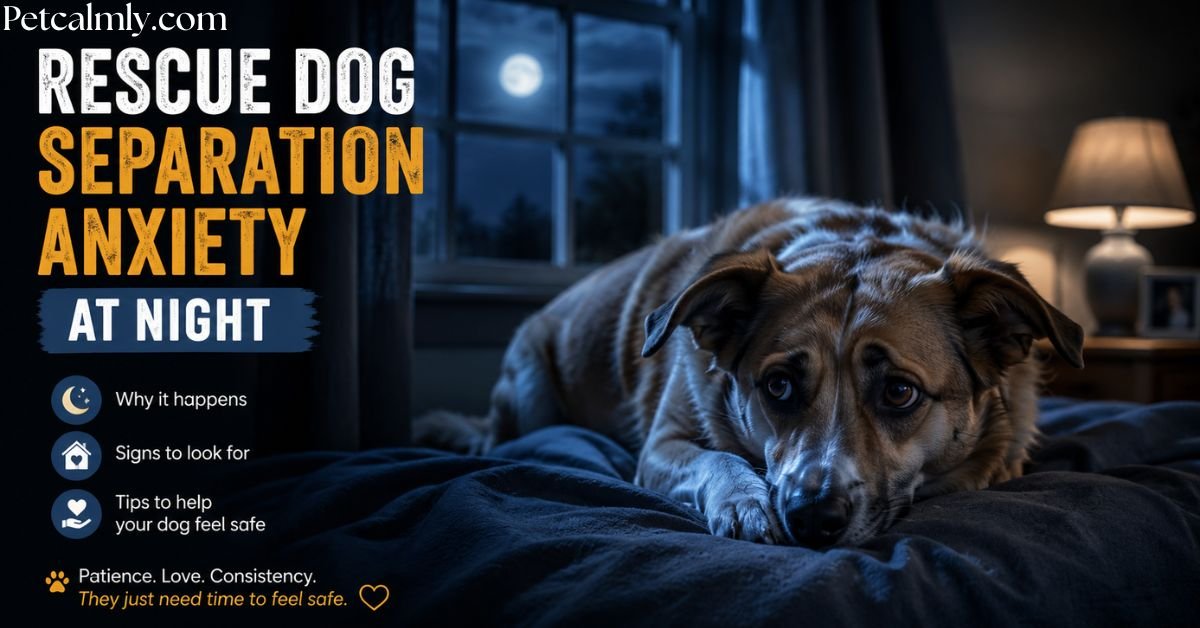
Short direct answer
Rescue dogs often struggle with separation anxiety at night because they fear being left alone after past trauma, abandonment, or shelter life. Signs include whining, barking, pacing, or destructive behavior after bedtime. The good news is that with patience, a consistent routine, and the right comfort strategies, most rescue dogs improve significantly within weeks.
Why This Is Such a Common Problem for Rescue Dog Owners
You finally adopted your rescue dog. You gave them a warm home, a cozy bed, and all the love you had. But the moment the lights go out and you close the bedroom door, everything falls apart whining, scratching, howling, and a restless night for everyone in the house.
You are not alone. This is one of the most common challenges rescue dog owners face, especially in the first few weeks after adoption.
Rescue dogs carry emotional weight that most people don’t fully see at first. Many of them spent weeks or months in a shelter a loud, stressful, unpredictable environment. Others were abandoned suddenly, sometimes after years with a family they loved. That kind of experience leaves a real mark on a dog’s brain and nervous system.
Nighttime is especially hard for these dogs. The house goes quiet, the humans disappear behind closed doors, and suddenly the dog is alone with their fears again. It’s not bad behavior. It’s anxiety and it needs to be understood before it can be fixed.
What Is Separation Anxiety in Rescue Dogs?
Separation anxiety is a genuine stress response. It happens when a dog becomes so attached to their owner or so afraid of being alone that being separated, even briefly, triggers panic.
In rescue dogs, this is often deeper than what you’d see in a dog raised from puppyhood. These dogs have already experienced loss. They’ve already been left behind once. So when you walk away, even just to go to bed, their brain can interpret it as abandonment happening all over again.
This is not stubbornness. It’s not the dog being difficult. It’s a fear response the same way a child who’s been through trauma might panic when a parent leaves the room.
Understanding that is the first and most important step.
Why Night time Triggers Anxiety More Than Day time
During the day, there’s usually more activity movement, sounds, smells. Even if the dog is alone, the environment feels alive. At night, the house becomes still and dark. The dog’s senses are heightened, and the absence of human presence feels much more dramatic.
Think of it like this: being alone in a busy coffee shop feels very different from being alone in a silent, dark house at 2 a.m. For a dog already prone to anxiety, that silence is unsettling.
There’s also the issue of crate training. Many well-meaning owners crate their rescue dog at night, not knowing that some rescue dogs associate crates with punishment or confinement in a shelter. What feels like safety to you can feel like a trap to them.
Common Signs of Separation Anxiety at Night
Recognizing the signs early helps you respond the right way. Rescue dog nighttime anxiety can look like:
Vocalization — persistent whining, barking, or howling that starts as soon as you leave or close a door. This is the dog calling out, hoping you’ll come back.
Destructive behavior — chewing furniture, scratching at doors, or tearing up bedding. This is a physical outlet for overwhelming stress, not mischief.
Pacing or restlessness — you might hear the dog walking back and forth, unable to settle, even after an hour or more.
Accidents indoors — a house-trained dog suddenly having accidents at night is often a stress signal, not a training failure.
Excessive drooling or panting — these are physical symptoms of anxiety. The dog’s body is in a stress response even without visible activity.
Trying to escape — scratching at doors, windows, or even gates to reach where you are. Some dogs injure themselves doing this.
If your dog shows several of these signs consistently at night, separation anxiety is very likely the cause.
The First Two Weeks: What’s Normal, What’s Not
When a rescue dog first comes home, there’s a well-known adjustment phase that rescue advocates call the “3-3-3 Rule.” The idea is that it takes roughly 3 days to decompress, 3 weeks to learn the household routine, and 3 months to feel truly at home.
During those first days and weeks, some nighttime distress is completely normal. Your dog is in a brand-new place, surrounded by unfamiliar smells, sounds, and people. A little anxiety is expected.
But if the nighttime crying and restlessness continues well past the first few weeks or gets worse over time that’s when it shifts from adjustment stress to true separation anxiety that needs to be actively addressed.
What Helps: Practical Strategies That Actually Work
Build a Predictable Nighttime Routine
Dogs are creatures of habit. A consistent routine tells a dog’s brain: this is safe, this is what happens every night, nothing bad is coming. Start signaling bedtime at the same time each evening a short walk, a calm settle-down period, maybe a small treat, then sleep.
Do this the same way every night. Within one to two weeks, most dogs begin to anticipate the routine and feel calmer because of it.
Let Your Dog Sleep Closer to You (At Least at First)
This one surprises some owners. Many people worry about creating “bad habits” if they let the dog sleep in the bedroom. But for a rescue dog with genuine anxiety, proximity to you is literally medicine.
A dog who can smell you, hear your breathing, and see you during the night has no reason to panic. They know where you are. They know you haven’t disappeared.
You don’t have to let the dog in your bed if you don’t want to. A dog bed or crate placed inside your bedroom close to your side is often enough to reduce nighttime anxiety dramatically.
Once the dog is more settled and confident, you can gradually move their sleeping spot further away if you want to. But starting with closeness is almost always the right call with rescue dogs.
Create a Comfort Zone With the Right Smells
Dogs are guided by scent more than anything else. One of the simplest tricks is to place an item of your worn clothing a t-shirt, a pillowcase in or near the dog’s sleeping area. Your scent is deeply calming to a dog who is bonded to you.
Some owners also use a heartbeat toy (a plush toy with a simulated heartbeat designed for dogs) or a low-level white noise machine near the dog’s sleeping area to mimic the feeling of companionship.
These aren’t magic fixes, but they genuinely help reduce the dog’s stress when they wake up in the night and you’re not immediately visible.
Don’t Rush Back When They Cry
This is hard to hear, but important: if you run back every time your rescue dog whines at night, you accidentally teach them that crying you appearing. This reinforces the anxiety rather than reducing it.
Instead, use a technique borrowed from desensitization training. Start by sitting near the dog’s area without interacting much. Gradually increase your distance over several nights. If the dog cries, wait a few minutes before responding and when you do respond, be calm and quiet, not dramatic.
The goal is to help the dog learn that you being “away” doesn’t mean you’re gone forever.
Try Calming Aids as a Short-Term Bridge
There are several vet-approved calming products that can help during the initial period:
Adaptil (DAP diffuser or collar) — releases a synthetic version of the calming pheromone mother dogs produce. Many owners report genuine results within a few days.
Calming chews or supplements — products with ingredients like L-theanine, melatonin, or chamomile can take the edge off without sedation. Always confirm with your vet before starting.
Anxiety wraps (like a Thundershirt) — a snug-fitting vest that applies gentle, constant pressure. It mimics being held and can have a noticeable calming effect on anxious dogs.
These aren’t permanent solutions, but they can reduce the intensity of nighttime anxiety while you work on the behavioral side of things.
Increase Daytime Exercise and Mental Stimulation
A tired dog is a calmer dog. One of the most underused tools for nighttime anxiety is simply making sure the dog is genuinely tired before bed not just physically, but mentally.
Evening walks are good. A puzzle feeder at dinnertime, a short training session before bed, or a game of sniff-and-search (hiding small treats around the house for the dog to find) can all drain mental energy in a healthy way.
A dog who has had a satisfying, stimulating day sleeps more deeply and settles more easily at night.
When Should You Be Concerned?
Most rescue dogs improve with time, patience, and consistent effort. But there are situations where the anxiety is severe enough to need professional support.
Talk to your vet if:
The dog injures themselves trying to escape or reach you at night. This is a safety issue that needs immediate attention.
The anxiety shows no signs of improving after 4 to 6 weeks of consistent effort. Plateau without progress is a signal that more support is needed.
The dog is unable to eat, drink, or settle at any point during the day. Generalized anxiety that’s not limited to nighttime suggests a deeper problem.
The dog is showing aggression alongside anxiety growling, snapping, or resource guarding especially in a home with children.
In moderate to severe cases, a veterinarian may recommend medication alongside behavior modification. This is not a failure. For some dogs, anxiety medication is exactly what allows them to absorb training and finally relax enough to feel safe. Think of it the same way you would treating any other medical condition.
A certified animal behaviorist or a veterinary behaviorist can also create a personalized desensitization plan if standard home strategies aren’t making enough progress.
3 Mistakes That Make Nighttime Anxiety Worse
Punishing the Dog for Crying
Raising your voice, spraying water, or using any form of punishment when a dog cries at night does not teach them to be quiet. It teaches them that being alone is not only frightening it also results in something unpleasant happening. This makes the anxiety worse, not better.
Crating a Dog Who Hasn’t Been Properly Introduced to the Crate
Some rescue dogs tolerate crates fine. Others find them deeply stressful, especially if they were kenneled in a shelter for a long time. Forcing an anxious rescue dog into a crate at night and closing the door is one of the most common mistakes new rescue owners make.
If you want to use a crate, introduce it very slowly during the day never force it, never lock the dog in before they’re comfortable going in voluntarily.
Being Inconsistent
One night you let the dog sleep with you because you felt bad. The next night you shut the door. The night after that, you let them back in. This kind of inconsistency keeps the dog in a constant state of uncertainty which feeds anxiety rather than reducing it.
Whatever your plan is, stick to it. Consistency is one of the most powerful tools you have.
A Real-Life Example: Bella’s First Month
Imagine a three-year-old Labrador mix named Bella, adopted from a shelter after being surrendered twice. Her new owner, a quiet woman living alone, was thrilled to have Bella home but the first week was exhausting. Bella whined from midnight until 4 a.m. every single night, scratching at the bedroom door until the wood was marked.
The owner did two things differently starting in week two. First, she moved Bella’s bed inside the bedroom right next to her own. Second, she started a short evening walk followed by a 10-minute sniff game before bed every night.
By week three, Bella was settling within 20 minutes of the lights going out. By week five, she slept through the night regularly. The bedroom door still had to stay open but that was a fair compromise.
Bella’s story isn’t unusual. The combination of closeness, routine, and genuine effort changes things for most rescue dogs. It just takes time.
Conclusion
Rescue dog separation anxiety at night is one of the most emotionally taxing challenges a new dog owner can face. You’re sleep-deprived, worried, and sometimes unsure if you’re doing the right thing.
But here’s the truth: the fact that your dog is anxious when separated from you means they’ve already bonded to you. You are already their safe person. Now your job is to help them trust that you’ll always come back.
Use a consistent nighttime routine. Prioritize closeness in the early weeks. Don’t punish anxiety manage it. Consider calming aids as a short-term bridge. Make sure your dog gets enough physical and mental exercise during the day.
And if things don’t improve after several weeks of genuine effort, reach out to your vet. There is no shame in asking for help it’s one of the most responsible things you can do for your dog.
Most rescue dogs come through this. With the right support, your nights will get better. And when they do, the bond you’ve built through those hard weeks will be something truly special.
More Information About Pets, Please Visit Our Website: How to Crate Train a Dog With Separation Anxiety?
Frequently Asked Questions
1: How long does separation anxiety last in rescue dogs?
There’s no single timeline, but many rescue dogs show meaningful improvement within four to eight weeks when given a consistent routine and proper support. Some dogs with more severe histories may take three to six months. Progress is rarely linear there will be setbacks, but they don’t mean you’ve failed.
2: Should I let my rescue dog sleep in my bed to reduce nighttime anxiety?
It can help, especially in the early weeks, and there’s no behavioral reason it makes anxiety worse long-term. If sharing your bed doesn’t suit you, placing the dog’s bed inside your bedroom is a great middle ground. Proximity to you is what matters most to an anxious rescue dog at night.
3: Is it okay to ignore a rescue dog crying at night?
Partially. You shouldn’t respond dramatically every time they cry that reinforces the crying. But completely ignoring a dog who’s in genuine distress isn’t kind or effective either. The goal is calm, low-key responses that slowly teach the dog that being alone is safe, not terrifying.
4: Can a rescue dog’s nighttime anxiety be cured completely?
Many dogs do reach a point where nighttime anxiety is no longer an issue at all. Others learn to cope very well but may always prefer to sleep near their owner. “Cured” may not be the right word “managed and overcome” is more accurate. With the right support, the vast majority of rescue dogs get there.
5: My rescue dog was fine for months and now has nighttime anxiety. Why?
This can happen after a change in the household a move, a new baby, a family member leaving, or even a shift in your schedule. Dogs are sensitive to change. Revisiting your nighttime routine and giving the dog extra reassurance during the transition usually helps. If it continues, speak with your vet.
6: At what age do rescue dogs typically show the most separation anxiety?
Separation anxiety can appear at any age, but it’s particularly common in dogs adopted as young adults (one to three years old) who may have had previous homes and then lost them. Puppies and senior dogs can also experience it, though for slightly different reasons. Age matters less than the dog’s individual history and temperament.