Short Direct Answer
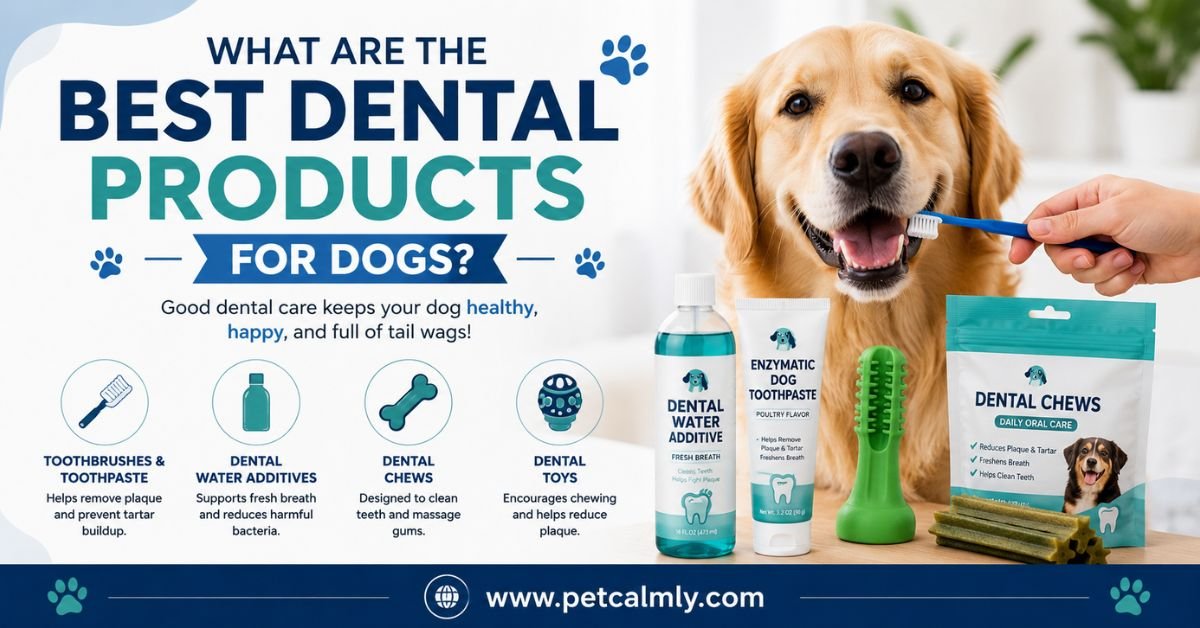
The best dental products for dogs usually include dog-safe toothbrushes, enzymatic toothpaste, dental chews, dental water additives, oral gels, and veterinarian-approved dental diets. For most dogs, the most effective routine combines daily tooth brushing with a quality enzymatic toothpaste and occasional dental chews. While dental products can significantly reduce plaque and tartar buildup, they work best when used consistently and alongside regular veterinary dental checkups.
If you’re wondering which products are truly worth buying, how often to use them, and what actually helps prevent dental disease, this guide covers everything you need to know.
Introduction
Many dog owners don’t think much about dental care until they notice bad breath, yellow teeth, or a veterinarian mentioning tartar buildup during an exam.
The reality is that dental health affects far more than your dog’s mouth.
Poor oral hygiene can lead to gum disease, tooth loss, pain, difficulty eating, and even complications involving the heart, liver, and kidneys. Unfortunately, many dogs develop dental disease long before owners recognize the warning signs.
The good news is that modern dental products make oral care much easier than it used to be.
Whether you have a playful puppy, a senior dog, or a breed prone to dental problems, choosing the right dental products can make a major difference.
In this guide, you’ll learn:
- Which dental products work best
- What veterinarians commonly recommend
- How to choose products for your dog’s age and size
- Common mistakes owners make
- How to build a simple dental care routine
- When professional dental treatment may be necessary
Why Dental Care Matters for Dogs
Quick answer
Dental care helps prevent plaque buildup, tartar formation, gum disease, tooth loss, and chronic oral pain.
Many owners assume bad breath is normal for dogs. In reality, persistent bad breath is often one of the earliest signs of dental disease.
By age three, many dogs show signs of periodontal disease, which is why preventive dental care is so important.
Healthy teeth support:
- Comfortable eating
- Better overall health
- Reduced oral pain
- Fresher breath
- Longer-lasting teeth
- Improved quality of life
Understanding Plaque and Tartar
Before choosing products, it helps to understand what they’re trying to prevent.
Plaque
Plaque is a sticky film of bacteria that forms on teeth daily.
If not removed regularly, plaque hardens.
Tartar
Tartar (also called calculus) is hardened plaque that attaches firmly to teeth.
Once tartar develops, brushing alone usually cannot remove it.
This is where professional veterinary cleaning may become necessary.
The main goal of dental products is to:
- Reduce plaque formation
- Slow tartar buildup
- Maintain healthy gums
- Control oral bacteria
The Best Dental Products for Dogs
1. Dog Toothbrushes
Why they’re important
A toothbrush remains the single most effective tool for cleaning a dog’s teeth.
Brushing physically removes plaque before it hardens into tartar.
Types of dog toothbrushes
Traditional Dog Toothbrush
Features:
- Long handle
- Angled head
- Soft bristles
Good for:
- Medium and large dogs
- Owners comfortable brushing
Finger Toothbrush
Features:
- Fits over your finger
- Greater control
- Gentle introduction
Good for:
- Puppies
- Small dogs
- Dental care beginners
What to look for
Choose:
- Soft bristles
- Comfortable grip
- Appropriate size for your dog
Avoid:
- Hard-bristle brushes
- Human toothbrushes with stiff bristles
2. Enzymatic Dog Toothpaste
Why it works
Enzymatic toothpaste contains ingredients that help break down bacteria and plaque.
Unlike human toothpaste, dog toothpaste is designed to be swallowed safely.
Popular flavors
Many dogs prefer:
- Poultry
- Peanut butter
- Beef
- Vanilla mint
A flavor your dog enjoys often makes brushing much easier.
Never use human toothpaste
Human toothpaste may contain:
- Xylitol
- Fluoride
- Foaming agents
These ingredients can be dangerous for dogs.
3. Dental Chews
Quick answer
Dental chews can help reduce plaque and tartar while satisfying a dog’s natural chewing instincts.
Many owners find dental chews easier to use than daily brushing.
However, they should supplement—not replace—brushing.
Benefits
Dental chews may:
- Scrape plaque from teeth
- Stimulate gums
- Freshen breath
- Provide mental enrichment
What makes a good dental chew?
Look for:
- Size-appropriate products
- Durable but digestible texture
- Veterinary recommendations
- Proven plaque-reduction benefits
Safety tips
Always supervise your dog when introducing a new chew.
Avoid chews that are:
- Too hard
- Sharp when broken
- Easy to swallow whole
4. Dental Water Additives
What are they?
Water additives are liquids added to your dog’s drinking water.
They help reduce bacteria and improve breath freshness.
Pros
- Extremely easy to use
- Helpful for dogs that resist brushing
- Convenient for busy households
Cons
- Less effective than brushing
- Results vary between dogs
Think of water additives as an extra layer of dental support rather than a complete solution.
5. Dental Wipes
Best for reluctant dogs
Dental wipes allow owners to wipe plaque from the tooth surface.
They’re often easier than a toothbrush for nervous dogs.
Benefits
- Easy introduction to oral care
- Portable
- Useful for travel
Limitations
They typically don’t clean as thoroughly as brushing.
Still, some dental care is better than none.
6. Oral Gels and Dental Sprays
These products are designed to:
- Reduce bacteria
- Support gum health
- Freshen breath
Many owners use them between brushing sessions.
They can be especially useful for:
- Senior dogs
- Dogs recovering from dental procedures
- Pets resistant to brushing
7. Veterinary Dental Diets
How they work
Certain dental diets use specially designed kibble textures that help clean teeth during chewing.
These foods may:
- Reduce plaque
- Slow tartar accumulation
- Improve oral hygiene
Best suited for
- Dogs with recurring tartar issues
- Multi-dog households
- Owners seeking long-term dental support
Dental diets work best as part of a complete oral care plan.
Comparing Common Dental Products
| Product Type | Plaque Control | Tartar Control | Ease of Use | Best For |
|---|---|---|---|---|
| Toothbrush | Excellent | Excellent | Moderate | All dogs |
| Enzymatic Toothpaste | Excellent | Good | Moderate | Daily use |
| Dental Chews | Good | Good | Easy | Supplemental care |
| Water Additives | Moderate | Moderate | Very Easy | Busy owners |
| Dental Wipes | Moderate | Limited | Easy | Beginners |
| Oral Gels | Moderate | Moderate | Easy | Sensitive dogs |
| Dental Diets | Good | Good | Very Easy | Long-term support |
Which Dental Products Are Best for Puppies?
Puppies benefit most from early dental training.
Start with:
- Finger toothbrushes
- Puppy-safe toothpaste
- Gentle oral handling exercises
The goal isn’t perfect brushing immediately.
It’s creating positive associations that make lifelong dental care easier.
Puppy dental routine
- Handle the mouth gently.
- Touch teeth briefly.
- Introduce toothpaste flavor.
- Use a finger brush.
- Gradually increase brushing time.
Best Dental Products for Small Dogs
Small breeds often experience dental disease earlier than larger breeds.
Examples include:
- Chihuahua
- Yorkshire Terrier
- Toy Poodle
- Maltese
Recommended products:
- Small-headed toothbrushes
- Finger brushes
- Small dental chews
- Enzymatic toothpaste
Because their mouths are crowded, plaque can accumulate quickly.
Best Dental Products for Senior Dogs
Older dogs may have:
- Sensitive gums
- Missing teeth
- Existing dental disease
- Arthritis affecting chewing
Helpful options include:
- Soft-bristle toothbrushes
- Dental gels
- Water additives
- Soft dental chews
- Veterinary dental diets
If your senior dog suddenly avoids chewing, a veterinary exam is a smart next step.
5 Common Dental Care Mistakes Dog Owners Make
1. Waiting Until Problems Appear
Many dogs hide dental pain surprisingly well.
By the time obvious symptoms appear, disease may already be advanced.
2. Relying Only on Dental Treats
Dental treats help, but they rarely match the effectiveness of brushing.
Think of them as part of a larger dental strategy.
3. Using Human Toothpaste
This remains one of the most common mistakes.
Always use products specifically formulated for dogs.
4. Ignoring Bad Breath
Persistent bad breath is often a warning sign.
It shouldn’t be dismissed as normal.
5. Brushing Inconsistently
Dental care works best through consistency.
Even a few minutes several times per week is better than occasional intensive cleaning.
Signs Your Dog May Have Dental Problems
Watch for:
- Bad breath
- Yellow or brown tartar
- Red gums
- Bleeding gums
- Drooling
- Difficulty chewing
- Pawing at the mouth
- Loose teeth
- Reduced appetite
- Facial swelling
These symptoms deserve attention, especially if they worsen.
A Simple Daily Dental Routine
Many owners feel overwhelmed by dental care.
Fortunately, a practical routine doesn’t need to be complicated.
Morning
- Fresh water
- Optional water additive
Evening
- Brush teeth with enzymatic toothpaste
- Reward with praise
Several Times Weekly
- Dental chew
- Quick gum check
Monthly
- Examine teeth for tartar buildup
- Monitor breath changes
This routine takes only a few minutes but can dramatically improve oral health.
What to Avoid When Choosing Dental Products
Not every product marketed for dental health is equally helpful.
Avoid products that:
- Make unrealistic claims
- Lack clear safety information
- Are too hard for your dog’s teeth
- Cause digestive upset
- Don’t match your dog’s size
A product that works for a large retriever may not be appropriate for a toy breed.
Natural Ways to Support Dental Health
Dental products are important, but overall lifestyle matters too.
Helpful habits include:
- Healthy nutrition
- Appropriate chewing opportunities
- Regular veterinary exams
- Daily oral inspections
- Consistent hydration
Natural approaches should complement—not replace—effective dental hygiene practices.
When Should You Worry?
Warning signs that deserve veterinary attention
Schedule a veterinary visit if your dog shows:
- Bleeding gums
- Loose teeth
- Severe bad breath
- Facial swelling
- Refusal to eat
- Signs of oral pain
- Broken teeth
- Excessive drooling
Emergency situations
Seek prompt veterinary care if your dog has:
- Significant facial swelling
- Difficulty eating or drinking
- Heavy bleeding
- Suspected tooth fracture with pain
Dental infections can become serious if left untreated.
What Should Pet Owners Do?
If you’re unsure where to start, keep it simple.
Step 1
Purchase:
- Dog toothbrush
- Enzymatic toothpaste
Step 2
Introduce oral handling gradually.
Step 3
Aim for daily brushing.
Step 4
Add dental chews as supplemental support.
Step 5
Schedule regular veterinary wellness exams.
Step 6
Monitor for changes in breath, chewing habits, and gum health.
The most effective dental plan is usually the one you can realistically maintain long term.
Dental Care Do’s and Don’ts
Do
✔ Use dog-specific toothpaste
✔ Start dental care early
✔ Reward cooperation
✔ Inspect teeth regularly
✔ Schedule professional dental evaluations
✔ Choose products appropriate for your dog’s size
Don’t
✘ Use human toothpaste
✘ Ignore bad breath
✘ Assume chewing alone cleans teeth
✘ Give excessively hard chews
✘ Wait until visible dental disease develops
✘ Force brushing if your dog is frightened
Frequently Asked Questions
1: What is the most effective dental product for dogs?
Daily tooth brushing with a dog-safe toothbrush and enzymatic toothpaste remains the most effective option. Other products work best as supplements.
2: Are dental chews enough to keep a dog’s teeth clean?
Usually not. Dental chews can reduce plaque and tartar but generally cannot replace regular brushing and professional dental care.
3: How often should I brush my dog’s teeth?
Daily brushing is ideal. If that isn’t possible, several times per week can still provide meaningful benefits.
4: Do water additives really work for dogs?
Water additives may help reduce bacteria and freshen breath. They’re convenient but usually less effective than brushing.
5: What age should dogs start dental care?
Puppies can begin learning dental routines as soon as they are comfortable with gentle mouth handling. Early training often leads to easier lifelong care.
6: Can bad breath mean dental disease?
Yes. Persistent bad breath is often one of the first signs of plaque buildup, gum inflammation, or periodontal disease.
More Information About Pets, Please Visit Our Website: What Are the Worst Dental Chews for Dogs?
Conclusion
The best dental products for dogs are the ones that effectively reduce plaque while fitting naturally into your daily routine. For most dogs, a combination of a quality toothbrush, enzymatic toothpaste, and occasional dental chews offers the strongest protection against dental disease.
What matters most isn’t finding a miracle product it’s building consistent habits.
A few minutes of dental care each day can help prevent painful dental problems, expensive treatments, and unnecessary discomfort later in life. Start small, stay consistent, and pay attention to your dog’s mouth health. Your dog may never thank you for brushing their teeth, but healthier gums, fresher breath, and a more comfortable life are rewards worth working toward.