Short Direct Answer
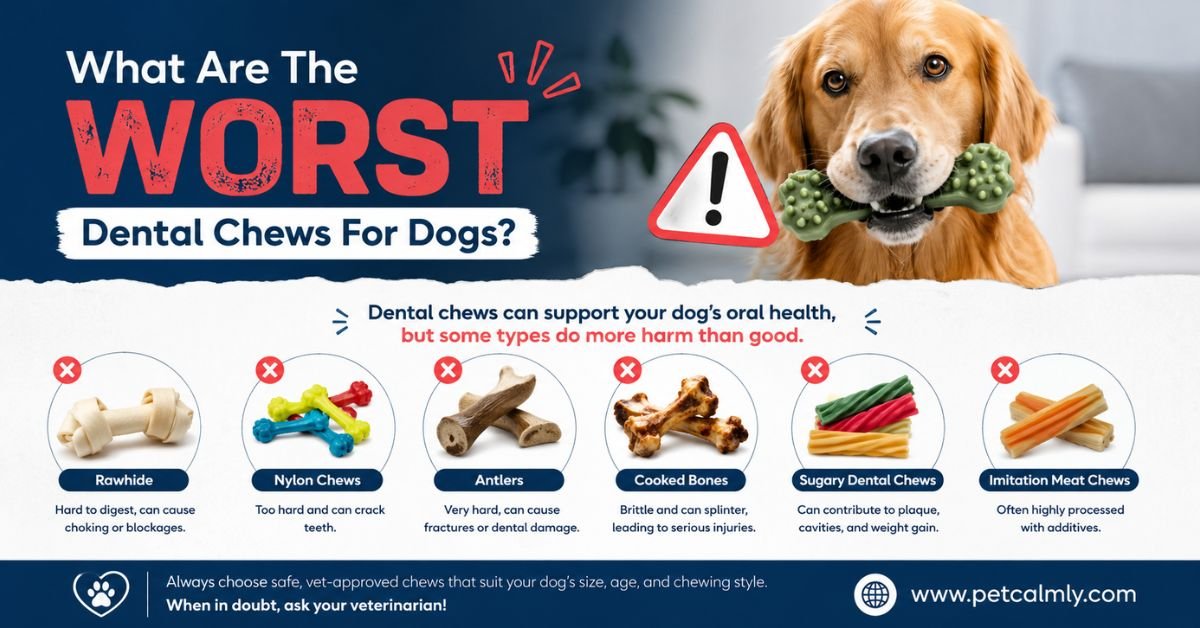
The worst dental chews for dogs are typically those that are too hard, highly digestible in large chunks, loaded with unnecessary additives, or likely to crack teeth. Common examples include cooked bones, antlers, hard nylon chews for aggressive chewers, rawhide products of questionable quality, and oversized dental treats that encourage gulping.
A good dental chew should help reduce plaque while remaining safe to chew and digest. If a chew is harder than your dog’s teeth, it can potentially cause painful dental injuries rather than improve oral health.
Introduction
Many dog owners buy dental chews because they want cleaner teeth, fresher breath, and fewer expensive veterinary dental procedures. That goal makes perfect sense.
The challenge is that not all dental chews are created equal.
Walk into any pet store and you’ll find shelves packed with products claiming to improve dental health. Some are genuinely helpful. Others can create new problems, including broken teeth, digestive blockages, choking risks, and gastrointestinal upset.
If you’ve ever wondered whether your dog’s favorite chew is actually safe, you’re not alone. Many owners discover only after a dental injury or emergency vet visit that a popular chew wasn’t the best choice for their dog.
This guide explains which dental chews deserve extra caution, why certain products can be risky, what warning signs to watch for, and how to choose safer alternatives that support your dog’s oral health.
Why Dental Chews Matter in the First Place
Dental disease is one of the most common health problems in dogs.
Plaque begins forming shortly after eating. If plaque isn’t removed, it can harden into tartar. Over time, bacteria can contribute to:
- Bad breath
- Gum inflammation
- Gingivitis
- Periodontal disease
- Tooth loss
- Oral pain
- Difficulty eating
Dental chews can help reduce plaque buildup through mechanical chewing action. However, they should complement—not replace—regular tooth brushing and veterinary dental care.
The problem arises when a chew marketed as “dental” causes more harm than good.
What Makes a Dental Chew Unsafe?
Quick Answer
A dental chew becomes unsafe when it increases the risk of:
- Tooth fractures
- Choking
- Digestive obstruction
- Intestinal injury
- Excessive calorie intake
- Toxic ingredient exposure
The safest dental chews balance cleaning effectiveness with appropriate softness and digestibility.
Veterinary dentists often share a simple guideline:
If you cannot slightly indent the chew with your fingernail, it may be too hard for many dogs.
The Worst Dental Chews for Dogs
1. Cooked Bones
Why They’re Dangerous
Cooked bones become brittle and prone to splintering.
When dogs chew them, sharp fragments can:
- Damage gums
- Cut the mouth
- Injure the esophagus
- Puncture the digestive tract
- Cause intestinal blockages
Many owners assume natural bones are automatically safer. Unfortunately, cooked bones are among the most common chew-related hazards.
Common Examples
- Cooked chicken bones
- Turkey bones
- Pork rib bones
- Steak bones from leftovers
Risk Level
Very high.
2. Extremely Hard Antlers
Why They’re Problematic
Deer and elk antlers are often marketed as long-lasting natural chews.
While they do last a long time, that’s partly because they’re extremely hard.
Veterinary dentists frequently see fractured teeth linked to antler chewing.
The most commonly damaged teeth include:
- Upper fourth premolars
- Canine teeth
- Molars
These fractures can expose sensitive tooth pulp and require expensive treatment.
Dogs at Highest Risk
- Power chewers
- Labrador Retrievers
- German Shepherds
- Pit Bull-type dogs
- Rottweilers
3. Hard Nylon Bones
The Main Concern
Some nylon chews are marketed for “extreme chewers.”
Durability sounds appealing, but many are hard enough to crack teeth.
A dental chew should encourage chewing without acting like concrete.
Warning Signs
Stop using a nylon chew if:
- Sharp edges develop
- Pieces break off
- Your dog aggressively grinds down on it
- Tooth wear becomes visible
4. Poor-Quality Rawhide
Why Rawhide Gets a Bad Reputation
Not all rawhide is dangerous.
The concern centers on poorly manufactured products that:
- Break into large chunks
- Contain chemical residues
- Cause digestive upset
- Create choking risks
Dogs that gulp rather than chew are especially vulnerable.
Additional Concerns
Some low-quality products may contain:
- Artificial preservatives
- Excessive bleaching agents
- Unclear sourcing
Quality varies enormously between brands.
5. Weight-Bearing Animal Bones
Examples
- Cow femurs
- Large beef leg bones
- Dense marrow bones
These bones are harder than canine teeth.
Many owners assume natural equals safe, but veterinary dental specialists regularly identify these products as contributors to fractured teeth.
The main problem isn’t digestion.
It’s dental trauma.
6. Hooves
Why Hooves Can Cause Problems
Cow hooves remain popular because they’re inexpensive and long-lasting.
However, they present several concerns:
- Extremely hard texture
- Tooth fracture risk
- Splintering potential
- Gastrointestinal irritation
Some dogs tolerate them without issue, but the risk profile is generally higher than softer dental chews.
7. Large Compressed Rawhide Blocks
The Hidden Danger
Compressed products can soften unevenly.
A dog may tear off a large section and swallow it whole.
Potential outcomes include:
- Choking
- Vomiting
- Intestinal blockage
- Emergency surgery
This risk increases in enthusiastic eaters.
8. Human Dental Products
Never Use Human Dental Chews
Products designed for people may contain ingredients unsafe for dogs.
One major concern is:
- Xylitol
Xylitol is highly toxic to dogs and can cause severe medical emergencies.
Always choose products specifically formulated for canine use.
A Quick Comparison Table
| Chew Type | Tooth Fracture Risk | Choking Risk | Digestive Risk | Overall Safety |
|---|---|---|---|---|
| Cooked Bones | Very High | High | Very High | Poor |
| Antlers | Very High | Low | Low | Poor |
| Hard Nylon Bones | High | Moderate | Moderate | Fair to Poor |
| Low-Quality Rawhide | Moderate | High | High | Poor |
| Weight-Bearing Bones | Very High | Low | Moderate | Poor |
| Hooves | High | Moderate | Moderate | Poor |
| Veterinary Dental Chews | Low | Low | Low | Generally Better |
Signs a Dental Chew Is Too Hard
In Short
If your dog sounds like they’re chewing rocks, the chew may be too hard.
Watch for:
- Loud cracking noises
- Sudden yelping while chewing
- Reluctance to chew afterward
- Dropping food
- Facial swelling
- Pawing at the mouth
- Bleeding gums
- Visible tooth damage
Some tooth fractures aren’t immediately obvious.
A dog may continue eating despite significant discomfort.
Common Mistakes Dog Owners Make
Assuming Natural Means Safe
Natural products can still cause injuries.
Examples include:
- Antlers
- Hooves
- Hard bones
Nature doesn’t automatically equal safety.
Choosing the Longest-Lasting Option
Many owners prioritize durability.
Ironically, the longest-lasting chews are often the hardest and therefore the riskiest for teeth.
Ignoring Dog Size
A chew appropriate for a Great Dane may be unsafe for a Yorkshire Terrier.
Size matters.
Chews should match:
- Body size
- Jaw strength
- Chewing style
Leaving Dogs Unsupervised
Even relatively safe chews should be supervised.
Dogs can:
- Break pieces off unexpectedly
- Choke
- Swallow oversized chunks
Monitoring helps reduce risk.
Which Dogs Face the Highest Risks?
Some dogs are more likely to experience chew-related injuries.
Aggressive Chewers
These dogs attack chews with maximum force.
Examples often include:
- Labrador Retrievers
- Boxers
- Pit Bull-type breeds
- Belgian Malinois
Senior Dogs
Older dogs may have:
- Weaker teeth
- Existing dental disease
- Hidden fractures
Hard chews become riskier with age.
Puppies
Puppies have developing teeth and immature chewing habits.
They require appropriately sized and age-appropriate products.
Dogs That Swallow Without Chewing
Some dogs inhale treats.
These dogs face higher risks of:
- Choking
- Blockages
- Gastrointestinal complications
What Makes a Good Dental Chew?
The best dental chew isn’t necessarily the toughest.
Look for products that:
- Have some flexibility
- Are digestible
- Encourage prolonged chewing
- Fit your dog’s size
- Have clear ingredient sourcing
- Support plaque reduction
Ideally, the chew should clean teeth without damaging them.
Are Veterinary-Approved Dental Chews Worth It?
In many cases, yes.
Products evaluated for dental benefits often undergo testing to determine whether they help reduce plaque and tartar accumulation.
Benefits may include:
- Better safety profiles
- Consistent manufacturing
- Predictable digestibility
- Evidence-based dental claims
That doesn’t mean every veterinary-recommended chew is perfect, but they often carry lower risks than extremely hard alternatives.
Safer Alternatives to Risky Dental Chews
If you’re concerned about the products your dog currently uses, consider alternatives that emphasize safety.
Options may include:
- Dental chews with proven plaque-control designs
- Rubber chew toys
- Dental toys designed for supervised chewing
- Dog-safe dental treats
- Daily tooth brushing
Many veterinary professionals still consider tooth brushing the gold standard for preventing dental disease.
Can Dental Chews Replace Brushing?
Quick Answer
No.
Dental chews can help reduce plaque buildup, but they cannot completely replace brushing.
Think of them as a supplement rather than a substitute.
The most effective dental care routine usually combines:
- Tooth brushing
- Veterinary dental examinations
- Appropriate dental chews
- Professional cleanings when necessary
Real-Life Situations Owners Commonly Face
“My Dog Loves Antlers”
Many dogs adore antlers.
Unfortunately, enjoyment doesn’t guarantee safety.
If your dog is a forceful chewer, the risk of a cracked tooth may outweigh the dental benefits.
“My Dog Finishes Every Chew in Minutes”
This often indicates a powerful chewer or a gulper.
In these cases:
- Supervision becomes essential
- Proper sizing matters
- Softer alternatives may be safer
“My Dog Has Bad Breath Despite Dental Chews”
Bad breath often indicates underlying dental disease.
Chews may help manage plaque, but persistent odor warrants a veterinary dental evaluation.
Daily Dental Health Checklist
A simple routine can make a significant difference.
Every Day
- Check breath changes
- Look at gums
- Offer fresh water
- Brush teeth if possible
Weekly
- Inspect chewing products
- Replace damaged toys
- Look for broken teeth
Every Few Months
- Schedule oral health checks if recommended
- Review dental products for safety
Dos and Don’ts
Do
Match chews to your dog’s size
Supervise chewing sessions
Replace damaged products
Ask your veterinarian about dental concerns
Monitor for signs of tooth injury
Don’t
Give cooked bones
Assume all natural chews are safe
Ignore cracked or chipped teeth
Leave high-risk chews unattended
Choose products solely because they last forever
When Should You Worry?
Certain signs deserve prompt veterinary attention.
Contact your veterinarian if your dog shows:
- Broken teeth
- Bleeding from the mouth
- Facial swelling
- Difficulty eating
- Dropping food
- Excessive drooling
- Sudden bad breath
- Vomiting after chewing
- Signs of choking
Emergency Situations
Seek immediate veterinary care if your dog:
- Cannot breathe normally
- Has a chew lodged in the throat
- Collapses
- Experiences severe oral bleeding
Prompt treatment can prevent serious complications.
What Should Pet Owners Do?
If you’re evaluating your dog’s dental chews today, start with these steps:
Step 1
Gather every chew product your dog currently uses.
Step 2
Identify items that are extremely hard, brittle, or likely to splinter.
Step 3
Remove products associated with tooth fractures or choking risks.
Step 4
Choose safer, size-appropriate alternatives.
Step 5
Schedule a dental examination if your dog has ongoing bad breath, gum inflammation, or chewing discomfort.
Step 6
Begin a realistic oral care routine that includes brushing whenever possible.
Small, consistent habits often produce better results than relying on one dental product alone.
Conclusion
When asking, “What are the worst dental chews for dogs?” the biggest concerns are usually products that are too hard, prone to splintering, or easily swallowed in dangerous chunks.
Cooked bones, antlers, weight-bearing bones, hooves, some nylon chews, and low-quality rawhide products consistently raise safety concerns because they can contribute to tooth fractures, choking incidents, and digestive emergencies.
The safest approach is to choose appropriately sized, digestible dental chews, supervise chewing sessions, and remember that no chew replaces regular dental care. A healthy mouth depends on a combination of smart product choices, routine monitoring, and veterinary guidance when needed.
Your dog’s favorite chew should support their health not become the reason for an unexpected dental emergency.
More Information About Pets, Please Visit Our Website: Best Paw Protection for Dogs in Winter
Homemade dog treats recipes vet approved
Early Signs Your Dog Is Pregnant
How to Cut Dog Nails That Are Black
Frequently Asked Questions
1: What is the safest dental chew for dogs?
The safest dental chew depends on your dog’s size, age, and chewing style. Generally, products designed specifically for dental health that are flexible, digestible, and appropriately sized are safer than extremely hard chews.
2: Are antlers bad for dogs’ teeth?
They can be. Antlers are very hard and may increase the risk of tooth fractures, especially in aggressive chewers and large breeds.
3: Is rawhide always dangerous for dogs?
No. Rawhide is not automatically dangerous, but poor-quality products and dogs that swallow large pieces face higher risks. Supervision and quality sourcing matter.
4: Can dental chews cause intestinal blockages?
Yes. Some chews can swell, break into large chunks, or become lodged in the digestive tract, potentially causing a blockage that requires veterinary treatment.
5: How do I know if my dog’s chew is too hard?
A common guideline is that you should be able to make a slight indentation with your fingernail. If the chew feels rock-hard, it may increase the risk of dental injuries.
6: What works better than dental chews for cleaning teeth?
Regular tooth brushing remains the most effective home-care method for reducing plaque. Dental chews can help, but brushing provides more direct and consistent cleaning.