Short direct answer
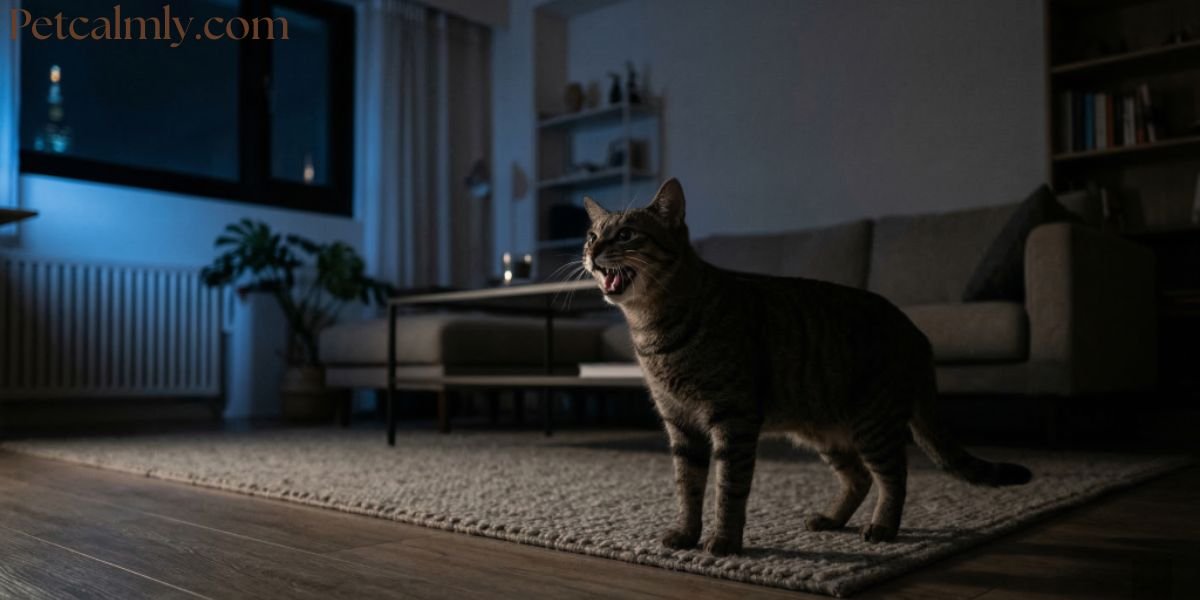
Your cat is walking around meowing at night mainly because cats are crepuscular animals most active at dawn and dusk. When the house quiets down, they release pent-up energy from daytime boredom, seek attention, feel hungry, or experience stress. In senior cats, it can also signal medical issues like hyperthyroidism, kidney disease, arthritis pain, or cognitive dysfunction (feline dementia). Start with a vet visit to rule out health problems. Then, use evening play sessions, a consistent routine, timed feeding, and ignoring attention-seeking meows to help everyone sleep better.
Why Nighttime Meowing and Pacing Affect So Many Cat Owners
Few things disrupt sleep like hearing your cat’s paws padding through the house followed by insistent meows. You’re exhausted from your day, yet your feline companion seems determined to turn the quiet hours into their personal performance. This behavior is incredibly common and often leaves owners feeling worried, frustrated, and sleep-deprived.
The good news? Understanding why your cat walks around meowing at night usually leads to straightforward solutions. Cats don’t meow to annoy us they’re communicating needs we’ve taught them we can fulfill. By addressing the root causes with patience and consistency, most families see big improvements within weeks. This article covers every angle so you can finally get rest while keeping your cat happy and healthy.
Understanding Your Cat’s Natural Behavior
Cats evolved as crepuscular hunters. Their internal clock tells them to be alert when prey is active twilight hours. Domestic life flips this schedule. While you work or run errands, your cat naps for up to 16 hours a day. By evening, they’re bursting with energy exactly when you want silence.
This mismatch explains a lot of nighttime activity. One owner described her young Siamese pacing the hallway at 3 a.m., meowing like she was reporting the day’s events. Once the family added 20 minutes of interactive play before bed, the “nightly news” sessions dropped sharply.
Meowing itself is mostly a human-directed language. Adult cats rarely meow at each other in the wild, but they quickly learn that vocalizing gets results from people food, pets, play, or doors opening. At night, with fewer distractions, those meows become louder and more persistent.
6 Common Reasons Why Cats Walk Around Meowing at Night
Several overlapping factors usually explain this behavior. Let’s break them down clearly.
Crepuscular Energy Bursts Even well-adjusted cats feel most lively at dawn and dusk. If your cat sleeps through your workday, they wake up ready to hunt, explore, or zoom. Pacing and meowing often accompany these natural bursts. Seasonal changes, like longer summer days, can shift their rhythm and intensify the pattern.
Boredom and Insufficient Daytime Stimulation Indoor cats especially need mental and physical outlets. Without enough enrichment, they save their energy for when the house is quiet. Imagine a child stuck indoors all day with no toys bedtime becomes chaos. Your cat may wander room to room, meow at windows, or knock objects to create excitement.
Hunger, Thirst, or Feeding Habits Many cats associate nighttime with snacks. If the last meal comes too early, genuine hunger kicks in. Others develop a habit of meowing because it once brought food. Thirst plays a role too stale water or low bowls prompt vocal protests. Some cats with medical conditions feel hungrier overall, turning mealtime into a 24-hour demand.
Attention-Seeking and Loneliness Cats form strong bonds. When the family sleeps, they may feel isolated and call out for company. This is common in affectionate breeds or single-cat homes. One story involved a rescue cat who started pacing after her owner began working nights the meows were her way of checking if anyone was still home.
Stress or Recent Changes Cats thrive on routine. New furniture, visitors, another pet, moving homes, or even neighborhood strays can create unease. Stress often shows as increased vocalization because meowing is their clearest way to express discomfort. External noises like dogs barking or cars can also trigger alertness.
Medical and Age-Related Causes Never overlook health. Sudden or worsening nighttime meowing, especially in cats over 8–10 years old, can point to:
- Hyperthyroidism: The most common endocrine issue in senior cats. It speeds up metabolism, causing restlessness, weight loss despite good appetite, increased thirst, and loud yowling. Many owners notice pacing and vocalizing at night as classic signs.
- Cognitive Dysfunction (Feline Dementia): Similar to Alzheimer’s in humans. Cats become disoriented, especially in the dark. They may stare at walls, get “stuck,” wander aimlessly, or yowl as if lost. Sleep-wake cycles reverse, leading to daytime sleeping and nighttime activity.
- Arthritis or Pain: Joint discomfort makes it hard to settle. Cats hide pain well, but restlessness and meowing can be subtle signals.
- Kidney Disease, High Blood Pressure, or Urinary Issues: These cause frequent thirst, discomfort, or litter box trips, prompting vocal protests.
- Vision or Hearing Loss: Sensory decline increases anxiety in low light, making cats call out for reassurance.
- Dental Problems or Other Illnesses: Mouth pain or infections can make cats irritable and vocal.
A quick vet check with bloodwork often catches these early, when treatment is simplest and most effective.
How to Recognize Different Types of Nighttime Meowing
Not all meows mean the same thing. Pay attention to tone, timing, and body language.
- Short, chirpy meows while rubbing against your legs usually mean “hello” or “play with me.”
- Long, low yowls or caterwauling often signal distress, pain, or confusion common in seniors.
- Repetitive meowing near the kitchen or bedroom door points to hunger or attention.
- Pacing combined with litter box visits or excessive drinking suggests a medical check is urgent.
Keep a simple log for a few nights: when it starts, how long it lasts, what your cat does, and any other symptoms. This helps your vet and helps you spot patterns.
Real example: Maria’s 13-year-old cat, Luna, began loud yowling at 2 a.m. She first tried extra playtime, but the behavior continued. Blood tests revealed hyperthyroidism. After starting medication, Luna’s energy balanced out and the nighttime wandering stopped within weeks. Early action made a huge difference.
Younger cats more often show playful or bored signs zooming, chasing shadows, or meowing at doors and windows. Seniors tend toward confusion or discomfort, sometimes staring blankly or seeming lost in familiar rooms.
When Should You Be Concerned?
Most nighttime meowing isn’t an emergency, but certain changes mean it’s time for professional help. See your vet promptly if:
- The behavior is new or suddenly worse
- Your cat is losing or gaining weight unexpectedly
- They drink or urinate much more (or less) than usual
- You notice vomiting, diarrhea, reduced grooming, or litter box accidents
- Meowing sounds distressed rather than demanding
- Your senior cat seems disoriented during the day too
- There are signs of pain like limping, hiding, or aggression when touched
Don’t assume “it’s just old age.” Many conditions that cause restlessness respond well to treatment—medication for thyroid issues, pain relief for arthritis, or special diets for kidney disease. Early intervention improves both quality of life and lifespan.
What Should Pet Owners Do? Step-by-Step Action Plan
Fixing why your cat walks around meowing at night usually combines ruling out medical causes with smart lifestyle changes. Here’s a practical, proven approach:
Step 1: Book a Veterinary Check-Up This is non-negotiable, especially for new or worsening behavior. Share your log with the vet. They may run blood tests, check blood pressure, examine teeth and joints, or screen for cognitive issues. Treating an underlying condition often resolves the vocalizing quickly.
Step 2: Boost Daytime and Evening Activity Tire your cat out naturally. Aim for two or three 10–15 minute interactive play sessions daily more in the evening. Use wand toys, feather teasers, laser pointers (always end with a catchable toy), or chase games. Puzzle feeders and treat-dispensing toys turn meals into hunting simulations. Rotate toys to keep them interesting. For indoor cats, add cat trees, wall shelves, scratching posts, and window perches with bird feeders outside.
Step 3: Optimize Feeding and Hydration Feed a small, protein-rich meal or snack closer to bedtime. This satisfies hunger and encourages post-meal sleepiness. Consider an automatic feeder for early morning portions to prevent dawn begging. Always provide fresh water in multiple clean bowls. Some owners use pet fountains because many cats prefer running water.
Step 4: Build a Calming Nighttime Routine Consistency helps reset their clock. Dim lights, play soft music or white noise to mask outside sounds, and use a nightlight for seniors who seem anxious in darkness. Keep the litter box spotless and accessible. Provide a cozy, familiar bed near your room (but not necessarily on your bed if you prefer independence).
Step 5: Handle Attention-Seeking Wisely This part is challenging but crucial. Ignore non-emergency meows—no talking, no eye contact, no getting up. Responding rewards the behavior and makes it stronger. It may intensify for a few days (called an extinction burst), but most cats learn within 7–14 days that nighttime vocalizing gets no payoff. During the day, give plenty of positive attention when they’re quiet.
Step 6: Reduce Stress and Enrich the Environment Minimize changes where possible. For anxious cats, pheromone diffusers (Feliway) or vet-approved calming supplements can help. In multi-cat homes, ensure separate resources (food, water, litter, resting spots) to avoid competition. If your cat wants to go outside, consider a safe catio or harness walks during daylight.
Step 7: Consider Additional Support After a clean vet bill, discuss options like anti-anxiety medication for severe cognitive dysfunction or behavioral cases. Never use human sleep aids or medications without guidance they can be dangerous.
Track progress weekly. Small improvements add up. If one change doesn’t help, combine several. Most owners report better sleep within 2–4 weeks when they stay consistent.
Common Mistakes That Make Nighttime Meowing Worse
Well-meaning owners sometimes prolong the problem without realizing it. Avoid these pitfalls:
- Feeding or playing right after meows start—this teaches your cat that vocalizing works.
- Yelling or using spray bottles—adds stress and fear without solving the cause.
- Inconsistent responses—one night you ignore it, the next you give in.
- Suddenly isolating your cat in another room without gradual training.
- Assuming all solutions are the same—bored young cats need play; seniors need medical care plus gentle routines.
- Neglecting enrichment during the day while only focusing on nights.
Patience and observation pay off. What works for one cat may need tweaking for another.
Extra Tips for Senior Cats and Special Cases
Senior cats deserve extra gentleness. If cognitive dysfunction is involved, maintain strict routines, use nightlights, and consider vet-prescribed medications that support brain health. Arthritis-friendly ramps or low-entry litter boxes reduce discomfort. Regular gentle grooming and soft bedding help them feel secure.
For kittens or young adults, focus heavily on play and enrichment they have boundless energy that needs healthy outlets. Breeds like Siamese, Bengals, or Orientals are naturally more vocal, so set realistic expectations while still managing excessive nighttime noise.
If you have multiple cats, watch for bullying or resource guarding that could stress one into vocalizing.
Long-Term Prevention for Peaceful Nights
Once the meowing calms, maintain good habits to prevent it from returning. Keep playtime regular, stick to feeding schedules, and schedule annual (or twice-yearly for seniors) vet visits. Continue providing mental stimulation new toys, food puzzles, or even clicker training for fun tricks.
Many cats and owners settle into a comfortable rhythm where nights are quiet and days are engaging. Your cat isn’t trying to be difficult; they’re expressing needs in the only language they know works with humans.
More Information About Pets, Please Visit Our Website: How to Clean Cat Eyes at Home
How to Introduce New Cat to Home
How Long Do Cats Remember Their Siblings?
Homemade Cat Treats Recipes Vet Approved
Do Cats Understand Siblings?
What Are the First Signs of Cat Pregnancy?
How to Stop Cat from Biting When Petting
Best Cat Food for Indoor Cats with Sensitive Stomachs
Conclusion
Why your cat walks around meowing at night almost always comes down to natural instincts, unmet needs, or treatable health concerns. By starting with a veterinary exam, increasing enrichment and play, adjusting routines, and responding consistently, you can dramatically reduce or eliminate the behavior.
Remember, your cat meows because they trust you to listen. With understanding, patience, and the right adjustments, you can meet their needs while protecting your own sleep. Most families see meaningful improvement, leading to happier cats and more rested owners.
If the behavior persists despite your efforts, revisit your vet new insights or treatments may be needed. You’ve got this. A good night’s sleep is within reach for both of you.
Frequently Asked Questions
1: Why does my cat suddenly start meowing loudly at night?
Sudden changes often point to medical issues like hyperthyroidism, pain, or stress from environmental shifts. A vet visit with bloodwork is the best first step to identify and treat the cause quickly.
2: Is nighttime meowing more common in senior cats?
Yes. Older cats frequently yowl due to cognitive dysfunction, arthritis, thyroid problems, or sensory loss. Many of these conditions are manageable with medication, diet, or simple home adjustments.
3: Should I get up and comfort my cat when they meow at night?
Only for genuine emergencies. Comforting or feeding usually reinforces the habit. Check needs earlier in the evening, then ignore attention-seeking meows consistently for best results.
4: Can changing my cat’s diet help stop nighttime vocalizing?
It can. A later evening meal or switch to a senior-appropriate diet may reduce hunger and support overall health. Always consult your vet before dietary changes, especially for seniors.
5: How do I tire out my cat so they sleep through the night?
Schedule energetic play sessions in the late afternoon and evening using interactive toys. Combine with puzzle feeders and environmental enrichment to burn mental and physical energy effectively.
6: What if ignoring my cat’s meowing doesn’t work?
Double-check for unmet medical needs or hidden stressors. Increase daytime stimulation and maintain strict consistency. If needed, your vet can recommend calming aids or further diagnostics for stubborn cases.