Short direct answer
Dogs who skip regular meals but happily eat treats are almost always telling you something about the food itself, not necessarily their health. Treats are usually softer, saltier, fattier, and more strongly scented than kibble or dog food, so they’re simply more rewarding to eat. That said, sudden pickiness combined with dental pain, nausea, stress, or an underlying illness can also cause this pattern. If your dog is eating treats but ignoring meals for more than a day or two, or shows other symptoms like vomiting, lethargy, or weight loss, it’s time to call your veterinarian.
If you’ve been standing over a full bowl of untouched kibble while your dog trots over the second you rustle a treat bag, you’re not imagining things and you’re definitely not alone. This is one of the most common concerns dog owners bring up, and thankfully, most of the time it has a simple, fixable explanation.
Let’s walk through exactly what’s going on, how to tell the difference between a picky eater and a dog who needs medical attention, and what actually works to get your dog interested in mealtime again.
Why Dogs Eat Treats But Refuse Regular Meals
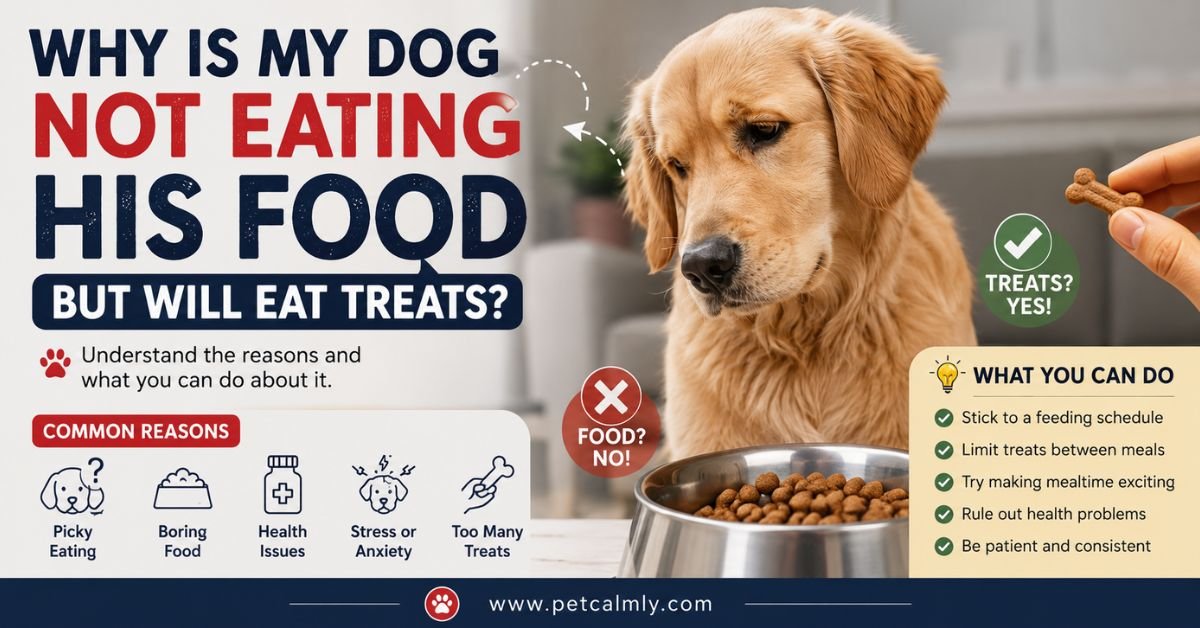
The short version: treats are designed to be irresistible, and regular dog food isn’t. Most commercial treats are packed with fat, salt, and strong aromas that trigger a dog’s appetite almost instantly. Dog food, even good quality food, is formulated for balanced daily nutrition — not maximum flavor impact.
Think about it from your dog’s point of view. A piece of chicken jerky or a training treat smells intense and tastes rich. A bowl of the same kibble he’s eaten every day for the last year? Less exciting, especially if he’s already learned that holding out sometimes gets him something better.
This doesn’t mean your dog is being manipulative in a human sense. Dogs are quick learners, and if refusing food once led to being offered something tastier, they’ll repeat the behavior that worked. It’s a learned pattern, not defiance.
The Difference Between Picky Eating and a Real Appetite Problem
Veterinarians actually split appetite loss into two categories, and understanding this distinction helps a lot:
- True anorexia — the dog has no interest in food at all, including treats and favorite snacks.
- Pseudo-anorexia — the dog is hungry and wants to eat, but something (pain, difficulty chewing, nausea, or simple pickiness) is getting in the way of eating the regular meal specifically.
According to veterinary guidance, decreased appetite and decreased food intake are outward signs that should be taken seriously, since they may indicate potentially life-threatening underlying conditions, even though poor appetite is a common reason owners seek veterinary care. A dog who’s still eating treats generally falls into the pseudo-anorexia or “picky eater” category rather than true anorexia but that doesn’t mean you should ignore it if the pattern continues.
7 Common Reasons Your Dog Skips Meals But Eats Treats
There isn’t one single cause here. In most households, it’s a combination of a few of these factors working together.
1. Learned Pickiness From Past Feeding Habits
If your dog has ever refused a meal and then been offered something better a topper, a different food, some chicken, or treats to coax him along — he’s learned that skipping the bowl can lead to something more appealing. This is one of the most common patterns I hear about from owners, and it’s completely understandable. Nobody wants to watch their dog go hungry, so we naturally try to help. Unfortunately, that instinct can accidentally reinforce the exact behavior we’re trying to stop.
2. Food Fatigue or Boredom
Dogs eating the exact same food, in the exact same bowl, at the exact same times, day after day, can genuinely lose enthusiasm for it — similar to how a person might stop looking forward to a meal they’ve had for lunch every day for months. This isn’t usually a medical issue, just a motivation issue.
3. Dental Pain or Mouth Discomfort
Chewing dry kibble requires more effort than swallowing a soft treat. If your dog has a sore tooth, inflamed gums, or an oral injury, meals can become uncomfortable while small, soft treats go down easily. Dental disease is one of the most overlooked reasons for appetite changes, especially in adult and senior dogs.
4. Mild Nausea or Digestive Upset
A dog with an unsettled stomach may still take a treat out of habit or excitement, but a full bowl of food can feel like too much. Nausea often comes with other subtle signs like lip licking, drooling, or grass eating.
5. Stress, Anxiety, or Environmental Changes
New pets, moving homes, changes in routine, loud noises, or even a different feeding spot can all reduce a dog’s appetite for regular meals. Veterinary behaviorists note that non-medical causes of decreased appetite are often associated with stress or anxiety, and pets in highly stressful situations may lose interest in food and become withdrawn. Treats, given by hand from someone they trust, can feel safer and more comforting than eating alone from a bowl.
6. An Underlying Medical Condition
This is the one owners worry about most, and while it’s less common than simple pickiness, it’s real. Chronic conditions such as kidney disease, liver disease, diabetes, or heart disease can lead to a decrease in appetite and pain, infections, or gastrointestinal issues can all play a role too. This is exactly why a pattern that continues for more than a day or two deserves a proper look from your vet rather than guesswork at home.
7. Food Quality, Freshness, or Storage Issues
Sometimes the answer really is that simple: the food has gone stale, been stored incorrectly, or simply doesn’t smell as fresh as it should. Dogs can be sensitive to the smell or taste of food, especially if it’s stale or spoiled, so it helps to store food properly and discard anything that smells off or is past its expiration date.
The Psychology Behind Why Treats Win Every Time
It helps to understand a little about how dogs experience food in the first place. Dogs rely heavily on smell to decide whether something is worth eating, far more than taste alone. Treats are typically manufactured to maximize aroma — think freeze-dried liver, bacon-flavored strips, or soft baked snacks because manufacturers know scent is what gets a dog’s attention fastest.
Regular dog food, by contrast, is built around balanced nutrition first and palatability second. Even high-quality kibble can smell comparatively mild next to a treat that was specifically engineered to be irresistible. On top of that, treats are usually given during moments of excitement training, play, greetings which pairs them with positive emotional associations. A meal from a bowl, eaten alone, doesn’t carry that same emotional charge.
This combination of stronger scent, higher fat content, and positive association is exactly why a dog can seem totally uninterested in food one moment and thrilled about a treat the next. It’s not confusion or manipulation — it’s simply a dog responding to what’s most rewarding in the moment, the same way a person might skip a plain salad but happily eat dessert.
Does Age Make a Difference? Puppies, Adults, and Senior Dogs
Puppies
Puppies can be picky for very different reasons than adult dogs. Teething discomfort, rapid growth changes, and simply learning what food even is can all play a role. Puppies also tend to have smaller stomachs and higher energy needs relative to their size, so what looks like “not eating enough” is sometimes just smaller, more frequent meals being needed. That said, puppies have far less reserve than adult dogs, so a puppy who refuses food for more than 12–24 hours should be seen by a vet sooner rather than later.
Adult Dogs
This is where learned pickiness and routine-based refusal show up most often, largely because adult dogs have had the most time to develop habits — including the habit of holding out for something better. Adult dogs are also the group most likely to develop dental tartar or early gum disease without obvious outward signs, so a dental check is worth doing if pickiness is new.
Senior Dogs
Older dogs are more likely to experience appetite changes tied to genuine medical issues, including dental disease, arthritis pain that makes standing at a bowl uncomfortable, or the chronic conditions mentioned earlier. A senior dog who suddenly prefers soft treats over regular kibble may be telling you that chewing has become painful, not that he’s simply being fussy. Because of this, new appetite changes in senior dogs generally deserve a more prompt vet visit than the same behavior in a younger, healthy dog.
How to Tell If It’s Behavioral or Medical
Here’s a quick comparison to help you figure out which category your dog likely falls into.
| Sign | Likely Behavioral/Pickiness | Possible Medical Concern |
|---|---|---|
| Eats treats enthusiastically | Yes | Sometimes, especially early on |
| Energy level | Normal, playful | Low, tired, withdrawn |
| Weight | Stable | Dropping |
| Duration | On and off, inconsistent | Getting worse over days |
| Water intake | Normal | Increased or decreased |
| Other symptoms | None | Vomiting, diarrhea, drooling, bad breath |
| Behavior around food bowl | Sniffs, walks away, still playful after | Approaches then flinches, whines, or avoids the area |
If your dog checks mostly boxes in the left column, you’re probably dealing with a fixable feeding habit. If several boxes on the right apply, it’s time to involve your vet.
What Pet Owners Usually Get Wrong (Common Mistakes to Avoid)
A few habits tend to make this problem worse without owners realizing it:
- Switching foods every time a meal is skipped. This teaches your dog that refusing food gets rewarded with something new and better.
- Adding treats or toppers to every meal automatically. It can quickly become the expectation rather than the exception.
- Free-feeding all day. Leaving food out constantly removes the natural hunger cues that make mealtime appealing.
- Hand-feeding every meal long-term. This can build a dependency where your dog won’t eat unless you’re actively feeding him piece by piece.
- Ignoring the pattern for too long. A few skipped meals is usually fine, but weeks of inconsistent eating deserves attention, even if your dog “seems fine otherwise.”
None of these mistakes mean you’ve done anything wrong as an owner they’re incredibly common, and dogs are experts at shaping our behavior without us noticing.
Practical Steps to Get Your Dog Eating Regular Meals Again
Step 1: Rule Out Pain or Illness First
Before changing any feeding habits, do a quick at-home check. Look at your dog’s gums and teeth for redness, swelling, or bad odor. Watch how he approaches the bowl does he sniff and walk away calmly, or does he seem hesitant and uncomfortable? If anything seems off, a vet visit should come before any behavioral changes.
Step 2: Set a Consistent Feeding Schedule
Offer meals at the same times each day, in the same location, and pick up any uneaten food after 15–20 minutes. This re-establishes a predictable hunger rhythm instead of letting food sit out as a constant, low-pressure option.
Step 3: Stop Offering Alternatives Immediately After a Refusal
If your dog walks away from his bowl, resist the urge to immediately swap in something more appealing. Pick the bowl up, and offer the same food again at the next scheduled mealtime. This breaks the “refuse and get something better” cycle.
Step 4: Make Mealtime More Engaging, Not More Indulgent
Instead of adding treats to the bowl, try warming the food slightly to enhance its smell, using a puzzle feeder to add mental stimulation, or feeding in a calm, low-traffic area away from noise and other pets.
Step 5: Reduce Treats and Table Scraps Temporarily
If your dog is getting a meaningful number of calories from treats throughout the day, he may simply not be hungry at mealtime. Cutting back treats for a week or two, while keeping mealtimes consistent, often resolves the issue on its own.
Step 6: Reintroduce Variety Thoughtfully
If boredom seems to be the issue, rotating between two or three vet-approved foods (introduced gradually to avoid stomach upset) can help maintain interest without creating a pattern of constant switching.
When Should You Worry? Signs That Need a Vet Visit
Occasional pickiness is normal. These signs are not, and they warrant a call to your veterinarian:
- Refusing all food, including treats, for more than 24 hours
- Skipping regular meals for more than 2–3 days in a row, even while still eating treats
- Vomiting, diarrhea, or noticeable weight loss
- Lethargy, hiding, or reduced interest in normal activities
- Drooling, pawing at the mouth, or bad breath (possible dental pain)
- Increased thirst or urination alongside reduced appetite
- Visible discomfort or whining near the food bowl
Veterinary sources are consistent on this point: a change in appetite is often one of the first indicators that a pet may be experiencing a health issue, and a dog with decreased appetite, food refusal, or apparent pain while eating should be evaluated by a veterinarian promptly. Prolonged appetite loss isn’t just an inconvenience it can also lead to complications like malnutrition or dehydration if it continues unaddressed.
If you’re ever unsure whether your dog’s eating pattern is “normal picky” or something more, it’s always reasonable to call your vet’s office and describe what you’re seeing. You don’t need to wait for an emergency to ask a question.
What Should Pet Owners Do Right Now?
If your dog is currently skipping meals but eating treats, here’s a simple checklist to work through today:
- Check for obvious signs of pain, dental issues, or illness.
- Note how many meals have actually been skipped, and for how long.
- Stop offering replacement food immediately after a refusal.
- Set (or return to) a consistent feeding schedule.
- Temporarily reduce treats and extra snacks between meals.
- Watch for any other symptoms over the next 24–48 hours.
- Call your vet if refusal continues past 2–3 days, or sooner if other symptoms appear.
Most dogs respond well to consistency within a week. If nothing changes, that’s valuable information for your vet, not a sign you’ve failed.
A Realistic Example
Picture a dog who’s always finished his bowl without issue, but over the last two weeks starts sniffing his food and walking away, while still eagerly taking treats during training. His energy and play level haven’t changed, and he seems otherwise normal. In this kind of situation, the most likely culprits are food fatigue, a subtle shift in routine, or a learned pattern from being offered toppers after a skipped meal. A consistent schedule, no immediate substitutions, and a short trial period usually resolves it.
Now picture a similar scenario, but the dog is also more tired than usual, drinking more water, and has lost a noticeable amount of weight. That combination points away from simple pickiness and toward something that needs veterinary evaluation, even though treats are still being eaten. The presence or absence of these extra signs is really what separates a feeding habit from a health concern.
Prevention: Keeping Mealtime Consistent Long-Term
Once your dog is eating regular meals again, a few ongoing habits help keep things that way:
- Stick to a predictable feeding schedule rather than free-feeding
- Avoid using treats as a substitute for a skipped meal
- Keep treat portions reasonable relative to daily calorie needs
- Store food properly and check freshness regularly
- Schedule routine dental checkups, since oral pain is a frequent, easily missed cause of appetite changes
- Pay attention to context travel, new pets, or household changes can temporarily affect appetite, and that’s usually normal
More Information About Pets, Please Visit Our Website: Why Is My Dog Coughing Like Something is Stuck in his throat?
Why Does My Dog Sniff Me So Much?
Why Do Dogs Shake Their Bodies
Frequently Asked Questions
1: Is it normal for a dog to skip one meal but still act completely fine?
Yes, in most cases. Dogs occasionally skip a single meal due to heat, mild stress, or simple disinterest, especially if they’re otherwise playful and energetic. One skipped meal isn’t usually cause for alarm, but a pattern lasting several days is worth monitoring closely.
2: Why does my dog sniff his food and then walk away?
This is often a sign of mild pickiness, food fatigue, or a learned habit where walking away has previously led to a better option being offered. It can also indicate the food doesn’t smell appealing due to freshness issues, or in some cases, mild nausea.
3: Should I switch dog food if my dog won’t eat it but eats treats?
Not immediately. Switching food every time your dog refuses a meal can reinforce the behavior. It’s better to first rule out pain or illness, stick with the current food for a short trial with consistent scheduling, and only consider switching if the problem persists after ruling out behavioral causes.
4: Can stress really cause a dog to stop eating regular food?
Yes. Changes in routine, new household members, moving, or loud environments can all reduce a dog’s interest in meals, even while treats often given in a calm, reassuring context remain appealing.
5: How long can a dog go without eating before it’s an emergency?
Generally, dogs should not go without any food at all for more than 24 hours without veterinary guidance, and skipped regular meals lasting beyond 2–3 days should be discussed with your vet, even if treats are still being accepted.
6: Will hand-feeding help my dog eat better, or make things worse long-term?
It can help temporarily during illness recovery or short-term stress, but relying on it as a permanent solution often creates a dependency where your dog expects to be fed by hand at every meal. It’s best used sparingly and phased out once your dog is back to normal.
Conclusion
A dog who turns away from his bowl but lights up for treats isn’t unusual, and in most cases it reflects normal preferences and learned habits rather than a medical crisis. Still, appetite is one of the clearest windows into your dog’s overall wellbeing, so it’s worth paying attention rather than dismissing it entirely. Try adjusting the feeding routine first, watch closely for any additional symptoms, and don’t hesitate to reach out to your veterinarian if the pattern continues or anything about your dog’s behavior feels off. Trusting that instinct is part of being a responsible, attentive pet owner.